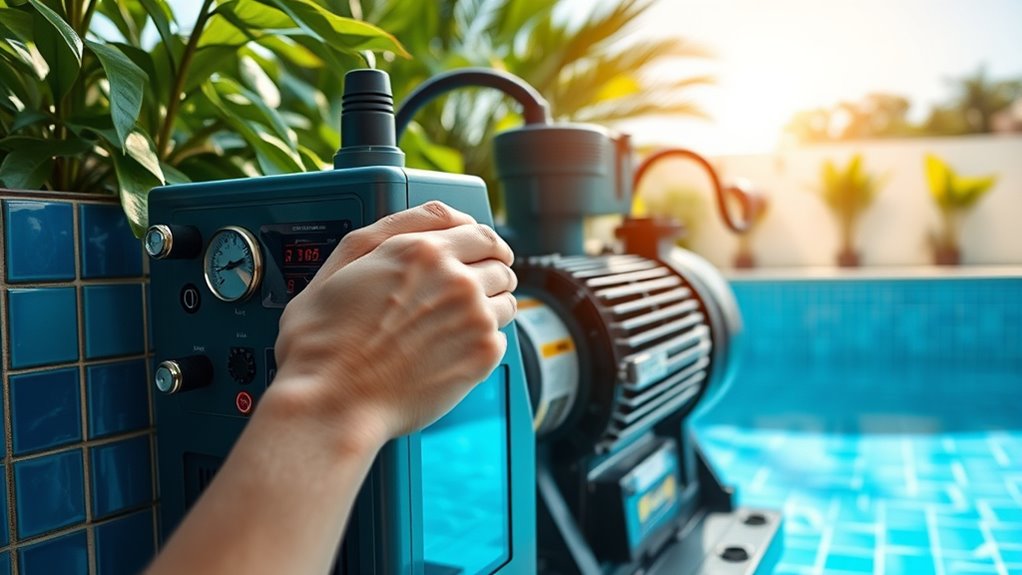

If you’re not scheduling your pool pump properly, you could be risking water imbalance, equipment damage, and higher energy bills. Pros analyze usage patterns, run the pump during off-peak hours, and adjust schedules seasonally to optimize efficiency and water quality. They also use automation to fine-tune settings and prevent mistakes like overworking the system. Keep going, and you’ll discover how to master the perfect pump routine for your pool.
Listen free for 30 days with Audible
Thousands of audiobooks and originals — cancel anytime.
As an affiliate, we earn on qualifying purchases.
Key Takeaways
- Regularly analyze usage patterns and adjust schedules to match peak and off-peak hours.
- Use automation and timers for optimal timing, avoiding unnecessary run times.
- Schedule more circulation during hot months and reduce in cooler seasons to save energy.
- Perform routine filter maintenance and fine-tune flow settings to prevent overworking equipment.
- Monitor water chemistry and adjust pump operation to maintain water quality and extend equipment lifespan.
As an affiliate, we earn on qualifying purchases.
Understanding the Importance of Pump Scheduling
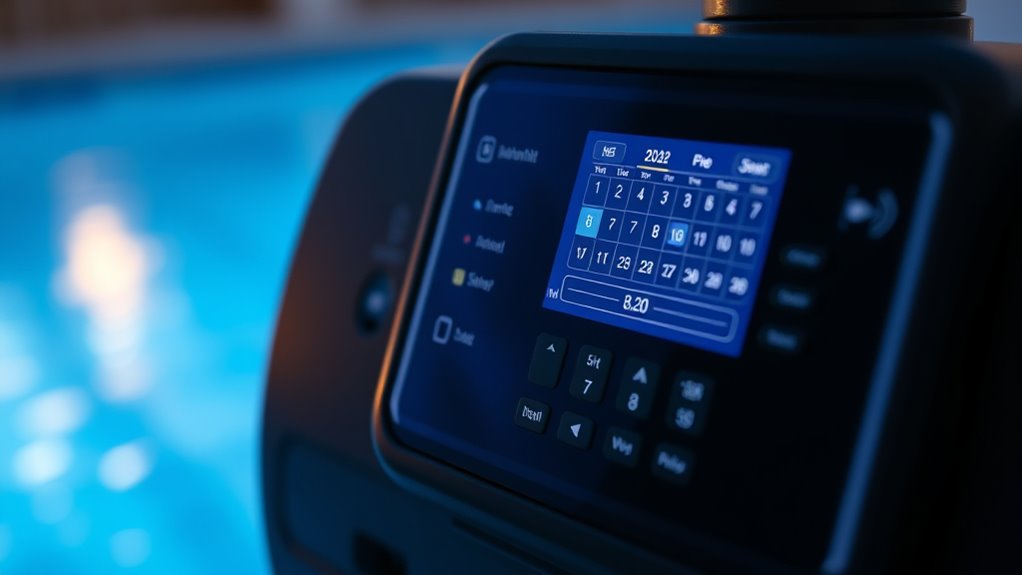
Understanding the significance of pump scheduling is essential for maintaining a healthy and efficient pool. When you set a proper schedule, your pump runs at ideal times, helping to keep the chemical balance stable. Consistent filtration prevents algae growth and reduces water imbalance, saving you time and money on chemical adjustments. Proper scheduling also protects your equipment by avoiding unnecessary wear and tear from constant operation. By running your pump during peak usage or sunlight hours, you ensure effective circulation without overworking your system. This proactive approach minimizes strain on your pump and extends its lifespan, while also maintaining clear, balanced water. Additionally, aligning pump operation with efficient heating solutions can further optimize energy use and cost savings. Ultimately, strategic pump scheduling supports both your pool’s health and your equipment’s longevity.
Analyzing Your Pool’s Usage Patterns

Start by tracking when your pool gets the most use each day to spot patterns. Pay attention to specific times when activity peaks, so you can adjust your pump schedule accordingly. Recognizing these trends helps you save energy and keep your pool in top condition.
Monitoring Daily Activity
Monitoring your pool’s daily activity helps you identify when it’s most frequently used, so you can optimize your pump schedule accordingly. By tracking usage patterns, you ensure your pump runs when it’s needed most, saving energy and reducing wear on equipment. Regular observation also helps you maintain proper chemical balance, as consistent filtration prevents algae growth and cloudy water. Plus, understanding daily activity highlights potential issues with equipment maintenance, such as unusual noise or reduced flow, which may indicate a problem. Keeping a log of usage times and pool conditions allows you to fine-tune your schedule for efficiency and longevity. Additionally, being aware of equipment performance can help you identify early signs of malfunction and address them promptly. Ultimately, monitoring daily activity empowers you to create a smart, responsive pump schedule that keeps your pool clean, safe, and well-maintained.
Identifying Peak Hours
By analyzing your pool’s usage patterns, you can pinpoint the specific times when it’s most frequently used throughout the day. This helps you identify peak hours, during which your pool pump may produce increased noise and higher energy consumption. Knowing these times allows you to schedule your pump more efficiently, reducing unnecessary noise and saving on electricity. Consider tracking your pool activity over a week to find consistent usage spikes. Below is a simple example:
| Time of Day | Usage Pattern |
|---|---|
| 8-10 am | High activity, kids swimming |
| 12-2 pm | Moderate usage, lounging |
| 4-6 pm | Peak usage, families swimming |
| 6-8 pm | Lower activity, cleaning |
| 9-11 pm | Minimal use, late-night dips |
Targeting these hours optimizes energy use and minimizes pool pump noise. Additionally, understanding your usage patterns can help you implement more effective scheduling strategies.
Timing Your Pump Run for Optimal Efficiency
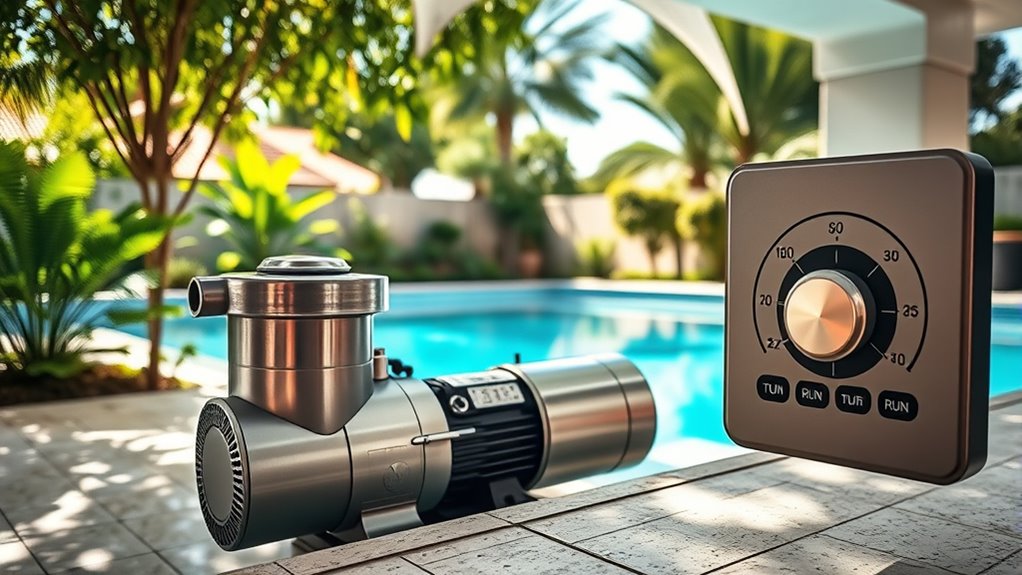
Timing your pump run is crucial for maximizing efficiency and saving energy. By scheduling your pump during off-peak hours, you help improve filtration efficiency and reduce energy costs. Running the pump at the right times ensures your pool stays clean without overworking the equipment, which can lead to unnecessary wear and tear. Proper timing also supports pump maintenance by preventing excessive strain, extending its lifespan. Avoid running the pump during peak sunlight hours when evaporation rates are high, as this wastes energy with little benefit. Instead, set your schedule to run in the early morning or late evening, when energy demand is lower. This strategic timing keeps your pool crystal clear while optimizing overall system performance and longevity. Additionally, noise levels of modern heat pumps have become quieter, allowing you to run your pump during early morning or late evening hours without disturbing your household.
Leveraging Automation and Smart Controls

Smart control integration makes managing your pool pump easier and more efficient. Automated scheduling ensures your pump runs at ideal times without you having to think about it. By leveraging these technologies, you can save energy and keep your pool perfectly maintained. Additionally, digital literacy programs can help users better understand and utilize these smart features for maximum benefit.
Smart Control Integration
Integrating smart controls into your pool pump system allows you to automate schedules based on real-time data and your preferences. With smart technology, you can optimize energy conservation by adjusting pump operation during off-peak hours or when the pool needs less filtration. These controls also enhance safety protocols, alerting you to issues like unusual energy usage or equipment malfunctions. By syncing your pool pump with a smart home system, you gain remote access to monitor and modify settings from anywhere. This seamless integration ensures your pool runs efficiently, reducing unnecessary energy waste and minimizing the risk of damage or safety hazards. Enhanced compatibility with Mazda Tuning options can further customize your system for optimal performance. Overall, smart control integration makes managing your pool’s operation more intelligent, safer, and environmentally friendly.
Automated Scheduling Benefits
Automated scheduling takes the benefits of smart control integration a step further by guaranteeing your pool pump operates precisely when needed, without manual intervention. This not only optimizes energy use but also helps maintain a stable chemical balance, preventing algae growth and chemical imbalances. Smart controls can adjust run times based on weather, usage, or water quality data, reducing the risk of over- or under-filtration. Additionally, automation enhances leak detection by monitoring pump performance and alerting you to irregularities early, preventing costly damage. By automating your pump schedule, you gain peace of mind, knowing your pool is always properly maintained. This proactive approach saves time, lowers energy costs, and ensures your water stays clear, safe, and balanced year-round. Incorporating home automation technology can further streamline your pool maintenance routine, making it more efficient and reliable.
Adjusting Schedules for Seasonal Changes

As the seasons change, it is vital to adjust your pool pump schedule to match the varying weather conditions and usage patterns. In cooler months, you can reduce run times, saving energy and extending equipment life. During warmer seasons, increasing pump hours helps maintain proper chemical balancing and optimize solar heating, which can keep your pool warm naturally. Adjusting your schedule also ensures your filtration system handles debris efficiently during fall and spring. Consider these tips:
Adjust your pool pump schedule seasonally to save energy, extend equipment life, and ensure proper chemical balance.
- Shorten run times in winter to prevent unnecessary wear
- Increase circulation during peak summer heat
- Use automation to adapt to fluctuating weather
- Monitor chemical levels regularly for proper balancing
- Staying informed about energy-efficient practices can further reduce operational costs.
Common Mistakes to Avoid With Pool Pumps

One common mistake homeowners make is running their pool pump longer than necessary, which wastes energy and increases wear on the equipment. This often leads to issues like chemical imbalance, as inadequate filtration allows algae and bacteria to thrive. Overworking the pump can also cause your filter to clog more quickly, requiring frequent maintenance. Neglecting proper filter maintenance can reduce circulation efficiency and lead to cloudy water. Additionally, running the pump excessively can strain the motor, shortening its lifespan. To avoid these pitfalls, set a balanced schedule that aligns with pool usage and weather conditions. Regularly check and clean your filter to guarantee optimal performance, helping maintain proper chemical levels and prolonging your pump’s life. Being aware of filter maintenance can significantly improve your pool’s overall health and energy efficiency.
Monitoring and Fine-Tuning Your Pump Routine

Monitoring and fine-tuning your pump routine is crucial to guarantee your pool stays clean and balanced. Regular adjustments help reduce pump noise, making your pool area more pleasant, and maximize energy savings. Keep an eye on how long your pump runs—shortening cycles during off-peak hours can cut costs. Listen for unusual pump noise, which may indicate issues needing attention. Adjust flow rates to prevent overworking the pump, saving energy and extending its lifespan. Consider implementing variable-speed pumps for better control. Additionally, clean your pump and filters regularly to maintain efficiency. Monitoring pump performance signs can help identify issues early before they become costly problems. Reduce run times during low-use periods. Use timers to optimize operation hours. Adjust flow settings for efficiency. Schedule regular maintenance to prevent issues.
Frequently Asked Questions
How Often Should I Update My Pool Pump Schedule?
You should update your pool pump schedule at least once a month to maintain proper chemical balance and guarantee efficient filter maintenance. Adjust based on seasonal changes, usage, and weather conditions. Regularly monitoring your pool’s chemical levels helps prevent algae and bacteria growth, while timely pump adjustments keep the filter working effectively. Staying proactive with these updates improves water clarity, reduces energy costs, and extends your pool equipment’s lifespan.
Can Improper Scheduling Damage My Pool Equipment?
Improper scheduling can definitely damage your pool equipment. When your pump runs at inconsistent times, it may lead to chemical imbalance, affecting water quality and causing algae growth. Overworking the pump wears out parts faster, while running it too little allows debris and algae to build up, stressing the system. Regular, properly timed schedules help maintain clean, balanced water and extend your equipment’s lifespan, saving you money in the long run.
Are There Specific Times Best for Energy Savings?
You can save energy by scheduling your pool pump during off-peak hours, typically late at night or early morning. Experts confirm that using energy-efficient timing reduces electricity costs and minimizes strain on your system. Avoid running your pump during peak usage times, like midday, when energy rates are higher. By adjusting your schedule, you maximize efficiency, lower bills, and extend your equipment’s lifespan.
How Do Weather Changes Affect Pump Scheduling?
Weather changes, especially seasonal adjustments and temperature considerations, influence your pump schedule considerably. When temperatures drop, you might need to run your pump less or at different times to prevent freezing and save energy. Conversely, warmer weather may require more frequent circulation to keep the water clean. Adjust your schedule accordingly to optimize efficiency and protect your equipment, staying flexible as weather patterns shift throughout the year.
What Signs Indicate My Schedule Needs Adjustment?
If your pool’s taking longer to filter or the pump runs constantly, it’s time to reevaluate your schedule. Signs include inconsistent water clarity, increased energy bills, or equipment making unusual noises. Regular seasonal maintenance helps maintain ideal performance and extends your equipment’s lifespan. Don’t let small issues snowball—adjust your pump schedule promptly to keep your pool pristine and avoid costly repairs down the road.
Conclusion
Don’t overlook your pool pump schedule — it’s the key to saving energy, extending your equipment’s life, and keeping your water pristine. By analyzing your usage patterns and leveraging smart controls, you can optimize efficiency like a seasoned pro. Remember, even in this modern age, a well-timed pump routine can feel as satisfying as a Sunday afternoon swim. Keep fine-tuning, stay vigilant, and enjoy the invigorating results of your efforts.
NFL season / tailgating Picks
team gear
As an affiliate, we earn on qualifying purchases.