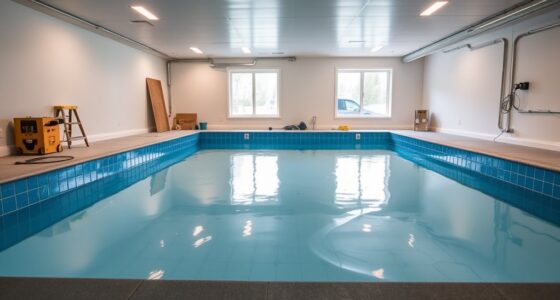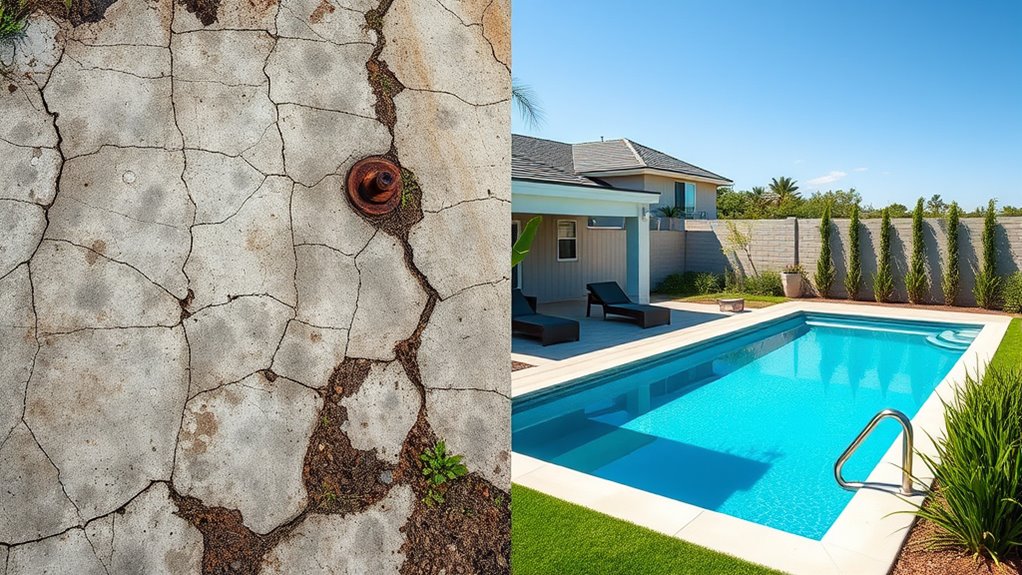

When deciding whether to renovate your old pool or build new, consider your budget, design goals, and the current condition of your existing pool. Renovation can be cost-effective if your pool is structurally sound, but hidden repairs may add expenses. Building new offers full customization and modern features but comes with a higher upfront cost. To make the best choice for your backyard, explore the key differences that can guide your decision.
Key Takeaways
- Renovation is usually cheaper upfront but may incur hidden costs from structural or plumbing issues.
- Building new allows complete customization of pool design, shape, size, and features.
- Renovation works best if the existing pool is in good condition and fits the current space.
- New construction often requires full permits and offers more predictable budgets.
- Consider long-term goals: renovation for cost-efficiency; new build for modernization and design flexibility.

Deciding whether to renovate your existing pool or build a new one can be a challenging choice, especially when considering your budget, space, and long-term goals. One of the key factors in this decision is understanding the cost implications involved. Renovating an existing pool often appears less expensive upfront because you’re working with what’s already there. You may only need to replace the liner, update the tiles, or improve the filtration system. However, hidden costs can add up if the underlying structure has considerable damage or outdated plumbing that needs extensive repair. On the other hand, new construction might have a higher initial price tag, but it allows you to plan a more predictable budget from the start. You won’t face unexpected surprises, and the scope of work is often clearer.
Another critical aspect to contemplate is design flexibility. When you renovate, your options can be somewhat limited by the existing pool’s shape, size, and layout. If your current pool no longer fits your aesthetic or functional goals, you might find yourself constrained by its original design. Conversely, building a new pool from scratch gives you the freedom to customize every detail—shape, size, depth, and features—according to your preferences. You can incorporate modern materials, energy-efficient systems, and innovative designs that weren’t feasible or available when your original pool was built. This level of customization can considerably enhance your backyard’s appeal and functionality, aligning it more closely with your personal style and lifestyle.
Space considerations also play a role in your decision. If your existing pool is well-placed and structurally sound, a renovation can be a practical way to upgrade without sacrificing outdoor area. But if your yard layout has changed or your lifestyle needs have evolved, starting fresh might make more sense. With new construction, you can optimize the layout for better usability, landscaping, or outdoor entertainment zones. Additionally, understanding local building codes and permits is essential to ensure your project complies with regulations and avoids legal issues.
Ultimately, your choice depends on balancing these factors with your long-term vision. If budget constraints are tight and the current pool is structurally sound, renovation may be the smarter route. But if you’re seeking a completely new look, improved functionality, and maximum design flexibility, building from scratch could be more satisfying. Carefully evaluate the costs, potential challenges, and your personal preferences to determine which option aligns best with your goals for your backyard oasis.
Frequently Asked Questions
How Long Does a Typical Pool Renovation Take?
A typical pool renovation usually takes anywhere from 2 to 6 weeks, depending on the scope. During this time, you’ll need to focus on pool safety updates and guarantee the project stays within your budget planning. Clear communication with your contractor helps prevent delays, and prioritizing safety features makes sure your pool remains safe and enjoyable. Being prepared for potential setbacks keeps the process smooth and efficient.
What Are the Hidden Costs in Pool Renovation?
When renovating a pool, watch out for hidden costs like upgrading pool safety features or addressing environmental impact. You might find unexpected expenses in replacing outdated equipment, fixing structural issues, or meeting new safety regulations. These hidden costs can add up quickly, so plan your budget carefully. Ensuring your pool meets current safety standards and minimizes environmental impact helps you avoid costly surprises down the line.
Can I Convert an Above-Ground Pool Into an In-Ground One?
You can convert an above ground pool into an in-ground one, but it’s a complex process. An in-ground conversion involves reinforcing the pool’s structure, excavating the area, and installing proper supports. You’ll need to take into account costs for excavation, permits, and additional materials. It’s essential to evaluate if your existing pool’s size and shape suit an in-ground design, or if starting fresh might be more practical and cost-effective in the long run.
What Permits Are Required for Building a New Pool?
When building a new pool, you’ll need to check the permits required by your local authorities. Typically, you must submit plans that meet building codes and zoning regulations. Permits make sure your project complies with safety standards and environmental guidelines. Before starting, contact your city or county office to confirm the necessary paperwork, inspections, and approvals. Skipping permits can lead to fines, delays, or even having to dismantle your pool later.
How Does Pool Renovation Affect Property Value?
Pool renovation can boost your property value by enhancing landscaping integration and adding modern features. Upgrading pool safety, such as new fencing or cover systems, reassures buyers and meets regulations. A well-maintained, stylish pool creates curb appeal and outdoor living space, making your property more attractive. These improvements not only attract potential buyers but also demonstrate your commitment to safety and aesthetics, ultimately increasing your home’s overall value.
Conclusion
Ultimately, whether you choose to renovate or build anew, your pool is more than just water and concrete—it’s a mirror of your dreams and past experiences. Renovation breathes new life into what’s aged, like a phoenix rising, honoring history while embracing change. Building fresh offers a blank canvas, symbolizing endless possibilities. Whichever path you take, remember you’re shaping a sanctuary where memories will flow, reflecting your journey—past, present, and future—in every ripple.