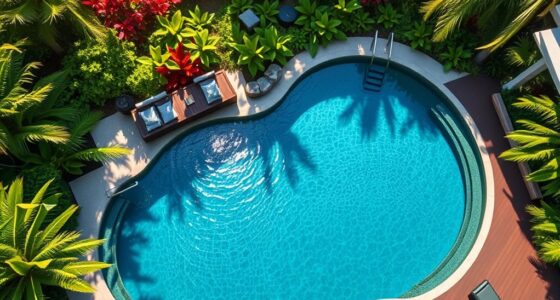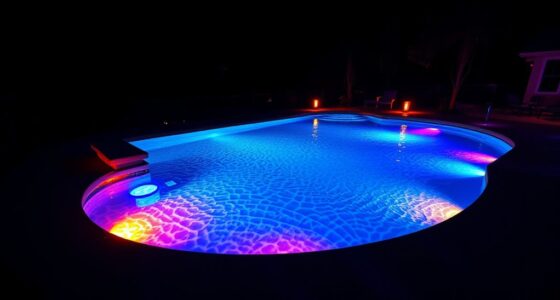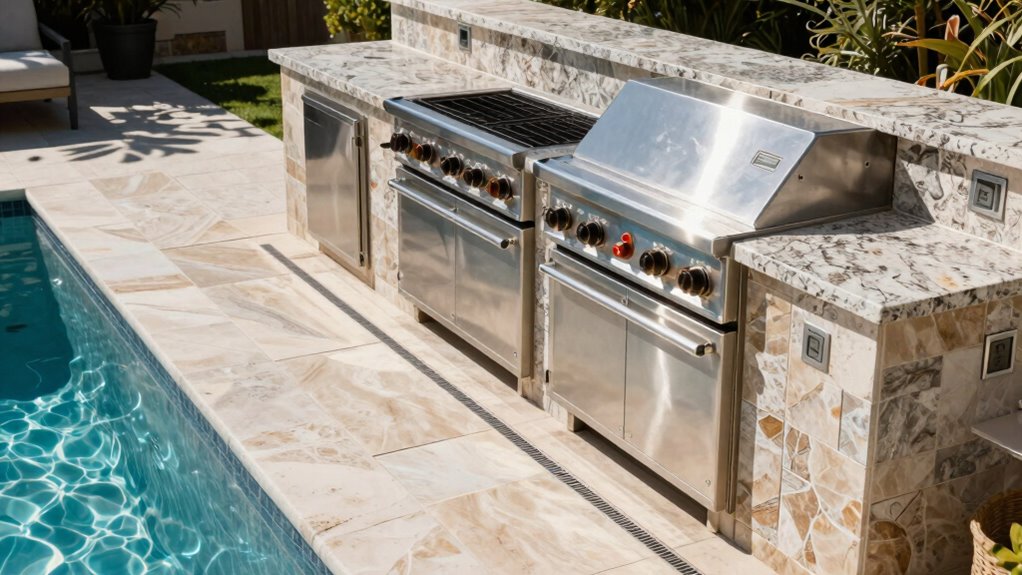
When constructing an outdoor kitchen near your pool, emphasize safe placement by selecting a level, slip-resistant surface away from high-traffic areas, and guarantee proper drainage to prevent water accumulation. Use textured materials and slip-resistant surfaces, and maintain barriers or fencing to enhance safety. Follow local regulations and obtain necessary permits. Properly managing water runoff and avoiding hazards can protect your family and guests—keep exploring to learn more about creating a safe, functional space.
Key Takeaways
- Position outdoor kitchens at safe distances from the pool and property lines, avoiding slip hazards and ensuring proper accessibility.
- Use non-slip, textured surfaces like slate or textured concrete to prevent slips when surfaces are wet.
- Incorporate effective drainage design with slopes, drains, and permeable materials to direct water away from seating and cooking areas.
- Install barriers or fencing around the pool and kitchen to restrict access and enhance safety, complying with local regulations.
- Ensure electrical outlets are GFCI-protected and all appliances are fire-resistant, following safety codes for outdoor construction.
How to Choose a Safe Location for Your Poolside Outdoor Kitchen

Choosing the right location for your poolside outdoor kitchen is crucial to guarantee safety and functionality. You want a spot that enhances outdoor aesthetics without creating hazards. You think about furniture placement to ensure enough space for seating, dining, and movement around the kitchen. Position the kitchen where it’s easily accessible from your home and pool, but away from high-traffic areas to prevent accidents. Consider how sunlight and shade will affect cooking and lounging, optimizing comfort for your guests. Keep pathways clear and avoid placing the kitchen too close to the pool edge to minimize the risk of slips or falls. Balancing practicality with visual appeal ensures your outdoor kitchen complements your landscape while maintaining safety standards. Additionally, incorporating appropriate drainage solutions helps prevent water accumulation and potential hazards around your setup. Properly designed drainage systems are essential for maintaining a safe and functional outdoor environment, especially near water features. Selecting a location with adequate drainage minimizes the risk of standing water that can lead to slips or damage to your outdoor kitchen components. Implementing proper grading can further enhance water runoff and protect your outdoor space from flooding. Moreover, considering gas line placement is important to ensure safety and compliance with local codes, especially if you plan to have a built-in grill or other gas appliances.
What Pool Safety Rules Do You Need to Follow When Building an Outdoor Kitchen?

When constructing an outdoor kitchen near your pool, it’s essential to follow specific safety rules to prevent accidents and guarantee everyone’s well-being. Prioritize fire safety by choosing materials that are fire-resistant and non-combustible, like brick, stone, or metal, to reduce fire risk. Avoid flammable materials near the cooking area, and ensure your grill or stove is placed at a safe distance from the pool and seating zones. Properly secure all appliances and install safety barriers if needed. Make sure electrical outlets are GFCI-protected to prevent shocks. Keep a fire extinguisher nearby and ensure everyone knows how to use it. Additionally, consult outdoor kitchen safety guidelines to ensure proper setup and adherence to local codes. Understanding electrical safety measures is crucial when installing outlets and wiring outdoors to prevent hazards. Incorporating landscaping elements thoughtfully around the kitchen can also contribute to a safer environment by reducing fire hazards and providing natural barriers. Being aware of drainage considerations helps prevent water accumulation that could create slip hazards or damage your setup. Proper drainage planning is especially important to avoid water pooling that can lead to slips or structural issues. These precautions help create a safe environment where your outdoor kitchen enhances your poolside experience without compromising safety.
Drainage Strategies to Keep Your Pool Area Safe and Dry
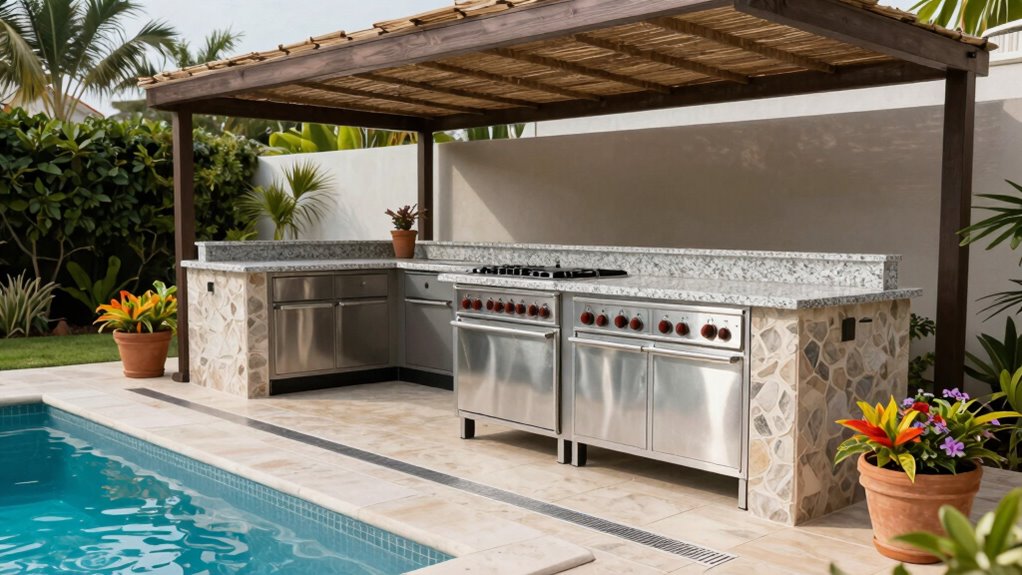
Proper drainage design is essential to prevent water from pooling around your outdoor kitchen and pool area. By planning effective slopes and drainage systems, you guarantee rainwater and runoff flow away safely. Regular maintenance keeps these systems working efficiently, helping you stay safe and dry. Incorporating hydraulics principles into your drainage planning can optimize water flow and prevent potential issues. Additionally, understanding permeable surfaces can enhance drainage effectiveness by allowing water to seep through and reduce runoff. Implementing stormwater management techniques can further improve water control and minimize erosion in your outdoor space. Considering smart home integration can also help monitor and manage drainage systems remotely, ensuring ongoing safety and efficiency. Understanding the responsible use of drainage systems is crucial to prevent future problems and maintain a safe environment around your pool area.
Proper Drainage Design
Effective drainage is essential to prevent water from pooling around your pool area, which can lead to safety hazards and property damage. Proper deck drainage relies on a well-planned slope design that directs water away from the pool and outdoor kitchen. Make certain your deck surface has a gentle slope, typically 1-2%, guiding water toward designated drain points or landscaping beds. Incorporate drainage channels or trench drains where necessary to handle heavy rainfalls. Avoid flat surfaces that trap water, and use permeable materials that allow water to seep through. Proper slope design not only ensures effective water runoff but also helps prevent erosion and structural issues over time. Additionally, thoughtful drainage planning can enhance the overall aesthetics of your outdoor space while maintaining safety. Good slope design and strategic drainage solutions keep your outdoor space dry, reduce slip risks, and protect your property’s foundation. Proper drainage system installation is also vital to ensure long-term effectiveness and reliability. Implementing proper grading techniques can further optimize drainage performance and prevent future issues. Maintaining proper drainage is a key part of responsible outdoor kitchen and pool area planning. Prioritizing these elements creates a safe, functional, and attractive poolside environment.
Regular Maintenance Practices
Regular maintenance is key to guaranteeing your outdoor kitchen area stays safe and dry. Regularly inspect and clear drainage channels to prevent water buildup that could cause slips or damage. Keep garden lighting well-maintained to ensure proper visibility at night, reducing trip hazards and enhancing safety. Effective pest control is also essential; eliminate standing water and debris that attract insects, especially near drainage areas. Check for obstructions around drains and ensure they’re functioning properly to direct water away from the kitchen and pool. Clean gutters and downspouts regularly to avoid overflow. Additionally, maintaining proper drainage strategies helps prevent water accumulation and potential hazards. Implementing seasonal maintenance routines can further enhance drainage effectiveness during heavy rains or seasonal changes. Incorporating proper grading techniques around your outdoor kitchen area can significantly improve water runoff and minimize pooling. Regularly assessing and updating drainage systems ensures they remain effective as your landscape evolves. These simple practices help maintain a dry, safe environment, minimizing risk and protecting your investment. Consistent upkeep ensures your outdoor space remains inviting, safe, and ready for enjoyment.
Design Tips to Reduce Water Accumulation and Slips Near Your Pool

To keep your pool area safe, focus on designing with water management in mind. Using non-slip surfaces and incorporating proper drainage can considerably reduce slips and standing water. Planning for effective water flow will help keep the area dry and secure for everyone.
Use Non-Slip Surfaces
Since water frequently splashes and drips around pools, choosing non-slip surfaces is essential for safety. Non-slip surfaces help prevent slips and falls, especially when the area is wet. To maximize safety, consider these tips:
- Select textured materials like stamped concrete or textured tiles for your outdoor kitchen flooring.
- Use rubber mats or rugs in high-traffic areas to provide extra grip.
- Install slip-resistant coatings on existing surfaces for added traction.
- Wear safety footwear with slip-resistant soles to further reduce the risk of accidents.
Incorporate Proper Drainage
Effective drainage is essential for keeping your outdoor kitchen area safe and dry. Proper landscaping design directs water away from cooking and seating spaces, preventing puddles that could cause slips. Incorporate subtle slopes into your patio surface to encourage water runoff. Consider installing drains or channels in strategic spots to manage excess water efficiently. Additionally, outdoor lighting can highlight these drainage features, making them more visible at night and reducing trip hazards. Thoughtful landscaping design also includes selecting plants that absorb excess moisture, further reducing pooling. By integrating these drainage strategies, you’ll create a safer, more comfortable outdoor kitchen environment, minimizing water accumulation and slip risks near your pool area.
Design for Water Flow
Proper water flow design is key to preventing puddles and slips around your pool area. To achieve this, focus on landscape integration and material selection. Here are four tips:
- Use permeable materials like textured concrete or stone pavers that promote drainage.
- Incorporate gentle slopes in your landscape to guide water away from the deck and seating areas.
- Choose landscaping elements, such as gravel or mulch, that absorb excess water effectively.
- Install strategically placed drains or catch basins to intercept runoff and direct it to appropriate drainage zones.
Best Materials and Surfaces for a Safe, Slip-Resistant Outdoor Kitchen
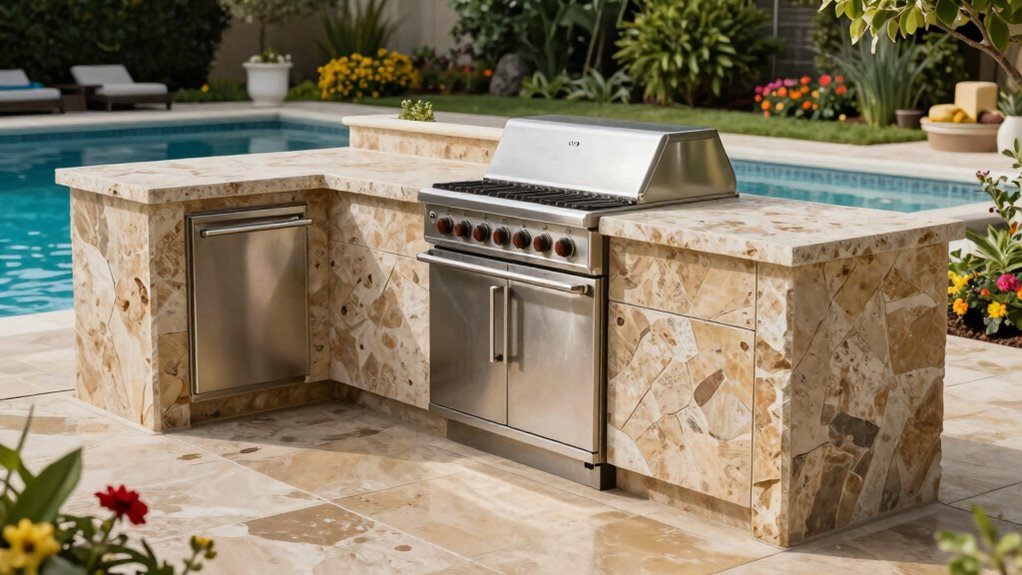
Choosing the right materials and surfaces is essential for creating a safe, slip-resistant outdoor kitchen near your pool. Opt for textured surfaces like slate, textured concrete, or composite decking, which provide better traction under wet conditions. Incorporate a thoughtful landscaping design to direct water away from cooking areas, reducing slip risks. Additionally, consider lighting options that illuminate the workspace without creating glare or shadows, ensuring you can see potential hazards clearly. Avoid smooth, polished surfaces like marble or highly glazed tiles, as they can become dangerously slippery when wet. By selecting durable, slip-resistant materials and planning your landscaping and lighting carefully, you create a safer environment that’s both functional and visually appealing.
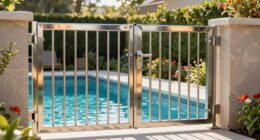
Installing Barriers and Fences to Keep Everyone Safe
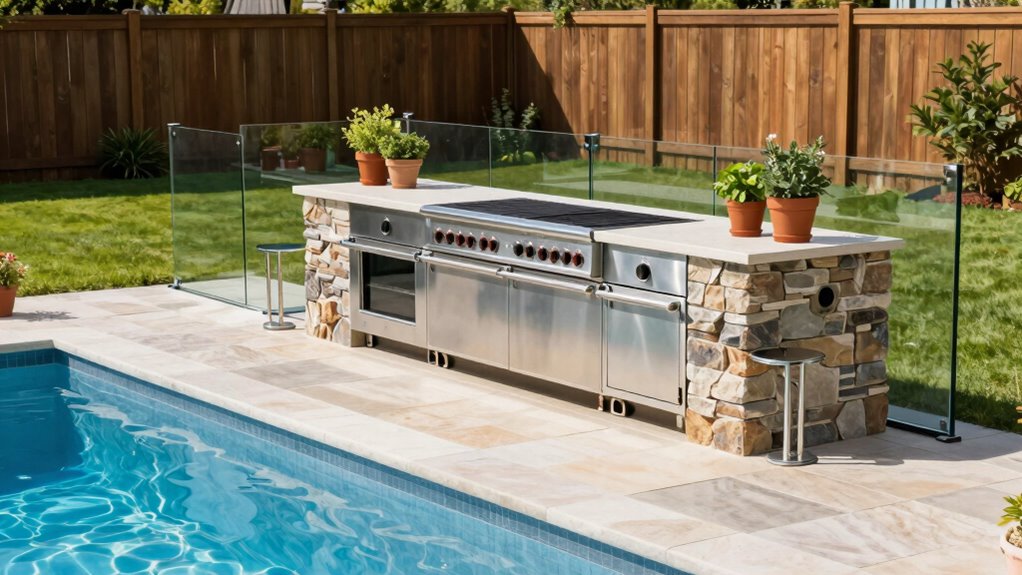
Installing barriers and fences around your outdoor kitchen and pool area is a crucial step in keeping everyone safe. Proper barrier placement prevents unsupervised access and reduces accidents. When choosing fencing materials, consider durability, visibility, and ease of maintenance. Here are four key tips to follow:
- Position fences at a safe distance from the pool and kitchen to allow clear visibility.
- Use sturdy fencing materials like vinyl, aluminum, or chain-link for longevity.
- Ensure gates are self-closing and self-latching to restrict access when needed.
- Keep fence height at least 4 feet to deter climbing and unauthorized entry.
Managing Water Runoff: Key Tips for Poolside Drainage
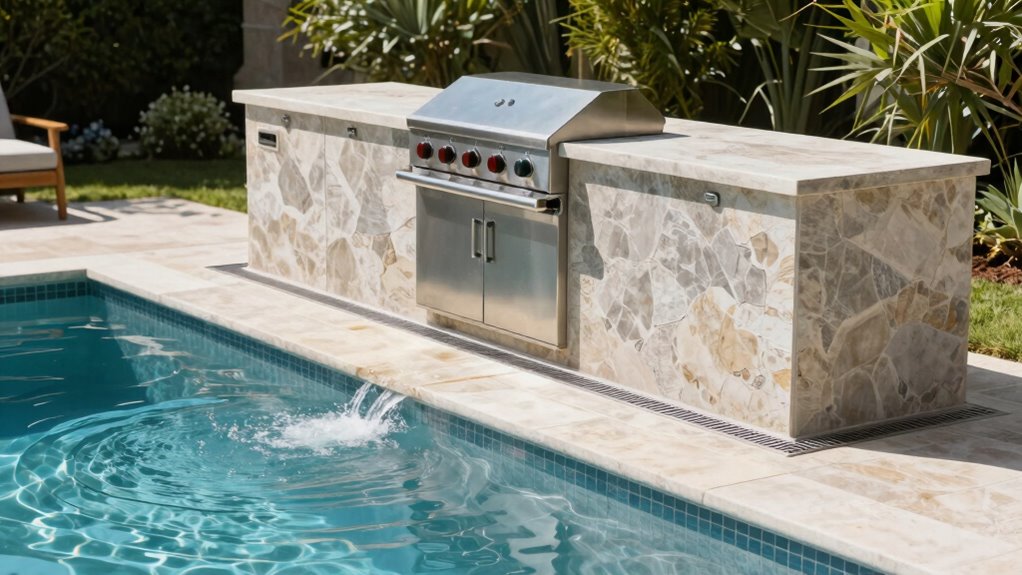
Effective water runoff management is vital for maintaining a safe and functional poolside area. Proper drainage planning helps prevent water from pooling or causing erosion near your outdoor kitchen. To manage water runoff effectively, ensure your landscape slopes away from the pool and kitchen area. Install drainage systems like gravel trenches or French drains to direct excess water away from high-traffic zones. Regularly clear debris from drains to prevent blockages. Consider permeable paving options that allow water to seep into the ground instead of pooling on the surface. When planning your drainage, think about the natural flow of water and how heavy rains might impact your space. Good drainage planning minimizes hazards and keeps your outdoor area safe, clean, and enjoyable.
Common Mistakes to Avoid When Planning Your Poolside Outdoor Kitchen

One common mistake is not carefully choosing the right location for your outdoor kitchen, which can lead to issues with traffic flow and safety. You also want to make sure your design includes proper ventilation to prevent smoke and heat buildup. Paying attention to placement and ventilation from the start helps make certain your poolside kitchen is both functional and comfortable.
Proper Placement Strategies
When planning your poolside outdoor kitchen, careful placement is essential to guarantee safety, functionality, and aesthetic appeal. To achieve this, avoid these common mistakes:
- Positioning your kitchen too close to the pool, which can create safety hazards and water damage risks.
- Ignoring landscaping aesthetics, leading to an unbalanced look that clashes with your overall yard design.
- Choosing materials without considering durability, resulting in quicker wear and higher maintenance.
- Overlooking proper drainage, which can cause water pooling and damage to your kitchen area.
Adequate Ventilation Measures
Without proper ventilation, your outdoor kitchen near the pool can quickly become uncomfortable and unsafe. To prevent this, install effective ventilation fans that promote good air circulation, especially around cooking appliances that produce smoke or fumes. Avoid neglecting ventilation, as poor air flow can lead to lingering odors, excess heat, and even dangerous buildup of gases. Make certain vents are strategically placed to exhaust fumes away from seating and lounging areas. Regularly maintain your ventilation system to keep it functioning efficiently. Remember, proper air circulation isn’t just about comfort—it’s a safety measure that reduces the risk of fire hazards and exposure to harmful fumes. Prioritizing adequate ventilation measures will keep your poolside kitchen safe, comfortable, and enjoyable.
Maintaining Your Outdoor Kitchen for Long-Term Safety and Functionality
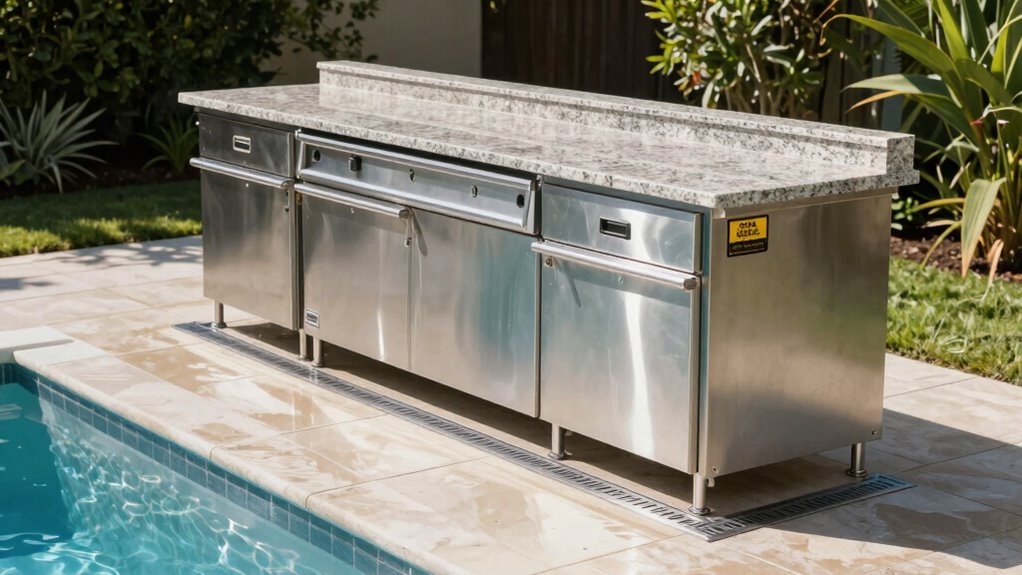
Regular maintenance is essential to keep your outdoor kitchen near the pool safe and functioning properly over time. To do this, you should:
- Regularly inspect and clean your garden lighting to ensure it’s working safely and provides adequate illumination.
- Check your privacy screens for damage or wear and repair or replace them as needed to maintain privacy and safety.
- Clean grills, countertops, and appliances to prevent grease buildup and reduce fire hazards.
- Clear drainage areas around your kitchen to avoid water pooling, which can lead to slips or electrical issues.
Keeping these elements in check helps prevent accidents and prolongs your outdoor kitchen’s lifespan. Consistent upkeep guarantees your space remains safe, functional, and inviting for years to come.
Understanding Local Regulations and Permits for Poolside Outdoor Kitchens
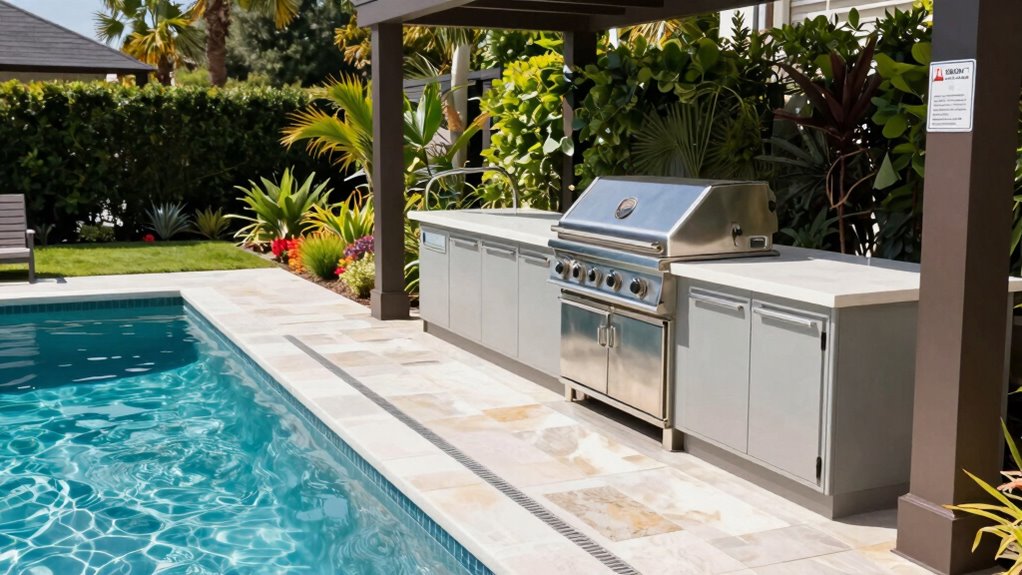
Maintaining your outdoor kitchen near the pool isn’t just about upkeep; it also involves understanding the rules that govern its installation and use. Before building, check if you need a building permit, which guarantees your setup complies with local safety standards. Zoning requirements may restrict outdoor kitchen size, location, or proximity to the pool, so reviewing these rules helps avoid violations. Contact your local planning department to clarify specific regulations in your area. Failing to obtain necessary permits can lead to fines or having to remove your outdoor kitchen. Staying informed about these regulations ensures your project is legal and safe, giving you peace of mind while enjoying your poolside space. Always prioritize local rules to ensure smooth installation and long-term enjoyment.
Frequently Asked Questions
How Close Can I Build My Outdoor Kitchen to the Pool?
You should build your outdoor kitchen at least 10 to 15 feet away from the pool to guarantee safety and proper drainage. Keep poolside furniture and landscaping privacy in mind, creating a clear, unobstructed space that prevents water splashes from reaching the kitchen. This distance reduces hazards, maintains cleanliness, and respects your outdoor area’s aesthetics, making your poolside setup both functional and enjoyable.
What Electrical Safety Measures Are Needed Near Poolside Kitchens?
You must guarantee all electrical outlets near your poolside kitchen have GFCI protection to prevent shocks. Imagine the danger of a stray spill or splash reaching outlets—GFCIs trip instantly, cutting power and saving lives. Keep outlets at a safe distance, and install weather-resistant, properly grounded GFCI outlets. Regularly test them to ensure they’re working. These precautions create a secure environment, letting you enjoy your outdoor space worry-free.
Can I Install a Built-In Grill Near My Pool Safely?
You can install a built-in grill near your pool safely if you follow proper precautions. Make certain regular grill maintenance to prevent fire hazards and keep the area clean. Use outdoor storage to protect your grill from weather damage and avoid clutter that could cause accidents. Maintain at least a 10-foot distance from the pool, and ensure proper drainage to prevent water accumulation around the grill, reducing slip hazards and electrical risks.
How Do I Prevent Pests Around My Outdoor Kitchen and Pool Area?
To prevent pests around your outdoor kitchen and pool, focus on effective pest control and wildlife deterrents. Keep food covered and clean up spills promptly to avoid attracting insects and rodents. Use wildlife deterrents like motion-activated lights or natural repellents near your area. Regularly inspect and seal any gaps or holes where pests could enter. These steps create a less inviting environment for pests, helping keep your outdoor space safe and enjoyable.
What Are the Best Lighting Options for Safety at Night?
Think of your outdoor space as a guiding lighthouse in the dark. Solar lighting and pathway illumination serve as your beacon, ensuring safety at night. Opt for solar-powered lights along pathways and around your kitchen to provide clear visibility without wires or fuss. These options are energy-efficient, easy to install, and create a welcoming ambiance, so you can cook and relax safely even after sunset.
Conclusion
By carefully planning your outdoor kitchen near the pool—considering safety, drainage, and materials—you can create a beautiful, functional space. For example, a homeowner who ignored drainage rules faced water pooling and slip hazards, leading to costly repairs. But with thoughtful design and adherence to safety guidelines, you’ll enjoy your poolside oasis worry-free, hosting gatherings and relaxing confidently. Prioritize safety now, and your outdoor kitchen will serve you well for years to come.