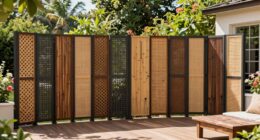
To create effective privacy by design, choose weather-resistant materials like composite, vinyl, or powder-coated metals for screens, fencing, and green walls. Natural options such as cedar or bamboo add organic charm, while modern materials like frosted glass or metal screens offer sleek looks. Prioritize sustainable, durable options that minimize maintenance and promote security. Combining these elements thoughtfully enhances privacy, safety, and aesthetics—exploring these options further can help you craft the perfect outdoor sanctuary.
Key Takeaways
- Use weather-resistant, durable materials like composite, vinyl, or powder-coated metals for long-lasting outdoor privacy solutions.
- Incorporate green walls and living plant screens to enhance privacy while promoting environmental sustainability.
- Select materials that blend seamlessly with surroundings, such as natural wood or organic materials, for aesthetic harmony.
- Prioritize security with sturdy, dense barriers like wrought iron or composite panels to improve safety and deter intruders.
- Choose low-maintenance, weatherproof materials to ensure longevity and reduce ongoing upkeep of privacy features.

Have you ever wondered how companies can protect your personal data while still providing innovative services? The same principle applies to outdoor privacy, where thoughtful design guarantees your personal space remains secure without sacrificing aesthetics or functionality. When it comes to creating private outdoor areas, material selection plays a vital role. Choosing the right materials for screens, fencing, or green walls isn’t just about appearance; it’s about durability, privacy, and environmental impact. For instance, using high-quality, weather-resistant materials like composite wood, vinyl, or powder-coated metals ensures your outdoor privacy features withstand the elements over time. These materials not only last longer but also maintain their appearance, reducing the need for frequent replacements and maintenance, which aligns with the core idea of privacy by design—creating solutions that are effective and sustainable from the start.
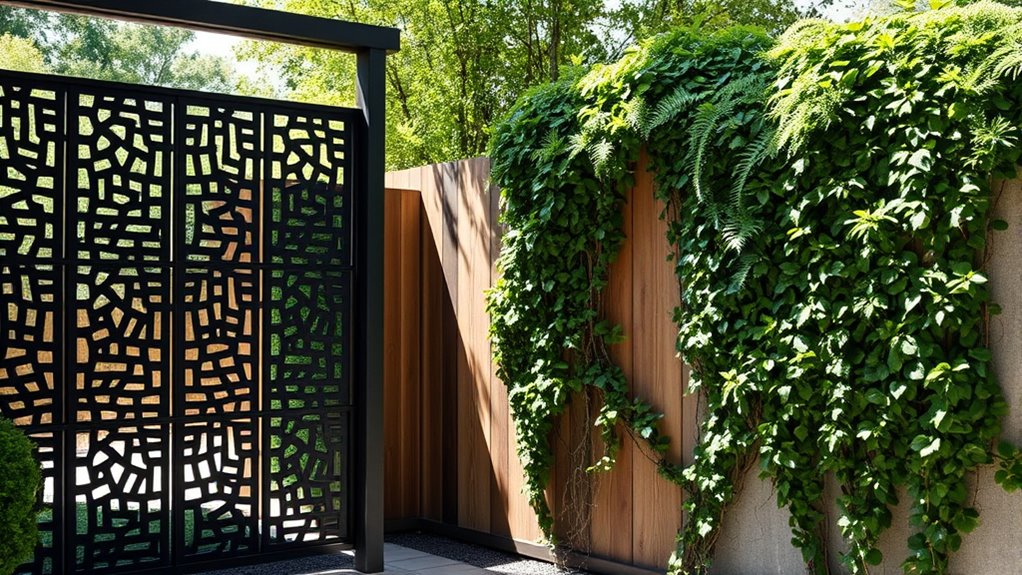
Material selection also impacts how well your outdoor privacy elements blend into the surroundings. If you want a natural look, bamboo, cedar, or stained wood can provide an organic feel that complements gardens or landscapes. For modern, sleek designs, metal screens or frosted glass panels can add a contemporary touch while maintaining privacy. Green walls, or living walls, introduce a different dimension, combining functionality with environmental benefits. The choice of plants and supporting materials influences not only the aesthetic appeal but also how effectively your green wall screens sound and sight, enhancing privacy and creating a calming atmosphere. Furthermore, selecting eco-friendly and sustainable materials aligns with privacy by design principles, reducing environmental impact and promoting responsible manufacturing. Additionally, incorporating sound design techniques can improve the acoustic privacy of outdoor spaces by reducing noise pollution and creating a more tranquil environment.
Choosing natural, modern, or eco-friendly materials enhances outdoor privacy while blending seamlessly with surroundings.
When designing outdoor privacy features, think about how material choices can contribute to the overall security of your space. Dense, sturdy materials like wrought iron or composite panels act as physical barriers that deter unwanted visitors or passersby. Privacy isn’t just about blocking sightlines; it’s about creating a sense of safety and enclosure. Also, consider how these materials interact with lighting and shadows to optimize privacy during different times of the day. Proper material selection can also prevent issues like rust, warping, or pest infestation, ensuring your outdoor privacy solutions remain effective and low-maintenance over time.
Ultimately, integrating privacy by design into outdoor spaces requires careful thought about material selection. It’s about choosing durable, attractive, and sustainable options that secure your privacy while enhancing the beauty and functionality of your outdoor environment. By doing so, you create a space that respects your need for solitude and safety, all while embracing innovative design principles. This proactive approach guarantees that your outdoor privacy features are not only effective today but continue delivering value and peace of mind well into the future.

LOVE STORY 3'x10' Dark Grey Balcony Privacy Screen Fence Cover (HDPE) UV Protection Weather-Resistant 3 FT Height Shield for Deck, Patio, Backyard, Outdoor Pool, Porch, Railing
(Breathable Material with Some Visibility Through) Made with 100% new high density polyethylene(HDPE) material–no recycled materials used,more healthy…
As an affiliate, we earn on qualifying purchases.
As an affiliate, we earn on qualifying purchases.
Frequently Asked Questions
How Do Screens Impact Thermal Comfort in Outdoor Spaces?
Screens improve thermal comfort in outdoor spaces by providing wind protection and enhancing thermal insulation. They block chilly breezes, making seating areas warmer and more inviting. Additionally, screens can reduce heat loss, helping you stay comfortable even on cooler days. By creating a barrier against wind and controlling airflow, screens help you enjoy outdoor environments with improved thermal comfort, making your space more usable year-round.
What Materials Are Best for Sustainable Green Walls?
Think of your green wall as a living tapestry; choose sustainable materials like recycled metal, biodegradable planters, and natural fiber panels for eco-friendly green wall choices. These sustainable materials support biodiversity, reduce waste, and lower carbon footprints. Using such materials guarantees your green wall thrives sustainably, blending beauty with responsibility. By selecting eco-conscious options, you create a lush, vibrant space that benefits both the environment and your outdoor area’s overall health.
Are Fencing Options Effective for Noise Reduction?
Yes, fencing options can be effective for noise reduction, especially if you choose soundproof fencing designed as a noise barrier. These fences considerably improve noise barrier effectiveness by absorbing and deflecting sound waves. To maximize results, ensure the fencing is tall, dense, and properly installed without gaps. Combining soundproof fencing with natural elements like green walls can further enhance noise reduction and create a more peaceful environment around your space.
How Do Privacy Screens Affect Plant Growth?
Privacy screens act like a gentle curtain, shaping the dance of light and shadow for your plants. They provide plant shading and light filtering, which can protect delicate foliage from harsh rays and promote healthy growth. However, too much coverage might block essential sunlight, hindering photosynthesis. To keep your plants thriving, find a balance that offers privacy without depriving them of the light they need to flourish.
What Maintenance Is Required for Green Walls?
You need to regularly inspect your green walls, checking irrigation systems to guarantee proper watering and prevent leaks. Prune plants to promote healthy growth and remove any dead or overgrown foliage. Monitor plant selection, replacing any that struggle or don’t thrive. Fertilize as needed and clean the wall surface to prevent mold or pests. Consistent maintenance keeps your green wall vibrant, healthy, and visually appealing.

ODTORY Artificial Grass Wall Panel Backdrop,10" X 10" 12P(8.4 sqft) UV-Anti Greenery Boxwood Panels for Indoor Outdoor Green Wall Decor & Ivy Fence Covering Privacy
Each package has 12 boxwood panels, each grass panel is 10×10 inches, which can cover 8.4 sqft. The…
As an affiliate, we earn on qualifying purchases.
As an affiliate, we earn on qualifying purchases.
Conclusion
By prioritizing privacy by design, you create spaces that truly protect your personal zone. Incorporating screens, fencing, or green walls not only boosts privacy but also adds beauty and value to your property. Did you know that homes with well-designed privacy features sell 12% faster? So, when planning your outdoor space, remember that thoughtful design isn’t just about looks—it’s about feeling secure and comfortable in your own sanctuary.

Office Desk Divider 2 pcs, Acrylic Desk Privacy Panels, Frosted Glass Privacy Divider on Desk Partition, 30" x 18"
【Strong and Durable】The premium acrylic with a frosting process make the panels strong and not easy to break,…
As an affiliate, we earn on qualifying purchases.
As an affiliate, we earn on qualifying purchases.

ALEKO Venice Style DIY Wrought Iron Fence Ornamental Security 5.5 x 5 Feet Black -FENCESTPDIY5X5.5
As an affiliate, we earn on qualifying purchases.
As an affiliate, we earn on qualifying purchases.