
Saltwater pools are gentler on your skin and eyes, producing a steady, low-level sanitizer that requires less active maintenance once balanced. Chlorine pools use traditional chlorine tablets or liquid, needing frequent adjustments and handling of chemicals, which can cause skin irritation or strong smells if not carefully managed. Both systems demand regular testing to keep water clear and safe. To understand which option suits your needs better and the best care tips, keep exploring the differences and maintenance tips.

Get pool and patio gear delivered free with Prime
- Fast, free delivery on millions of items
- Prime Video, Amazon Music and more included
- Member-only deals all year
Key Takeaways
- Saltwater pools generate chlorine continuously, offering gentler water but may require generator maintenance and salt level checks.
- Chlorine pools need regular manual chemical additions, providing precise control but often causing stronger chemical odors and skin irritation.
- Saltwater systems generally require less frequent chemical adjustments, reducing maintenance effort over time.
- Proper balancing of pH and alkalinity is crucial for both systems to prevent water issues and ensure comfort.
- Long-term costs and equipment durability can vary, with saltwater pools potentially causing corrosion if not properly maintained.
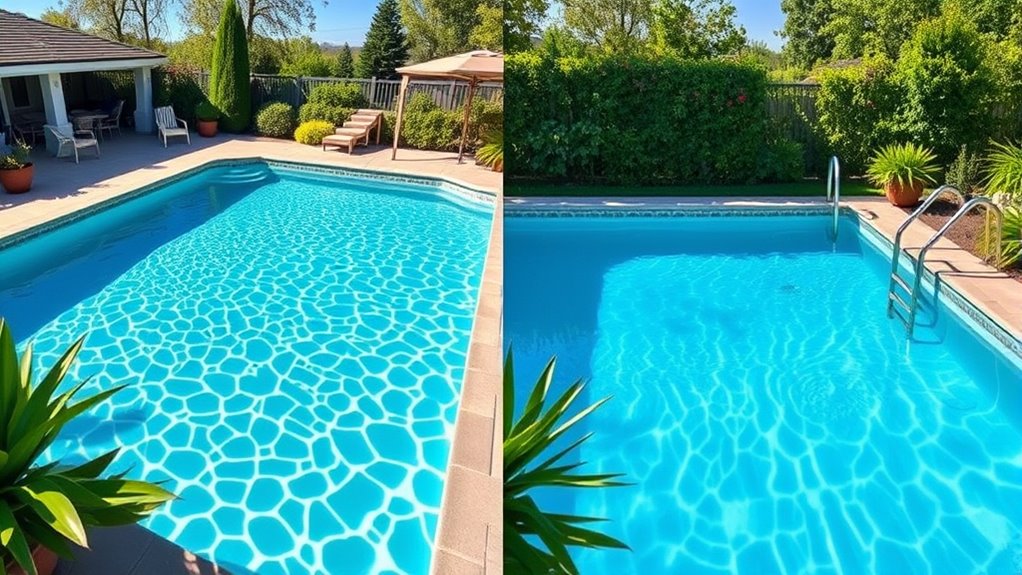
When choosing between saltwater and chlorine pools, understanding their differences can help you make the best decision for your backyard oasis. One of the key factors to contemplate is how each type impacts your pool maintenance routine and the chemical balance. Saltwater pools use a generator to convert salt into chlorine, providing a steady, low-level sanitizing process. This often means less manual handling of chemicals, but it doesn’t eliminate the need for regular upkeep. Maintaining proper chemical balance remains essential to keep the water safe, clear, and comfortable. You’ll need to test the water regularly to verify pH levels, alkalinity, and sanitizer levels stay within ideal ranges. While saltwater pools tend to be gentler on your skin and eyes, they still require attention to chemical levels, just like traditional chlorine pools.
Saltwater pools need regular testing and balance to stay safe and comfortable.
Chlorine pools, on the other hand, rely on added chlorine tablets, liquid, or granular forms to sanitize the water. This approach often demands more active management of pool chemicals, especially since chlorine levels can fluctuate with weather and usage. Maintaining a consistent chemical balance is vital; if chlorine levels are too low, bacteria and algae can thrive, making your pool unsafe and unappealing. Conversely, too much chlorine can cause skin irritation and a strong chemical smell. Regular testing and adjusting chemicals are necessary to keep the water balanced and to prevent issues like cloudy water or algae growth. Chlorine pools typically require more hands-on effort, but they offer straightforward control over sanitation.
In terms of ongoing care, saltwater pools generally need less frequent chemical adjustments once properly balanced. The salt generator produces chlorine continuously, which means fewer trips to the pool store for chemicals. However, you’ll need to monitor the salt levels and ensure the generator is functioning correctly. If you neglect pool maintenance and chemical balance, both types can develop water quality problems, but saltwater pools might be a bit more forgiving thanks to their steady chlorination process. Still, ignoring proper maintenance can lead to corrosion of pool equipment or scaling issues caused by improper chemical levels.
Ultimately, your choice depends on how much effort you want to put into pool maintenance and how sensitive you are to pool chemicals. Both systems require consistent testing and adjustment of chemical balance to keep your water safe and inviting. Whether you prefer the lower chemical handling of a saltwater system or the straightforward control of traditional chlorine, understanding these differences ensures you’ll enjoy a clean, healthy pool all season long.
As an affiliate, we earn on qualifying purchases.
Frequently Asked Questions
Which Type of Pool Is More Environmentally Friendly?
When choosing a pool, you might wonder which is more eco-friendly. Saltwater pools are generally more sustainable because they use fewer chemicals and require less maintenance, reducing environmental impact. They also produce fewer harmful byproducts. Chlorine pools, while effective, often rely on harsher chemicals that can affect water quality and ecosystems. So, if eco-friendliness is your goal, a saltwater pool tends to be the more sustainable option.
How Do Saltwater Pools Affect Skin and Hair Health?
Did you know that saltwater pools have about 10% of the salinity of seawater? You might find that saltwater pools cause less skin irritation and hair damage compared to traditional chlorine pools. The lower chlorine levels help keep your skin softer and reduce dryness, while your hair stays less brittle. So, if you’re sensitive to harsh chemicals, a saltwater pool could be gentler on your skin and hair health.
Are Saltwater Pools More Cost-Effective Long-Term?
You might find saltwater pools more cost-effective long-term because, despite higher installation costs, they usually have lower ongoing maintenance expenses. The cost comparison shows that salt systems reduce the need for frequent chemical purchases and less equipment replacement. While initial setup can be pricier, over time, the savings on chemicals and fewer repairs make saltwater pools a smart investment, especially if you plan to enjoy your pool for years.
Can You Convert a Traditional Chlorine Pool to Saltwater?
Think of your pool as a blank canvas waiting for a splash of change. Yes, you can convert a traditional chlorine pool to saltwater through a pool conversion process. You’ll need to adjust water chemistry, install a saltwater chlorinator, and guarantee proper balance. This transformation simplifies maintenance and offers a gentler swim. With some effort, your pool becomes a invigorating oasis, blending innovation with familiar comfort.
What Maintenance Differences Exist Between Saltwater and Chlorine Pools?
You’ll notice that maintaining saltwater pools involves less frequent maintenance of pool chemistry, since salt generates chlorine naturally. You’ll need to monitor and adjust pH and salt levels regularly, but overall, maintenance frequency is lower compared to chlorine pools that require more frequent chemical additions. Saltwater systems also reduce the need for handling harsh chemicals, making upkeep safer and simpler, while still keeping your pool clean and balanced.
Conclusion
Choosing between a saltwater and a chlorine pool comes down to your priorities. While saltwater pools offer a gentler, more natural feel, chlorine pools provide a traditional, cost-effective option. You might enjoy the low-maintenance convenience of saltwater, but appreciate the familiarity of chlorine’s proven effectiveness. Ultimately, it’s about balancing comfort with practicality. Whichever you pick, both can deliver invigorating fun — just remember, your perfect pool depends on what feels right for you.
Halloween Picks
halloween
As an affiliate, we earn on qualifying purchases.