
When budgeting for a small pool, focus your spending on safety features like fencing and alarms, as they prevent costly accidents. Spend wisely on durable materials and energy-efficient equipment to save money in the long run. You can cut costs on complex designs or elaborate features, but skipping safety or quality can lead to bigger expenses later. To balance safety, efficiency, and budget, consider strategic choices—more tips await if you explore further.
Key Takeaways
- Prioritize safety features like fencing and alarms early to prevent costly accidents and legal issues.
- Invest in durable, high-quality materials for construction to reduce long-term repair and maintenance costs.
- Choose energy-efficient pumps and heaters to lower ongoing utility expenses over the pool’s lifespan.
- Opt for simple, easy-to-install designs to minimize initial construction costs without sacrificing safety.
- Allocate funds wisely by balancing safety, maintenance, and energy savings to ensure affordability and longevity.
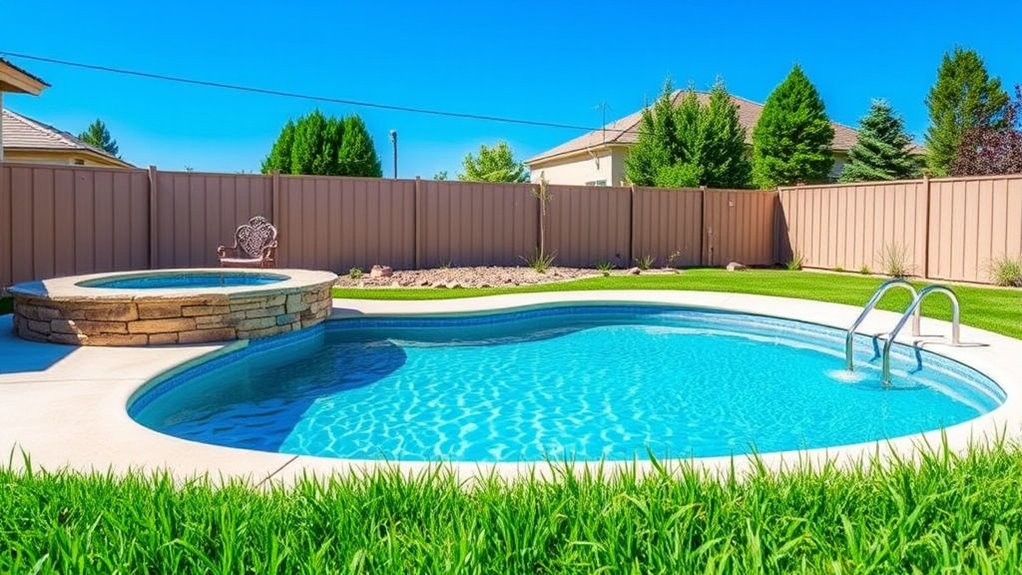
Creating a small pool can be a rewarding project, but it requires careful budgeting to stay on track. One of the first areas to consider is pool safety. Cutting corners here might seem like a way to save money initially, but neglecting proper safety features can lead to costly accidents or legal issues down the line. Investing in sturdy fencing, a reliable cover, and safety alarms is essential. While these items might seem like upfront expenses, they are vital for protecting children, pets, and visitors. Remember, safety isn’t the place to skimp; prioritizing it helps you avoid potential liabilities and costly repairs caused by accidents or damage. Additionally, incorporating safety solutions that are easy to maintain can save time and effort in the long run.
Prioritize safety features like fencing, covers, and alarms to protect loved ones and avoid costly accidents.
Next, think about maintenance costs. Even a small pool demands ongoing care, including filtering, cleaning, and chemical balancing. While it might be tempting to choose cheaper equipment or skip regular maintenance, this can lead to higher long-term expenses. Investing in quality filtration systems and easy-to-maintain features might cost more initially, but they save you time, effort, and money over the years. Regular cleaning and chemical treatments prevent algae growth and water contamination, which can be expensive to fix later. Keeping your pool well-maintained reduces the likelihood of major repairs, extending its lifespan and ensuring you get the most enjoyment out of your investment.
When it comes to the actual construction, you’ll need to decide where to save and where to spend. For example, choosing a simple, easy-to-install design might cut costs upfront. However, investing in durable materials and professional installation guarantees your pool remains functional and safe for years. Sometimes, opting for cheaper, lower-quality materials may seem like a good way to save, but they often require more frequent repairs or replacements, increasing your total costs over time. Conversely, spending a little extra on high-quality liners or concrete can pay off in the long run by reducing maintenance needs and preventing leaks or structural issues. Prioritizing high-quality materials can also contribute to overall safety and longevity.
Finally, don’t forget about ongoing operational costs, such as electricity for pumps and heaters. These can add up over time, so consider energy-efficient options when budgeting. While they might have higher initial costs, energy-efficient equipment can substantially reduce your monthly utility bills, making your pool more affordable to operate in the long run. Balancing your spending between quality safety features, dependable maintenance equipment, and energy-efficient systems ensures you create a pool that’s enjoyable, safe, and budget-friendly. Proper planning and strategic spending will keep your small pool a source of relaxation rather than financial stress. Being aware of energy efficiency options can help you make smarter choices that save money over time.
Frequently Asked Questions
How Long Does a Small Pool Typically Last With Proper Maintenance?
A small pool typically lasts 10 to 15 years with proper maintenance. Regular pool maintenance, like cleaning, balancing chemicals, and inspecting equipment, helps extend its lifespan. Factors such as the pool’s material, installation quality, and climate also influence durability. By staying consistent with maintenance, you can prevent major issues and maximize your pool’s longevity, ensuring you enjoy it for many seasons to come.
What Are the Hidden Costs Involved in Installing a Small Pool?
Hidden expenses in installing a small pool often include unexpected maintenance surprises, such as higher energy bills from pumps or heaters, and costs for repairs or upgrades to filtration systems. You might also overlook permits or landscaping adjustments, adding to your budget. To avoid surprises, plan for these hidden expenses upfront, and set aside a contingency fund. This way, you stay prepared for any unexpected costs that arise during or after installation.
Can I Finance or Lease a Small Pool Instead of Paying Upfront?
Imagine your dream pool as a key to summer paradise—you might not need to pay the full price upfront. You can explore financing options or lease agreements, turning a hefty investment into manageable monthly payments. Leasing advantages include lower initial costs and flexibility, giving you more freedom to enjoy your backyard oasis now. Just guarantee you review terms carefully to avoid surprises, so your pool becomes a source of joy, not stress.
How Energy-Efficient Are Small Pools Compared to Larger Ones?
Small pools generally have lower energy consumption than larger ones, making them more energy-efficient. You can enhance efficiency by choosing good insulation options, which help retain heat and reduce heating costs. Additionally, smaller pools require less water and energy to maintain, saving you money over time. By focusing on insulation and proper maintenance, you guarantee your small pool remains cost-effective and eco-friendly, giving you more enjoyable swimming with less energy use.
What Safety Features Should I Prioritize Within My Budget?
You should prioritize a sturdy pool fence and a reliable safety cover, as data shows that fences reduce drownings by over 80%. Investing in a secure pool fence keeps kids safe, while a safety cover prevents accidental falls when the pool isn’t in use. These features are affordable and essential, giving you peace of mind without overspending, and are often more cost-effective than extensive safety equipment.
Conclusion
As you stand beside your small pool, envision the shimmering water inviting friends over, laughter echoing under the sun. By wisely choosing where to save and spend, you craft a backyard oasis that sparkles without draining your wallet. Prioritize essentials like quality liner and safety features, while sparing on extras. With thoughtful budgeting, your pool becomes a invigorating retreat, turning your backyard into a paradise where every splash feels like a reward for smart choices.