
To keep your small pool cool, focus on effective shade and surface tricks. Use natural shade like trees or shrubs and add artificial options such as shade sails, umbrellas, or pergolas to block sunlight. Apply reflective coatings or covers to bounce heat away and slow water warming. Combining these strategies helps reduce heat gain naturally and sustainably. Curious about more ways to beat the heat? Keep exploring for even smarter cooling tips.
Key Takeaways
- Use natural shade like trees or shrubs to block direct sunlight and reduce water heating in small pools.
- Install shade sails, umbrellas, or pergolas to provide overhead cover and minimize surface sun exposure.
- Apply reflective coatings or specialized heat-reflective surfaces to bounce sunlight away and lower water absorption.
- Incorporate insulating materials and reflective surfaces around the pool to slow heat transfer and maintain cooler water.
- Regularly monitor water temperature and adjust shading and surface treatments for consistent, energy-efficient cooling.
Why Shade Is the Most Important Way to Keep Your Small Pool Cool
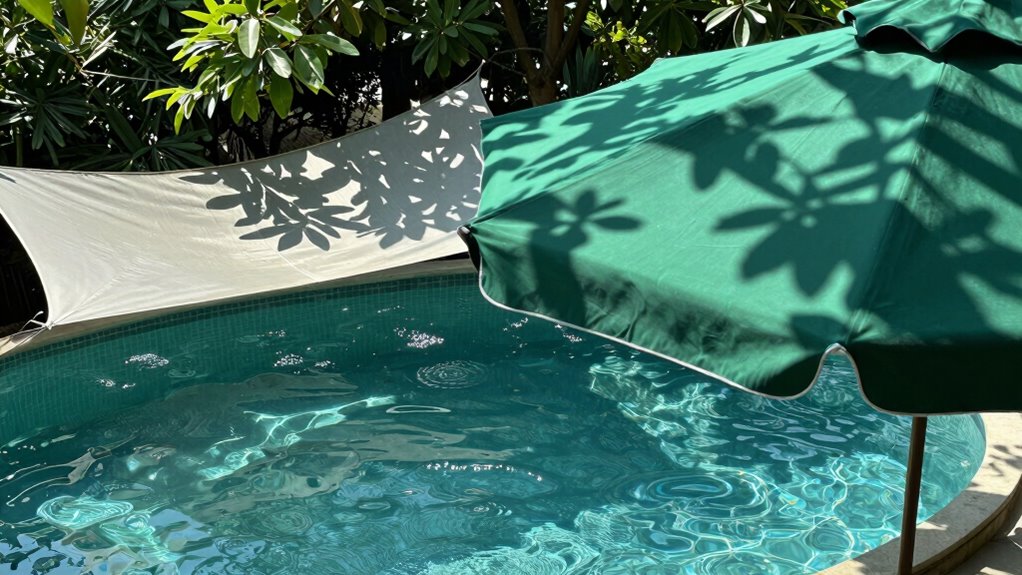
Shade is the most effective way to keep your small pool cool because it directly blocks the sun’s intense rays from heating the water. Understanding the shade importance helps you prioritize this simple cooling strategy. By providing overhead cover or placing shade structures, you prevent direct sunlight from reaching the pool’s surface, considerably lowering water temperature. Shade acts as a natural barrier, reducing the need for electrical or mechanical cooling methods. It’s a cost-effective, eco-friendly way to maintain comfortable water levels, especially during peak sun hours. Incorporating shade into your cooling strategies ensures your pool stays surprisingly cool without extra effort or expense. Additionally, using sustainable cloud solutions such as reflective surfaces or innovative coverings can enhance your shade setup. Recognizing the benefits of shade can help you choose the most effective shading options for your specific setup. Proper shade design can maximize cooling efficiency and durability over time. Ultimately, shade is a practical, powerful tool to keep your small pool inviting all summer long.
Common Mistakes When Trying to Cool Your Pool Water

Many pool owners make the mistake of trying to cool their water quickly with chemical or mechanical methods, only to find they’re ineffective or harmful. Overusing chemicals, like chlorine or algaecides, can upset the water balance and irritate swimmers. Relying solely on mechanical cooling, such as pumps or coolers, often wastes energy and provides limited results. Poor insulation around your pool allows heat to seep in, making it harder to maintain a cool temperature naturally. Additionally, understanding the importance of proper water chemistry can help prevent issues that hinder cooling efforts. Recognizing the role of insulation in minimizing heat gain can significantly improve cooling efficiency. Proper pool cover use can also help retain cooler water temperatures when the pool is not in use, reducing the need for additional cooling measures. Avoid these common mistakes: – Excessive chemical use that disrupts water chemistry – Ignoring insulation, leading to heat gain – Rushing into quick fixes without understanding their effects – Neglecting natural shading options – Overlooking surface tricks that promote cooling. Incorporating natural shading techniques, such as umbrellas or trees, can dramatically reduce heat absorption and help maintain a cooler pool temperature. Implementing shade solutions can be one of the most effective and eco-friendly ways to keep your pool cool. Smart strategies lead to lasting, safe cooling.
Best Shade Options for Small Pools: Natural and Artificial
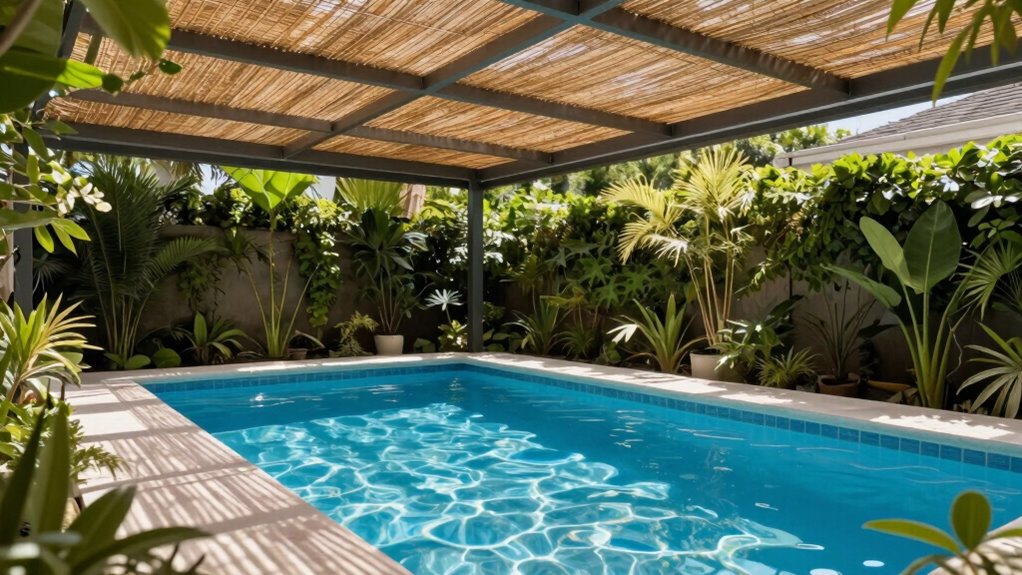
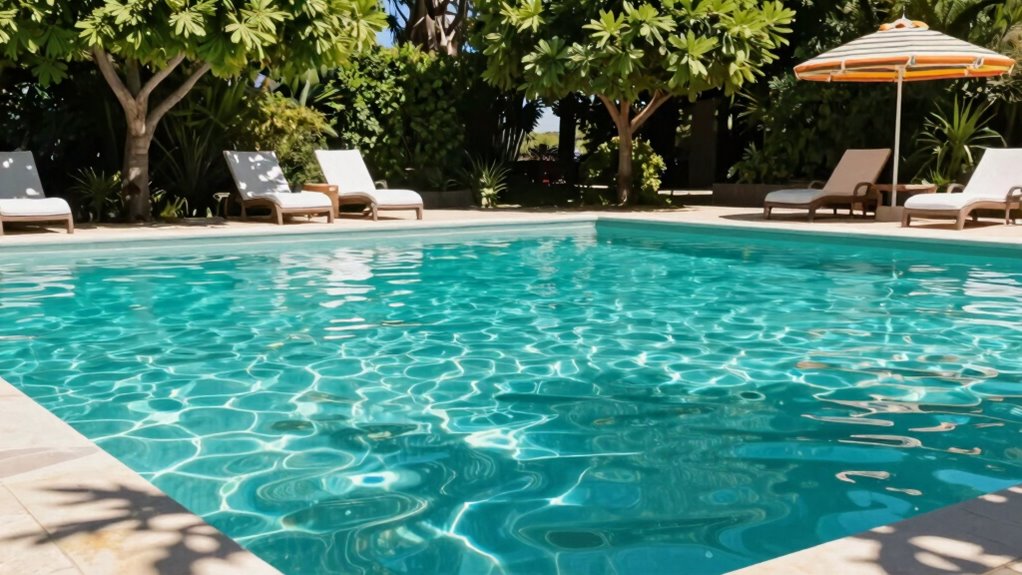
Choosing the right shading options can considerably improve your small pool’s cooling efficiency while enhancing comfort. Natural shade options, like trees or shrubs, provide cooling benefits and improve water chemistry by reducing debris that complicates pool cleaning. Just make certain trees are positioned to prevent excessive leaf litter. Additionally, understanding the science of shade can help you select the most effective solutions for your specific environment. Artificial options, such as shade sails or pergolas, offer customizable coverage without affecting water chemistry or increasing debris. These structures help keep the water cooler by blocking direct sunlight, reducing the need for frequent pool cleaning. Both options can be effective, but consider your space and maintenance capacity. Proper shading minimizes heat gain while maintaining water quality, making your pool more enjoyable and easier to care for during hot months.
Easy DIY Shade Ideas to Beat the Heat

On hot days, creating quick and effective shade solutions can make your small pool much more comfortable. DIY shade ideas are affordable and simple, giving you immediate relief from the sun’s harsh rays. Surface strategies, like using lightweight fabrics or portable structures, can be easily set up and moved as needed. These shade solutions not only lower water temperature but also enhance your poolside experience. Think outside the box with these ideas:
- Hang a colorful outdoor umbrella for instant shade
- Drape a lightweight tarp or fabric over a freestanding frame
- Use large potted plants or trellises for natural shade
- Create a DIY shade sail with affordable materials
- Arrange umbrellas or shade cloths on strategic sides of your pool
- Incorporate evidence-informed guidance to ensure your DIY shade solutions are both effective and safe. For optimal results, consider the landscaping around your pool to provide additional natural shade and privacy. Adding quick installation methods can further streamline setting up your shade solutions for immediate relief.
These surface strategies provide quick, customizable relief from heat, making your pool time more enjoyable.
Using Pool Covers and Surface Strategies to Lower Water Temperature

To effectively lower your pool’s water temperature, using pool covers and surface strategies is essential. Covering your pool with a shade fabric or specialized pool cover minimizes heat gain by reducing direct sunlight exposure. These covers also promote evaporative cooling, where water vapor escapes, taking heat with it. Additionally, surface strategies like floating insulators or reflective materials can deflect sunlight, preventing the water from heating up. Consider the following options:
| Method | Benefit |
|---|---|
| Shade fabrics | Block sunlight, reduce surface heating |
| Reflective surfaces | Bounce sunlight away, lower heat absorption |
| Floating insulators | Insulate water, slow heat transfer |
Implementing proper insulation techniques can further enhance cooling efficiency by minimizing heat transfer from the environment. Utilizing smart surface materials designed for insulation can optimize these efforts and provide better temperature control, especially when combined with advanced reflective coatings. Incorporating energy-efficient cooling methods and thermal regulation technologies can also help maintain comfortable water temperatures while conserving energy.
How to Combine Shade and Surface Tactics for Maximum Cooling
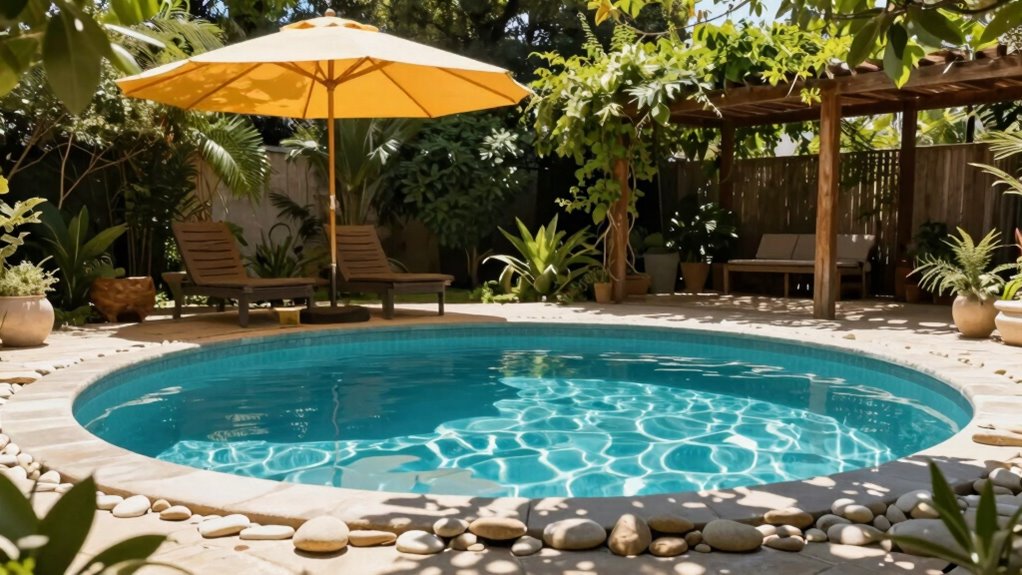
Combining shade fabrics with surface strategies amplifies your pool’s cooling effect by tackling heat from multiple angles. Shade synergy creates a cooler environment by blocking direct sunlight, while surface tactics reduce heat absorption. When you use both approaches, you maximize your pool’s cooling potential. Incorporating thermal management techniques that focus on sustainable, simple methods can also inspire smarter energy use and enhance overall comfort. Feel the relief as shade fabrics provide instant respite from harsh sun. Watch surface strategies minimize water heating, keeping your pool pleasantly cool. Additionally, selecting reflective surface materials can further decrease heat gain. Using reflective coatings on pool surfaces can significantly reduce heat absorption and improve cooling efficiency. Applying cooling surface materials designed for heat reflection further enhances the overall cooling effect. Incorporating energy-efficient solutions can help reduce operational costs while maintaining a comfortable pool temperature. Enjoy the calming effect of combined tactics, transforming your pool area into a cool oasis. Experience the satisfaction of smarter energy use and lower cooling costs. Revel in the comfort of an inviting, temperature-controlled pool even on hot days.
How to Monitor and Maintain a Cool Pool Throughout the Day

To keep your pool cool all day, you need to regularly check the water temperature to spot any unwanted warming. Adjust water circulation as needed to help distribute coolness evenly and prevent hotspots. Staying attentive to these details ensures a consistently invigorating swimming experience. Incorporating sound management techniques, such as minimizing external noise disruptions, can also contribute to a more relaxing environment around your pool area.
Regular Temperature Checks
Regularly checking your pool’s temperature is essential for keeping the water comfortably cool throughout the day. By monitoring it, you can spot overheating caused by solar heating or insufficient water filtration. Use a reliable pool thermometer to get accurate readings, especially during peak sunlight hours. This way, you can adjust shading or filtration if needed, ensuring the water stays invigorating.
Consider these tips to maintain ideal temperature:
- Check water temperature every 2-3 hours
- Use floating thermometers for quick readings
- Adjust shading if water gets too warm
- Enhance water filtration to cool the water naturally
- Keep an eye on solar heating effects during the hottest parts of the day
Consistent checks help you create a perfect, cool oasis with minimal effort.
Adjust Water Circulation
Monitoring and maintaining proper water circulation is key to keeping your pool cool throughout the day. You should regularly check the water flow to ensure circulation pumps are working efficiently. If the water isn’t circulating well, stagnant areas can heat up faster. Adjust the circulation pumps to optimize flow, making sure the water is evenly distributed and invigorated. Run the pumps during the hottest parts of the day, but avoid overworking them, which can increase energy costs. Consider splitting the circulation schedule into multiple shorter cycles to keep water consistently cool. Keep an eye on pressure gauges and clean out any debris that may block the flow. Proper water circulation helps dissipate heat and prevents the formation of warm pockets, keeping your pool pleasantly cool.
Quick Tips to Extend Your Pool’s Refreshing Hours
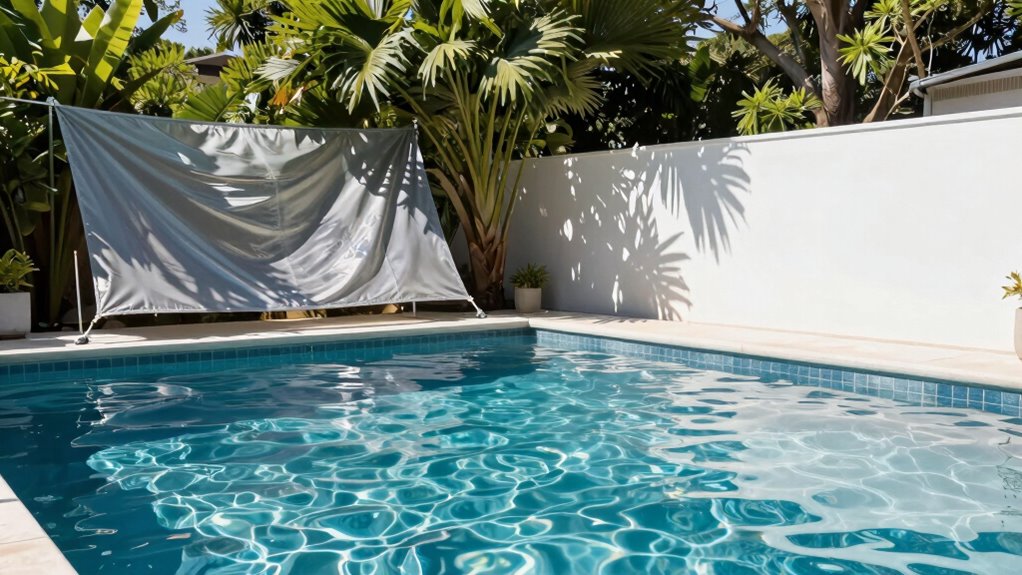
If you want to enjoy your small pool for longer during hot days, taking simple steps can make a big difference. Proper pool chemistry keeps water safe and inviting, while effective water filtration prevents algae and debris, maintaining clarity. To extend your pool’s invigorating hours, consider these quick tips:
Enjoy your small pool longer with simple tips: keep water clean, use shade, and optimize circulation.
- Cover your pool when not in use to minimize heat loss and evaporation
- Use a solar blanket to harness the sun’s warmth
- Keep water circulation consistent to promote even temperature distribution
- Adjust your filtration schedule for ideal water quality
- Add a shade structure or umbrellas to reduce surface heat gain
These small adjustments help you maximize your pool time, ensuring the water stays cooler and more inviting longer into the day.
Frequently Asked Questions
How Much Can Shade Reduce My Pool’s Temperature?
Shading your pool can lower its temperature by up to 10°F through evaporative cooling and reflection. When you add shade, it blocks direct sunlight, reducing heat absorption. Reflective surfaces around the pool bounce sunlight away, further cooling the water. You’ll notice a significant difference in comfort and energy savings. Keep in mind, consistent shading and reflective materials work together to maintain a cooler pool environment effectively.
Are There Eco-Friendly Options for Pool Shading?
Sure, eco-friendly options like solar covers and shade sails exist, even if they seem too simple. You’ll love how solar covers trap heat and reduce evaporation, saving energy and water. Shade sails, made from sustainable fabrics, provide natural cooling and block out harsh sunlight without harming the environment. So, you can keep your pool cool and eco-conscious, all while enjoying the outdoors and reducing your carbon footprint.
How Do Surface Materials Affect Water Cooling Efficiency?
Surface materials greatly impact your pool’s cooling efficiency. High reflectivity surfaces, like light-colored or reflective materials, bounce sunlight away, reducing heat absorption. Conversely, darker surfaces absorb more heat, warming your water. Durable materials resist wear from weather and water exposure, maintaining their reflective properties longer. Choosing a surface with high reflectivity and good durability helps keep your pool cooler, saving energy, and extending its lifespan.
Can Plants Around the Pool Provide Effective Cooling?
Think of plants around your pool as natural air conditioners. They act as plant barriers, blocking direct sunlight and reducing heat gain. For example, planting tall shrubs or installing shade cloths creates a cooler microclimate, lowering water temperature. Studies show shaded pools can be several degrees cooler. By strategically placing plants and shade cloths, you effectively enhance cooling without extra energy, making your pool more comfortable and eco-friendly.
What Are the Safety Considerations for DIY Shade Structures?
When building DIY shade structures, prioritize safety by securing supports firmly and using weather-resistant materials. Follow shade structure safety guidelines, such as avoiding sharp edges and ensuring stability to prevent collapse. Use proper construction tips, like anchoring posts properly and checking local codes. Always wear safety gear during assembly, and if unsure, consult a professional. These precautions help protect you and guarantee your shade structure is durable and safe.
Conclusion
By thoughtfully adding shade and surface tricks, you create a more inviting and comfortable pool experience. These simple adjustments can gently help you beat the heat without much fuss, letting you relax and enjoy your small oasis. With a little planning, your pool becomes a cool retreat where warmth softly whispers away, leaving you refreshed and ready for more sunny days. Embrace these easy tips and turn your pool into a peaceful haven of cool comfort.