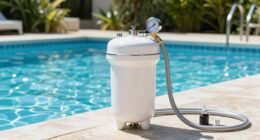
To keep your small pool safe for kids and pets, make certain you have a good filtration system and regularly check chemical levels to prevent bacteria growth. Install a secure fence or cover, and keep rescue equipment nearby. Never leave children or pets unsupervised, and clean the pool frequently to avoid debris and stagnation. Proper maintenance and safety measures are essential — discover more tips to create a safer pool environment.
Key Takeaways
- Install secure fencing or covers to prevent children and pets from accessing the pool unsupervised.
- Always supervise kids and pets when they are near or in the pool area.
- Keep rescue equipment nearby and learn basic rescue and CPR skills.
- Regularly check and maintain filtration and chemical levels for water safety.
- Remove debris, prevent stagnant water, and clean the pool to minimize health risks.

Are small pools safe for everyone? That’s a question many parents and pet owners ask when they consider adding a fun, revitalizing feature to their backyard. The truth is, small pools can be safe if you pay close attention to water filtration and chemical safety. These two elements are key to preventing accidents, infections, and health issues. Proper water filtration keeps the water clean and clear, reducing the risk of bacteria and algae growth. When you ensure your pool’s filtration system works efficiently, you help keep the water safe for kids and pets to enjoy. Regularly checking and maintaining the filter prevents clogs and ensures the water circulates properly, which is essential for safety.
Small pools are safe when water filtration and chemical safety are properly maintained.
Chemical safety is equally critical. You might be tempted to add chemicals to balance pH levels or disinfect the water, but it’s important to handle them with care. Always follow the manufacturer’s instructions and store chemicals out of reach of children and pets. Using the right amount of sanitizer and algaecide ensures the water remains hygienic without causing irritation or harm. Overuse or improper handling can lead to skin and eye irritation or even poisoning if ingested. You should test the water regularly using test strips or kits to monitor chemical levels, adjusting as needed to keep everything within safe ranges. Never mix chemicals, and in case of spills, clean up immediately and ventilate the area. Additionally, understanding water chemistry is vital for maintaining a safe balance in your pool.
Supervising children and pets around the pool is crucial, but safety measures extend beyond supervision. Install a secure, child-proof fence or cover around your small pool to prevent accidental falls when nobody’s watching. Keep rescue equipment nearby, like a reaching pole or life ring, and learn CPR just in case. Educate your kids about pool safety rules, such as no running or diving, and never leave them unsupervised near the water. For pets, consider adding a pet-safe barrier or cover when the pool isn’t in use. Always empty and clean the pool if it’s not going to be used for a while to avoid stagnant water that can harbor germs.
In the end, small pools can be a safe, enjoyable addition to your home when you prioritize water filtration and chemical safety, along with proper supervision and physical barriers. Regular maintenance, careful handling of chemicals, and vigilant watching make all the difference in ensuring everyone stays safe while having fun. When you stay proactive, you turn your small pool into a secure oasis for your family and furry friends alike.
Frequently Asked Questions
What Are the Best Ways to Prevent Small Pool Drownings?
To prevent small pool drownings, always supervise kids and pets closely. Make certain they never swim alone, and keep floatation devices nearby for added safety. Taking a lifeguard training course can teach you vital rescue skills, so you’re prepared in emergencies. Install a safety fence around your pool, and cover it when not in use. These steps help create a secure environment, reducing the risk of drowning and keeping everyone safe.
How Can I Teach Kids Water Safety Effectively?
To teach kids water safety effectively, you should emphasize constant child supervision whenever they’re near water. Incorporate water safety education into daily routines, making it engaging and age-appropriate. Use clear rules and demonstrate safe behaviors, like no running or swimming without an adult. Reinforce lessons regularly, and guarantee they understand the dangers. By actively supervising and teaching water safety, you help kids develop responsible habits that keep them safe around pools.
Are Pool Alarms Reliable for Small Pools?
Pool alarm reliability varies, especially for small pools. You should know that small pool sensors might sometimes trigger false alarms or fail to detect all movements, so they shouldn’t be solely relied upon. It’s best to combine alarms with active supervision and barriers. Remember, alarms are helpful, but they’re just one part of an overall safety plan. Always stay alert and keep a close eye on kids and pets around your small pool.
What Pool Covers Provide the Safest Protection?
Did you know that proper pool cover safety can reduce drowning risks by up to 85%? When choosing a pool cover, consider types like solid safety covers, mesh covers, and automatic covers, as each offers different levels of protection. Solid safety covers are the safest, preventing access when not in use, while automatic covers provide quick, secure coverage. Prioritize cover safety to keep kids and pets safe around your small pool.
How Often Should I Check Water Quality for Safety?
You should check the water quality regularly to guarantee safety. During pool maintenance, test the water at least once a week using proper water testing kits. This helps you monitor pH levels, chlorine, and other chemicals, preventing bacteria growth and skin irritation. After heavy use or rain, test more frequently. Consistent water testing keeps your pool safe, clean, and enjoyable for everyone.
Conclusion
By following these safety tips, you turn your small pool into a safe oasis rather than a hidden hazard. Think of your pool as a delicate treasure chest—you hold the key to protecting your kids and pets from accidents. Stay vigilant, supervise always, and keep safety equipment nearby. When you prioritize safety, you’ll enjoy peace of mind, knowing your backyard remains a revitalizing retreat rather than a risky trap. Immerse yourself in safety, and everyone will thank you.