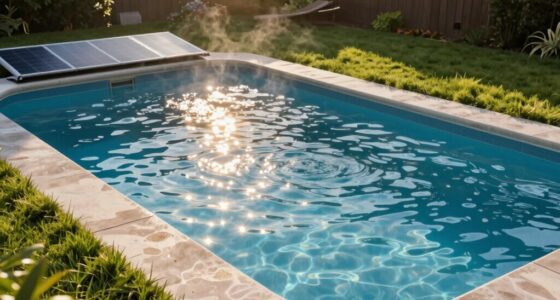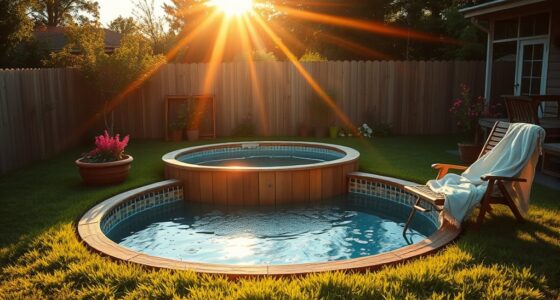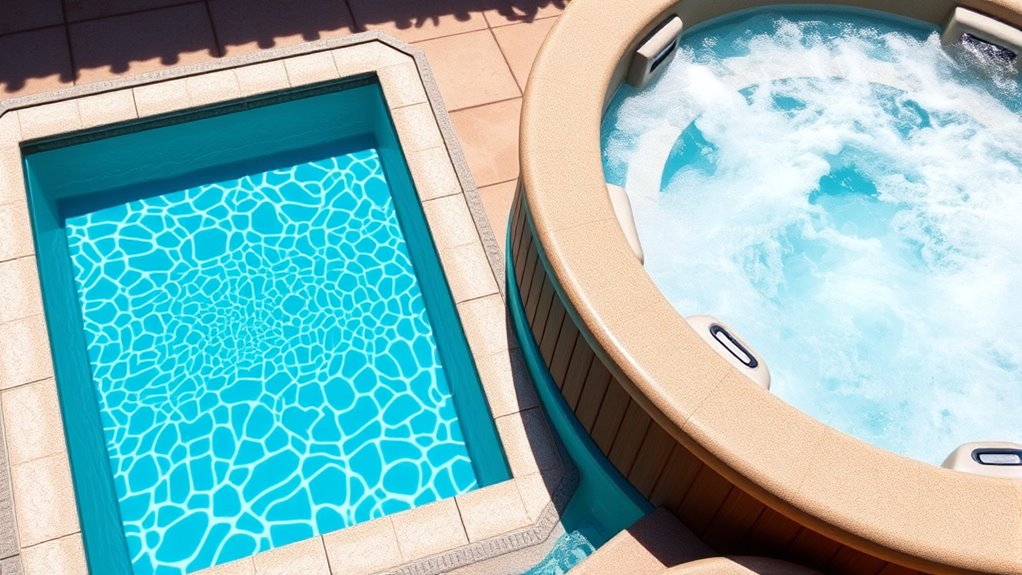

A small pool and a large hot tub serve different purposes, shaping how you use them. A small pool is perfect for swimming, water exercises, or lounging, thanks to its larger water volume and circulation needs. In contrast, a large hot tub offers relaxing massages, hydrotherapy, and stress relief with heated jets, while being energy-efficient and easier to maintain. To discover the key differences in features and ideal uses, keep exploring the details below.
Key Takeaways
- Small pools are versatile, suitable for swimming, water exercises, and lounging, whereas large hot tubs focus on relaxation and hydrotherapy.
- Hot tubs have smaller water volumes, making them more energy-efficient and easier to maintain than larger pools.
- Pools support active activities like swimming and water sports, while hot tubs primarily provide soothing massages and stress relief.
- Larger pools require more powerful filtration and circulation systems compared to the simpler systems in hot tubs.
- The choice depends on whether the primary use is active recreation and exercise or relaxation and therapeutic benefits.

When choosing between a small pool and a large hot tub, understanding your needs and space constraints is vital. Both options offer unique benefits, but they also serve different purposes, so thinking about how you’ll use them helps determine the best fit. One key factor to consider is water circulation. Small pools typically require more robust circulation systems to keep the water clean and healthy since larger volumes of water can stagnate if not properly filtered. Hot tubs, on the other hand, have smaller water reservoirs, making water circulation easier to manage. This means you can often run the filtration system less frequently but still maintain good water quality. Efficient water circulation is essential for both, but hot tubs often benefit from built-in jets that aid in even water movement, ensuring consistent temperature and cleanliness.
Energy efficiency is another major consideration. Small pools generally consume more energy because they need larger pumps and filtration systems to move and filter the water effectively. Maintaining a comfortable temperature, especially in cooler climates, can also be costly. Hot tubs, with their smaller water volume, tend to be more energy-efficient, as less power is needed to heat and circulate the water. Many hot tubs come with energy-saving features like insulated covers and programmable timers, which help reduce ongoing costs. If you’re concerned about energy consumption, a hot tub might be the more economical choice, especially if you plan to use it frequently.
In terms of use, a small pool offers versatility. You can swim, lounge, or even do water exercises, making it suitable if you want a space for multiple activities. Its size allows for more social interaction, especially if you have family or friends who enjoy swimming. A large hot tub, however, emphasizes relaxation and hydrotherapy. Its heated jets provide soothing massages, making it ideal for unwinding after a long day or alleviating muscle tension. Keep in mind, hot tubs typically have limited space for swimming or vigorous movement, so if your main goal is exercise, a small pool might serve you better.
Ultimately, the choice depends on what you prioritize—whether it’s water circulation efficiency, energy costs, or intended use. If you want a versatile recreational area with good water turnover, a small pool can be a great investment. If relaxation, hydrotherapy, and energy efficiency are your main goals, a large hot tub might be the better choice. Balancing these factors against your available space and budget will help you make the most satisfying decision.
Amazon Product B07TN3JQ2P
As an affiliate, we earn on qualifying purchases.
Frequently Asked Questions
Can Both Be Used Year-Round in Cold Climates?
In cold climates, both small pools and large hot tubs can be used year-round if you have the right equipment. You’ll want to invest in good insulation and heating systems to extend seasonal use and maintain comfort. Hot tubs, with their aesthetic appeal and insulated nature, are especially suited for winter enjoyment. Small pools might need additional covers or heating, but with proper setup, both can be enjoyed all year.
How Much Does Maintenance Differ Between Small Pools and Large Hot Tubs?
You’ll find maintenance differs mainly in chemical balance and cleaning frequency. Smaller pools require more regular checks to keep water balanced and prevent algae, since they have a larger surface area relative to volume. Large hot tubs typically need less frequent cleaning, but you must stay vigilant with chemical levels to avoid bacteria. Overall, small pools demand more consistent upkeep, while hot tubs focus on maintaining proper chemical balance for safety and comfort.
Are There Specific Safety Concerns Unique to Each?
Think of your hot tub or pool as a delicate dance, where safety takes center stage. For small pools, you need to watch out for chemical safety, ensuring chemicals are balanced to prevent skin irritation. Larger hot tubs demand electrical safety checks to avoid shocks. Both require diligent attention to safety protocols—like a choreographed performance—to keep your relaxing oasis safe and enjoyable.
Which Option Offers Better Energy Efficiency?
When considering which option offers better energy efficiency, think about insulation requirements and energy consumption. A smaller hot tub typically has better insulation, reducing heat loss and lowering energy use. Larger pools often require more energy to maintain water temperature because of increased volume and insulation challenges. You can save energy by choosing well-insulated models and maintaining proper temperature settings, making smaller hot tubs generally more efficient for heating and ongoing energy costs.
How Do Installation Costs Compare for Small Pools and Large Hot Tubs?
When comparing installation costs, you’ll find that small pools generally have lower installation expenses than large hot tubs. Small pools require less space, simpler plumbing, and fewer materials, making the cost comparison more budget-friendly. Large hot tubs often involve higher installation expenses due to their size, specialized equipment, and additional features. So, if you’re looking to save on upfront costs, a small pool might be the better choice.
Amazon Product B0D4R2Y3KM
As an affiliate, we earn on qualifying purchases.
Conclusion
So, whether you find yourself drawn to a small pool or a large hot tub, it’s funny how sometimes your choice mirrors your mood—seeking either lively activity or cozy relaxation. Sometimes, the universe just nudges you toward what you need most, even if you didn’t realize it at first. Just remember, it’s not about size but what you make of the space. Whatever you choose, enjoy the moments that make your backyard feel like your personal retreat.
Amazon Product B093CJ99WH
As an affiliate, we earn on qualifying purchases.
Amazon Product B01B4C7P46
As an affiliate, we earn on qualifying purchases.