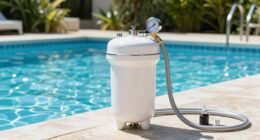
To keep your small pool warm in cold climates, focus on insulating the walls and floor with foam boards or rigid materials to reduce heat loss. Use a high-quality cover, like an automatic or thermal blanket, to trap warmth when the pool isn’t in use. Solar covers can add extra warmth naturally. Proper insulation and covers can extend your swimming season and lower heating costs. Keep exploring to discover more tips for winter-proofing your pool effectively.
Key Takeaways
- Insulate pool walls and floors with foam boards or rigid materials to retain heat in cold climates.
- Use high-quality, snug-fitting covers or automatic covers to prevent heat loss during non-use periods.
- Layer solar pool covers over insulated pools to harness solar energy and maintain higher water temperatures.
- Lower water levels in winter to prevent ice damage and regularly inspect insulation and covers for effectiveness.
- Proper insulation and cover use extend swimming seasons, reduce heating costs, and keep small pools warmer longer.
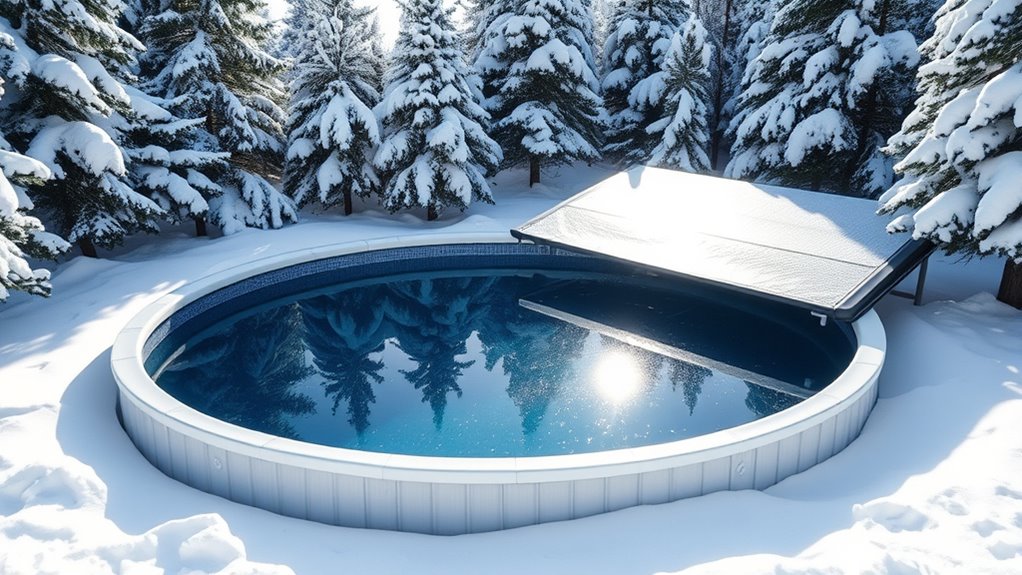
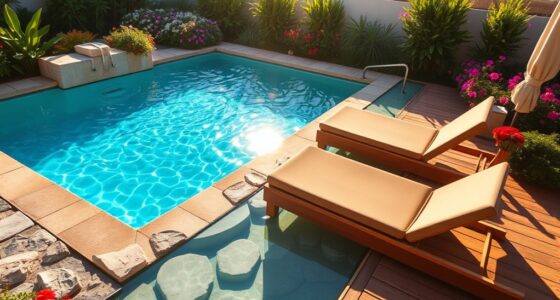
Living in a cold climate doesn’t mean you have to give up on enjoying a pool. With the right insulation techniques and cover options, you can extend your swimming season and keep your small pool comfortable year-round. The key is to minimize heat loss, which is especially important when outdoor temperatures drop considerably. Proper insulation techniques help you retain heat, ensuring your pool stays warmer longer and reducing your energy costs. You might consider insulating the pool walls and floor with foam boards or other rigid insulation materials. These create a barrier that slows down the transfer of cold from the ground and air, helping your water maintain its temperature.
Proper insulation keeps your small pool warm and reduces energy costs in cold climates.
In addition to insulating the pool structure itself, investing in a high-quality cover can make a big difference. Cover options come in various styles, from simple tarps to specialized pool covers designed to trap heat. A solid, insulated cover acts like a thermal blanket, preventing heat from escaping overnight or during periods of non-use. Automatic covers are convenient and provide an extra layer of insulation, making it easier to cover and uncover the pool quickly. When you choose a cover, look for one that’s durable and fits snugly to minimize heat loss and keep debris out, which helps maintain water quality and reduces cleaning time.
You should also consider the use of solar pool covers, which are lightweight and transparent. These covers let sunlight in to warm the water during the day while trapping the heat at night. They’re an energy-efficient way to harness free solar energy, especially if your small pool is positioned in a way that receives ample sunlight. Combining insulation techniques with an appropriate cover creates a synergy that maximizes heat retention, which is essential in colder climates. If you’re serious about extending your swimming season, layering a solar cover over an insulated pool and using an insulated cover at night can add considerable warmth and reduce your heating expenses. Additionally, understanding the importance of heat retention methods can help you choose the most effective strategies for your specific climate and pool setup.
Finally, the way you manage your pool during off-seasons is important. Drain or lower the water level slightly to prevent ice damage if temperatures drop below freezing. Regularly inspecting your insulation and cover options ensures they remain effective and in good condition. With the right combination of insulation techniques and cover options, you can enjoy your small pool even when the weather outside isn’t cooperating. It’s about making smart investments upfront that pay off in comfort and convenience, allowing you to make the most of your pool throughout the year.
Frequently Asked Questions
What Is the Most Cost-Effective Insulation Method for Small Pools?
The most cost-effective insulation method for small pools is using foam board insulation, which offers good thermal resistance at an affordable price. You should install foam board beneath the pool’s perimeter and around its sides for maximum insulation. Additionally, using a cover during off-season helps retain heat and reduces energy costs. Proper cover installation is essential, as it minimizes heat loss and keeps your pool warmer more efficiently.
How Often Should Pool Covers Be Replaced in Cold Climates?
Think of your pool cover as a loyal guardian, standing watch over your small pool through winter’s icy grasp. In cold climates, you should consider replacing it every 3 to 5 years, depending on cover longevity and wear. Regular inspections help catch tears or deterioration early, ensuring your cover remains a sturdy shield. Adopting this replacement schedule preserves your pool’s warmth and keeps maintenance costs in check over time.
Are Solar Covers Effective in Maintaining Pool Temperature?
Yes, solar covers are effective in maintaining your pool temperature. They boost solar cover efficiency by trapping heat and reducing evaporation, which keeps your pool warmer longer. To guarantee maximum benefit, you need to perform regular cover maintenance, like cleaning off debris and checking for tears. Proper upkeep helps your solar cover work at its best, saving energy and extending its lifespan, so you get the most out of your investment.
What Safety Features Are Recommended for Winter Pool Covers?
You should choose safety features like sturdy, compliant safety covers with locking mechanisms to prevent accidents during winter pool maintenance. Reinforced covers help prevent ice damage, reducing the risk of tearing or collapse. Consider adding a winter cover pump to remove excess water and avoid ice buildup. These features guarantee safety, protect your pool from ice damage, and make winter pool maintenance safer and more manageable.
Can Small Pools Be Heated Efficiently During Winter?
Yes, you can heat small pools efficiently during winter. To do so, choose the right pool heater types like electric heat pumps or gas heaters, which work well in cold weather. Additionally, use quality insulation materials such as foam or bubble wrap to retain heat. Proper insulation reduces energy costs, allowing your pool to stay warm longer. Combine these methods for effective, efficient winter heating of your small pool.
Conclusion
By choosing the right insulation, installing a quality cover, and maintaining proper upkeep, you’ll enjoy your small pool all year round. Insulate to keep the warmth in, cover to protect from the cold, and maintain to guarantee longevity. Insulate to save energy, cover to prevent debris, and care to extend your pool’s life. With these simple steps, you’ll make your small pool a cozy retreat, no matter how chilly the climate gets.