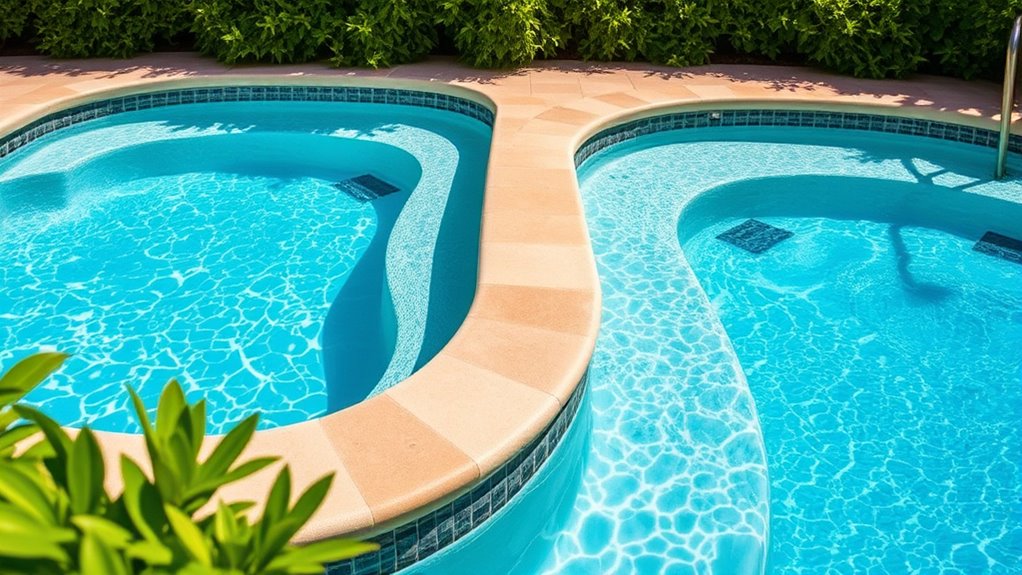

Saltwater swim spas differ from freshwater systems in several ways that enhance your experience. They produce less irritating chlorine, making the water feel softer and more soothing. You’ll enjoy a more pleasant swimming atmosphere without harsh chemical smells. While there’s a higher initial cost, you’ll save on chemicals and maintenance over time. Plus, the therapeutic benefits create a relaxing sanctuary. If you’re curious about how these features can improve your swim spa experience, there’s more to uncover.

Get pool and patio gear delivered free with Prime
- Fast, free delivery on millions of items
- Prime Video, Amazon Music and more included
- Member-only deals all year
Key Takeaways
- Saltwater swim spas generate chlorine through a salt cell, leading to softer and less irritating water compared to traditional freshwater systems.
- Freshwater systems often require frequent chemical purchases, while saltwater systems have lower ongoing costs due to automatic chlorine generation.
- Saltwater systems produce fewer harsh chemicals, resulting in a more pleasant swimming experience and less environmental impact from plastic waste.
- Maintenance for saltwater swim spas is simpler, with fewer manual adjustments needed thanks to automatic chlorination and less frequent chemical purchases.
- The therapeutic benefits of saltwater, such as reduced skin irritation and enhanced relaxation, create a more soothing swimming environment.

If you’re considering a swim spa, saltwater systems might just be the perfect choice for you. Unlike traditional freshwater systems, saltwater options offer a gentler approach to swimming and relaxation. Your skin and eyes will thank you as saltwater produces a form of chlorine that’s less irritating than typical chlorine setups. You’ll enjoy a more pleasant experience without those harsh chemical smells that can sometimes ruin a good swim.
While the initial investment for a saltwater system can be higher, you’ll likely find it cost-effective in the long run. Fewer chemical purchases and longer-lasting components, like salt cells, mean you’ll save money over time. You won’t have to worry about frequently buying chlorine or other sanitizers, as the system generates chlorine automatically. This simplified maintenance makes your life easier, letting you spend more time enjoying your swim spa.
When you plunge into a saltwater swim spa, you’ll notice the water feels softer and more soothing against your skin, mimicking natural body salt concentrations. This not only reduces irritation but also helps maintain your skin’s moisture balance better than freshwater systems. You may even find that your eyes feel more comfortable, thanks to the lower chlorine levels. The therapeutic benefits of a saltwater experience can enhance your relaxation, making your swim spa a true sanctuary.
Experience the soothing softness of saltwater, reducing irritation and enhancing relaxation in your swim spa sanctuary.
Environmental considerations are another reason to choose saltwater. These systems use fewer chemicals, which means less plastic waste from packaging and reduced chemical runoff into the environment. With salt being a naturally abundant resource, you’ll be making a more sustainable choice compared to traditional systems. A smaller ecological footprint is a win-win for both you and the planet.
Maintaining your saltwater swim spa is straightforward. While you still need to test the water regularly to guarantee ideal chemical balance, the automatic chlorination feature means fewer manual adjustments.
You’ll only need to replace the salt cell every few years, which is much less frequent than the ongoing purchases required for freshwater systems. Overall, this means you’ll enjoy long-term cost savings and a cleaner, easier-to-maintain system.
Products Worth Considering

Ring Alarm 8-Piece Home Security System Kit

Shark IY143H Cordless Pet Stick Vacuum

Shark PowerPro Reveal Plus Cordless Stick Vacuum, Charcoal (IZ376H)
As an affiliate, we earn on qualifying purchases.
Frequently Asked Questions
Can Saltwater Swim Spas Help With Skin Conditions?
Yes, saltwater swim spas can help with skin conditions. They’re gentler on your skin compared to traditional systems, reducing irritation and allergic reactions.
The minerals in saltwater, like magnesium, hydrate your skin and lower inflammation, potentially easing issues like psoriasis or eczema.
Plus, the electrolysis process means you’re exposed to lower chlorine levels, minimizing dryness.
Regular use can promote healthier skin by exfoliating and reducing excess oil, which helps clear acne.
How Do Saltwater Swim Spas Affect Hair and Bathing Suits?
Swimming in saltwater can feel like diving into a sea of hair woes!
Saltwater’s drying effects can leave your hair dehydrated and rough, while also fading color and causing breakage. Your bathing suits won’t escape unscathed either; they may fade and deteriorate faster.
To protect yourself, rinse both your hair and swimsuit with fresh water after swimming, and consider using leave-in conditioners and salt-resistant materials to keep everything in top shape.
Are Saltwater Swim Spas More Energy-Efficient Than Freshwater Ones?
Yes, saltwater swim spas are generally more energy-efficient than freshwater ones.
Their advanced insulation technologies help retain heat, cutting heating costs by up to 30%. Efficient circulation and filtration systems minimize energy consumption, while self-cleaning features reduce maintenance needs.
Saltwater systems also produce chlorine naturally, lowering chemical usage and costs over time.
What Maintenance Is Required for Saltwater Swim Spas?
Imagine you’ve just taken a revitalizing dip in your saltwater swim spa.
To keep it that way, you need to regularly test the water’s pH and chlorine levels, clean the filter, and monitor salt levels.
Every couple of months, plan to drain and refill the water.
Don’t forget to clean the jets and check for clogs.
Are There Specific Chemicals Needed for Saltwater Swim Spas?
Yes, there are specific chemicals needed for saltwater swim spas.
You’ll need to add granulated salt to facilitate the electrolytic process that converts salt into chlorine or bromine. pH balancers, like pH Up and pH Down, are vital for maintaining ideal water chemistry.
Additionally, using oxidizers helps free up chlorine or bromine for sanitation. Regular filter cleaning is also important for keeping your spa’s water quality in top shape.
Conclusion
In the end, choosing between saltwater and freshwater swim spas comes down to what suits your needs. Saltwater systems offer a gentler experience, reducing skin irritation and making maintenance a breeze. So, if you’re ready to plunge in, consider going the saltwater route for a truly invigorating swim. After all, when it comes to relaxation, you want to be floating on cloud nine, not worrying about harsh chemicals and upkeep!