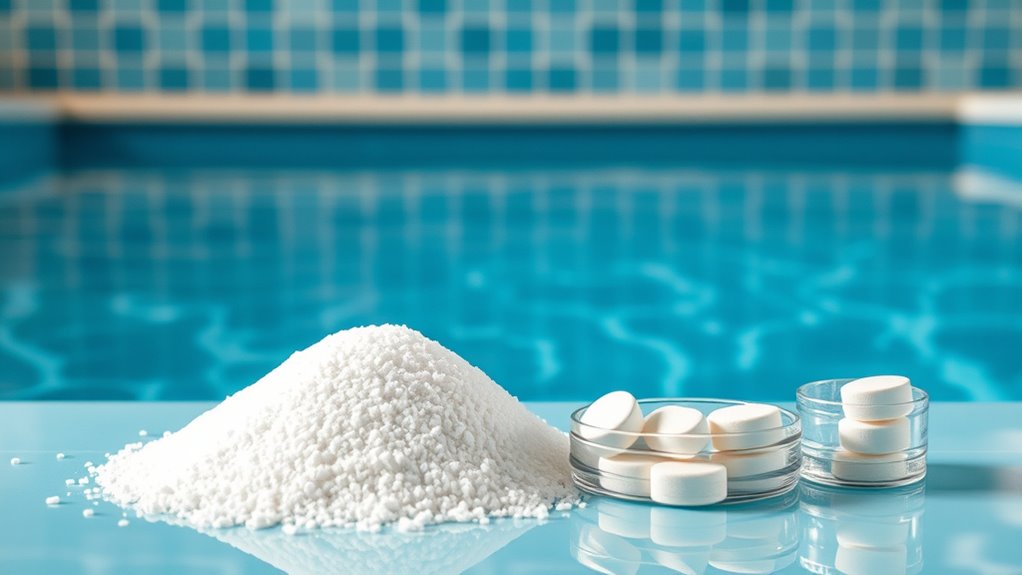

To keep your swim spa safe and crystal clear, you need to understand the basics of chemical care with chlorine, bromine, or salt systems. Regularly test your water’s pH and sanitizer levels, and adjust using appropriate chemicals to maintain balance. Chlorine works fast but can cause odors, bromine is effective over a wider pH range, and salt systems generate chlorine automatically. If you want to master proper chemical handling and optimize your spa’s water quality, continue exploring these essential tips.
Key Takeaways
- Chlorine is the most common sanitizer, working quickly but requiring pH balance for effectiveness.
- Bromine is effective over a wider pH range and produces fewer odors than chlorine.
- Salt systems generate chlorine through electrolysis, providing steady sanitation with less manual chemical addition.
- Regular testing with water test kits ensures proper chemical levels and prevents issues like cloudiness and irritation.
- Always follow manufacturer instructions, wear protective gear, and store chemicals safely to maintain swim spa water quality.

Are you unsure how to handle chemicals safely at home or work? Managing chemicals like chlorine, bromine, and salt in your swim spa can seem overwhelming, but understanding some basic principles makes it much easier. One of the most vital aspects of chemical care is pH balancing. Maintaining the correct pH level, typically between 7.2 and 7.8, ensures your sanitizer works effectively and prevents issues like cloudy water or skin irritation. When the pH is too high or too low, your sanitizer types—whether chlorine or bromine—lose their effectiveness, leading you to use more chemicals than necessary. Regular testing with a reliable water test kit helps you stay on top of pH levels, so you can adjust with pH increasers or decreasers as needed. This keeps your water safe, clear, and comfortable to swim in.
Understanding sanitizer types is vital for safe and effective chemical management. Chlorine is the most common sanitizer, working quickly to eliminate bacteria and algae. Bromine, on the other hand, is a popular alternative, especially in warmer water, because it remains effective over a wider pH range and produces fewer strong odors. Salt systems offer a different approach: they generate chlorine from salt through a process called electrolysis. This method provides a steady, low level of sanitizer, reducing the need for adding chemicals manually, but it still requires monitoring and balancing. Regardless of which sanitizer you choose, always follow manufacturer instructions carefully to avoid over- or under-treating your water.
Handling these chemicals safely involves more than just understanding their roles. Always wear protective gear like gloves and goggles when adding chemicals to your swim spa, and never mix different chemicals directly—this can cause dangerous reactions. Store chemicals in a cool, dry, well-ventilated area away from children and pets. Before adding any chemical, test your water to determine what’s needed; this prevents waste and potential chemical hazards. Properly labeling containers and keeping a record of your chemical treatments can also help you track your water quality over time. Remember, the goal is to keep your swim spa water balanced and sanitized without risking your health or damaging your equipment.
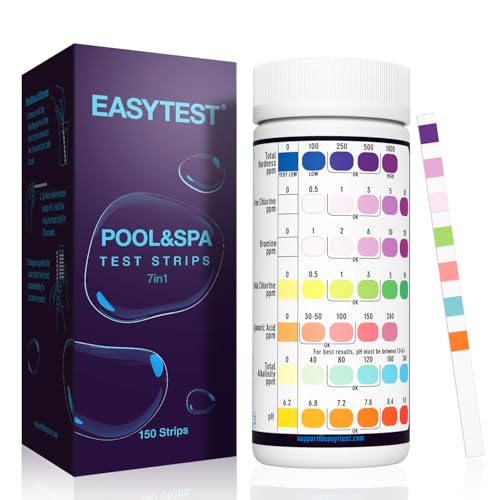
EASYTEST 7-Way Pool Test Strips, 150 Strips Water Test for Hot tub and Spa
- 150 Test Strips Included: Enough for multiple water tests
- Fast and Accurate Results: Soak for 1 second, read in 15 seconds
- 7-in-1 Water Testing: Tests Bromine, pH, Chlorine, Alkalinity, Hardness, Cyanuric Acid
As an affiliate, we earn on qualifying purchases.
As an affiliate, we earn on qualifying purchases.
Frequently Asked Questions
How Often Should I Test My Swim Spa’s Water Chemistry?
You should test your swim spa’s water chemistry at least 2-3 times a week. Regular water testing frequency helps you monitor the chemical balance effectively, preventing issues like algae growth or skin irritation. Always check pH, sanitizer levels, and alkalinity, especially after heavy use or weather changes. Consistent chemical balance monitoring guarantees your water stays clean, safe, and inviting for every swim session.
Can I Use Regular Household Chlorine in My Swim Spa?
You shouldn’t use regular household chlorine in your swim spa because it often lacks the purity and chemical compatibility needed for safe, effective water maintenance. Household chlorine can contain impurities or stabilizers that may damage your spa’s components or upset water chemistry. Instead, use spa-specific chlorine that guarantees high purity and is formulated for your swim spa’s delicate systems, ensuring safe, clear water and a longer-lasting experience.
What Are the Signs of Over-Chlorination in My Swim Spa?
You’ll notice signs of over-chlorination in your swim spa if you see strong chemical odors, skin or eye irritation, or a cloudy water appearance. These symptoms indicate a chemical imbalance, which can also affect your health. To fix this, test your water regularly and dilute or adjust the chlorine levels as needed. Proper chemical balance keeps your swim spa safe, comfortable, and enjoyable for every swim.
Is It Safe to Swim Immediately After Adding Chemicals?
You can’t just jump in immediately after adding chemicals — that’s like stepping into a storm of invisible dangers! For chemical safety, give your swim spa at least 15-30 minutes to let the chemicals circulate and settle. This guarantees the chlorine or bromine distributes evenly and your water’s pH stabilizes. Waiting a bit keeps you safe, prevents skin irritation, and guarantees your swim is fun, not risky.
How Do Temperature Changes Affect Chemical Balance in My Swim Spa?
Temperature changes can impact your swim spa’s chemical balance by causing thermal expansion, which alters water volume and concentration levels. As water heats up, chemicals may become less chemically stable, leading to fluctuations in sanitizer effectiveness and pH levels. To maintain proper balance, regularly test your water and adjust chemicals accordingly, especially during temperature swings, ensuring a safe and comfortable swimming environment.
Conclusion
So, now that you’re a chemical care expert, go ahead and master the art of balancing chlorine, bromine, and salt. After all, who wouldn’t want to spend their weekends testing water instead of actually enjoying the swim spa? Remember, a little chemical chaos keeps things interesting—just don’t let your spa turn into a science experiment. Keep it balanced, keep it clean, and maybe, just maybe, resist the urge to turn your spa into a chemistry lab.