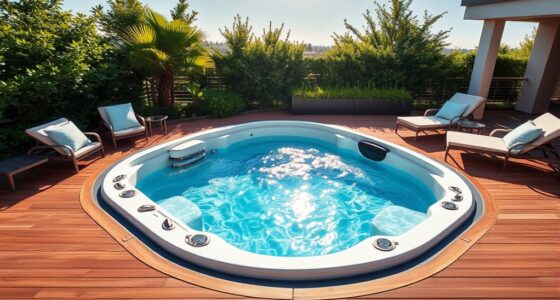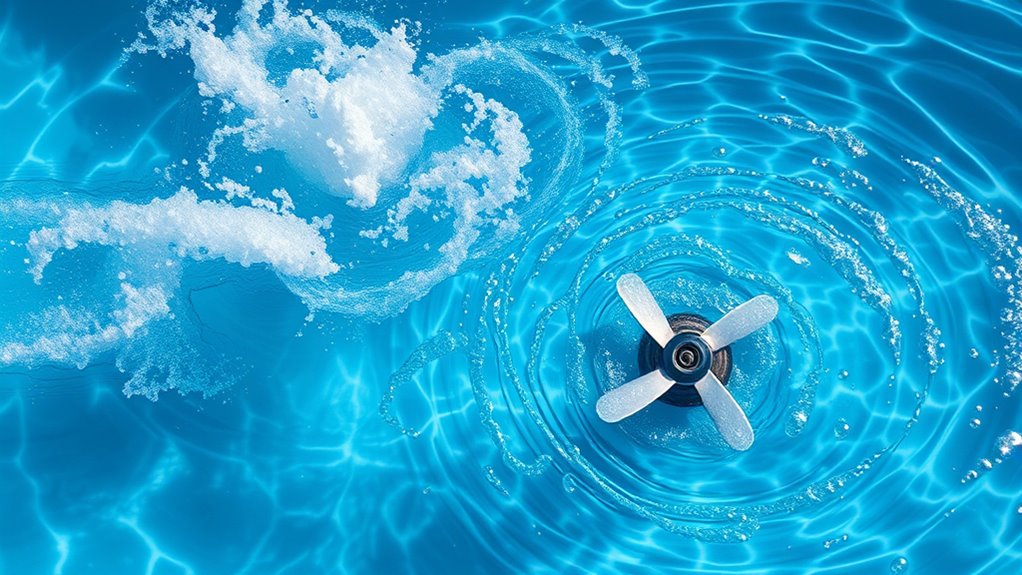

Swim spas generate flow using either jet or propeller systems. Jets draw water in and force it through nozzles to create a focused, adjustable current, offering powerful and customizable flow. Propeller systems use rotating blades to push water, providing a steady current. Both methods have their advantages in efficiency and maintenance. If you want to understand which system suits your needs best, keep exploring the details behind how these technologies work.
Key Takeaways
- Swim spas use jet systems that draw in water and force it through nozzles to create adjustable, focused currents.
- Propeller systems generate flow by rotating blades that push water directly, often providing a broader or less targeted current.
- Jets offer high hydrodynamic efficiency and customizable flow strength, ideal for personalized swimming experiences.
- Propeller-based systems are typically simpler but may produce less precise or less adjustable currents.
- The choice between jet and propeller systems depends on desired flow control, efficiency, and maintenance considerations.

When comparing jet engines and propellers, understanding how each interacts with air currents is essential. Although swim spas don’t use traditional engines, the principles behind jet and propeller technology still influence how they generate water flow. Both systems aim to produce effective currents, but they do so through different hydrodynamic methods. If you’re considering a swim spa, understanding these differences can help you choose a model that offers ideal performance and longevity. Jet systems operate by drawing water into a pump via an intake, then forcing it through a nozzle at high speed. This creates a strong, focused current that can be adjusted for intensity. Because jets rely on a controlled water flow, their hydrodynamic efficiency is often high, especially when designed with smooth, streamlined components that minimize turbulence. The more efficiently water moves through the system, the less energy it consumes for a given flow rate, making jets a popular choice for powerful, customizable currents. However, this efficiency isn’t just about performance; it also impacts maintenance considerations. Jet pumps and nozzles can accumulate debris or mineral buildup over time, requiring regular cleaning and inspection to sustain ideal flow. The internal components may also need periodic servicing to prevent wear and ensure consistent operation, especially in environments with hard water. Additionally, advancements in hydrodynamic efficiency continue to improve how effectively swim spas can generate and sustain desired water currents.

Oh Yuk Healthy Hot Tub Cleaner for Spa Plumbing and Jets, 2-Pack
- Deep Cleaning Power: Penetrates jet lines and pipes
- Restores Clear Water: Targets contaminants in plumbing
- Enhances Water Flow: Clears buildup for better circulation
As an affiliate, we earn on qualifying purchases.
As an affiliate, we earn on qualifying purchases.
Frequently Asked Questions
How Do Jet and Propeller Systems Compare in Energy Efficiency?
Jet systems tend to be more energy-efficient because they use less power to generate strong currents, reducing overall energy consumption. Propeller systems might consume more energy due to their larger motors and higher power output, but they can deliver more force when needed. If you want a balance of performance and system efficiency, jet systems usually offer better energy savings, making them a smarter choice for minimizing energy consumption without sacrificing flow quality.
Can Users Customize Flow Patterns in Swim Spas?
Yes, you can customize flow patterns in swim spas. With user control features, you have the ability to adjust the flow intensity and direction to suit your workout or relaxation needs. Many models offer advanced controls that let you create personalized flow settings, ensuring you get the most out of your swim experience. This customization enhances comfort, making your swim spa sessions more effective and enjoyable.
What Maintenance Is Required for Jet and Propeller Systems?
You need to regularly inspect and clean your jet and propeller systems to guarantee system durability. For jets, remove debris and check for clogs, while propellers may require lubrication and cleaning of buildup. Although maintenance might seem tedious, it helps prevent breakdowns and keeps your swim spa running smoothly. A little routine upkeep ensures peak flow, extends system life, and guarantees you enjoy uninterrupted, powerful currents whenever you swim.
Are There Safety Differences Between Jet and Propeller Currents?
You should know that jet and propeller currents have different safety considerations. Jet systems often include safety protocols like emergency shut-off features and covers to prevent accidental contact. Propeller systems may pose more risk due to moving blades, so strict safety protocols and emergency features are vital. Always follow manufacturer guidelines, supervise users, and guarantee safety features are functional to prevent injuries in either system.
How Do Costs Vary Between Installing Jet and Propeller Systems?
Did you know that installation costs for jet systems can be up to 30% higher than propeller systems? You’ll find that jet systems often require more complex setup, increasing initial expenses. However, they may offer better long-term savings through energy efficiency. Overall, propeller systems are more budget-friendly upfront, but considering maintenance and energy bills, your choice impacts total costs over time.
Conclusion
So, whether you prefer the sleek power of jet currents or the steady push of propeller flow, you now have the scoop to choose your perfect swim spa. Remember, it’s like choosing between a knight’s lance and a sharp arrow—each has its strengths. As you weigh your options, keep in mind that modern technology’s been around since the days of the printing press. Whichever you pick, you’ll be making waves and enjoying your personal oasis to the fullest.