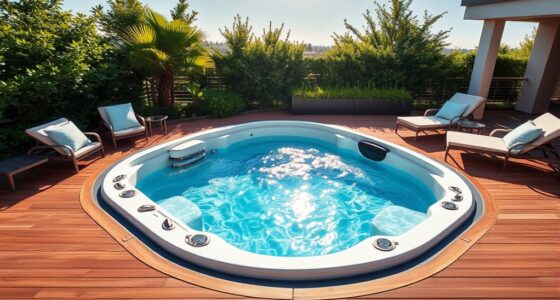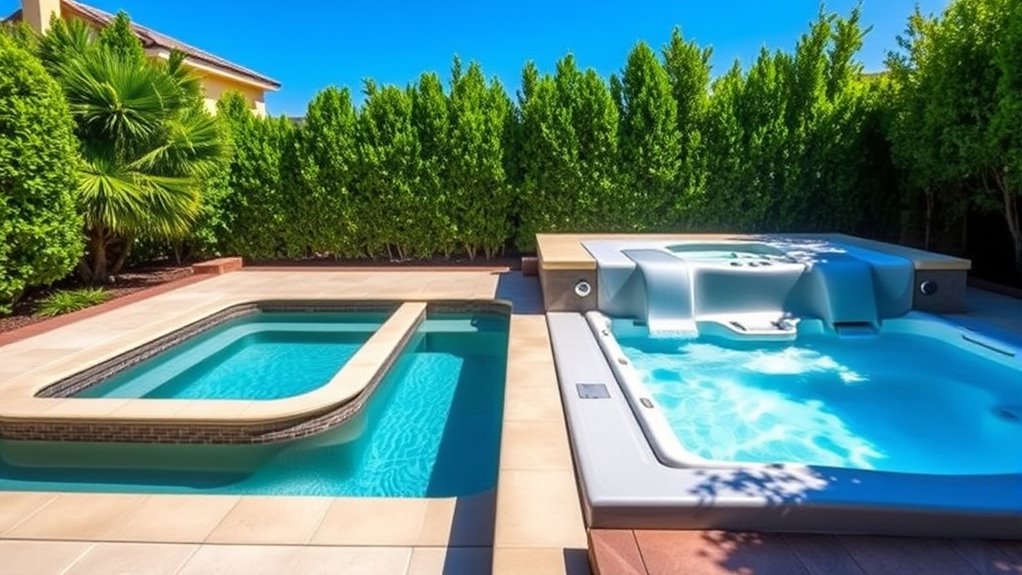

When choosing a swim spa or endless pool for your home, consider your budget, space, and fitness goals. Swim spas offer a full-body workout with a strong current but come with higher installation and energy costs, requiring more space. Endless pools are more affordable, easier to install, and perfect for casual swimming in limited areas. To decide which suits your needs best, explore the detailed benefits and considerations that follow.
Key Takeaways
- Consider your space availability: swim spas require larger, dedicated areas, while endless pools fit smaller, versatile spaces.
- Budget and installation costs are higher for swim spas; endless pools are more affordable and easier to set up.
- Evaluate energy efficiency: endless pools consume less energy, reducing ongoing operating expenses.
- Determine your primary use: swim spas suit serious fitness and full-body workouts, endless pools are ideal for casual swimming and relaxation.
- Long-term maintenance and operational costs should influence your choice, with endless pools generally offering lower ongoing expenses.

When choosing between a swim spa and an endless pool, understanding their key differences can help you make the right decision for your fitness and relaxation needs. One of the first aspects to weigh is installation costs. Swim spas generally require more extensive setup because they’re larger and often need a dedicated space with proper drainage, electrical wiring, and sometimes reinforced flooring. This can lead to higher upfront expenses, especially if you opt for a custom installation. Endless pools, on the other hand, are typically more compact and designed for quick, DIY-friendly setups, which can considerably reduce installation costs. They can often fit into smaller spaces like basements or patios, making them a more budget-friendly option if you’re working with limited space or a tighter budget.
Energy efficiency is another critical factor. Swim spas tend to consume more energy because they are larger units with more powerful pumps and heaters needed to maintain their size and functionality. If you’re concerned about ongoing energy costs, it’s essential to look for models with energy-efficient features such as insulated shells, variable-speed pumps, and advanced heating systems. Many swim spas now come with energy-saving modes, but their larger size inherently requires more power to operate. Endless pools are generally more energy-efficient due to their smaller size and simpler design. They often use less water and require less heating, which translates into lower operating costs over time. Choosing an energy-efficient model can help you save money both during installation and in daily usage. Additionally, high-quality projectors can optimize your home entertainment setup, making your space more versatile for relaxation and fitness activities.
While installation costs and energy efficiency are crucial, they aren’t the only factors to weigh. If you prioritize a full-body workout with the ability to swim against a strong current, a swim spa might be your better choice, despite the higher initial and ongoing costs. Conversely, if your goal is casual swimming, relaxation, or low-impact exercise without breaking the bank or sacrificing space, an endless pool offers a practical and cost-effective solution. Think about your available space, budget, and long-term maintenance costs when making your decision. Both options can serve well for home use, but understanding the differences in installation costs and energy efficiency will help you choose the one that fits your lifestyle and financial considerations best.

INTEX 28433EP PureSpa Bubble Deluxe Spa Set: Includes Energy Efficient Spa Cover – 120 Bubble Jets – Octagonal Design – 4 Person Capacity – 71" x 71" x 28"
- Fiber-Tech Beam Construction: Provides structural stability and comfort
- Hard Water Treatment System: Protects spa and skin from hard water damage
- Heated Air Bubble Technology: Ensures efficient and safe heating
As an affiliate, we earn on qualifying purchases.
As an affiliate, we earn on qualifying purchases.
Frequently Asked Questions
What Is the Average Cost Difference Between Swim Spas and Endless Pools?
When comparing costs, you’ll find that swim spas generally cost more than endless pools, mainly due to size and features. The pricing comparison shows swim spas range from $15,000 to $30,000, while endless pools are typically $8,000 to $15,000. Installation costs also vary, with swim spas often needing more extensive setup, adding to the overall expense. Consider your budget and space to make the best choice for your home.
How Much Space Is Required to Install Each Type?
Did you know that swim spas typically need about 250 to 400 square feet of installation space? For endless pools, expect a smaller footprint, often around 150 to 250 square feet. Your choice depends on your available installation space and footprint requirements. If space is tight, an endless pool might fit better, while a swim spa offers more room for movement and additional features.
Are There Significant Maintenance Differences Between Swim Spas and Endless Pools?
You’ll find that maintenance differs mainly in chemical management and filtration systems. Swim spas often have larger filtration systems, requiring regular cleaning and monitoring to keep water clear. Endless pools typically have simpler filtration, making maintenance easier and quicker. Both need consistent chemical balancing to prevent bacteria growth. Overall, swim spas might demand more effort, but with proper care, both options can stay clean and safe for daily use.
Which Option Offers Better Energy Efficiency?
When comparing energy efficiency, you should consider energy consumption and insulation efficiency. Swim spas generally use more energy due to larger size and additional features, but high-quality insulation can reduce this. Endless pools typically consume less energy because of their smaller size and focused design. To save on energy costs, look for models with excellent insulation efficiency and energy-efficient pumps, regardless of which option you choose.
Can Both Types Be Used for Physical Therapy and Rehabilitation?
You might think only specialized equipment suits therapy, but both swim spas and endless pools can be great for physical therapy and rehabilitation. Hydrotherapy benefits include reduced joint stress and improved circulation, making these pools highly rehabilitation compatible. You’ll find that their adjustable water currents and temperatures support recovery, allowing you to perform gentle exercises or more intense rehab routines right at home.
Conclusion
Ultimately, choosing between a swim spa and an endless pool depends on your space, budget, and fitness goals. Did you know that the global swim spa market is projected to grow at a CAGR of 6.2% through 2028? This shows increasing popularity and innovation in these options. Whichever you pick, investing in one can boost your health and relaxation at home. So, consider your needs carefully, and you’ll enjoy the benefits of your perfect aquatic workout space.