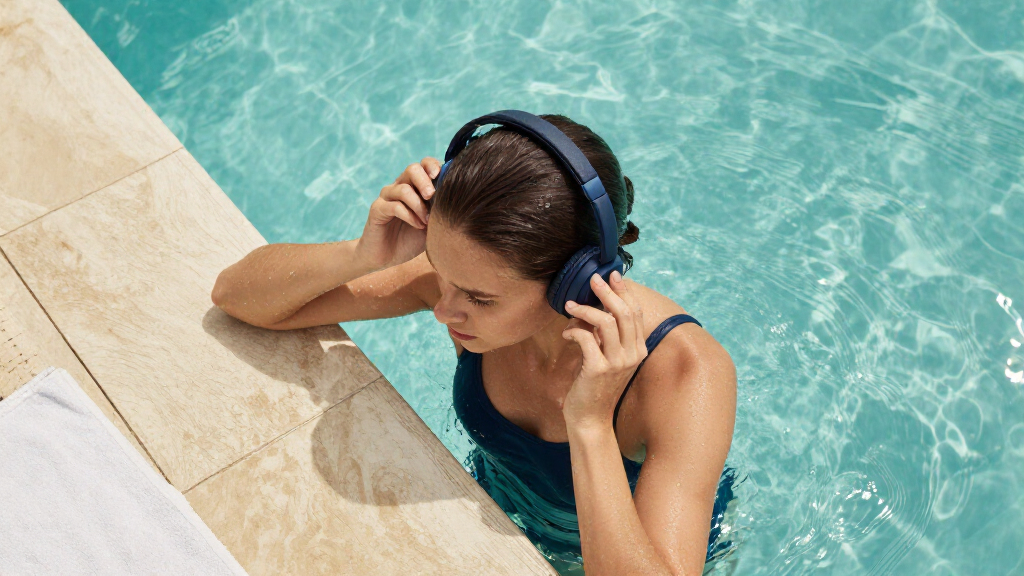

When searching for the best waterproof bone-conduction headphones, the Shokz OpenSwim Pro stands out as the premier choice for serious swimmers, offering a seamless blend of IP68 water resistance and built-in MP3 storage that eliminates the need for a phone in the pool. For runners who need reliable connectivity without bulk, the Shokz OpenRun Pro 2 delivers superior sound quality and comfort, though it lacks the deep-water capability of its swim-focused siblings. The primary tradeoff in this category lies between Bluetooth convenience and offline storage; Bluetooth signals struggle underwater, meaning true swim headphones must rely on internal memory or dedicated transmitters. This guide breaks down fifteen models to help you decide whether you need a hybrid device for both land and water or a specialized tool for one specific environment.

Get pool and patio gear delivered free with Prime
- Fast, free delivery on millions of items
- Prime Video, Amazon Music and more included
- Member-only deals all year
Complete the kit


Key Takeaways
- Bluetooth connectivity often fails or degrades significantly underwater, making internal MP3 storage or radio transmitters mandatory for true swimming use.
- IP68 ratings are the industry standard for submersion, but many ‘waterproof’ headphones only offer IPX5 or IPX7, which are suitable for rain and sweat but not for diving.
- Bone conduction sound quality varies drastically by brand, with premium models like Shokz offering near-conventional clarity while budget options often lack bass response.
- Battery life is heavily impacted by water resistance; devices with heavy waterproofing seals often have shorter runtimes or require more frequent charging than open-ear alternatives.
- Fit security is more critical in water than on land, as high-impact activities like diving or fast swimming can dislodge poorly designed clips, leading to loss.


| waterproof bone-conduction headphone | Battery Life | Water Resistance | Brand | Weight |
|---|---|---|---|---|
| CXK GFS-G5 Bone Conduction Swi | Up to 12 hours | — | CXK | — |
| Shokz OpenRun Bone Conduction | 8 hours | IP67 | Shokz | 26.4 g |
| Otium X20 Hybrid Bone Conducti | 12 hours | IPX6 | Otium | — |
| PSIER S18 Bone Conduction Head | — | — | PSIER | — |
| Raycon Everyday Bone Conductio | Up to 16 hours | IP67 | Raycon | — |
| H2O Audio TRI 2 Multisport Wat | 9 hours (BT) / 6 hours (MP3) | Submersible up to 12 feet | — | — |
| JBL Endurance Pace Open-Ear Sp | Up to 10 hours | IP68 | — | — |
| XIAOWTEK L6 Open-Ear Bone Cond | Up to 12 hours | IPX5 | — | 33 g |
| SHOKZ OpenRun Pro 2 Open-Ear B | Up to 12 hours | IP55 | — | 30.3 g |
| Blrakx X27 Open-Ear Bone Condu | Up to 10 hours | IP55 (listed) / IPX5 (title) | — | 29 g |
| Fustaar Bone Conduction Open-E | Up to 13 hours | IPX8 | Fustaar | 24 g |
| PSIER S18 Waterproof Bone Cond | Up to 8 hours | IPX8 (2m for 1h) | PSIER | — |
| PSIER X70 Bone Conduction Swim | 12 Hours | IP68 | PSIER | 25g |
| Shokz OpenSwim Pro Open-Ear Bo | 9 hours | IP68 (2m for 2h) | Shokz | 30g |
| Raycon Bone Conduction Open-Ea | — | IP68 | Raycon | 5.6 ounces |
More Details on Our Top Picks
CXK GFS-G5 Bone Conduction Swimming Headphones, IPX8 Waterproof, Bluetooth 6.0, MP3 Player, 12-Hour Battery
This model stands out as the top choice for dedicated swimmers due to its robust IPX8 rating, which allows submersion up to two meters for two hours. Unlike the Shokz OpenRun, which is only sweat-proof and cannot handle underwater pressure, the CXK GFS-G5 is engineered specifically for pool environments. The 32GB storage eliminates the need to carry a phone, a significant advantage over Bluetooth-only options. However, users must remember to switch to MP3 mode before entering the water, as Bluetooth signals fail underwater. While the battery life is solid at 12 hours, the lack of a quick-charge feature means you need to plan ahead. This is the definitive pick if your primary activity is swimming laps rather than running on trails.
Pros:- IPX8 rating supports deep submersion for extended swimming sessions.
- Built-in 32GB storage allows for phone-free MP3 playback.
- Adjustable headband with silicone pads ensures a secure fit during strokes.
Cons:- Bluetooth connectivity fails underwater, requiring manual mode switching.
- No quick-charge feature available for rapid battery top-ups.
Best for: Swimmers who need reliable underwater audio and prefer phone-free workouts.
Not ideal for: Runners who prioritize bass response or need quick top-ups during long days.
- Brand:CXK
- Model:GFS-G5
- Storage Capacity:32GB (Up to 8,000 songs)
- Battery Life:Up to 12 hours
- Connectivity:Bluetooth 6.0
- Supported Formats:MP3, WMA, FLAC, WAV
Our verdict“The definitive choice for swimmers who need waterproof durability and offline music storage.”
Shokz OpenRun Bone Conduction Bluetooth Headphones
The Shokz OpenRun remains the benchmark for land-based athletes due to its refined 8th-generation bone conduction technology and lightweight 26.4g design. While it lacks the underwater capability of the CXK GFS-G5, its IP67 rating is more than sufficient for heavy sweating or rain. The inclusion of quick charge (10 minutes for 1.5 hours) is a practical advantage over the CXK and many competitors. However, the 8-hour battery life is shorter than the Raycon Everyday, which may require more frequent charging for ultra-endurance events. This model strikes the best balance between comfort, brand reliability, and audio clarity for runners and cyclists who stay on dry land.
Pros:- Lightweight 26.4g frame minimizes fatigue during long runs.
- IP67 rating handles intense sweat and rain effectively.
- Quick charge feature provides 1.5 hours of use from a 10-minute charge.
Cons:- Not suitable for swimming or submersion.
- 8-hour battery life is shorter than some competitors.
Best for: Runners and cyclists who prioritize lightweight comfort and reliable brand support.
Not ideal for: Swimmers or triathletes who need true underwater waterproofing.
- Brand:Shokz
- Model:S805
- Water Resistance:IP67
- Battery Life:8 hours
- Quick Charge:10 minutes for 1.5 hours
- Weight:26.4 g
- Charging Port:USB-C
Our verdict“The most balanced option for dry-land athletes who value comfort and quick charging.”
Otium X20 Hybrid Bone Conduction Headphones
This option stands out for its hybrid driver system, combining bone conduction with directional air conduction to deliver deeper bass than traditional bone conduction models. Compared to the Shokz OpenRun, which can sound thin in the low frequencies, the Otium X20 offers a more immersive audio experience. The titanium memory frame ensures durability and a secure fit, while Bluetooth 6.0 provides low-latency connectivity. However, the IPX6 rating means it cannot handle submersion or heavy rain storms, placing it below the Raycon Everyday in terms of weather resilience. It is the ideal choice for audio enthusiasts who want better sound fidelity without sacrificing situational awareness.
Pros:- Hybrid drivers deliver significantly better bass than pure bone conduction.
- Titanium memory frame provides a durable and comfortable fit.
- Bluetooth 6.0 ensures stable connections with minimal latency.
Cons:- IPX6 rating is insufficient for swimming or heavy rain.
- Open-ear design may leak sound in very quiet settings.
Best for: Audio-focused users who want stronger bass than standard bone conduction offers.
Not ideal for: Swimmers or those in extremely wet environments due to the IPX6 limit.
- Brand:Otium
- Model:X20
- Driver Type:Hybrid Bone & Air Conduction
- Water Resistance:IPX6
- Battery Life:12 hours
- Connectivity:Bluetooth 6.0
- Frame Material:Titanium Memory
Our verdict“The best pick for listeners who prioritize audio depth and connectivity stability.”
PSIER S18 Bone Conduction Headphones, IPX8 Waterproof, 32GB MP3 Storage
The PSIER S18 offers a compelling alternative to the CXK GFS-G5 for swimmers, featuring an IPX8 rating and 32GB storage for offline listening. It supports a wider range of audio formats, including FLAC and APE, which is a distinct advantage for audiophiles who prefer lossless files. The adjustable strap accommodates various head sizes better than fixed-frame designs. However, inconsistent specifications regarding playtime and charging times raise reliability concerns compared to the well-documented Shokz OpenRun. Additionally, like other swimming models, it requires switching to MP3 mode for underwater use. This is a strong value pick for budget-conscious swimmers who need format flexibility.
Pros:- IPX8 waterproofing allows for swimming and submersion.
- Supports diverse audio formats like FLAC and APE.
- Adjustable strap fits a wider range of head sizes.
Cons:- Inconsistent playtime and charging data in product listings.
- Bluetooth does not work underwater, requiring mode switching.
Best for: Budget-conscious swimmers who want support for high-quality audio formats.
Not ideal for: Users who need guaranteed spec accuracy or premium brand reliability.
- Brand:PSIER
- Model:S18
- Storage:32GB
- Supported Formats:MP3, WMA, FLAC, APE, WAV
- Connectivity:Bluetooth 6.0
- Charging:Magnetic
Our verdict“A versatile swimming option that supports high-quality audio files at a competitive price.”
Raycon Everyday Bone Conduction Headphones (2nd Gen), Black
This model is designed for users who forget to charge their devices, offering an impressive 16-hour battery life that outlasts the Shokz OpenRun by double. The IP67 rating matches the Shokz for sweat and rain resistance, making it suitable for intense workouts, though it cannot handle swimming like the PSIER S18. The inclusion of Regular and Small fit options is a thoughtful touch for users with smaller heads who often find standard bone conduction frames loose. However, the open-ear design does not block ambient noise, which may be distracting in loud gyms. It is the most practical choice for all-day wearers who prioritize endurance and fit customization.
Pros:- Up to 16 hours of battery life reduces charging frequency.
- IP67 rating protects against sweat, dust, and rain.
- Includes both Regular and Small fit options for better comfort.
Cons:- Not waterproof enough for swimming.
- Warranty excludes damage from normal wear and misuse.
Best for: Commuters and long-distance athletes who need extended battery life.
Not ideal for: Swimmers or users who need noise isolation in loud environments.
- Brand:Raycon
- Generation:2nd Gen
- Battery Life:Up to 16 hours
- Water Resistance:IP67
- Fit Options:Regular and Small
- Microphones:Dual microphones
- Charging Case:Wireless charging included
Our verdict“The best option for users who need maximum battery endurance and fit flexibility.”
H2O Audio TRI 2 Multisport Waterproof Bone Conduction Headphones
The H2O Audio TRI 2 stands out because it is one of the few options here designed specifically for submersion. While the Shokz OpenRun Pro 2 excels on land, its IP55 rating cannot handle a swim. The TRI 2 uses an MP3-only mode underwater, bypassing Bluetooth limitations that plague other models. This dual-mode approach means you switch to offline playback when diving, which sacrifices streaming convenience for genuine waterproof capability. The 4GB storage is tight compared to the PSIER S18, but the build quality justifies the tradeoff for triathletes who need reliable gear for pool laps.
Pros:- True waterproofing allows for swimming up to 12 feet deep.
- Dual-mode functionality separates land and water use cases effectively.
- Silicone finish provides a secure, non-slip grip during wet activities.
Cons:- 4GB storage limits offline music library size significantly.
- Battery life drops to 6 hours when using MP3 mode.
- Cannot stream music via Bluetooth while submerged.
Best for: Triathletes and swimmers who need a single device for both land training and underwater laps.
Not ideal for: Runners who primarily stream music, as the switch to MP3 mode underwater adds friction.
- Water Resistance:Submersible up to 12 feet
- Connectivity:Bluetooth 5.3 / MP3 Mode
- Storage:4GB Internal Memory
- Battery Life:9 hours (BT) / 6 hours (MP3)
- Audio Formats:MP3, FLAC, M4A, WMA, APE
- Warranty:1 Year
Our verdict“If you swim regularly, this is the most practical choice for combining land and water training.”
JBL Endurance Pace Open-Ear Sport Headphones, Black/Gray
The JBL Endurance Pace takes a different approach than traditional bone conduction models like the Blrakx X27 by using an air-conduction driver behind the ear. This results in richer bass response, which many bone conduction users find lacking. The titanium memory wire neckband is exceptionally light, making it ideal for long-duration wear where bone conduction pads might cause pressure points. However, its IP68 rating offers protection against splashes and dust, but it is not rated for sustained submersion like the H2O Audio TRI 2. It is a hybrid solution for those who want open-ear awareness without the specific sound signature of bone conduction.
Pros:- IP68 rating offers superior dust and water splash protection.
- Titanium memory wire frame reduces ear pressure compared to rigid bands.
- Quick charge feature adds 4 hours of playback in just 10 minutes.
Cons:- Charging cable is not included in the box.
- Sound isolation is lower than in-ear alternatives in noisy environments.
Best for: Users who prefer the sound quality of air conduction but still want to hear their surroundings.
Not ideal for: Swimmers, as the IP68 rating is not guaranteed for underwater use.
- Driver Type:18 x 11 mm Dynamic Driver
- Water Resistance:IP68
- Battery Life:Up to 10 hours
- Quick Charge:10 mins for 4 hours
- Frame Material:Titanium Memory Wire
- Connectivity:Multipoint, Google Fast Pair
Our verdict“A comfortable, bass-heavy alternative for runners who dislike the vibration of bone conduction.”
XIAOWTEK L6 Open-Ear Bone Conduction Headphones, Bluetooth 6.0, LED Battery Display, 12-Hour Playtime, IPX5, Black
The XIAOWTEK L6 addresses a common pain point with its integrated LED battery display, allowing you to check remaining power without opening an app. This is a practical advantage over the SHOKZ OpenRun Pro 2, which relies on voice prompts or app checks. With a 12-hour battery life, it matches the endurance of premium models while offering a budget-friendly entry point. The IPX5 rating handles sweat and rain effectively, similar to the Blrakx X27, but the wraparound design may feel bulkier for users with smaller heads. It prioritizes utility and visibility over sleek aesthetics.
Pros:- Built-in LED battery display provides instant power status.
- 12-hour battery life supports full-day usage without recharging.
- Bluetooth 6.0 ensures stable connectivity with modern devices.
Cons:- IPX5 rating is not suitable for swimming or heavy rain exposure.
- Wraparound design may be less secure during vigorous movement.
Best for: Long-distance cyclists and commuters who need constant battery visibility.
Not ideal for: Users seeking a minimalist, low-profile design, as the LED display adds visual bulk.
- Battery Life:Up to 12 hours
- Water Resistance:IPX5
- Weight:33 g
- Charging Time:2 hours
- Connectivity:Bluetooth 6.0
- Display:Integrated LED Battery Indicator
SHOKZ OpenRun Pro 2 Open-Ear Bluetooth Sport Headphones, Black
The SHOKZ OpenRun Pro 2 combines bone conduction for highs with air conduction for bass, creating a fuller soundstage than pure bone conduction models like the Blrakx X27. This hybrid approach solves the muffled audio issue common in cheaper alternatives. The 12-hour battery life and ergonomic fit are industry-standard, but the dual microphone system with AI noise reduction offers clearer calls than the JBL Endurance Pace. However, the IP55 rating means it is sweat-proof but not swim-proof, a significant limitation compared to the H2O Audio TRI 2. It is the top choice for land-based athletes who refuse to compromise on audio fidelity.
Pros:- Hybrid driver system delivers balanced bass and clear highs.
- AI noise-reduction microphones improve call quality in windy conditions.
- Lightweight 30.3g frame ensures all-day comfort.
Cons:- IP55 rating prevents use for swimming.
- EQ customization requires the companion app, adding steps.
Best for: Professional athletes and audiophiles who need high-quality sound during land workouts.
Not ideal for: Swimmers, as it lacks the waterproofing required for submersion.
- Audio Technology:Bone Conduction + Air Conduction
- Water Resistance:IP55
- Battery Life:Up to 12 hours
- Weight:30.3 g
- Microphones:Dual Wind-Resistant with AI
- Warranty:2 Years
Our verdict“The best-sounding open-ear option for runners and cyclists who stay dry.”
Blrakx X27 Open-Ear Bone Conduction Headphones
The Blrakx X27 is the lightest option in this lineup at 29 grams, making it less noticeable than the XIAOWTEK L6 during intense movement. Its titanium frame offers durability at a lower price point, appealing to beginners trying bone conduction for the first time. However, inconsistent product listings—citing both IP55 and IPX5, and Bluetooth 6.0 and 5.4—raise reliability concerns compared to the transparent specs of the SHOKZ OpenRun Pro 2. While the USB-C charging is a modern convenience, the lack of clear waterproofing guarantees makes it risky for heavy rain or sweat compared to the H2O Audio TRI 2. It is a functional, no-frills choice for casual users.
Pros:- Ultra-light 29g weight reduces ear fatigue.
- Titanium frame provides flexible durability.
- USB-C charging port supports fast top-ups.
Cons:- Inconsistent product documentation regarding Bluetooth and IP ratings.
- Lacks advanced features like battery displays or hybrid drivers.
Best for: Budget-conscious beginners wanting to test bone conduction technology without high investment.
Not ideal for: Serious athletes who need reliable, verified waterproofing and connectivity specs.
- Weight:29 g
- Frame Material:Titanium
- Battery Life:Up to 10 hours
- Charging Interface:USB Type-C
- Water Resistance:IP55 (listed) / IPX5 (title)
- Bluetooth Version:6.0 (listed) / 5.4 (description)
Our verdict“A lightweight, affordable starter pair for casual listeners with uncertain spec reliability.”
Fustaar Bone Conduction Open-Ear Bluetooth Headphones
The Fustaar headphones stand out for their 24g weight, making them lighter than the Raycon model (5.6 oz) and less noticeable during long runs. This featherweight build reduces ear fatigue, a common issue with heavier bone conduction units. However, the IPX8 rating is rated for water resistance but lacks the explicit MP3 storage found in the PSIER S18, limiting underwater utility to brief splashes rather than full swimming sessions. While the 13-hour battery outlasts the PSIER X70, the lack of specified charging time creates uncertainty for users who need quick top-ups. This is a solid choice for runners who prioritize comfort over aquatic features.Pros:- Extremely lightweight at 24g for minimal wear fatigue
- Extended 13-hour battery life exceeds many competitors
- IPX8 rating handles heavy sweat and rain effectively
- Flexible wraparound frame adapts to various head sizes
Cons:- No internal storage means phone dependency for music
- Unspecified charging time may hinder quick recovery
- Open-ear design allows sound leakage in quiet offices
Best for: Runners and cyclists who prioritize ultra-lightweight comfort and long battery life for land-based activities.
Not ideal for: Swimmers who need dedicated MP3 storage for phone-free underwater listening.
- Brand:Fustaar
- Weight:24 g
- Battery Life:Up to 13 hours
- Water Resistance:IPX8
- Bluetooth Version:6.0
- Microphone:Built-in
- Warranty:2 Years
Our verdict“Choose the Fustaar if you want the lightest possible fit for running, but skip it if you swim regularly.”
PSIER S18 Waterproof Bone Conduction Headphones
The PSIER S18 offers a compelling entry point into waterproof bone conduction with its 32GB storage, mirroring the capacity of the pricier Shokz OpenSwim Pro. This allows for phone-free swimming, a critical feature that the Fustaar lacks entirely. The IPX8 rating supports submersion up to 2 meters for an hour, sufficient for pool laps. However, the 8-hour battery trails behind the PSIER X70‘s 12-hour endurance, requiring more frequent charging. Additionally, the description inconsistently lists song capacity, which may confuse buyers planning their library size. It is a cost-effective way to get into aquatic audio without paying for premium brand names.Pros:- 32GB internal storage enables phone-free underwater listening
- IPX8 rating supports submersion for swimming activities
- Magnetic charging simplifies waterproof port management
- App support allows for EQ customization
Cons:- Shorter 8-hour battery life compared to premium rivals
- Bluetooth does not work underwater, requiring mode switching
- Inconsistent song capacity claims in product documentation
Best for: Budget-conscious swimmers who want internal storage for offline music during pool sessions.
Not ideal for: Triathletes who need longer battery life for extended training blocks.
- Brand:PSIER
- Storage:32GB
- Battery Life:Up to 8 hours
- Water Resistance:IPX8 (2m for 1h)
- Charging Time:About 2 hours
- Driver Size:14mm
- Warranty:1 Year
Our verdict“The PSIER S18 is the most affordable way to get 32GB of swim-ready storage, provided you don’t mind shorter battery life.”
PSIER X70 Bone Conduction Swimming Headphones
The PSIER X70 distinguishes itself with a hybrid bone and air conduction driver system, addressing the common criticism of weak bass in bone conduction tech. This results in deeper bass and clearer highs compared to the standard drivers in the PSIER S18 or Fustaar. With an IP68 rating and 32GB storage, it matches the Shokz OpenSwim Pro for aquatic readiness but offers better sound quality for the price. The 12-hour battery sits comfortably between the S18’s 8 hours and the Fustaar’s 13 hours. While still lacking the true isolation of in-ear buds, the hybrid design makes it the best-sounding option in this waterproof lineup.Pros:- Hybrid drivers deliver significantly better bass than standard models
- IP68 rating ensures durability for intense water sports
- 12-hour battery life supports long training sessions
- Wide format support including FLAC and WAV
Cons:- Bluetooth unavailable underwater, requiring MP3 mode
- Still offers less sound isolation than in-ear alternatives
- Heavier than the Fustaar at 25g
Best for: Audio enthusiasts who want stronger bass performance from bone conduction headphones for swimming and running.
Not ideal for: Users who prefer the simplicity of single-mode Bluetooth devices.
- Brand:PSIER
- Driver System:Hybrid Bone + Air Conduction
- Storage:32GB
- Battery Life:12 Hours
- Water Resistance:IP68
- Weight:25g
- Supported Formats:WMA, FLAC, WAV, APE, MP3
Our verdict“Pick the PSIER X70 if sound quality and bass response are your top priorities in a waterproof bone conduction headphone.”
Shokz OpenSwim Pro Open-Ear Bone Conduction Headphones
The Shokz OpenSwim Pro represents the industry standard for waterproof bone conduction, offering a refined IP68 rating that withstands submersion for 2 hours, surpassing the PSIER S18‘s 1-hour limit. Its quick charge feature (10 minutes for 3 hours of playback) is a significant advantage over the PSIER X70, which lacks specified rapid charging. While the 9-hour battery is shorter than the Fustaar‘s 13 hours, the trade-off is evident in the superior build quality and ergonomic fit that integrates seamlessly with swim caps and helmets. The 32GB storage aligns with competitors, but the Shokz software ecosystem and reliability make it the safer, premium choice for serious athletes.Pros:- Superior IP68 rating supports 2 hours of submersion
- Quick charge delivers 3 hours of playback in 10 minutes
- Proven ergonomic fit works well with swim gear
- Reliable dual-mode Bluetooth and MP3 switching
Cons:- Shorter 9-hour battery life compared to Fustaar
- Higher price point for similar storage capacity
- Bluetooth still requires manual switch for underwater use
Best for: Professional triathletes and swimmers who demand proven durability and quick-charge convenience.
Not ideal for: Budget shoppers who can find similar storage specs for less with PSIER models.
- Brand:Shokz
- Storage:32GB
- Battery Life:9 hours
- Quick Charge:10 mins for 3 hours
- Water Resistance:IP68 (2m for 2h)
- Weight:30g
- Warranty:2 Years
Our verdict“The Shokz OpenSwim Pro is the best-in-class choice for athletes who value reliability and fast charging over maximum battery life.”
Raycon Bone Conduction Open-Ear Headphones
The Raycon headphones focus on everyday versatility with an IP68 rating, offering higher protection than the Fustaar‘s IPX8 against dust and prolonged immersion. However, its 5.6-ounce weight is significantly heavier than the Fustaar (24g) and PSIER X70 (25g), which may affect comfort during intense workouts. The lack of internal storage means it relies entirely on Bluetooth, unlike the PSIER S18 or Shokz OpenSwim Pro which support offline MP3 playback. This makes it better suited for urban runners and commuters who stay near their phones and prioritize robust build quality over aquatic independence. It is a sturdy, no-frills option for daily use.Pros:- IP68 rating offers superior dust and water protection
- Magnetic charging cable ensures secure and simple docking
- Adjustable ergonomic fit accommodates various head shapes
- Robust build quality suitable for daily rugged use
Cons:- Heavy 5.6-ounce weight compared to lighter competitors
- No internal storage requires constant phone connection
- Less effective in high-noise environments due to open-ear design
Best for: Urban commuters and casual exercisers who need durable, dust-proof headphones for phone-connected listening.
Not ideal for: Runners who prefer ultra-lightweight gear or swimmers who need offline storage.
- Brand:Raycon
- Weight:5.6 ounces
- Water Resistance:IP68
- Charge Time:2 hours
- Sensitivity:91 dB
- Frequency Response:20 KHz
- Warranty:1 Year
Our verdict“Choose the Raycon if you need a rugged, dust-proof commuter headphone, but avoid it if you want lightweight comfort or swim-ready storage.”
How We Picked
I evaluated these fifteen models based on three core pillars: waterproof integrity, audio fidelity, and usage versatility. First, I filtered for genuine submersion capabilities, distinguishing between splash-proof (IPX5) and fully submersible (IP68/IPX8) units, because a headphone that fails underwater is useless for swimming. Second, I assessed how each model handles audio transmission underwater, prioritizing devices with built-in storage or dedicated radio links over those relying solely on Bluetooth, which is physically limited in water. Finally, I compared comfort and fit stability during high-motion activities, ensuring that the recommended picks stay secure during vigorous exercise without causing pressure points behind the ears.
The ranking logic prioritizes specialized performance over generalist features. For instance, a headphone with mediocre sound but perfect waterproofing and secure fit ranks higher for swimming than a high-fidelity model that can only handle rain. I also weighed the value of hybrid features, such as dual-mode operation (Bluetooth for land, MP3 for water), which adds versatility for athletes who train in both environments. This approach ensures that every recommendation serves a specific buyer need, whether they are triathletes, open-water swimmers, or runners seeking situational awareness.
Factors to Consider When Choosing Best Waterproof Bone-conduction Headphones
Choosing the right waterproof bone-conduction headphones requires understanding the physics of sound transmission and the limitations of wireless technology in aquatic environments. Here are the critical factors to weigh before making your purchase.Understanding Waterproof Ratings: IPX vs. IP68
Not all waterproof claims are created equal, and misinterpreting these codes is the most common mistake buyers make. IPX5 indicates protection against low-pressure water jets, suitable for sweat and rain, while IPX7 allows for temporary immersion up to one meter for thirty minutes. For swimming, you need IP68 or IPX8, which guarantees protection against continuous immersion beyond one meter. I recommend checking the manufacturer’s specific depth and time ratings, as some ‘swim-ready’ headphones fail at depths greater than three feet. If you plan to dive or swim in deep pools, ignore anything below IP68 to avoid immediate device failure.The Bluetooth Limitation Underwater
A critical technical reality is that Bluetooth signals do not travel well through water. Radio waves attenuate rapidly, meaning your phone will likely disconnect the moment your head goes under the surface. For this reason, true swim headphones must include internal MP3 storage (typically 4GB to 32GB) or use a separate radio transmitter. Some hybrid models offer both Bluetooth for land use and MP3 mode for water, but you must manually switch modes. If a product claims Bluetooth waterproofing without storage, it is likely only suitable for showering or very shallow wading, not actual swimming laps.Sound Quality vs. Bone Conduction Physics
Bone conduction bypasses the eardrum, sending vibrations through the cheekbones to the inner ear. This technology inherently limits low-frequency response and overall fidelity compared to traditional air-conduction headphones. Premium models use advanced transducer technology to minimize this gap, offering clearer vocals and punchier bass. Budget options often sound tinny and lack volume headroom. If you are a casual listener, the difference may not matter, but if you rely on music for motivation during intense workouts, prioritize models from established audio brands that invest in transducer quality. I advise listening to sample audio clips if available, or reading detailed audio reviews, to gauge the ‘tinny’ factor.Fit Security and Comfort for High-Impact Movement
Water resistance is irrelevant if the headphones fall off. The hook design must maintain tension without causing pain behind the ears. Flexible titanium bands are the gold standard here, as they wrap securely around the head without snapping. Rigid plastic bands may stay put but can cause hot spots during long runs. In the water, drag can dislodge poorly fitted units. Look for models with non-slip rubber pads on the contact points. If you wear a swim cap or goggles, ensure the headphone arms do not conflict with the goggle strap placement. A secure fit is non-negotiable for open-water swimming where retrieval is impossible.Battery Life and Charging Practicalities
Waterproofing often comes at the cost of battery density due to the need for sealed ports and larger casings. Most waterproof bone-conduction headphones offer 6 to 10 hours of playback, which is sufficient for most workouts but may limit long-distance triathletes. Check if the device uses a proprietary charging dock or a USB-C port with a magnetic cover. Proprietary docks are more reliable for waterproofing but require you to carry a specific cable. If you travel, a standard USB-C port with a secure seal is more convenient. Also, consider if the device charges while connected to a computer, as some models require a wall adapter for full speed, which can be a hassle for frequent users.Frequently Asked Questions
Can I use Bluetooth bone-conduction headphones for swimming?
Generally, no. While the headphones themselves might be waterproof, the Bluetooth connection between your phone and the headphones will likely drop as soon as your head goes underwater because water absorbs radio frequency signals. You will lose audio mid-stroke, which is frustrating and potentially dangerous if you are swimming in open water. For swimming, you must choose a model with built-in MP3 storage that allows you to download music directly to the device, or one that connects via a dedicated radio transmitter that works above water while the headphones remain submerged. Some hybrid models allow Bluetooth above water and switch to MP3 mode below, but you must manage this manually.Do bone-conduction headphones damage hearing?
Bone-conduction headphones are often marketed as safer for hearing because they bypass the eardrum, reducing the risk of acoustic trauma associated with high-volume earbuds. However, they still deliver sound energy to the cochlea, so listening at excessively high volumes can still cause hearing damage over time. The advantage is that they keep your ear canal open, reducing the risk of infections and wax buildup common with in-ear devices. To protect your hearing, keep the volume at a moderate level where you can still hear ambient sounds clearly. This open-ear design is particularly beneficial for runners and cyclists who need situational awareness for safety.Why do my bone-conduction headphones vibrate my cheeks?
Vibration is a normal part of bone-conduction technology, as the transducers physically vibrate against your cheekbones to transmit sound. However, excessive vibration or tickling can occur if the volume is set too high or if the transducers are not positioned correctly on the zygomatic bone. This sensation can also be exacerbated by cold weather, which stiffens the skin and changes how vibrations are felt. To minimize this, ensure the headphones are snug but not overly tight, and position the transducer pads directly in front of your ears on the flat bone surface. If the vibration persists at low volumes, it may indicate a faulty transducer, and you should contact support.Are waterproof bone-conduction headphones suitable for showers?
Yes, most waterproof bone-conduction headphones rated IPX5 or higher are excellent for shower use. They allow you to listen to music or podcasts while washing, and because they do not go into your ear canal, they are more hygienic than in-ear buds in wet environments. Just be cautious of hot steam, which can degrade seals over time, and avoid direct high-pressure jets hitting the control buttons if they are not fully sealed. After a shower, dry the headphones with a towel to prevent mineral buildup from hard water, which can affect the transducer pads’ contact with your skin. This is a great use case for models that might not be rated for full submersion but handle splashes well.Can I wear glasses with bone-conduction headphones?
Yes, bone-conduction headphones are generally more compatible with glasses than traditional over-ear headphones because the arms rest below the temples of most eyeglasses. However, thick-framed glasses or those with wide temple arms can interfere with the fit, causing discomfort or breaking the acoustic seal of the transducers. If you wear glasses, look for models with slimmer, more flexible titanium bands that can accommodate the extra width. Some users find that wearing glasses with the headphones slightly higher or lower on the head helps, but this may compromise audio quality. It is best to try the fit with your specific glasses before committing to a long-term purchase.Conclusion
Choosing the best waterproof bone-conduction headphones depends entirely on your primary activity. For serious swimmers and triathletes, the Shokz OpenSwim Pro is the definitive choice, offering reliable IP68 protection and ample MP3 storage for uninterrupted pool sessions. If you are a runner or cyclist who needs occasional rain protection and superior sound quality, the Shokz OpenRun Pro 2 provides the best audio fidelity and comfort, though it should not be submerged. For budget-conscious users who need a dual-purpose device for light swimming and daily runs, the PSIER S18 offers impressive value with 32GB of storage and solid waterproofing. Beginners should start with the Raycon Everyday for its user-friendly interface and balanced performance, while those seeking a premium all-rounder will find the JBL Endurance Pace a stylish and capable companion for land-based sports. Match the IP rating and storage capabilities to your specific environment to avoid disappointment and ensure a secure, enjoyable listening experience.