Pool shock rapidly boosts chlorine levels in your water, effectively removing harmful contaminants like bacteria and algae. It also breaks down organic matter, ensuring your pool stays clear and safe for swimming. After heavy usage or noticeable algae growth, shocking is essential to restore water quality. Remember to adjust pH levels beforehand for best results. By understanding how pool shock works and its benefits, you can maintain a healthy swimming environment. There’s more to explore on this topic.
Key Takeaways
- Pool shock rapidly increases chlorine levels, effectively eliminating contaminants like bacteria and algae from the water.
- It breaks down organic matter, enhancing water clarity and safety for swimmers.
- Shocking reduces combined chlorine levels, improving the effectiveness of free chlorine in the pool.
- Regular shocking is vital after heavy usage or contamination events to maintain water quality.
- Post-shocking, continuous monitoring of chemical levels is essential for overall pool health.
When you want to keep your pool water clean and safe, understanding pool shock is vital. Pool shock involves using a high dose of chlorine to rapidly elevate chlorine levels in your pool, effectively eliminating contaminants like bacteria and algae. This process breaks down organic matter, enhancing both water safety and clarity. By reducing combined chlorine levels, pool shock improves the effectiveness of free chlorine, which is fundamental for sanitizing your pool.
The primary function of pool shock is to remove harmful contaminants that can accumulate, especially after heavy use or contamination events. If you’ve noticed visible algae growth or suspect excessive bather waste, it’s time to shock your pool. Doing so not only destroys bacteria and algae but also maximizes chlorine efficiency, guaranteeing that the pool remains safe for swimmers. It’s especially important for tackling chlorine-resistant pathogens and controlling algae blooms of various colors.
Pool shock is essential for eliminating contaminants and ensuring a safe swimming environment, especially after heavy usage or algae growth.
You should use pool shock after periods of heavy pool usage, as this often leads to a buildup of contaminants like sweat and lotions. If you encounter visible algae or experience a contamination event, shocking the pool is a quick way to restore water quality. The general rule for dosage is about 1 pound of pool shock per 10,000 gallons of water, but always check the specific product instructions for accuracy. Customizing the dosage based on pool conditions is vital, as overdosing can lead to chemical imbalances and safety issues.
Before you shock your pool, take some pre-shocking steps. Test the water’s pH and total alkalinity levels. Aim to adjust the pH to between 7.2 and 7.4 for peak shock effectiveness. Wearing protective gear like gloves and eye coverings is a must during application. If you’re unsure about the process, don’t hesitate to seek professional help.
After shocking the pool, you need to confirm that other chemical levels are balanced to maintain overall pool health. Remember, the effects of chlorine shock are temporary, so regular maintenance is necessary. Some types of pool shock can raise the pH level, which can impact effectiveness, but stabilized dichlor offers a near-neutral pH effect, reducing your adjustment needs.
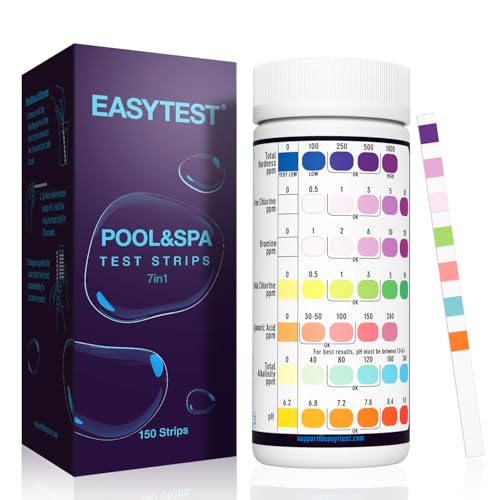
EASYTEST 7-Way Pool Test Strips, 150 Strips Water Chemical Testing for Hot tub and Spa, Accurate Test Bromine, Total Alkalinity, pH, Free Chlorine, Total Hardness, Cyanuric Acid, and Total Chlorine
- 150 Test Strips Included: Enough for multiple water tests
- Fast and Accurate Results: Soak for 1 second, read in 15 seconds
- 7-in-1 Water Testing: Tests Bromine, pH, Chlorine, Alkalinity, Hardness, Cyanuric Acid
As an affiliate, we earn on qualifying purchases.
Frequently Asked Questions
How Often Should I Use Pool Shock?
You should use pool shock about once a week or every two weeks, depending on how often you swim.
After heavy usage, like parties, or following storms, it’s essential to shock your pool more frequently.
If you notice algae or your water quality isn’t up to par, don’t hesitate to shock it.
Always test the water afterward to guarantee everything’s balanced before diving back in.
Keeping a consistent schedule is key to maintaining clean water.
Can I Swim Immediately After Shocking the Pool?
You shouldn’t swim immediately after shocking the pool. Elevated chlorine levels can cause skin irritation and discomfort in your eyes.
It’s best to wait at least 8-12 hours if you’ve used chlorine-based shock. Non-chlorine shocks allow swimming in as little as 15 minutes.
Always test the water’s chlorine and pH levels before diving in to guarantee safety. Your health matters, so give the chemicals time to settle!
What Types of Pool Shock Are Available?
Imagine a toolbox filled with various tools, each designed for a specific job. That’s how pool shock works!
You’ve got Calcium Hypochlorite for tough algae, Sodium Dichlor for stabilizing chlorine levels, Potassium Monopersulfate for chlorine-free options, and Sodium Hypochlorite for heavy-duty tasks.
Each type has its unique strengths, so you can choose the right one based on your pool’s needs and conditions.
Just select wisely to keep your water sparkling clean!
Is Pool Shock Harmful to Pets?
Yes, pool shock can be harmful to pets. When exposed, they risk skin irritation, eye problems, and even severe burns if they ingest concentrated chemicals.
You should always supervise your pets near the pool and provide them with fresh water to prevent them from drinking pool water.
Regularly check chemical levels and store pool supplies safely to minimize risks, ensuring your furry friends stay safe while enjoying the outdoors.
How Should I Store Pool Shock Safely?
Think of pool shock as a powerful potion; store it wisely.
Find a well-ventilated, cool spot away from sunlight, like an outdoor shed or locked cabinet.
Use hard plastic bins with tight lids, keeping chemicals separated and labeled.
Avoid stacking them to reduce spill risks.
Regularly check for damage and maintain a log of what you’ve got.
Following these guidelines guarantees your storage space remains safe and organized, protecting everyone around.
Conclusion
In the grand dance of pool maintenance, pool shock takes center stage, transforming murky waters into a crystalline oasis. Like a magician waving a wand, it banishes harmful bacteria and algae, leaving your pool sparkling and inviting. Picture the sun’s rays glistening off the surface, inviting you to plunge into. With just a sprinkle of this powerful remedy, your backyard paradise becomes a invigorating escape, where laughter floats on the air and joy ripples through every splash.