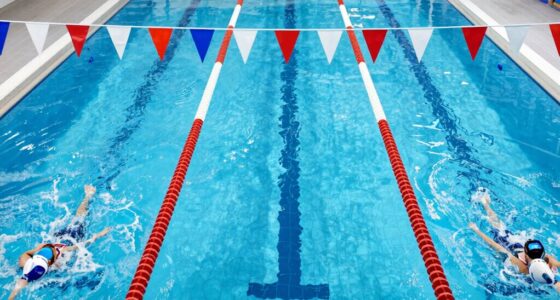
An ideal lap pool measures around 25 yards (75 feet) in length for home use or 50 meters (164 feet) for competition, giving you enough space to swim comfortably without feeling crowded. The width typically ranges from 6 to 8 feet, allowing multiple swimmers and clear lane distinction. 2 to 4 lanes with proper ropes help organize your swim and enhance safety. Getting these dimensions right guarantees a smooth, enjoyable workout—keep exploring to learn more details for your perfect pool.
Open a free Amazon Business account
Business pricing, bulk buying and tax-exempt orders.
As an affiliate, we earn on qualifying purchases.
Key Takeaways
- Typical lap pool length ranges from 25 yards (75 feet) for casual use to 50 meters (164 feet) for competitive swimming.
- Width generally spans 6 to 8 feet, allowing multiple swimmers and comfortable lane separation.
- For residential pools, 2 to 4 lanes are ideal, with lane ropes or markings to establish clear boundaries.
- Incorporate proper water circulation features like jets and skimmers to maintain water quality and safety.
- Effective water flow ensures minimal dead zones, promoting clean, safe, and consistent swimming conditions.

Are you wondering what the standard dimensions of a lap pool are? If you’re considering installing one, understanding the typical sizes helps confirm it meets your fitness goals and safety standards. A well-designed lap pool emphasizes not just length and width, but also how water circulates to maintain cleanliness and safety. When you’re planning your pool, keep in mind that proper water circulation is vital for pool safety, preventing stagnation and reducing the risk of algae or bacteria buildup. This means you’ll want a design that allows efficient water movement, which is often achieved through strategically placed jets and skimmers that keep the water flowing smoothly across the entire surface.
In most cases, the standard length for a lap pool is around 25 yards (75 feet), although some are built to 50 meters (164 feet), especially for competitive swimmers. The length you choose depends on your space and goals—if you’re working on serious training or competition prep, a longer pool might be preferable. For casual fitness or home use, 40 to 50 feet is usually sufficient. The width typically ranges from 6 to 8 feet, allowing enough room for multiple swimmers to use the pool simultaneously without interference. This width ensures that you can swim laps comfortably, maintaining a steady rhythm without feeling crowded. When designing your pool, consider the number of users and whether you’ll need space for multiple lanes or additional features like a shallow end for warm-up or relaxation.
The lane design also plays a significant role in your swimming experience. For most residential pools, dividing the space into 2 to 4 lanes is ideal, providing enough separation to avoid collisions and making it easier to focus on your swim. Lane ropes or markings help establish clear boundaries, which can improve water safety by preventing accidental collisions. Plus, a good lane layout enhances water circulation by encouraging better flow patterns, which can reduce dead zones where water tends to stagnate. Confirming your pool’s water circulation system is properly designed, with enough jets and return inlets, keeps the water fresh, safe, and inviting. Proper circulation not only improves water quality but also helps maintain consistent temperature and clarity, making your swimming experience more enjoyable.
As an affiliate, we earn on qualifying purchases.
Frequently Asked Questions
What Materials Are Best for Durable Lap Pool Construction?
You should choose durable pool surface materials like reinforced concrete, fiberglass, or vinyl liner to guarantee longevity. For structural supports, opt for corrosion-resistant steel or composite materials that withstand water and environmental factors. These choices provide strength and durability, reducing maintenance needs. With proper installation and quality materials, your lap pool will remain sturdy and attractive for years to come, giving you a reliable, long-lasting swimming experience.
How Does Pool Depth Affect Swim Training?
A stitch in time saves nine, and in swim training, pool depth plays a vital role. Deeper pools provide more resistance, helping you build strength and improve technique. Shallower pools are great for practicing starts and turns. Adjusting pool depth to your training goals guarantees peak performance, safety, and comfort. So, consider your swim goals carefully because the right pool depth supports your progress every stroke of the way.
Can Lap Pools Be Heated Efficiently?
Yes, lap pools can be heated efficiently with the right pool heating options. You should consider energy-efficient choices like solar heaters or heat pumps, which reduce energy consumption and operating costs. Proper insulation also helps maintain consistent water temperatures. By selecting these options, you’ll enjoy comfortable swimming conditions while minimizing energy use, making your lap pool both cost-effective and eco-friendly.
What Safety Features Are Recommended for Residential Lap Pools?
You want to keep your pool area as safe as a cozy home, so consider installing pool safety features like a sturdy cover, non-slip surfaces, and a reliable fence with a self-latching gate. Adding pool alarms, proper lighting, and clear depth markers also enhances safety. These residential features help prevent accidents and create peace of mind, making your swimming experience both enjoyable and secure.
How Much Does a Custom Lap Pool Installation Typically Cost?
A custom lap pool installation usually costs between $40,000 and $100,000, depending on size, materials, and features. Your cost estimation should include the entire installation process, from excavation to finishing touches. Factors like pool shape, decking, and additional upgrades impact the price. Working closely with a professional helps guarantee you get an accurate estimate and smooth installation, so you enjoy your new lap pool without surprises.
Conclusion
Think of your lap pool as a mirror reflecting your dedication and discipline. Its dimensions symbolize the journey you undertake with every stroke—lengths that stretch your limits, lanes that guide your progress. When you choose the right size, you’re not just building a pool; you’re creating a sanctuary where your commitment flows freely, shaping your strength and resilience. Let your pool be a symbol of your relentless pursuit of excellence, inspiring every swim.
Flea & tick season Picks
flea and tick prevention
As an affiliate, we earn on qualifying purchases.