

Pool therapy helps most with fibromyalgia by reducing joint and muscle strain, making movement easier and less painful. It supports gentle exercises like walking and stretching, which improve flexibility, strength, and circulation. The buoyant environment promotes better balance and coordination while decreasing fall risk. Plus, the calming sensation of water eases tension and boosts mood. To discover the key ways to maximize these benefits, keep exploring how aquatic therapy can support your recovery.
Key Takeaways
- Water buoyancy reduces joint and muscle strain, making movement easier and less painful.
- Gentle aquatic exercises improve flexibility, strength, and circulation without high impact.
- Water supports balance and coordination, decreasing fall risk and enhancing safe mobility.
- The calming sensation of water helps decrease anxiety, relax muscles, and boost overall mood.
- Consistent pool therapy routines provide ongoing symptom relief and improve quality of life.
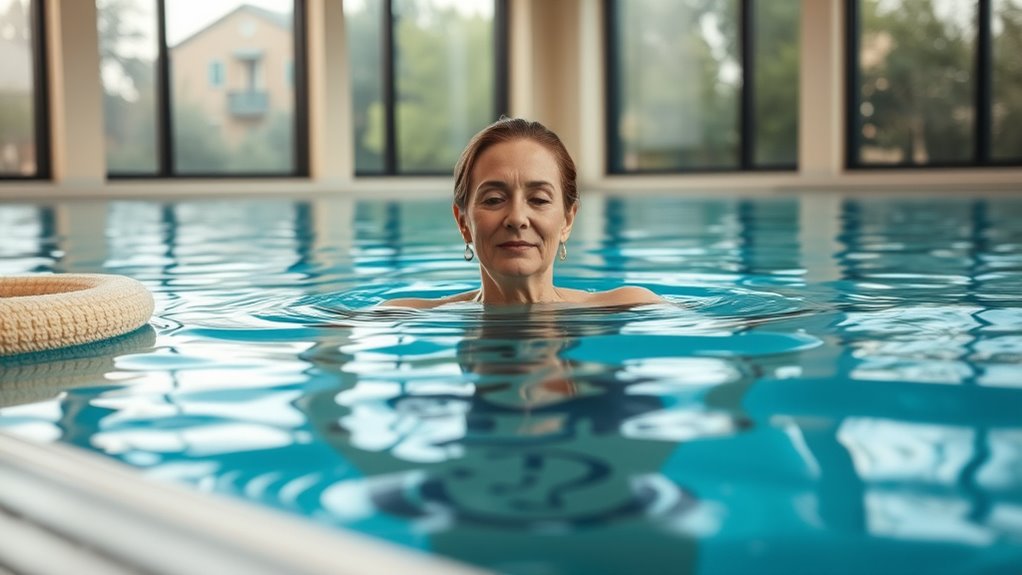
Pool therapy offers a gentle and effective way to manage fibromyalgia symptoms. When you immerse yourself in water, you harness the natural benefits of water buoyancy, which reduces the strain on your muscles and joints. This is especially helpful if you’re dealing with widespread pain and fatigue, common in fibromyalgia. The water’s supportive nature allows you to move more freely without feeling the full impact of gravity. As a result, you can perform a range of aquatic exercises that promote strength, flexibility, and circulation, all without exacerbating your pain. These exercises are designed to be low-impact, making them accessible even if your energy levels fluctuate or your joints feel especially tender.
When you engage in aquatic exercises, you activate muscles in a controlled environment that minimizes discomfort. The water provides resistance, which helps build strength without the need for heavy weights or strenuous movements. This resistance is gentle yet effective, allowing you to gradually improve muscle tone and endurance. As you perform movements like walking, stretching, or gentle aerobic routines in water, you benefit from a combination of resistance training and cardiovascular exercise, both of which are essential for managing fibromyalgia symptoms. Plus, the soothing sensation of water can help reduce muscle tension and ease stiffness, making your workouts more comfortable and less intimidating.
Incorporating water buoyancy into your routine also helps you work on balance and coordination, which can sometimes be compromised by fibromyalgia. The supportive environment encourages safer movements, reducing the risk of falls or injury. Since water reduces the weight your joints have to bear, you can extend your range of motion more easily, helping to combat stiffness and improve joint flexibility over time. Regular aquatic exercises can also boost your overall mood and mental well-being, as the calming properties of water help decrease anxiety and promote relaxation. Additionally, practicing water-based activities can enhance your proprioception, further supporting your functional mobility.
Ultimately, using water buoyancy for aquatic exercises creates a safe, effective space for managing fibromyalgia symptoms. It allows you to stay active without overwhelming your body, making it easier to stick with a consistent exercise routine. With these gentle yet powerful movements, you can experience less pain, improved mobility, and a better quality of life. Remember, always consult with your healthcare provider or a trained aquatic therapist before starting any new exercise program to guarantee it’s tailored to your specific needs. With patience and persistence, water-based activities can become a essential part of your fibromyalgia management plan.
Frequently Asked Questions
How Often Should I Do Pool Therapy Sessions for Fibromyalgia?
You should aim for 2 to 3 pool therapy sessions per week to maintain an ideal schedule. Consistency is key, so sticking to this session frequency helps manage fibromyalgia symptoms effectively. Listen to your body—if you feel fatigued, consider adjusting the intensity or frequency. Regular sessions can reduce pain and improve mobility, but always consult your healthcare provider to tailor the schedule to your specific needs.
Can Pool Therapy Replace Other Fibromyalgia Treatments?
Pool therapy can be a helpful complementary therapy, but it shouldn’t replace your primary treatments for fibromyalgia. It works well alongside medications, physical therapy, and lifestyle changes as an all-encompassing treatment. You should discuss with your healthcare provider to develop a thorough plan that includes pool therapy, ensuring you get the most benefit without neglecting essential medical approaches. Combining therapies often provides the best relief for managing fibromyalgia symptoms.
Are There Specific Pool Exercises Best for Fibromyalgia?
Imagine gliding through warm water, feeling the tension melt away. Water aerobics and gentle stretching are excellent pool exercises for fibromyalgia, as they promote soft movement and reduce joint stress. You’ll find that these exercises improve flexibility, decrease pain, and boost your mood. Focus on slow, controlled motions, and listen to your body. Regular practice helps manage symptoms, making your time in the pool both soothing and beneficial.
What Temperature Should the Pool Be for Optimal Relief?
You should aim for a water temperature between 83°F and 88°F for ideal relief with pool therapy. This perfect pool temperature helps reduce muscle pain and stiffness while preventing overheating. Water temperature influences how your muscles relax and recover, so maintaining it within this range allows you to experience the most benefits. Always listen to your body and adjust the water temperature if you feel too hot or too cold during your sessions.
Is Pool Therapy Safe for All Ages With Fibromyalgia?
Pool therapy is generally safe for most ages with fibromyalgia, but you should always prioritize pool safety and consider age considerations. Young children and older adults might need extra supervision or tailored exercises. Consult your healthcare provider before starting, especially if you have other health issues. By ensuring proper supervision and adapting activities to age and ability, you can enjoy the benefits of pool therapy safely and effectively.
Conclusion
Imagine the gentle embrace of warm water wrapping around you, easing your pain with every soothing wave. Pool therapy becomes your sanctuary, where each movement feels lighter, freer. As you glide through the water, tension melts away, and your body finds renewed strength. Embrace this peaceful rhythm, letting the pool wash away your worries. With each session, you step closer to relief, feeling the gentle flow of healing ripple through your entire being.