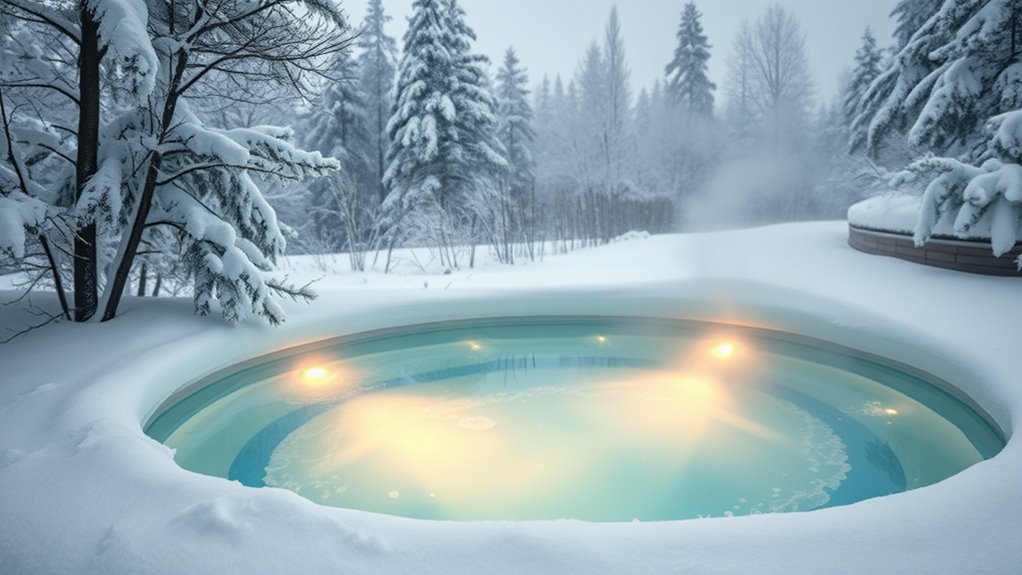

To use your endless pool in cold weather, make certain it’s well-insulated with foam boards or blankets to retain heat and prevent freezing. Regularly clear snow and debris, and inspect the cover and system for damage. Maintain proper chemical levels and check your heater’s functionality to keep the water warm and safe. Installing freeze protection and insulating pipes help prevent damage. Stay ahead of issues—more tips lie ahead for a safe winter swim.
Key Takeaways
- Insulate the pool perimeter with foam boards or blankets to retain heat and prevent freezing damage.
- Regularly clear snow and debris from the cover and surrounding area to ensure safety and proper function.
- Maintain proper chemical levels, including pH and sanitizer, to prevent algae and bacterial growth in cold temperatures.
- Use weather-resistant covers and inspect the system frequently to protect equipment and reduce heat loss.
- Run and insulate the heater properly, setting it slightly higher and periodically activating it to keep the water from freezing.

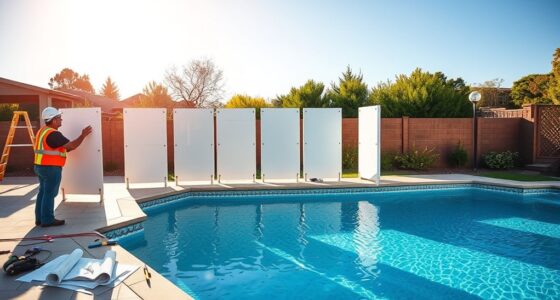
Winter operation requires careful planning and preparation to guarantee safety and efficiency. When you decide to keep using your endless pool during the colder months, outdoor maintenance becomes even more critical. Cold weather can take a toll on your equipment and surrounding area if you don’t take the right steps. One of the most essential aspects is ensuring proper pool insulation. Insulation helps maintain water temperature, reduces energy costs, and prevents damage caused by freezing temperatures. You want to start by evaluating your pool’s insulation system—consider adding foam boards or specialized insulating blankets around the pool’s perimeter. These measures help retain heat and keep your pool water at a comfortable temperature for as long as you want to enjoy it.
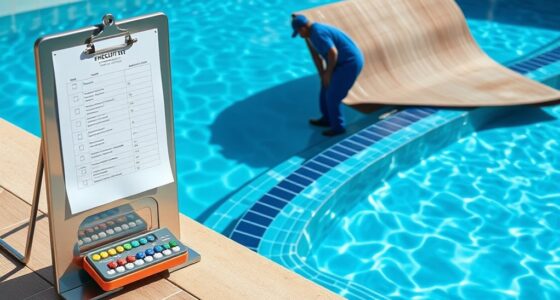
Beyond insulation, outdoor maintenance involves clearing the area around your endless pool of snow, ice, and debris. Regularly removing snow from the pool cover and surrounding deck helps prevent excess weight that could damage the cover or pool structure. Using a non-abrasive tool to clear snow ensures you don’t accidentally scratch or weaken the surface. It’s also wise to check the pool’s chemical levels frequently, as colder temperatures can cause chemical imbalances or algae growth if not properly managed. Keep a close eye on pH levels, chlorine, and sanitizer levels to maintain water quality and safety.
You should also consider investing in a high-quality, weather-resistant pool cover designed for winter use. A good cover prevents debris from falling into the water and minimizes heat loss. When installing the cover, make sure it’s taut and secure to prevent it from blowing off during strong winter winds. Additionally, inspecting your pool’s filtration and circulation systems is vital. Cold weather can cause pipes to freeze, which can lead to costly repairs. Insulating these pipes or installing freeze protection devices ensures they stay functional throughout the winter months.
If your endless pool is equipped with a heater, verify it’s working efficiently and consider setting it to a slightly higher temperature to compensate for heat loss. Running the heater periodically can help keep the water from dropping below freezing, protecting your investment. Remember, consistent outdoor maintenance not only prolongs the life of your pool but also makes winter usage safe and enjoyable. With proper pool insulation, diligent cleaning, and protective coverings, you can confidently use your endless pool in cold weather, extending your swimming season and making the most of your investment all year round.
Additionally, understanding the importance of projector technology and how it can enhance your home cinema experience can help you create a more immersive environment indoors, complementing your outdoor winter activities.
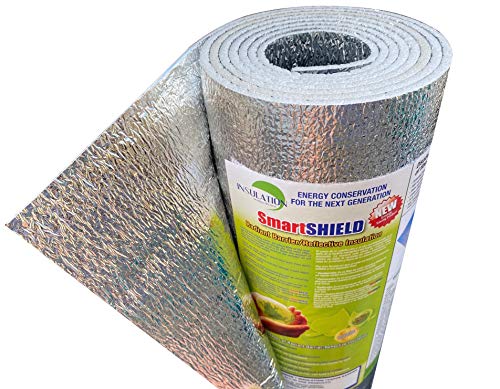
INSULATION MARKETPLACE SmartSHIELD -3mm 24inx10Ft ReflectiveINSULATION Roll, Foam Core Radiant Barrier, ThermalINSULATION Shield – Engineered Foil
- High Reflectivity: Reflects 95% of radiant energy
- Vapor Barrier: Resistant to humidity and moisture
- Soundproofing: Blocks sound effectively
As an affiliate, we earn on qualifying purchases.
As an affiliate, we earn on qualifying purchases.
Frequently Asked Questions
How Does Cold Weather Affect the Pool’s Heating Efficiency?
Cold weather reduces your pool’s insulation effectiveness, making it harder to retain heat, and causes the heater to work harder to maintain your desired temperature. As outdoor temperatures drop, your heater’s performance declines because it needs to run longer and more frequently. To improve efficiency, guarantee proper insulation around your pool and cover it when not in use, helping to conserve heat and reduce energy consumption.
Are There Safety Concerns With Icy Surfaces Near the Pool?
Yes, icy surfaces near your pool pose significant slip hazards and ice safety concerns. You should regularly clear snow and ice, use salt or sand to improve traction, and install non-slip mats around the area. Keep walkways well-lit and avoid rushing when walking near icy zones. Taking these precautions helps prevent falls, ensuring your safety and that of others in cold weather conditions.
What Maintenance Is Required for Winter Operation?
You’ll need to regularly inspect your pool cover for tears or debris and keep water chemistry balanced to prevent freezing. As temperatures drop, periodically remove any accumulated snow or ice to avoid damage. Check the filtration system and pump operation to verify everything runs smoothly. Proper winter maintenance, including covering the pool securely and monitoring water chemistry, prevents costly repairs and keeps your endless pool safe and ready for use once spring arrives.
Can Outdoor Electrical Components Withstand Freezing Temperatures?
Outdoor electrical components can withstand freezing temperatures if they have proper electrical insulation and are designed for durability. Look for components rated for cold weather and make certain they’re properly sealed to prevent moisture ingress. Regularly inspect and maintain insulation to avoid damage, and choose durable parts built to endure harsh conditions. With these precautions, your outdoor electrical system remains safe and functional even in freezing temperatures.
How Do I Prevent Water From Freezing Inside the Pool?
Think of your pool as a delicate glass sculpture in winter’s chill. To prevent water from freezing inside, you should cover it with insulated covers and add antifreeze solutions to the plumbing. These barriers act like a warm blanket, keeping the water flowing smoothly. Regularly monitor the temperature, guarantee the cover stays secure, and use non-toxic antifreeze to maintain a liquid state, protecting your pool through the coldest months.
Conclusion
So, stay smart and stay safe as you set your endless pool for winter. With proper planning and persistent precautions, you’ll enjoy the icy months without interruption. Keep your pool protected, prevent potential problems, and preserve your passion for winter swimming. Remember, a little preparation prevents problems and keeps your pool pristine. Embrace the cold with confidence, and make winter wonderland workouts a wonderful, worry-free routine. Winter’s chill won’t dampen your dedication—dive in and dominate!