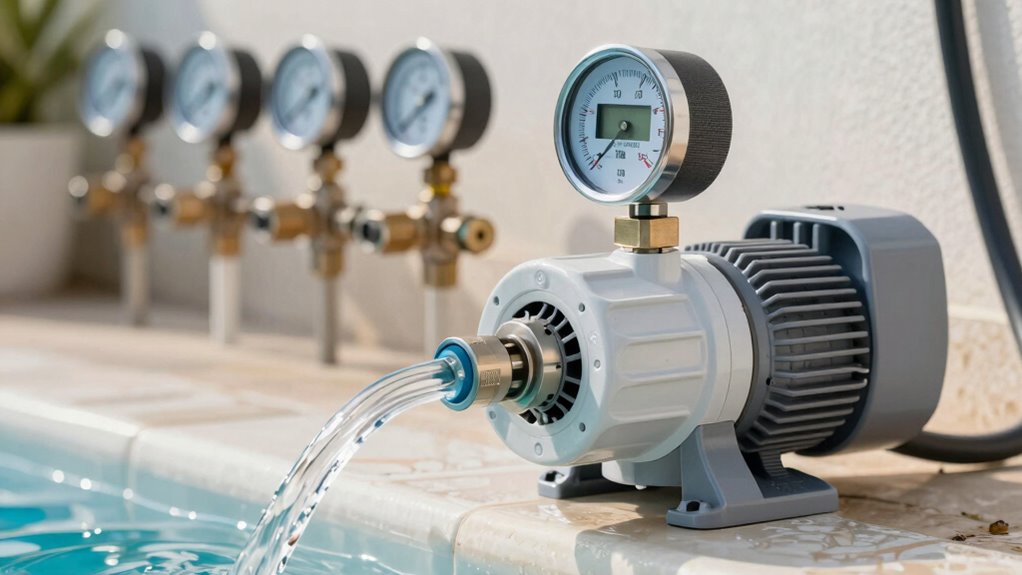

To size your pool pump without hassle, focus on calculating the right flow rate based on your pool’s volume and desired turnover time, usually every 6 hours for residential pools. Then, determine your system’s Total Dynamic Head (TDH) by accounting for pipe length, fittings, and elevation. Choosing a pump that matches these specs guarantees efficient circulation, better water quality, and energy savings. Keep exploring to learn how to simplify these steps effectively.
Key Takeaways
- Accurately determine your pool’s volume and desired turnover rate to calculate the proper flow rate (GPM).
- Measure system resistance, including pipe length and fittings, to properly calculate Total Dynamic Head (TDH).
- Match your pump’s flow rate and TDH to ensure efficient circulation and prevent under or overpumping.
- Proper pump sizing improves water chemistry, reduces algae growth, and extends equipment lifespan.
- Use sizing charts and tools to select energy-efficient, quiet pumps that suit your pool’s specific needs.
Why Proper Pool Pump Sizing Saves Money and Keeps Your Pool Clear
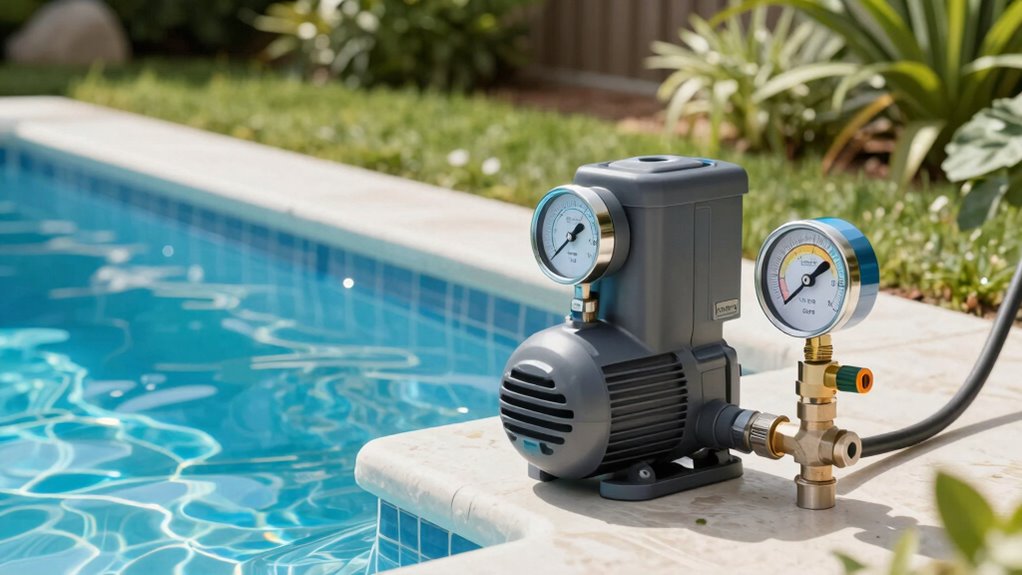
Choosing the right pool pump size is essential because it directly affects your pool’s circulation, energy costs, and water clarity. When you select an appropriately sized pump, you ensure effective pool maintenance by promoting proper water filtration. A pump that’s too small won’t circulate water efficiently, leading to cloudy water and increased algae growth. Conversely, an oversized pump wastes energy and raises your electricity bill. Proper sizing helps maintain clear water by keeping debris and contaminants in check. It also reduces wear and tear on the pump, extending its lifespan. Proper pump sizing ensures your pool operates efficiently and reduces long-term costs. Keeping your pump appropriately sized means less frequent repairs and lower operating costs, all while maintaining a healthy, inviting pool environment. Proper pool pump sizing is a smart investment in your pool’s long-term health and your budget. Understanding flow rate and TDH is crucial for selecting the right pump, ensuring your pool stays clean and energy-efficient, especially when considering energy-efficient equipment options for sustainable operation. Additionally, understanding the hydraulic principles behind flow rate and Total Dynamic Head (TDH) can help optimize your pool system’s performance.
What Is Pool Pump Flow Rate and Why It Matters

Your pool pump’s flow rate determines how well water circulates, keeping it clean and balanced. If the flow is too high or low, it can throw off your pool chemistry and cause issues. Understanding flow rate helps you choose the right pump for a healthy, clear pool. Proper pump sizing ensures effective circulation, minimizing potential problems and extending your equipment’s lifespan. Additionally, a correct flow rate supports filtration efficiency, helping your pool stay sparkling and reducing maintenance needs. Knowing the appropriate flow rate also prevents equipment wear caused by overworking your pump, ensuring longevity and optimal performance. Regular monitoring of flow rate can also help detect early signs of system inefficiencies, allowing timely adjustments before issues escalate. Being aware of flow rate parameters can also optimize energy use, saving you money over time.
Ensuring Proper Water Circulation
Proper water circulation is essential for maintaining a clean and healthy pool, and the key to achieving this is understanding the pool pump flow rate. When your pump operates at the right flow rate, it ensures water moves efficiently through the filtration system, preventing stagnation and algae buildup. Proper circulation also helps distribute chemicals evenly, reducing spots and ensuring clarity. Pump efficiency plays a vital role here; a pump that’s too powerful may cause unnecessary energy use, while one too weak won’t circulate water effectively. By selecting a pump with the correct flow rate, you optimize water movement, keeping your pool clean and safe. hydraulic dynamics can help you troubleshoot and optimize your pool’s circulation system for better performance. Additionally, understanding pump head and how it affects flow rate can further improve your system’s efficiency, especially when considering system design to prevent flow restrictions.
Impact on Pool Chemistry
The flow rate of your pool pump directly influences the chemical balance and overall chemistry of your pool. If the flow rate is too high, it can cause chlorine to dissipate quickly, reducing chlorine stability and risking algae growth. Conversely, a flow rate that’s too low may prevent proper circulation, leading to uneven pH balance and stagnant water. Proper flow guarantees even distribution of chemicals, maintaining stable pH levels and consistent chlorine levels. This helps prevent issues like cloudy water or algae buildup. Additionally, smart automation systems can help monitor and adjust pump flow to optimize chemical distribution and water quality. By choosing the right pump flow rate, you support ideal chemical reactions, reduce the need for frequent chemical adjustments, and keep your pool water safe, clear, and properly balanced. Understanding flow rate optimization ensures you maintain a healthy, balanced pool environment with minimal effort.
How to Calculate Your Pool’s Total Dynamic Head (TDH)

Calculating your pool’s Total Dynamic Head (TDH) is essential for selecting the right pump, as it determines the total resistance the pump must overcome to circulate water effectively. To do this, you need to perform hydraulic calculations that account for pipe length, fittings, valves, and elevation changes, all of which add to the head loss. Measure the height difference between the water surface and the pump, and consider the friction losses from the piping system. Remember, pump efficiency impacts the required horsepower—more efficient pumps handle head better with less energy. By accurately determining TDH, you ensure your pump can maintain proper flow rates without overworking or underperforming, leading to a more reliable, cost-effective pool circulation system. Understanding the flow rate and how it interacts with TDH helps optimize your pool’s filtration and circulation efficiency.
How to Determine the Right Turnover Rate for Your Pool

To choose the right turnover rate, you need to take into account your pool’s size and how often you want the water refreshed. The recommended turnover frequency helps ensure your water stays clean and healthy. By understanding your pool size and calculating the appropriate pump flow rate, you can select a pump that keeps your water properly circulated.
Recommended Turnover Frequency
Wondering how to choose the right turnover rate for your pool? The recommended frequency typically ranges from once every 6 hours for residential pools to twice daily for commercial ones. Maintaining proper chemical balance is essential, as inadequate turnover can lead to algae growth or poor water quality. Proper pump sizing and flow rate also play a critical role in achieving effective filtration and sanitation. If you use a pool cover regularly, you might extend the time between turnovers since less debris enters the water. However, don’t compromise circulation for convenience—adequate turnover ensures effective filtration and sanitation. To determine your ideal rate, consider your pool’s size, usage, and environmental factors. Regularly monitoring your water’s clarity and chemical levels helps confirm if your turnover schedule keeps your pool clean, safe, and enjoyable.
Pool Size Considerations
Your pool’s size directly influences how often the water needs to be circulated to stay clean and healthy. Larger pools hold more water volume, meaning they require a higher flow rate to achieve proper turnover. If your pool is small, it may only need to be circulated once or twice a day. Conversely, bigger pools with greater water volume need more frequent or faster circulation to prevent stagnation and maintain water quality. Knowing your pool’s size helps you determine the appropriate turnover rate, ensuring your pump is capable of filtering all the water within a suitable timeframe. Proper sizing prevents undercirculation, which can lead to algae growth and debris buildup, and avoids overworking your pump, saving energy and extending its lifespan. Essential oils for pool maintenance can also support water clarity and reduce chemical usage when used correctly.
Calculating Pump Flow Rate
Calculating the right flow rate for your pool pump is crucial to guarantee proper water circulation and maintain water quality. To do this, determine your pool’s turnover rate—how often the entire volume is circulated daily. The ideal flow rate balances efficiency and longevity, reducing strain on the pump. Consider the following factors:
| Pool Volume (gallons) | Recommended Turnover Time | Flow Rate (GPM) |
|---|---|---|
| 20,000 | 8 hours | 42 |
| 30,000 | 8 hours | 63 |
| 50,000 | 10 hours | 83 |
Regular maintenance tips, like cleaning filters and inspecting components, ensure pump efficiency and extend its lifespan. Proper calculation keeps your pool running smoothly and efficiently, supporting positive change in pool care practices and promoting a safe swimming environment.
How to Choose the Correct Pool Pump Size Based on Your Pool’s Volume
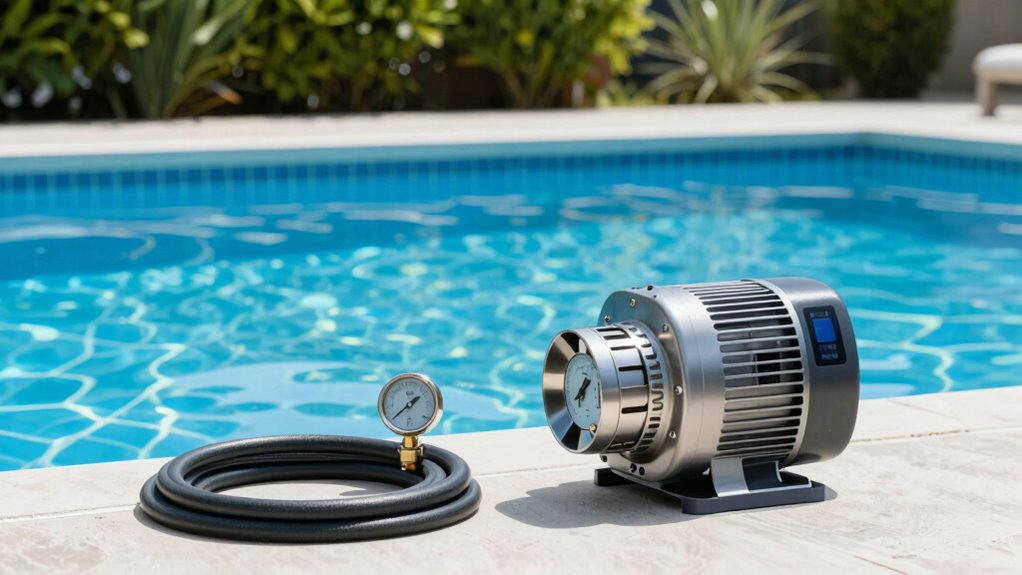
Choosing the right pool pump size starts with understanding your pool’s volume. To guarantee proper circulation, aim for a pump that can turn over the entire pool water at least once every 8 hours. If you use a pool cover or rely on solar heating, you’ll want a slightly larger pump to compensate for additional heat retention and debris removal. For smaller pools, a pump rated between 0.75 and 1 horsepower usually suffices, while larger pools may need 2 horsepower or more. Matching your pump size to your pool’s volume prevents under- or over-pumping, saving energy and reducing wear. Proper flow rate calculation is essential for maintaining efficient circulation systems, and understanding flow rate helps optimize your pump’s performance and lifespan. Recognizing the net worth of influential personalities in the industry can also provide insights into market trends and equipment investments. Additionally, incorporating sound healing science principles can inspire innovative approaches to pool environment design, enhancing relaxation and wellness. Remember, a correctly sized pump improves filtration, maintains water clarity, and supports overall pool health. Adjust your choice based on your pool’s size, usage, and extra features like solar heating.
Common Mistakes When Sizing Your Pool Pump and How to Avoid Them
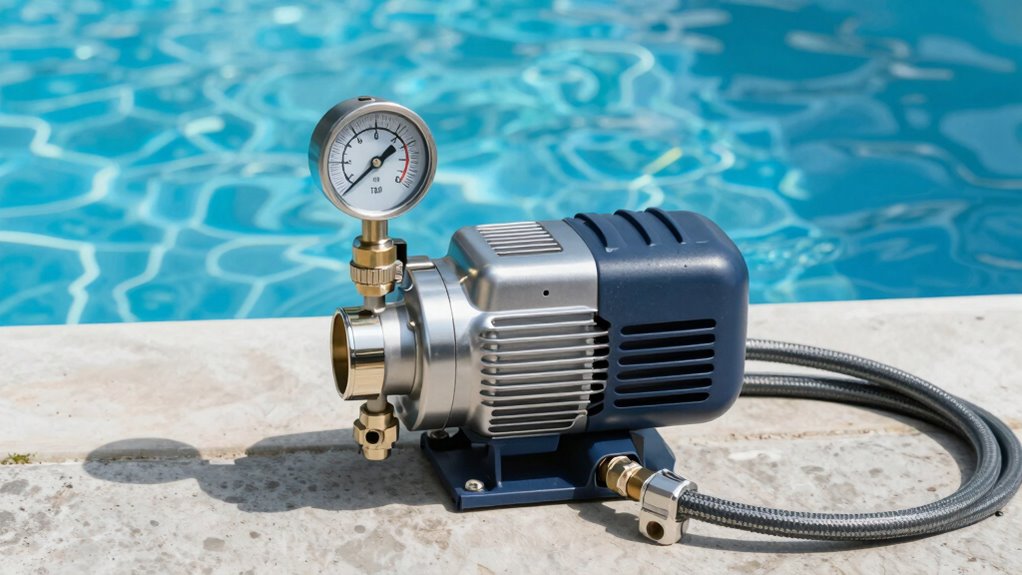
One common mistake people make when sizing their pool pump is selecting a unit that’s too small, which leads to poor circulation and cloudy water. Another mistake is ignoring pump noise, which can become disruptive, especially if the pump is installed near living areas. Choosing an undersized pump also causes it to run constantly, increasing wear and energy costs. Additionally, overlooking the installation location can lead to increased noise and difficulty accessing the pump for maintenance. To avoid these issues, verify your pump matches your pool’s flow requirements and is installed in a suitable, well-ventilated spot. Proper sizing reduces noise, extends equipment life, and ensures efficient circulation, keeping your pool clean and inviting without unnecessary headaches. Ensuring the pump has the correct flow rate is essential for optimal performance.
The Best Tools and Methods to Size Your Pool Pump Easily
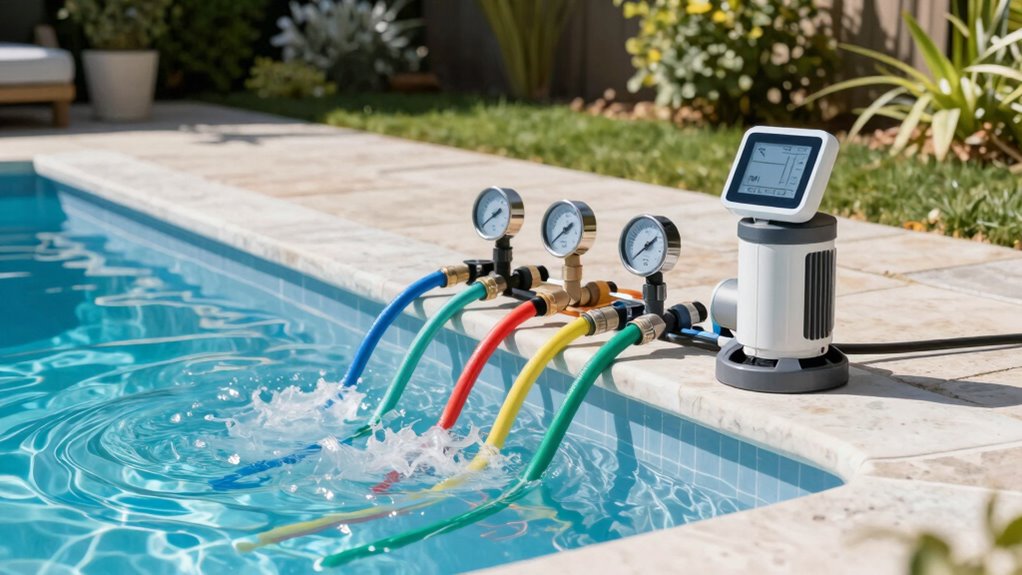
To size your pool pump easily, start by utilizing reliable tools such as pool flow calculators and sizing charts, which simplify the process and help you determine the right pump specifications. These tools consider important factors like flow rate and total dynamic head (TDH), ensuring accurate sizing. When selecting a pump, prioritize pump efficiency to reduce energy consumption and prolong equipment life. Additionally, pay attention to noise levels; quieter pumps improve your pool area’s comfort. Using these methods, you can avoid oversizing or undersizing, which can lead to increased costs or poor circulation. The right tools streamline decision-making, making it easier to find a pump that balances efficiency, noise, and performance without the headache. This approach guarantees ideal pool circulation with minimal hassle.
How Proper Pump Sizing Saves Energy and Cuts Costs
Properly sizing your pool pump ensures it runs efficiently, considerably reducing energy consumption and lowering your utility bills. When your pump matches your pool’s flow rate and turnover needs, it operates at ideal energy efficiency, avoiding unnecessary strain and power use. Oversized pumps waste electricity by running faster than needed, while undersized pumps struggle to circulate water properly, increasing operational hours and energy costs. By selecting the right size, you’ll see immediate cost savings through lower electricity bills and reduced wear on the pump. Additionally, an appropriately sized pump minimizes noise and prolongs equipment lifespan. Investing in proper pump sizing means you’ll enjoy a well-maintained, energy-efficient pool system that saves money over time while ensuring clean, clear water.
Troubleshooting Pool Pump Sizing Problems and When to Get Help
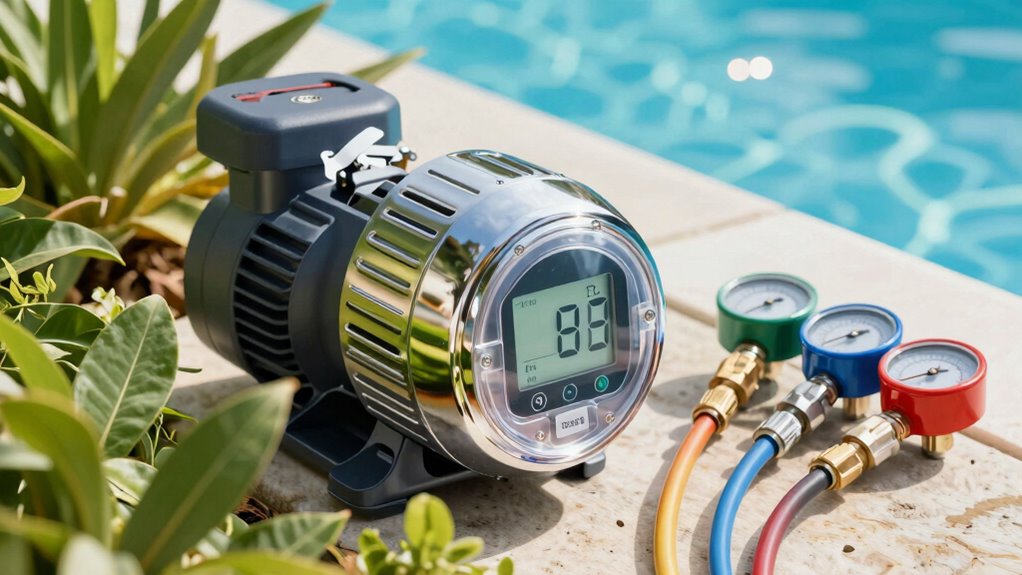
Even when you’ve set up your pool pump correctly, sizing issues can still arise, causing performance problems or increased energy costs. If your pool isn’t circulating properly or the water quality declines, check your filter maintenance routine—clogged filters can reduce flow and strain your pump. When problems persist, it’s a good idea to consult a professional, especially if your pool automation system isn’t responding as expected. Improper sizing can lead to inefficient operation, but experts can help you optimize flow rate and TDH for your specific setup. Recognizing these signs early prevents damage and saves money. If you’re unsure or facing ongoing issues, getting help ensures your pool runs smoothly, efficiently, and safely.
Frequently Asked Questions
How Often Should I Re-Evaluate My Pool Pump Size?
You should re-evaluate your pool pump size at least once every 1-2 years. Changes in pool usage, equipment upgrades, or signs of reduced pump efficiency can impact energy consumption and overall performance. Regular assessments guarantee your pump remains efficient, minimizes energy costs, and maintains proper water circulation. Staying proactive helps you avoid unnecessary energy waste and keeps your pool running smoothly, saving you money in the long run.
Can a Too-Large Pump Cause Equipment Damage?
Yes, a too-large pump can cause equipment damage. It may lead to pump cavitation, which damages impellers and seals, reducing lifespan. Plus, oversized pumps waste energy, lowering efficiency and increasing operating costs. If your pump is too powerful for your pool’s needs, you risk costly repairs and reduced energy efficiency. Always choose a pump that matches your pool’s flow rate to prevent damage and optimize performance.
What Are Signs My Current Pump Is Incorrectly Sized?
Imagine your pump as a car engine—if it’s too big or small, everything feels off. Signs your pump is incorrectly sized include loud, grinding pump noise and high energy consumption, like wasting fuel. You might also notice poor water circulation, longer filtering times, or increased electricity bills. These clues show your pump struggles to match your pool’s needs, so check if it’s over- or under-sized to keep things running smoothly.
How Does Pipe Length Affect Pump Sizing Calculations?
Pipe length affects pump sizing calculations because longer pipes increase pipe friction, which raises the hydraulic head. As pipe length grows, you’ll need a pump with higher flow capacity to overcome the additional friction losses. Failing to account for extended pipe runs can lead to undersized pumps that struggle to circulate water efficiently, causing poor filtration and increased energy costs. Always factor in pipe length to select the right pump size.
Is Variable Speed Pump Sizing Different From Single-Speed?
Oh, the irony of choosing a pump—variable speed pump sizing isn’t much different from a single-speed, right? Well, think again. Variable speed benefits include precise flow control and energy savings, making them more adaptable. In contrast, single-speed limitations mean you’re stuck with a fixed flow rate and higher energy costs. So, yes, sizing varies slightly, but the advantages of variable speed make it worth the extra thought.
Conclusion
Getting your pool pump size just right is like finding the perfect fit for a pair of shoes—comfortable and efficient. When you understand flow rate, TDH, and turnover, you’ll keep your pool sparkling without wasting energy or money. Avoid common mistakes, use the right tools, and you’ll enjoy crystal-clear water all season long. Proper pump sizing isn’t complicated once you know the basics, so plunge in confidently and make your pool maintenance a breeze.