
Power surges can quickly damage your pool controllers by overwhelming their electronic parts with sudden voltage spikes. If your system isn’t properly grounded or lacks surge protection devices, these excess voltages can cause fried circuit boards, burned-out motors, and early failures. External events like lightning strikes make your equipment even more vulnerable. Installing surge protectors and ensuring proper grounding can shield your pool systems from costly damage—if you want to know how to keep your equipment safe, keep exploring.
Key Takeaways
- Power surges deliver high voltage that can fry sensitive circuit boards in pool controllers.
- Lack of proper grounding prevents safe dissipation of surge energy, increasing component damage risk.
- Lightning strikes and electrical faults cause sudden voltage spikes that overwhelm electronic components.
- Inadequate surge protection devices allow excess voltage to reach controllers, leading to early failure.
- Regular inspection and proper installation of surge protectors reduce the likelihood of controllers dying prematurely.

Intermatic PS3000 Pool and Spa Surge Protective Device
- Surge protection for pool and spa: Inexpensive insurance against power surges
- Protection status indicator: Green LED shows protection is active
- Durable enclosure: Type 4x watertight and UV resistant
As an affiliate, we earn on qualifying purchases.
As an affiliate, we earn on qualifying purchases.
How Do Power Surges Damage Pool Controllers and Pumps?

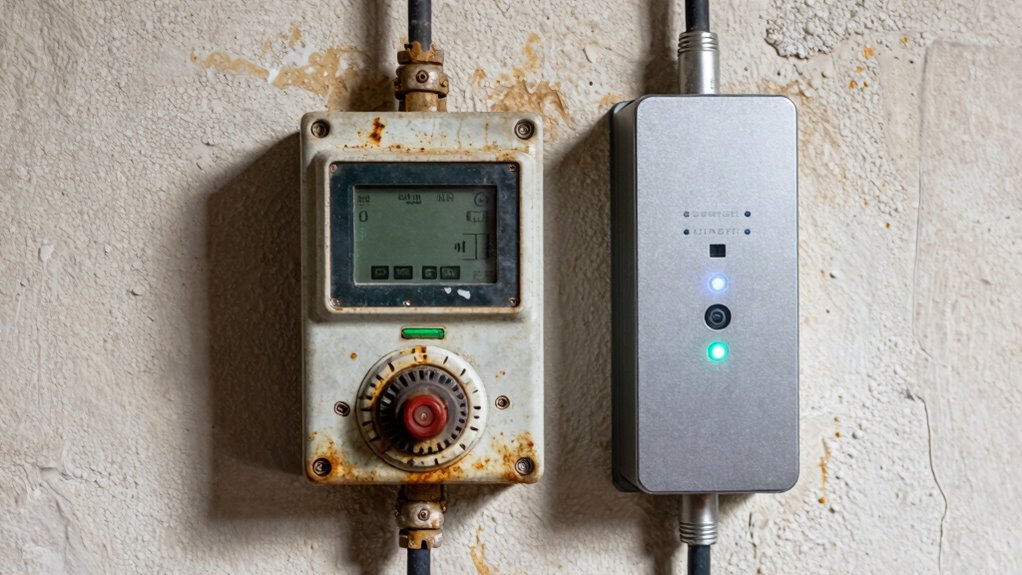
Power surges can cause serious damage to pool controllers and pumps by overwhelming their electronic components with sudden, high voltage. Without proper electrical grounding, this excess electricity has no safe path to dissipate, increasing the risk of component failure. Surge suppression devices act as a buffer, absorbing or redirecting excess voltage before it reaches your equipment. When these protective measures aren’t in place, power surges can fry circuit boards, burn out motors, or cause erratic operation. Proper electrical grounding helps channel unwanted electrical energy safely into the ground. Installing surge suppressors provides an extra layer of protection, reducing the likelihood of costly repairs or replacements. Sizing and load‑planning tools are essential to ensure your surge protection setup is appropriately matched to your equipment’s needs. Properly systematically assessing your electrical setup can further prevent damage caused by unexpected surges. Incorporating comprehensive electrical safety measures can significantly enhance your overall protection against power surges. Additionally, understanding the causes of power surges can help you implement more effective preventative strategies. Together, electrical grounding and surge suppression are essential defenses against damaging power surges.
What Causes Power Surges in Your Pool Equipment?

Electrical issues outside your pool equipment can trigger power surges, often caused by lightning strikes, downed power lines, or sudden electrical faults. Lightning strikes are a common cause, delivering a massive voltage spike that can travel through power lines and damage your equipment. Downed power lines or electrical faults can create voltage irregularities, leading to surges. Proper electrical grounding is essential; if your system isn’t grounded correctly, surges can find unintended paths, increasing the risk of damage. These external events inject excess voltage into your electrical system, overwhelming your pool’s electronics. Additionally, high-quality surge protectors can help mitigate the impact of these dangerous power spikes. Ensuring your grounding system is properly installed and maintained is crucial for directing surges safely into the earth and protecting your equipment. Regular electrical system checks and maintenance can help identify potential vulnerabilities before a surge causes damage. Recognizing the importance of electrical safety and regular system checks can further prevent damage caused by unexpected power surges. Understanding these causes highlights the importance of surge protection measures, such as lightning arresters and grounded wiring, to shield your pool equipment from damaging power spikes. Incorporating proper wiring practices can significantly reduce the risk of surge-related damage to your pool electronics.
Why Are Pool Controllers More Vulnerable to Voltage Spikes?

Pool controllers are more vulnerable to voltage spikes because they’re exposed to external power sources and environmental elements. Their electronic components are sensitive, making them easier to damage during a surge. Understanding these vulnerabilities helps you protect your equipment effectively. Additionally, essential oils with calming and protective properties can be used to reduce stress on sensitive electronic components, although practical application in this context is limited. Recognizing the industry trends and advancements in surge protection technology can further safeguard your pool equipment from unexpected power fluctuations. Implementing surge protection devices is essential for preventing early controller failure due to voltage spikes. Being aware of electrical safety practices can also minimize the risk of damage caused by power surges.
Exposure to External Power
Because controllers are often connected directly to external power sources, they face increased risk from voltage spikes. Grounding issues can make them even more vulnerable, as poor grounding allows excess voltage to travel through the system, damaging sensitive components. Lightning strikes are a common external cause that can send sudden, massive surges through power lines, overwhelming the controller’s protective devices. When your pool controller isn’t properly grounded or shielded, these power fluctuations can quickly cause failures. External power exposure means the controller is less insulated from external electrical events, increasing the chance of early failure. Proper surge protection** is essential to safeguard against these external voltage fluctuations. Without adequate surge protection, these voltage spikes can damage internal circuits, leading to costly repairs or replacements and shortening the lifespan of your pool electronics. Additionally, implementing surge protective devices can significantly reduce the risk of damage from unexpected power surges. Ensuring effective electrical grounding helps direct excess voltage safely into the ground, providing an additional layer of protection against damaging power surges. Properly designed electrical systems can also include ground fault circuit interrupters that help prevent damage caused by grounding issues and voltage anomalies. Incorporating advanced surge suppression** technologies can further enhance protection by actively reducing transient voltage spikes before they reach sensitive components.
Sensitive Electronic Components
Sensitive electronic components within pool controllers are especially vulnerable to voltage spikes because they rely on stable, low-voltage signals to operate correctly. Their electronic vulnerabilities make them susceptible to sudden power surges that can easily damage delicate parts like microprocessors, relays, and sensors. The component fragility of these elements means even minor voltage fluctuations can cause malfunction or complete failure. Unlike rugged mechanical parts, electronic components lack inherent resilience, so they’re less equipped to handle unexpected electrical stresses. This vulnerability underscores the importance of surge protection, as unchecked voltage spikes can rapidly degrade controller performance and shorten equipment lifespan. Protecting these sensitive parts ensures your pool system remains reliable, safe, and efficient over the long term.
What Happens When Pool Controllers Fail Early?

When pool controllers fail early, it can disrupt your entire pool operation and lead to costly repairs. Without a functioning controller, maintaining proper pool chemistry becomes challenging, risking algae growth or corrosion. You might notice fluctuating pH levels, sanitizer imbalance, or cloudy water, which affect swimmer safety and comfort. Additionally, your aesthetic features—like lighting, waterfalls, or automated cleaners—may stop working, diminishing your pool’s visual appeal. This breakdown can also cause equipment damage if issues aren’t promptly addressed. The inconvenience of manual adjustments increases, and you may find yourself spending more time troubleshooting or calling in repairs. Moreover, exposure to power surges can accelerate electronic component failure, emphasizing the importance of surge protection for your pool electronics. Properly safeguarding your equipment with reliable electrical safeguards can significantly extend the lifespan of your controllers. Implementing **power surge protection** is essential to prevent damage caused by unexpected voltage spikes. Regular maintenance and **electronic monitoring can help detect early signs of failure before costly breakdowns occur. Additionally, using appropriate surge protection devices can provide an extra layer of defense against voltage spikes. Ultimately, early controller failure** compromises both the performance and appearance of your pool, emphasizing the importance of reliable electronics and surge protection to prevent these costly and frustrating issues.
What Surge Protection Devices Do You Need for Your Pool?

Choosing the right surge protection devices for your pool is essential to prevent damage and ensure safety. You need to take into account proper types of surge protectors, how to install them correctly, and whether they’re compatible with your existing equipment. Let’s explore these points to help you make the best choices for your pool’s electronics.
Proper Surge Protector Types
To protect your pool electronics effectively, selecting the right surge protection devices is essential. You need devices with appropriate surge protector ratings to handle unexpected voltage spikes. A whole-house surge protector offers primary defense, diverting excess energy at the main panel. Additionally, point-of-use surge protectors for controllers and pumps provide targeted protection. Proper grounding techniques ensure surge energy dissipates safely into the ground, reducing damage risk. Here’s a quick comparison:
| Surge Protector Type | Best For |
|---|---|
| Whole-House Surge Protector | Main panel, large voltage surges |
| Plug-in Surge Protector | Controllers, pumps, smaller devices |
| Inline Surge Suppressor | Sensitive electronics, delicate parts |
| Power Strip with Surge Protection | Convenience, multiple outlets |
| Lightning Arresters | Extreme events, outdoor equipment |
Choosing the appropriate type depends on your system’s specific needs and grounding practices.
Installation Best Practices
Proper installation of surge protection devices is key to safeguarding your pool electronics from voltage spikes. Start by ensuring proper grounding practices; a solid ground connection directs excess energy safely into the earth, reducing stress on your equipment. When wiring your surge protectors, follow recommended wiring configurations to maintain system integrity and prevent bypasses or weak links. Install surge protection devices close to the main electrical panel and equipment, avoiding long wiring runs that can reduce effectiveness. Use shielded or grounded cables where possible, and double-check all connections for tightness. Proper grounding practices and correct wiring configurations are essential for supreme performance, ensuring surge protectors work as intended. These steps help prevent voltage surges from damaging controllers and other sensitive electronics in your pool system.
Compatibility Considerations
Selecting the right surge protection devices for your pool depends on the specific electronics you want to safeguard. You need to take into account pool controller compatibility to ensure the surge protector matches your system’s requirements. Not all devices work with every type of controller or pump, so check manufacturer specifications carefully. Additionally, adhere to surge protection standards—like UL 1449—to guarantee your equipment is properly safeguarded. Compatibility issues can lead to ineffective protection or damage to your pool’s electronics. Always verify that the surge protection device you choose is rated for the voltage and current your pool system uses. By selecting devices that meet surge protection standards and are compatible with your pool controller, you’ll reduce the risk of damage from power surges and extend the lifespan of your equipment.
How Can You Protect Your Pool Equipment From Power Surges?

Power surges can strike unexpectedly and cause serious damage to your pool equipment. To protect your system, start with proper grounding to prevent electrical faults from escalating. Confirm all your equipment is correctly grounded to redirect excess electricity safely into the ground. Additionally, use equipment shielding, such as surge protectors designed specifically for pool electronics, to absorb or block sudden voltage spikes. Installing a high-quality surge protector at your main power source can help prevent surges from reaching your pool controls and pumps. Regularly inspecting grounding connections and shielding components keeps your setup reliable. Taking these steps minimizes the risk of damage caused by power surges, extending the lifespan of your pool equipment and saving you money on repairs.
How to Choose the Right Surge Protector for Your Pool?
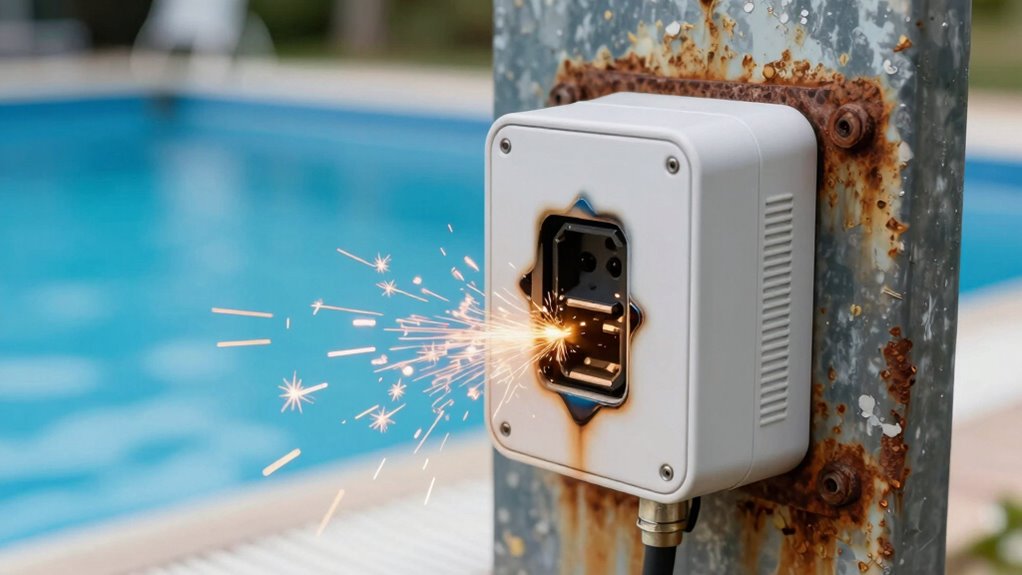
Choosing the right surge protector for your pool involves considering the specific needs of your equipment and the level of protection required. If you have a pool cover, guarantee the surge protector is weather-resistant and suitable for outdoor use. Water chemistry plays a role too; high mineral content or saltwater pools can affect electrical components. Look for surge protectors with a high joule rating to handle power spikes effectively. Make sure it’s compatible with your pool controller and other electronics. Also, consider whether it has grounding features to prevent damage from lightning strikes. Proper installation is key—install the surge protector close to your equipment, but away from water exposure. Selecting the right surge protector helps prevent early controller failure and extends your pool equipment’s lifespan.
Frequently Asked Questions
Can Indoor Surge Protectors Effectively Protect Outdoor Pool Equipment?
Indoor surge protectors generally can’t effectively protect outdoor pool equipment because they aren’t designed for harsh weather conditions. Relying solely on indoor protection can compromise equipment durability, leading to early controller failures. For maximum safety and longevity, you should use outdoor-rated surge protectors specifically designed to withstand moisture, temperature fluctuations, and electrical surges. This ensures your pool electronics stay protected and last longer.
How Often Should Surge Protection Devices Be Replaced?
Ironically, your surge protector’s lifespan isn’t eternal, so don’t assume it’ll last forever. You should replace your surge protection device every 3-5 years or sooner if you notice signs of wear, damage, or frequent tripping. Regularly checking your surge protector’s condition guarantees maximum protection. Remember, the longer you delay, the higher the risk of damaging your pool electronics during a lightning strike or power surge.
Are There Specific Surge Protection Standards for Pool Controllers?
Yes, there are specific surge protection standards for pool controllers. You should look for surge protectors with high ratings, such as UL 1449, to guarantee proper protection. Additionally, following grounding best practices is crucial; make sure your surge protector is properly grounded to prevent early controller failure. By choosing devices that meet these standards and grounding correctly, you’ll markedly reduce the risk of damage from power surges.
What Are Signs That a Surge Protector Has Failed?
Think of a surge protector like a shield that wears down over time. Signs of failure include frequent tripping, a burning smell, or if the protector feels hot to the touch. You might notice your pool controller acting erratically. Proper electrical grounding helps extend its lifespan, but if you see these signs, it’s time to replace it. Ignoring them risks damage to your electronics from unchecked power surges.
Do Solar Pool Systems Require Different Surge Protection Measures?
Yes, solar pool systems need different surge protection measures. You should make certain your surge protector is compatible with your solar panel and inverter. Since solar inverters are sensitive, you must choose a protector designed for inverter compatibility to prevent damage from power surges. Installing specialized surge protection helps safeguard your system, extending its lifespan and maintaining efficient operation, especially during thunderstorms or electrical spikes.
Conclusion
So, next time your pool controller throws a tantrum and dies unexpectedly, remember it’s not just bad luck—it’s your power’s way of saying, “Surprise!” Protect your investment with the right surge protector, or enjoy the thrill of replacing costly electronics. Because nothing says “fun” like troubleshooting dead controllers during pool season, right? Keep your equipment safe, and maybe—just maybe—you’ll get through summer without a shocking surprise.