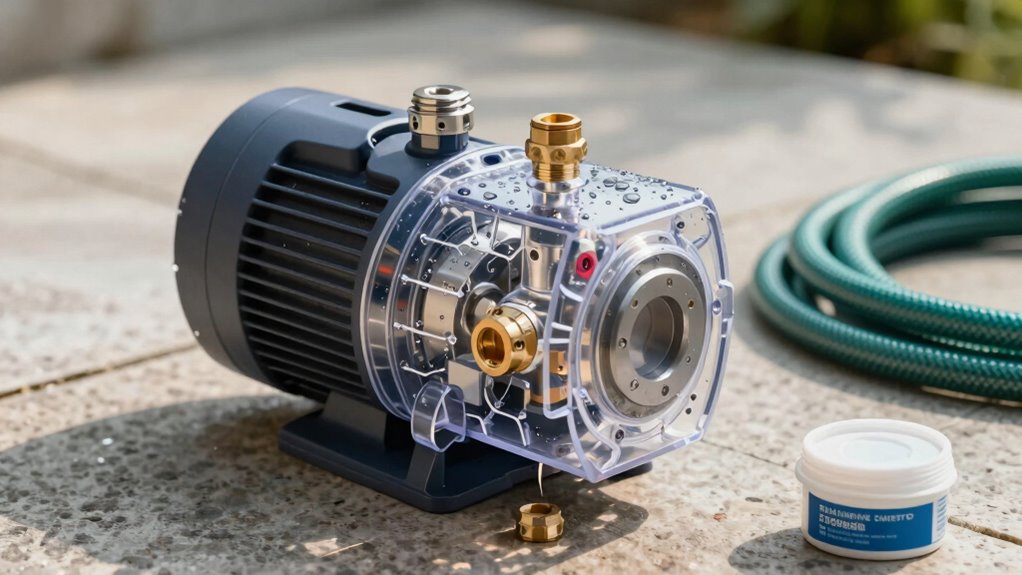

Pool pumps can lose prime due to air leaks, debris blockages, low water levels, or worn seals, which disrupt suction and circulation. To prevent this, regularly inspect seals, check for air leaks, keep the water level proper, and clean skimmer baskets and filters. Proper maintenance and correct priming techniques help maintain consistent flow. If you want detailed solutions to solve and prevent prime loss, you’ll find helpful tips to keep your system running smoothly.
Key Takeaways
- Regularly inspect and tighten fittings, seals, and o-rings to prevent air leaks that cause pump priming issues.
- Maintain proper water levels and clean skimmer baskets to ensure continuous water flow and prevent air entry.
- Properly prime the pump by filling the filter with water and securing all connections before operation.
- Check for debris, clogs, or damage in the pump, hoses, and valves to maintain system integrity and suction.
- Perform routine maintenance, including cleaning filters and inspecting components, to reduce the risk of prime loss.

Water Transfer Pump, 115V 1/10HP Electric Utility Pump with On/Off Switch 2 * 6 ft Water Hoses Kit for Removing Water from Garden Pools Aquariums Hot Tub Draining 1/8’’ Low Suction for Rain Barrel
Powerful Water Transfer Pump: 115V AC / 60 HZ, 1/10 HP, power cords length: 2*6 FT. Our portable…
As an affiliate, we earn on qualifying purchases.
As an affiliate, we earn on qualifying purchases.
Why Does My Pool Pump Keep Losing Its Prime? Common Causes Explained
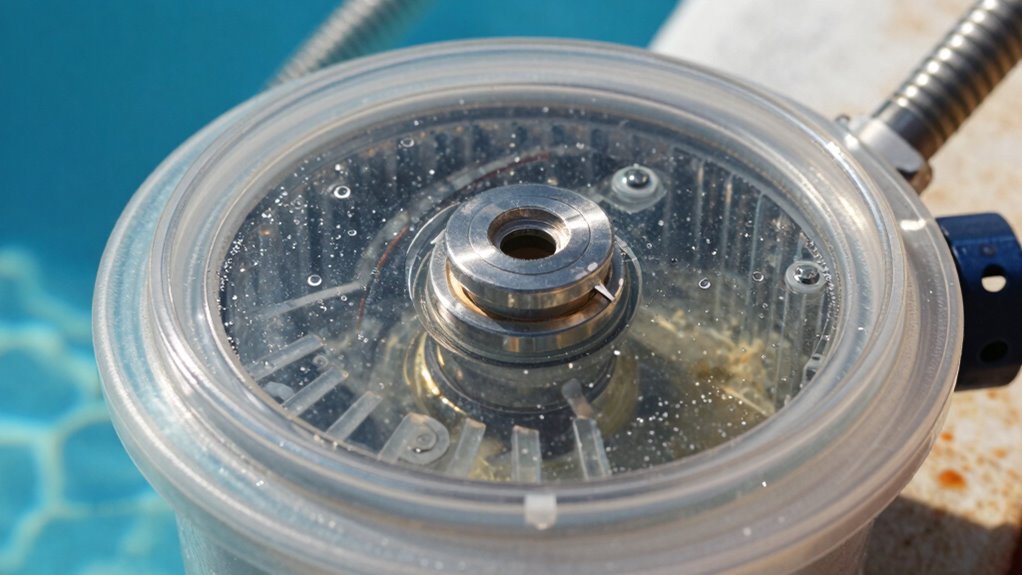
If your pool pump keeps losing its prime, it can be frustrating and disruptive to your swimming season. One common cause is a debris blockage in the pump motor or skimmer basket. When debris clogs the pump’s impeller or inlet, it prevents water from flowing properly, causing the pump to lose its prime. Sometimes, leaves, dirt, or algae can build up and hinder water intake. Additionally, a faulty or worn-out pump motor may struggle to maintain suction, leading to prime loss. Regularly inspecting and cleaning your pool circulation system can help prevent these issues. Proper maintenance routines and timely repairs are essential for avoiding prime loss. Check for blockages regularly, especially after storms or heavy use. Clearing debris and ensuring the pump motor is working correctly can help maintain a steady prime and keep your pool circulating smoothly. Understanding the role of proper maintenance is essential to prevent prime loss and extend the lifespan of your pump. Maintaining the correct water level is also crucial, as low water levels can cause air to enter the pump and disrupt its prime process. Incorporating regular inspections can further reduce the risk of prime issues by catching potential problems early.

KitKing – SPX1600TRA Super Pump Seal Replacement for Hayward Go Kit 3. Fits SP1600, SP2600 in Regular, X, VSP Models. SPX1600TRA SP1600Z2 PS-201 SPX1600R SPX1600S SPX1600T Pool
Super Pump Seal O-ring Replacement Go Kit 3 by Kit King.
As an affiliate, we earn on qualifying purchases.
As an affiliate, we earn on qualifying purchases.
How to Check and Fix Air Leaks in Your Pool Pump System
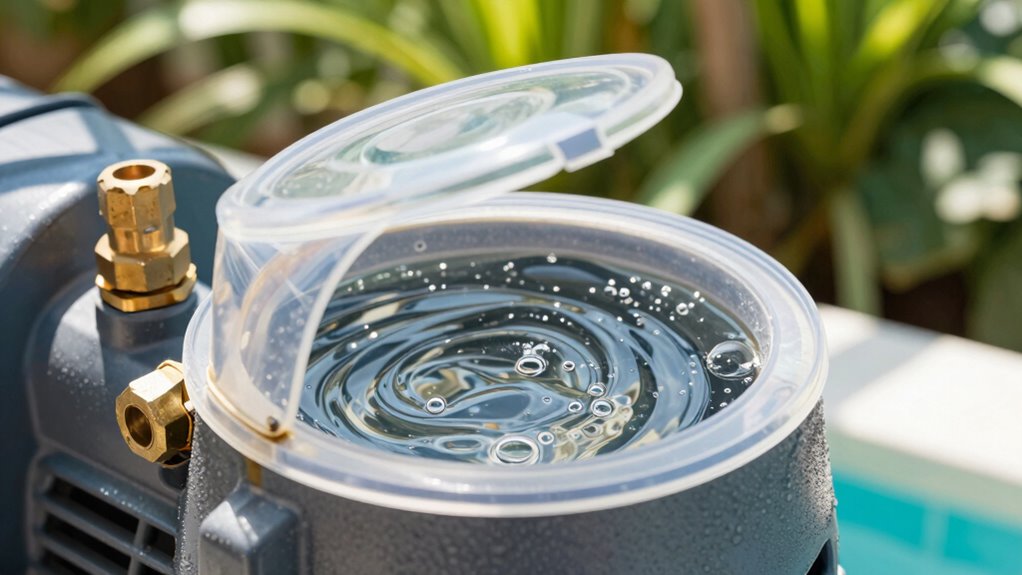
Air leaks are a common culprit behind losing prime in your pool pump system, and detecting them early can save you time and frustration. To check for air leaks, start by inspecting the pump lid and o-ring for cracks or damage, ensuring they’re seated properly. Listen for unusual pump noise, which often signals air entering the system. Next, examine all connections, hoses, and fittings for cracks or loose fittings that could be letting air in. You can also apply a soap and water solution to suspect areas—bubbles will form if there’s a leak. Fix any leaks by tightening fittings, replacing damaged o-rings, or sealing with pool-safe silicone. Regular maintenance and careful inspection help prevent air leaks and keep your pump running quietly and efficiently. Understanding system components and how they interact can also help diagnose issues more effectively, especially when considering the role of vetted solutions like reliable pool equipment and accessories. Paying attention to proper pump priming techniques can also make a significant difference in avoiding prime loss over time. Additionally, being aware of common air leak locations can facilitate quicker troubleshooting and repairs. Moreover, implementing routine inspections with appropriate tools can greatly improve early detection and prevent prolonged prime problems.

WENPENG Pool Skimmer Basket Replacement,for Hayward Swimming Pool Skimmer SPX1082CA & Aladdin B-152 Skimmer Models,SP1082 SP1083 SP1084 1085 1086 SP1075 1075T 1076 1077 Skimmers Basket
Product:1* skimmer basket with handle, Size: top OD: 7", bottom OD: 6.6", depth: 5"
As an affiliate, we earn on qualifying purchases.
As an affiliate, we earn on qualifying purchases.
Why Water Level and Skimmer Basket Matter for Priming
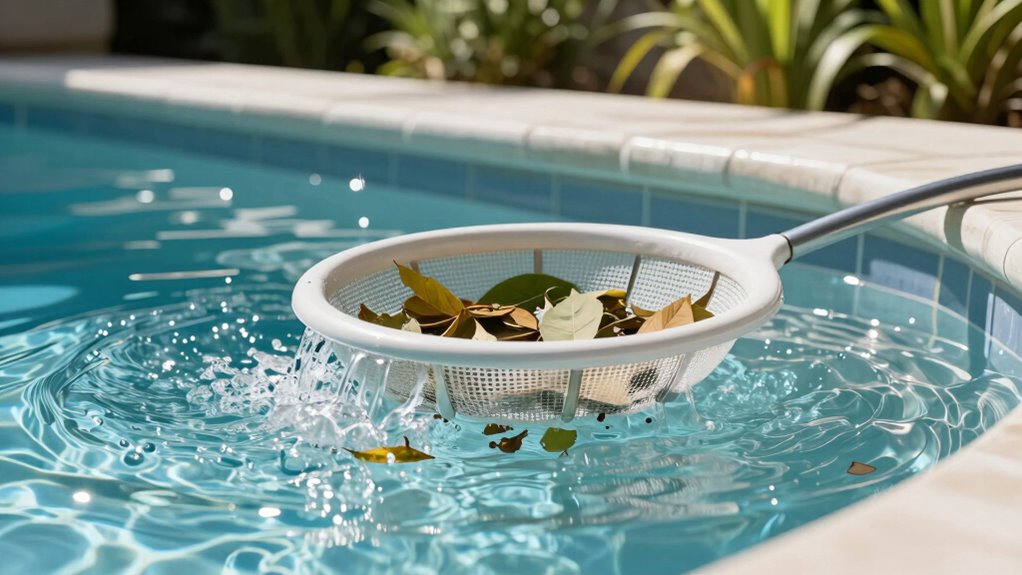
Ever wonder why maintaining the correct water level and keeping the skimmer basket clear are essential for your pump to prime properly? The water level directly affects the pump’s ability to stay submerged and maintain proper suction. If the water drops below the skimmer opening, the pump can draw in air instead of water, causing it to lose prime. Similarly, a cluttered or clogged skimmer basket restricts water flow, increasing the risk of air entering the system. A clean skimmer basket ensures smooth water intake and prevents air pockets that disrupt priming. Proper water circulation, including the use of natural filtration systems, can also help maintain consistent water quality. By regularly checking and maintaining the water level and skimmer basket, you help your pool pump operate efficiently, reduce priming issues, and extend its lifespan. Proper maintenance keeps your pump primed and ready to keep your pool clean.

LubeTube 4oz O-Ring Grease – Stops Leaks on Pump & Filter Seals – Non-Sticky Synthetic Grease for Pool Equipment, Plumbing, RV & Marine – PFAS-Free, Food-Grade, Made in USA
STOP LEAKS ON POOL FILTERS & PUMPS Fix leaking pool filter lids, pump baskets, and union fittings by…
As an affiliate, we earn on qualifying purchases.
As an affiliate, we earn on qualifying purchases.
Troubleshooting Check Valves and Seal Failures Causing Prime Loss
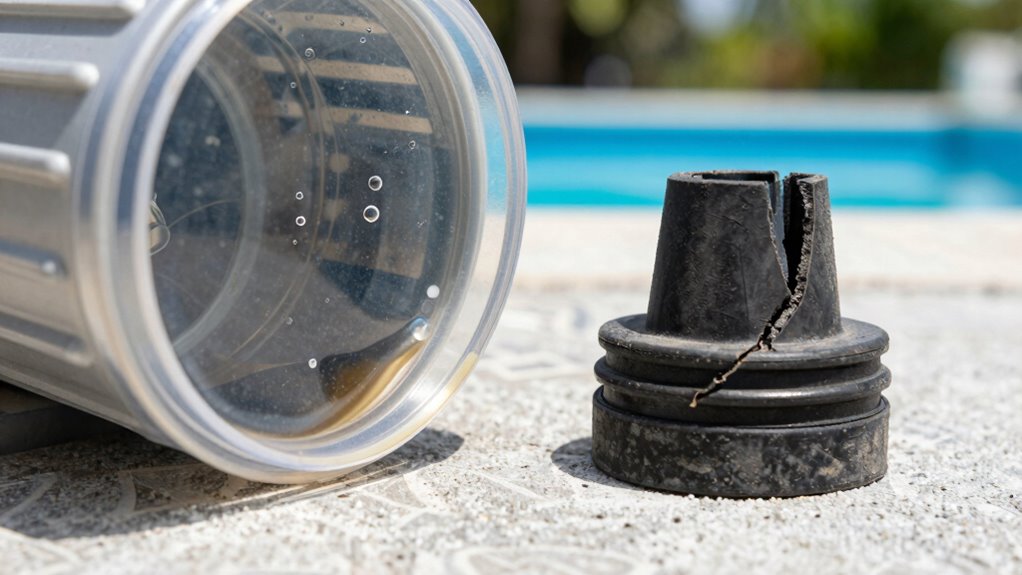
Troubleshooting check valves and seal failures is essential when your pool pump loses its prime. Check valve issues often cause air leaks or blockages that prevent proper water flow, leading to prime loss. Inspect the check valve for cracks, wear, or improper installation, and replace if necessary. Seal failure causes are another common culprit; worn or damaged seals can allow air to enter the system, breaking the prime. Examine all seals around the pump and fittings for cracks, brittleness, or deterioration. Tighten loose fittings and replace damaged seals promptly. Ensuring that check valves function correctly and seals are intact helps maintain a watertight system, preventing air from entering and causing your pump to lose prime. Regular inspection is key to avoiding these issues. Proper installation of components is crucial for maintaining system integrity and preventing prime loss.
Preventative Maintenance Tips to Keep Your Pool Pump Primed
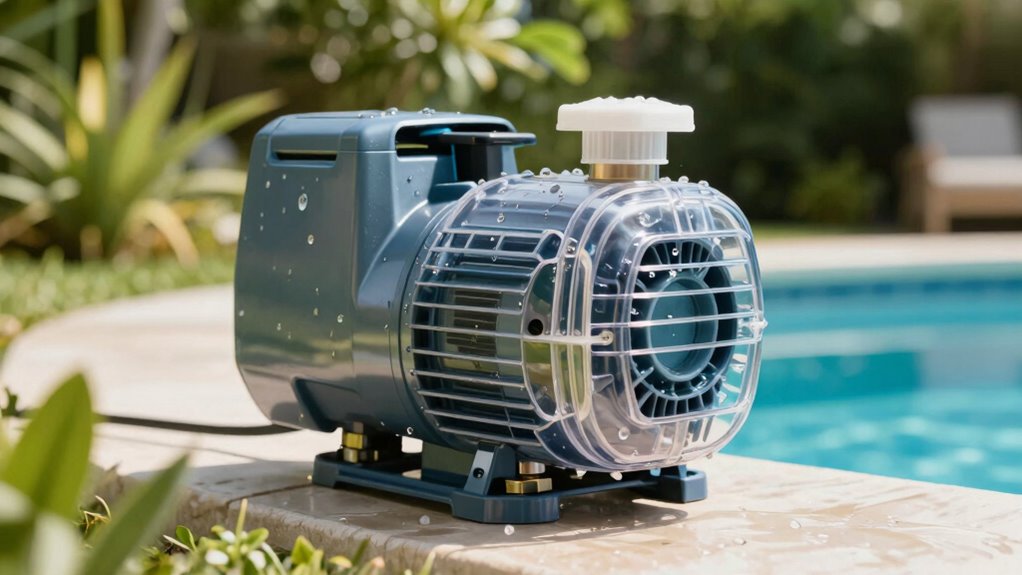
Regularly inspecting your pump and its components helps catch issues before they cause prime loss. Make sure to maintain seals and O-rings to prevent leaks that can disrupt proper flow. Staying on top of these simple tasks keeps your pump running smoothly and efficiently. Additionally, checking small appliance efficiency can help identify underlying problems that may affect your pump’s performance. Incorporating routine maintenance checks into your schedule can further minimize the risk of prime failure by ensuring all parts are in optimal condition. Monitoring vacuum performance can also provide early warning signs of developing issues that impact prime retention. Conducting system pressure tests periodically can help detect hidden leaks or blockages that might cause prime loss over time. Regularly cleaning and inspecting filter systems can further prevent debris buildup that impairs flow and prime stability.
Regular Inspection Checks
To keep your pool pump primed and running smoothly, you should routinely perform inspection checks. Start by examining the pool’s chemical balance, ensuring alkalinity and pH levels are within recommended ranges. Proper chemical balance prevents buildup that can clog the pump’s skimmer and impeller, reducing prime issues. Also, pay attention to pump noise levels; unusual sounds can indicate air leaks or debris in the impeller, which may cause loss of prime. Check hoses, fittings, and seals for leaks or cracks, and clean out any debris around the pump area. Regular inspections help identify potential problems early, allowing you to address them before they affect your pump’s performance. Understanding your pool system can help you troubleshoot issues more effectively. Inspections should also include verifying that the pool filter system is operating correctly, as a malfunctioning filter can contribute to prime loss. Consistent checks keep your pump primed, efficient, and prolong its lifespan. Preventative maintenance is key to avoiding prime loss and keeping your system running smoothly.
Seal and O-Ring Maintenance
Maintaining the seals and O-rings on your pool pump is key to preventing air leaks that can cause loss of prime. Regularly inspect these components for cracks, wear, or damage. If you notice deterioration, perform a seal replacement to ensure a tight seal. Proper O-ring lubrication is essential; apply a silicone-based lubricant to keep the O-rings flexible and prevent them from drying out or cracking. This simple step helps maintain a watertight connection, reducing the chances of air entering the system. When reinstalling seals or O-rings, make sure they sit snugly without over-tightening. Proper maintenance of pool equipment is vital for keeping your pump primed and running efficiently. Consistent maintenance of these small but crucial parts keeps your pump primed, efficient, and less prone to air leaks that disrupt circulation. Regularly checking seal integrity can help catch issues early before they lead to priming problems.
Step-by-Step Guide to Properly Prime Your Pool Pump
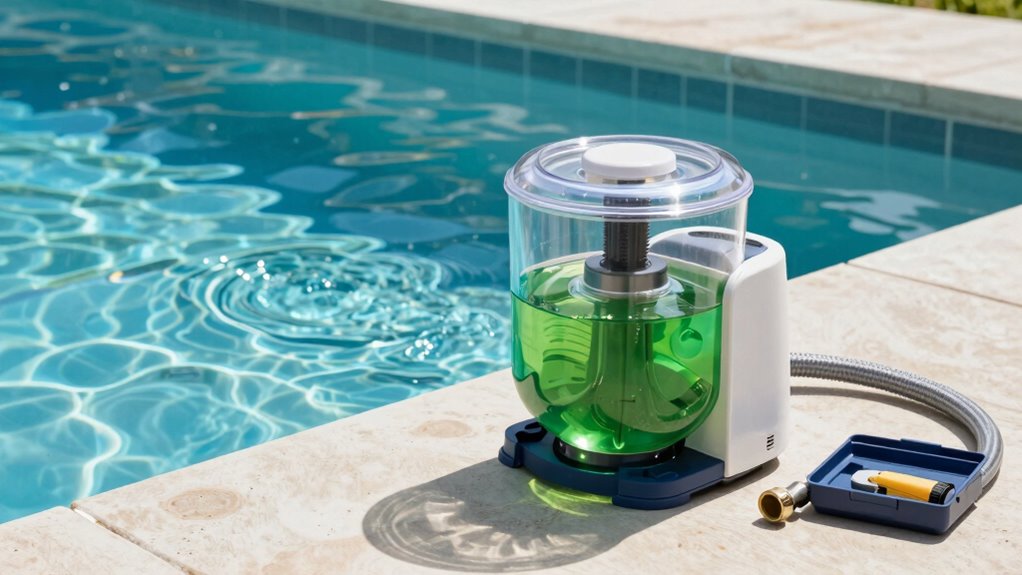
Before you start priming, make sure the area around your pump is clean and accessible. Next, properly fill the filter with water to prevent air pockets. These simple steps set the foundation for a smooth priming process. Additionally, ensure that all valves are in the correct position to facilitate proper water flow and prevent air from entering the system proper water flow. Properly managing air entrapment in the system can also help prevent the pump from losing prime.
Prepare the Pump Area
Setting up the pump area correctly is essential for a smooth priming process. Start by choosing a flat, stable spot on your pool deck to place the pump. Proper pump placement helps prevent vibrations and reduces the risk of air leaks. Make certain the area is clear of debris, leaves, or obstacles that could interfere with operation. Confirm that the pump is level, as uneven positioning can lead to air leaks and priming issues later. Check that the pump’s inlet and outlet connections are secure and accessible for maintenance. Keep the area dry and well-ventilated to avoid moisture buildup. By preparing the pump area properly, you set the foundation for easier priming and reliable operation, reducing downtime and preventing common priming problems.
Properly Fill the Filter
To guarantee your pool pump primes properly, you need to start by filling the filter with water. Remove the pump lid and pour water directly into the pool filter until it’s full. This assures the pump has enough water to create proper water circulation once it’s turned on. Filling the filter prevents air from entering the system, which can cause the pump to lose prime. Be sure to check that all valves are open and seals are secure before starting the pump. Properly filling the filter helps establish a steady flow of water, reducing the chances of air pockets and priming issues. Once filled, replace the lid tightly, and you’re ready to turn on the pump for ideal water circulation.
Signs Your Pool Pump Isn’t Maintaining Prime and When to Call an Expert
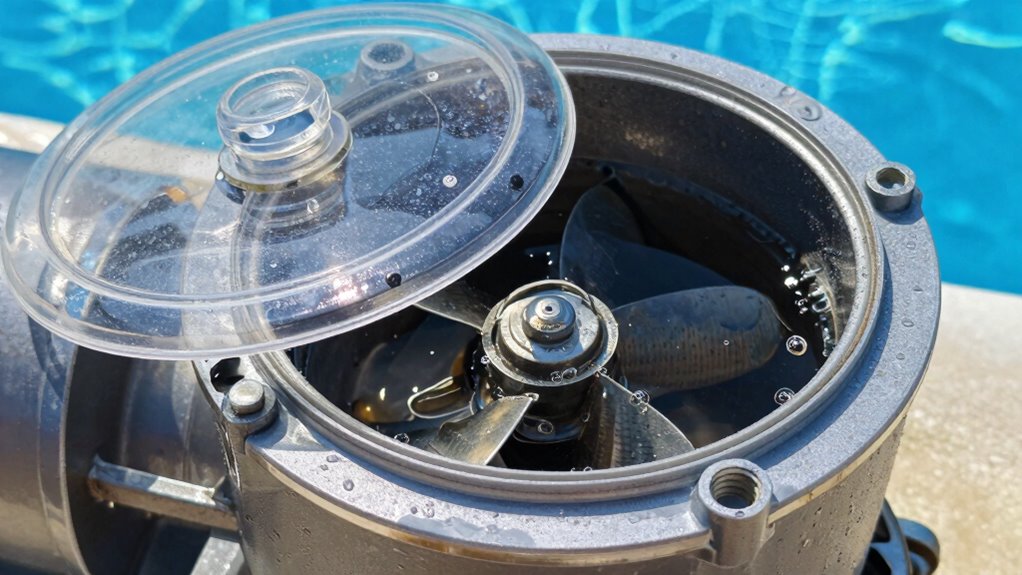
If your pool pump isn’t maintaining prime, you’ll likely notice signs like decreased water flow, strange noises, or frequent air bubbles in the skimmer. You might also hear unusual pool pump noise, indicating air or a malfunction. When the pump struggles, the chemical balance can be affected, leading to cloudy water or algae growth.
You should call an expert if you observe:
- Persistent, loud pool pump noise that doesn’t stop
- Inconsistent water flow or pressure drops
- Continuous air bubbles in the skimmer, despite attempts to re-prime
Ignoring these signs can cause damage to your pump and disrupt your pool’s chemistry, making repairs more costly. It’s best to seek professional help when you’re unsure or if issues persist.
Frequently Asked Questions
Can Temperature Changes Cause My Pool Pump to Lose Prime?
Yes, temperature fluctuations can cause your pool pump to lose prime. When temperatures drop, water can freeze or contract, leading to air leaks or cracks in the pump or plumbing, which impacts pump performance. Conversely, high temperatures can cause water to evaporate, lowering water levels and trapping air in the system. These changes can disrupt prime, so regularly check for leaks and maintain proper water levels to keep your pump running smoothly.
How Do Seasonal Closures Affect Pool Pump Priming?
Seasonal closures, like winter shutdowns, can cause your pool pump to lose prime because water may drain from the system or freeze, damaging components. During seasonal maintenance, you should drain the pump and skimmer baskets to prevent freezing and debris buildup. When reopening, priming becomes essential to restore proper water flow. Proper winterization and seasonal maintenance help prevent prime loss and make certain your pump runs smoothly when you reopen your pool.
Are There Specific Pump Models More Prone to Losing Prime?
Some pump models are more prone to losing prime due to lower pump model reliability, often linked to design flaws or poor construction. You should consider the manufacturer reputation when choosing a pump, as reputable brands tend to produce more durable, reliable models less likely to lose prime. Investing in high-quality equipment helps prevent priming issues, saving you time, effort, and costly repairs down the line.
Can Algae or Debris Inside the Pump Cause Prime Issues?
Algae buildup and debris clogging inside your pool pump can definitely cause prime issues. When algae accumulate or debris blocks the intake, the pump struggles to maintain proper water flow, leading to losing prime. Regularly cleaning the pump basket, skimming debris, and reducing algae growth with proper chemical balance help prevent these problems. Keep your pump clear of algae and debris, and you’ll minimize prime loss and keep your pool running smoothly.
What Impact Does Chemical Imbalance Have on Pump Priming?
Chemical imbalance can considerably impact pump priming by disrupting water chemistry, which affects the pump’s ability to maintain proper suction. When pH, alkalinity, or chlorine levels are off, it can cause air to get trapped or create foam that blocks water flow. This makes it harder for your pump to prime correctly. Regularly testing and adjusting your water chemistry helps keep your pump running smoothly and prevents priming issues.
Conclusion
Think of your pool pump as a loyal sailboat. When the water level drops or leaks appear, it’s like losing the wind in your sails—your pump stalls. By checking for air leaks, maintaining water levels, and sealing valves, you keep the wind steady in your sails. With regular care, your pump will glide smoothly through the season, always primed and ready to keep your pool sparkling like a calm, clear lake.