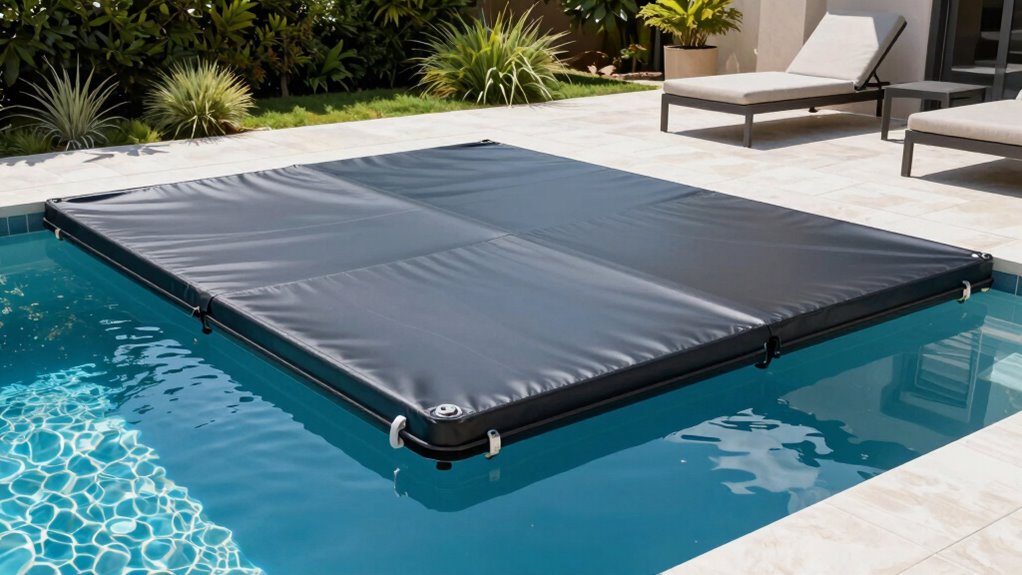
Automatic pool covers save energy and money by trapping heat, reducing evaporation, and maintaining your pool’s temperature. They insulate the water, so less energy is needed for heating, even during cooler months or overnight. Plus, their automatic design makes them easy to use, preventing debris and chemical loss. This means lower maintenance costs and a greener pool. Stay tuned to discover how these efficient covers can benefit your wallet and the environment.
Key Takeaways
- Automatic pool covers significantly reduce heat loss and evaporation, lowering energy costs for heating and water refilling.
- They improve insulation with high-density, low thermal conductivity materials, retaining pool warmth effectively.
- Weather-responsive systems optimize cover operation, enhancing energy efficiency based on environmental conditions.
- By limiting chemical evaporation, they reduce chemical usage and maintenance costs, contributing to overall savings.
- Their ease of use and quick deployment encourage consistent coverage, maximizing long-term energy and water conservation.

Automatic Motorized Solar Blanket Cover Reel/Roller for Pools up to 20×40'
- Easy Installation: Fits 20 ft pool reels, quick setup
- Solar-Powered Operation: Battery-powered, grid-independent, eco-friendly
- Complete Kit Included: Motor unit, charger, and shaft adapter included
As an affiliate, we earn on qualifying purchases.
As an affiliate, we earn on qualifying purchases.
Do Automatic Pool Covers Really Save Energy and Money?
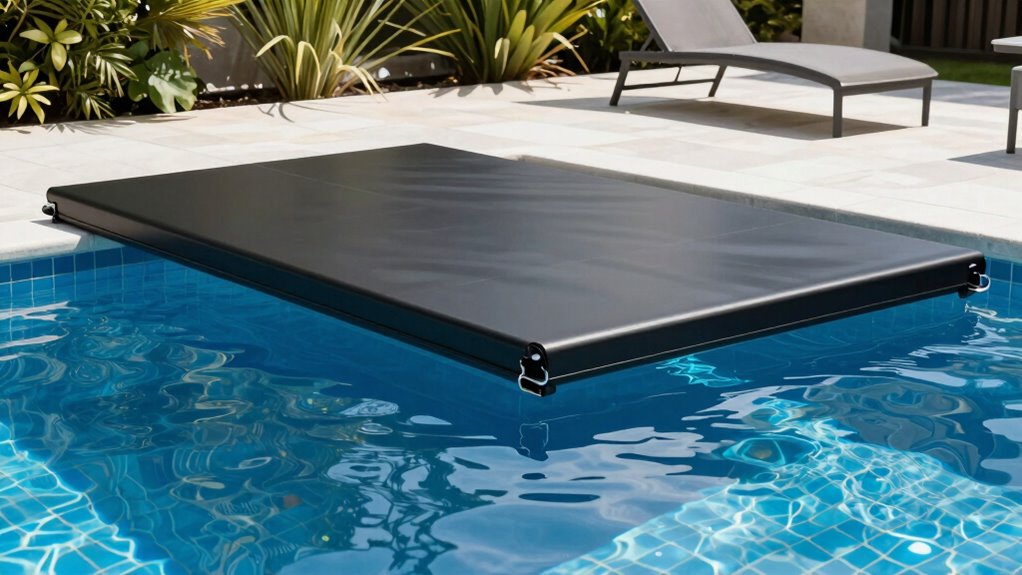
Are automatic pool covers worth the investment when it comes to saving energy and money? The answer largely depends on the quality of the pool cover materials and the installation costs. High-quality materials, such as durable vinyl or reinforced fabrics, help retain heat and reduce evaporation, which saves energy and lowers heating bills over time. Proper installation and maintenance also play crucial roles in maximizing energy savings and extending the lifespan of your pool cover. Regular inspection and upkeep ensure that the cover continues to perform efficiently and prevents unnecessary energy loss. While installation costs can be significant upfront, they often offset long-term expenses by minimizing heat loss and water evaporation. Automatic covers make it easy to manage these benefits, ensuring you keep your pool warm and conserve water without hassle. Investing in a well-made cover with proper installation can lead to noticeable savings, especially in cooler climates or during off-season months. Additionally, selecting covers with insulation properties can further enhance heat retention and energy efficiency, making your investment even more worthwhile. Incorporating properly sealed edges can also prevent thermal leaks and improve overall performance. To maximize these benefits, choosing a cover with advanced insulation can significantly boost energy savings. Ultimately, a good automatic pool cover pays for itself over time.
How Do Automatic Pool Covers Reduce Energy Loss and Keep Costs Down
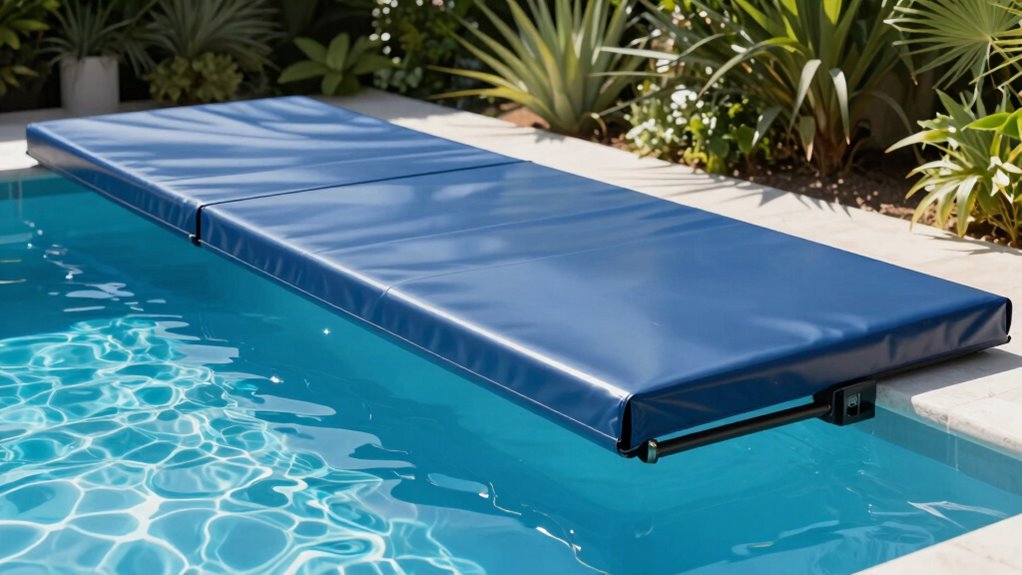
Automatic pool covers help keep your pool warm by providing insulation and retaining heat. They also reduce evaporation, which saves water and energy needed to heat the pool. As a result, your pool becomes more energy-efficient and costs stay lower over time. Additionally, proper ventilation considerations ensure safe and effective operation of the cover system. Incorporating smart‑home integrations can further optimize cover operation and monitor energy savings remotely. Proper air circulation and ventilation are essential to prevent moisture buildup and ensure safe operation of the cover system. Understanding energy-efficient design principles can help maximize these benefits and improve overall savings, especially through the application of energy-efficient features that enhance thermal retention and reduce operational costs.
Insulation and Heat Retention
Since pool evaporation and heat loss can considerably increase energy costs, automatic pool covers play a essential role in insulation and heat retention. By covering your pool when not in use, they create a barrier that keeps heat in and minimizes heat loss, reducing the need for constant heating. This insulation effect supports solar heating systems, allowing them to work more efficiently by maintaining warmer water temperatures. Additionally, with less evaporation, you’ll use fewer chemicals for chemical maintenance, saving money and reducing chemical use. The cover also helps stabilize water temperature overnight and during cooler months, lowering energy demands for heating. Incorporating energy-efficient designs further enhances the overall savings and environmental benefits of automatic pool covers. Furthermore, these covers can contribute to climate control by reducing the overall energy footprint of pool maintenance. Proper installation and regular maintenance can maximize the thermal efficiency of your pool cover, ensuring optimal performance. Regularly checking for wear and tear can help maintain the thermal barrier and prolong the lifespan of your cover. Overall, automatic pool covers are a simple yet effective way to improve insulation, enhance heat retention, and keep your energy costs down.
Reduced Evaporation Losses
By covering your pool, automatic pool covers substantially reduce water evaporation, which is a primary source of heat and energy loss. This keeps your pool warmer longer and lessens the need for additional heating, saving energy and costs. Reduced evaporation also minimizes the loss of chemicals, making pool maintenance easier and more efficient. Additionally, the use of energy-efficient technology can further enhance your pool’s overall savings by optimizing operational performance. Plus, less water loss means fewer refills, conserving resources. The table below highlights some benefits:
| Benefit | Impact | Key Feature |
|---|---|---|
| Solar heating efficiency | Maximizes heat retention | Keeps pool warm naturally |
| Lower chemical use | Reduces chemicals needed | Safer, cleaner pool |
| Cost savings | Less energy for heating | Reduces overall expenses |
Automatic covers are a simple way to improve energy efficiency and keep your pool ready for use. Connected equipment can further optimize your pool’s energy savings by providing real-time data and control options. A thorough understanding of evaporation loss is essential for maximizing these benefits and ensuring your pool remains energy-efficient. Incorporating proper insulation can also help maintain heat and reduce energy consumption further. Understanding evaporation dynamics is key to implementing the most effective energy-saving strategies.
Enhanced Energy Efficiency
Automatic pool covers effectively reduce energy loss by trapping heat and preventing it from escaping into the environment. This enhanced energy efficiency keeps your pool warmer naturally, reducing the need for additional heating methods like solar heating. By minimizing heat loss, the cover helps maintain ideal water temperature, so your solar heating system works less often and uses less energy. Additionally, the cover promotes better water circulation by limiting evaporation and heat exchange, ensuring the water stays evenly heated. This improved water retention reduces the workload on your pool’s filtration system, saving energy and lowering costs. Moreover, air quality in your pool environment can be improved by reducing airborne contaminants that may enter through evaporation, further supporting a healthy swimming space. The heat retention properties of automatic covers are especially beneficial during colder months, helping extend your swimming season and further enhancing energy savings. Proper insulation provided by automatic covers also minimizes heat transfer to the surroundings, boosting overall energy efficiency. Automatic pool covers also help to reduce energy consumption by decreasing the need for auxiliary heating systems, making your pool operation more sustainable. Overall, automatic pool covers serve as an effective barrier that keeps heat in, maximizes solar heating, and enhances water circulation, resulting in significant energy savings and reduced operational expenses.
What Science Explains How Pool Covers Insulate and Retain Heat?
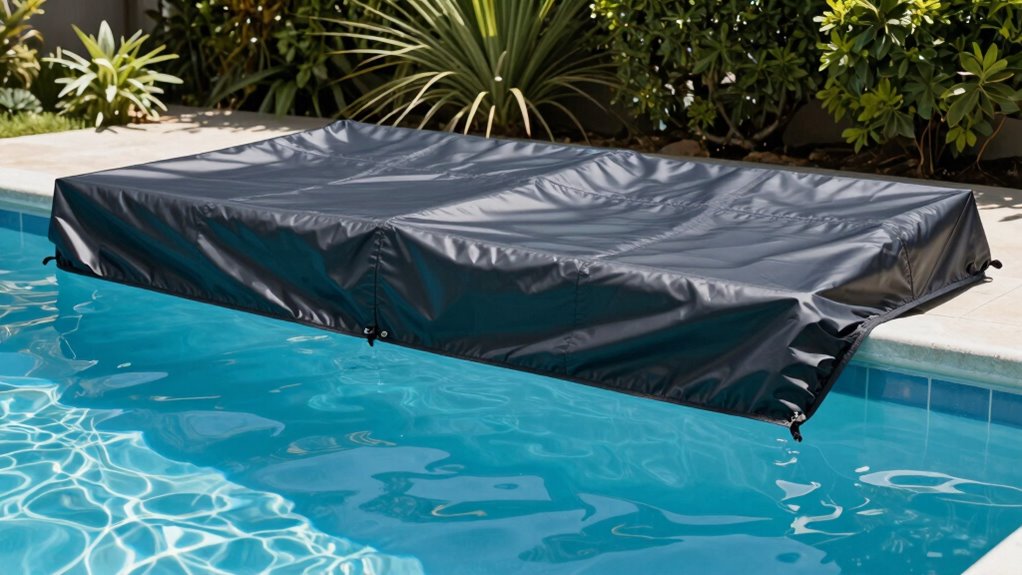
Pool covers work by creating a barrier that reduces heat loss through evaporation, convection, and radiation. They minimize heat transfer, keeping your pool warmer longer. The science behind this involves low thermal conductivity materials that resist heat flow, acting as insulators. These covers reflect radiant heat back into the water and slow down convection currents. The table below shows how different materials impact heat transfer:
| Material Type | Effect on Heat Transfer |
|---|---|
| Low thermal conductivity | Reduces heat loss efficiently |
| High thermal conductivity | Allows rapid heat transfer |
| Insulating foam | Minimizes heat transfer |
| Reflective surfaces | Reflects radiant heat |
| Water-resistant fabric | Slows evaporation |
How Automatic Pool Covers Minimize Evaporation and Lower Water Heating Costs
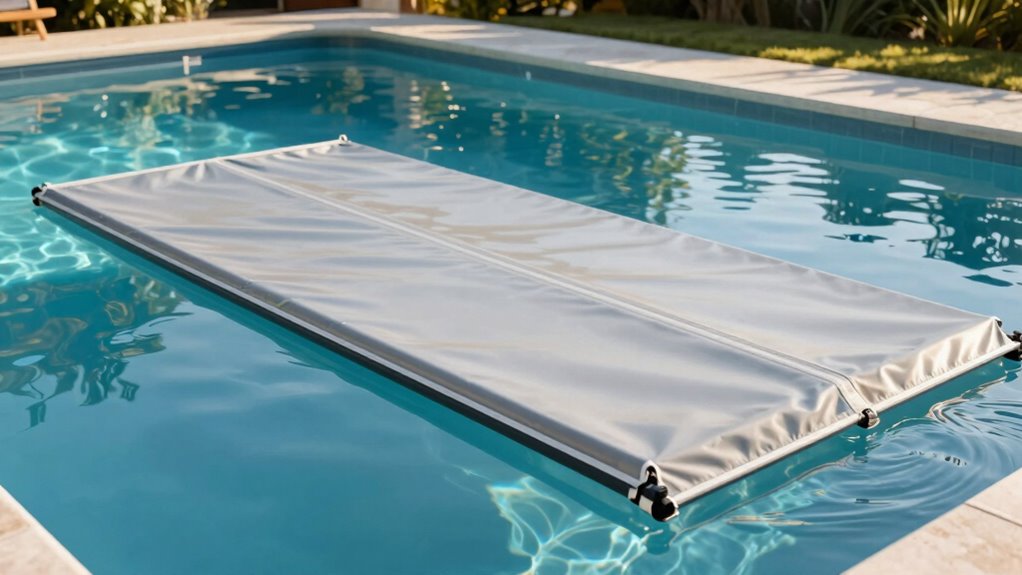
Since evaporation is a major cause of water loss and energy waste, automatic pool covers play a essential role in minimizing these issues. By covering your pool, you reduce water loss through evaporation, which conserves water and lowers the need for refilling. This also keeps the water warmer longer, decreasing your reliance on energy-intensive heating methods like solar heating. With less evaporation, your water stays at a comfortable temperature, saving you money on heating costs. Additionally, automatic covers:
Automatic pool covers reduce evaporation, conserve water, and lower energy costs while keeping your pool warm and protected.
- Protect against wind and debris, maintaining water quality
- Reduce heat loss during cooler nights
- Extend your swimming season naturally
- Support water conservation efforts
- Maximize energy efficiency by minimizing heat escape
These benefits help you save water and lower your overall energy costs, making your pool more eco-friendly and cost-effective.
What Features Make an Automatic Pool Cover More Energy-Efficient?
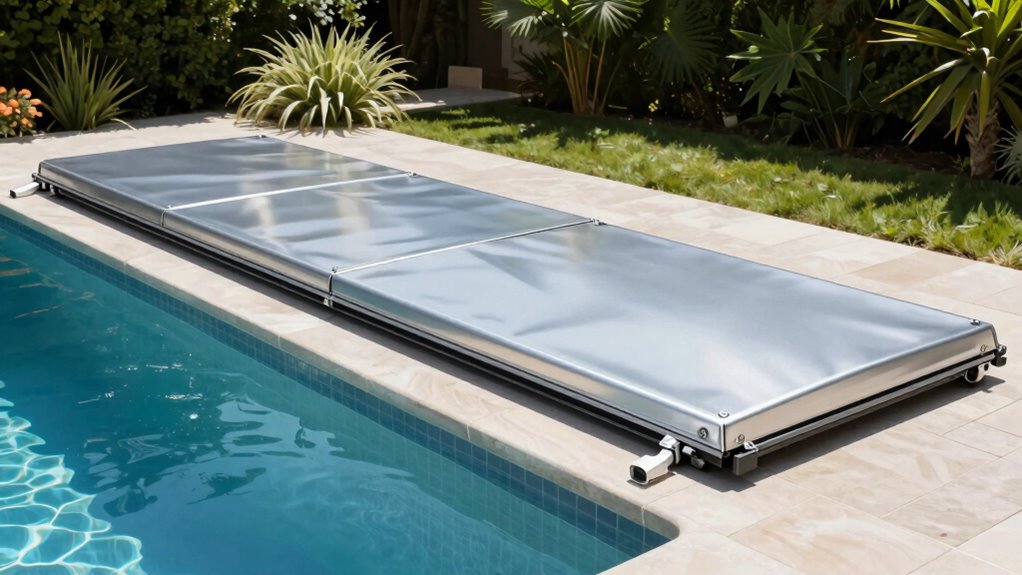
To make your automatic pool cover more energy-efficient, consider its insulation quality and thickness, which help retain heat better. Automated weather adjustment features also play a crucial role by optimizing cover operation based on current conditions. These features work together to reduce energy costs and keep your pool warmer with less effort.
Insulation Quality and Thickness
The insulation quality and thickness of an automatic pool cover play a essential role in enhancing its energy efficiency. Thicker covers with high insulation value reduce heat loss by minimizing heat transfer through thermal conductivity. Materials with higher density typically provide better insulation because they lower thermal conductivity, trapping heat more effectively. When evaluating insulation, consider these factors:
- Higher material density for better heat retention
- Thicker layers to reduce heat transfer
- Low thermal conductivity materials to limit heat flow
- Durable, high-quality insulation materials
- Compatibility with your pool size and climate
Choosing a cover with ideal insulation quality and sufficient thickness helps maintain your pool’s temperature longer, reducing energy costs. This ensures less heat escapes, saving you money and keeping your pool comfortably warm.
Automated Weather Adjustment
Ever wondered how automatic pool covers can adapt to changing weather conditions to save energy? Automated weather adjustment features help optimize your pool’s energy use by responding to temperature, sunlight, and wind changes. These systems can automatically open or close based on weather forecasts, reducing heat loss and conserving solar heating. They also help maintain proper pool chemical levels by avoiding unnecessary evaporation, which can disrupt chemical balance. Some covers even adjust based on real-time weather data for maximum efficiency.
| Weather Condition | Cover Adjustment Effectiveness |
|---|---|
| Sunny & Warm | Opens to maximize solar heating |
| Cloudy & Cold | Closes to retain heat |
| Windy | Closes to prevent heat loss |
| Rain | Closes to protect chemicals |
| Night | Closes to conserve energy |
Automatic vs. Traditional Pool Covers: Which Is More Energy-Efficient?

When it comes to energy efficiency, automatic pool covers often outperform traditional ones by minimizing heat loss and reducing evaporation. Automatic covers are typically made from durable, insulating pool cover materials that trap heat more effectively. Although installation costs for automatic covers are higher initially, they save you money over time through lower energy bills. Traditional covers, while cheaper upfront, tend to be less effective at retaining heat and can be more cumbersome to use regularly. Automatic covers also provide better sealing, preventing heat escape more efficiently than manual options.
- Better insulation increases energy savings
- Easier to operate regularly
- Longer-lasting pool cover materials
- Reduced evaporation leads to less chemical loss
- Higher initial installation costs but greater long-term savings
Tips to Maintain Your Pool Cover for Maximum Energy Savings
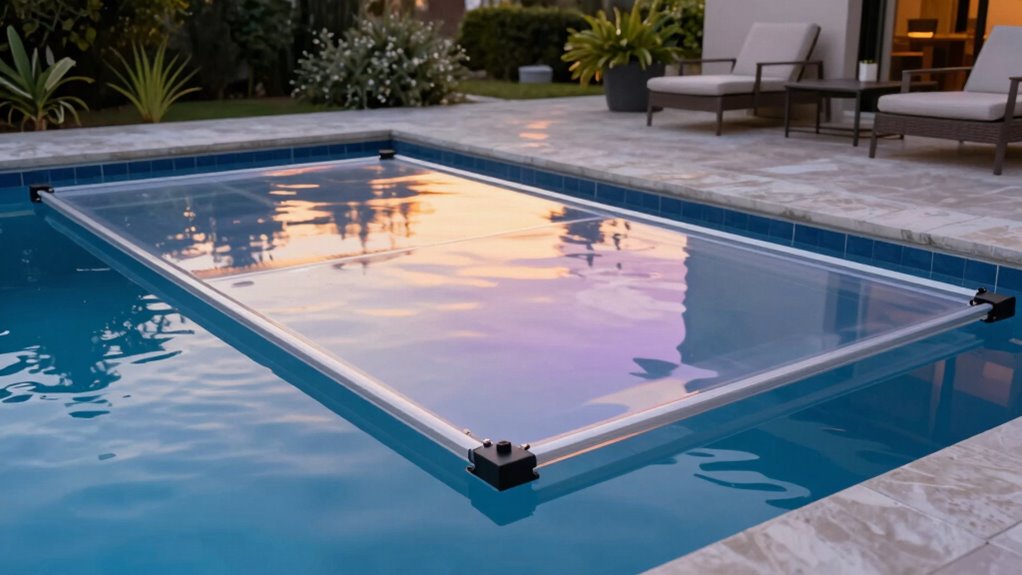
Regularly inspecting and cleaning your pool cover is essential to maximize its energy-saving potential. Proper pool cover maintenance guarantees that dirt, debris, and tears don’t compromise its insulating properties. Follow these energy saving tips to keep your cover in top shape:
| Tip | Benefit |
|---|---|
| Clean regularly | Prevents dirt buildup that reduces insulation |
| Check for tears | Maintains barrier efficiency |
| Remove debris promptly | Avoids mold and damage |
| Ensure proper cover fit | Maximizes heat retention |
Are Automatic Pool Covers Worth the Investment? A Cost-Benefit Breakdown
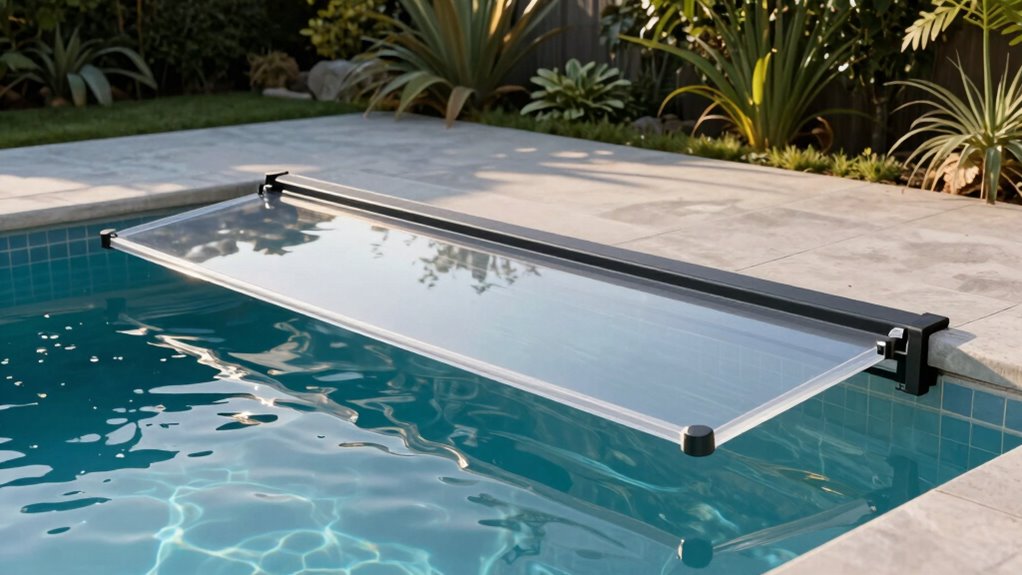
Automatic pool covers can be a significant investment, but they often pay off through energy savings and convenience. They reduce heat loss, especially when combined with solar heating, lowering energy costs. Plus, they help keep your pool clean by preventing debris from entering, reducing the need for frequent pool cleaning. The initial expense may seem steep, but the long-term savings make it worthwhile. Consider these benefits:
- Decreased energy bills from reduced heat loss
- Enhanced solar heating efficiency
- Less time and money spent on pool cleaning
- Increased safety, especially for families with kids
- Longer pool lifespan due to protection from weather and debris
If you value energy efficiency, convenience, and safety, investing in an automatic pool cover is a smart choice. The savings in energy and maintenance costs often outweigh the upfront investment.
Real-Life Examples: How Pool Covers Help Homeowners Save on Energy Bills
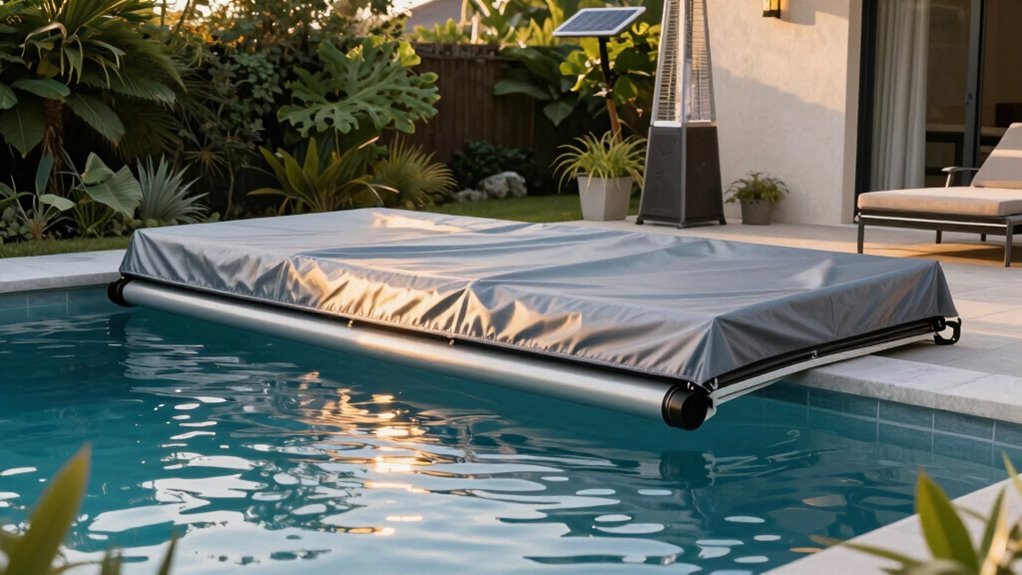
Many homeowners have seen noticeable savings on their energy bills after installing automatic pool covers. By trapping heat, these covers reduce the need for extensive solar heating, helping you cut back on energy costs. They also make pool cleaning easier, preventing debris from entering the water and reducing the workload of your pool’s filtration system. This means less energy is used to run pumps and filters, lowering your utility bills. Additionally, the cover’s insulation properties maintain water temperature longer, decreasing reliance on heating systems. Homeowners report savings of hundreds of dollars annually, especially in cooler months when heat loss is greatest. Overall, automatic pool covers provide a practical way to optimize energy efficiency while making pool maintenance simpler and more cost-effective.
Frequently Asked Questions
How Long Does It Take for an Automatic Pool Cover to Pay for Itself?
An automatic pool cover typically pays for itself in 3 to 7 years through energy efficiency savings. Your cost analysis shows reduced heating costs, less water evaporation, and lower chemical use. By keeping heat in and debris out, the cover minimizes energy loss, saving you money over time. The exact payback period varies based on your pool size, local energy rates, and usage habits, but most owners see benefits within a few years.
Are Automatic Pool Covers Safe for Children and Pets?
Yes, automatic pool covers are safe for children and pets when used properly. They provide excellent child safety and pet protection by securely covering the pool, preventing accidental falls or drownings. You should always verify the cover is functioning correctly, keep the control mechanisms out of children’s reach, and educate your family about pool safety. Regular maintenance and supervision are key to making automatic pool covers a safe, protective feature for your loved ones.
Can Automatic Pool Covers Be Used in All Pool Sizes and Shapes?
You can use automatic pool covers on most pool sizes and shapes, but some designs may require custom solutions. The shape of your pool, whether rectangular, freeform, or irregular, influences installation complexity. While standard covers fit straightforwardly, intricate shapes might need specialized adjustments, increasing installation time and cost. Always consult a professional to assess your pool’s shape and guarantee a proper, safe fit for your automatic cover.
What Maintenance Is Required to Keep an Automatic Cover Energy-Efficient?
Think of your automatic pool cover as a loyal guardian. To keep it energy-efficient, you should regularly lubricate the cover’s moving parts, ensuring smooth operation. Additionally, debris removal is essential; clearing leaves or dirt prevents strain on the motor. By performing these simple maintenance tasks, you preserve your cover’s functionality and energy savings, letting it protect and serve your pool efficiently for years to come.
Do Automatic Pool Covers Impact Pool Chemical Levels or Water Quality?
Automatic pool covers help maintain your water quality by reducing evaporation and debris, which can keep your chemical balance stable. However, they don’t replace proper water filtration or chemical treatment. You still need to regularly test and adjust your chemical levels, and make certain your filtration system is working efficiently. By doing so, you’ll keep your pool safe, clear, and inviting, all while benefiting from energy savings and better water quality.
Conclusion
Investing in an automatic pool cover can considerably cut your energy costs, as it prevents heat loss and reduces evaporation. For example, a homeowner who installed one saved hundreds annually on heating bills and water use. With proper maintenance and choosing the right features, you maximize these savings. Ultimately, the upfront investment pays off over time, making your pool more energy-efficient and environmentally friendly while lowering your long-term expenses.