
To quiet pool equipment, start by inspecting for loose or worn parts like filters, pump motors, and bearings, and tighten or replace as needed. Use vibration dampers, insulate your equipment, and secure it on stable surfaces to reduce noise. Soundproof enclosures and barriers can also help, along with regular maintenance. These simple fixes can make a big difference in your backyard peace—keep going to discover tips that really work.
Key Takeaways
- Regularly inspect and tighten loose parts, filters, and fittings to prevent vibrations and rattling sounds.
- Install vibration dampers, shock pads, or soundproof enclosures to absorb and reduce equipment noise.
- Insulate pumps and filters with soundproof materials and cover noisy equipment to contain sound.
- Maintain equipment properly, including cleaning filters and replacing worn bearings or seals, to minimize operational noise.
- Upgrade to quieter, energy-efficient pumps and seek professional help if noise persists or worsens.
pool equipment vibration dampers
As an affiliate, we earn on qualifying purchases.
As an affiliate, we earn on qualifying purchases.
What Causes Pool Equipment Noise and How Can You Detect It?

Pool equipment can produce noise for several reasons, often signaling that something isn’t functioning properly. If your pool cover isn’t fitted correctly or has debris underneath, it can cause vibrations or rattling sounds when the pump runs. Algae growth can also clog filters or pipes, making the pump work harder and creating unusual noises. Sometimes, a loose or worn-out pump motor or filter parts can be the culprit, leading to banging or humming sounds. To detect these issues, listen carefully when the equipment runs, noting any irregular sounds. Check your pool cover for tears or improper placement, and inspect the filter for algae buildup. Regular maintenance and understanding the mechanics of pool equipment can also help you troubleshoot and prevent noise issues more effectively. Additionally, inspecting the pump assembly periodically can reveal loose or damaged components that contribute to noise. Being familiar with the proper operation of pool pumps can help identify early signs of malfunction before noise becomes a significant problem. Incorporating routine inspections into your maintenance routine can help catch issues before they escalate and extend the lifespan of your equipment.
Identifying the Noisiest Components of Your Pool Equipment

You can usually tell which parts of your pool equipment are the loudest by paying attention to specific sounds. The pump often produces humming or grinding noises, while the filter system may clatter when debris causes blockages. Valve operation sounds can also reveal where noise originates, especially when they make banging or hissing sounds during use. Additionally, checking the sound levels of different components can help identify which parts may benefit from noise-reduction techniques. For example, equipment noise levels can be minimized by installing vibration pads or sound-dampening enclosures around noisy machinery. Regularly inspecting component wear and tear can also prevent issues that lead to increased noise, making maintenance easier and more effective. Recognizing signs of wear and damage early can help prevent more significant problems and noise escalation.
Pump Noise Sources
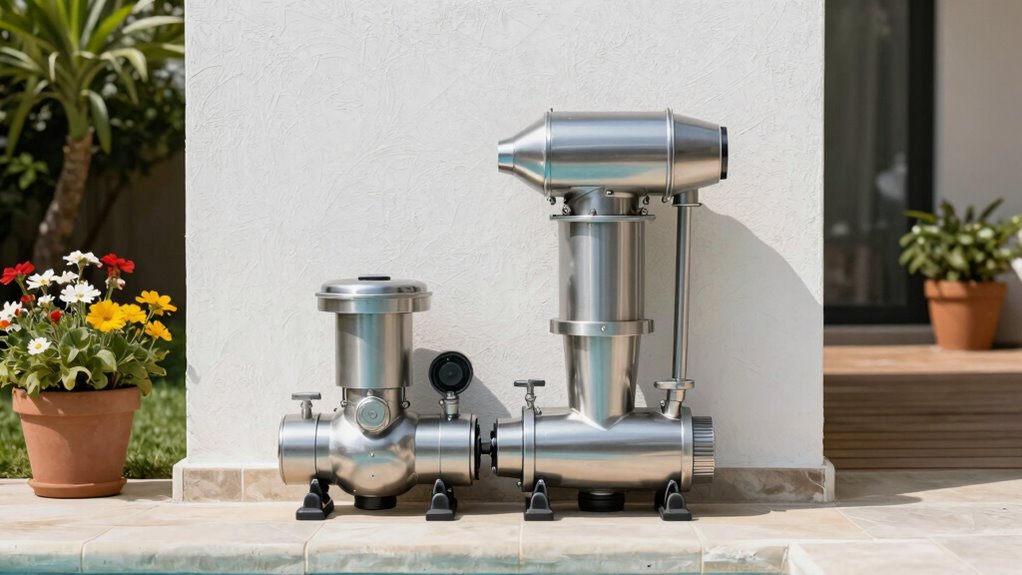
Among the various components of your pool pump, certain parts tend to generate the most noise, making it easier to identify and address the source of the sound. Usually, the motor, impeller, and pump housing are the main culprits. Worn bearings or misaligned parts can cause rattling or grinding sounds, while cavitation from air leaks creates buzzing. To reduce noise, perform regular pool equipment maintenance, check for loose fittings, and replace worn components promptly. Being aware of noise sources helps you troubleshoot more effectively and extend the lifespan of your equipment. Regular inspection and understanding of connected fitness technology can also help you optimize your pool setup for quieter operation. Here’s a quick overview:
| Noisiest Pump Components | Common Noise Issues |
|---|---|
| Motor | Buzzing, humming |
| Impeller | Whining, rattling |
| Pump Housing | Vibrations, banging |
| Bearings | Grinding, squealing |
| Seals & Gaskets | Leaking, high-pitched squeals |
Filter System Clatter
When your filter system starts making clattering noises, pinpointing the source can help you address the issue quickly. Often, the noise comes from loose or trapped filter debris that causes uneven flow and vibration. Check the filter basket for leaves, debris, or blockages that might be jamming the system. Excessive pump vibration can also contribute to clattering sounds, especially if the pump isn’t secured properly or if its mounting is loose. Inspect the pump and its connections for any signs of wear or looseness. Cleaning out debris and tightening mounting bolts usually reduce vibrations and noise. Regular maintenance, like clearing filter debris and ensuring all components are secure, keeps your filter system running smoothly and quietly. Additionally, ensuring proper navigation and mapping of your pool equipment setup can help identify underlying issues contributing to noise.
Valve Operation Sounds
Valve operation sounds can often be the noisiest part of your pool equipment. When you open or close a valve, it creates a loud, clunking or hissing noise that can disturb your peace. These sounds come from water rushing through the valve or the valve’s internal components moving sharply. To reduce this noise, check for loose or worn parts and tighten or replace them as needed. Installing a valve with noise reduction features, like a soft-close mechanism, can make a significant difference. Regular maintenance, such as lubricating moving parts, also helps minimize valve operation sounds. By addressing these components directly, you can enjoy quieter pool equipment and a more peaceful backyard environment.
How to Reduce Noise From Your Pool Pump and Filter

Reducing noise from your pool pump and filter starts with proper installation and maintenance. Ensuring your equipment is correctly set up prevents unnecessary vibrations and sounds. Regular pool maintenance keeps your pump running smoothly, reducing noise caused by dirt or debris. Consider these steps:
- Secure the Pump and Filter: Place them on a stable, level surface to minimize vibrations.
- Use Soundproof Enclosures or Pads: These absorb vibrations and dampen noise.
- Upgrade to Quieter Equipment: Modern pumps are designed to operate more quietly, making equipment upgrades a smart investment.
- Choose Energy-Efficient Models: These models often operate more smoothly and quietly, contributing to overall noise reduction from Best Pool Heaters.
Additionally, proper installation techniques can significantly impact the noise levels produced by your pool equipment, especially when considering vibration control methods. Incorporating advanced noise mitigation strategies, such as flexible mounts and sound barriers, further enhances the effectiveness of your noise reduction efforts.
Ways to Minimize Noise From Pool Heaters and Chlorinators
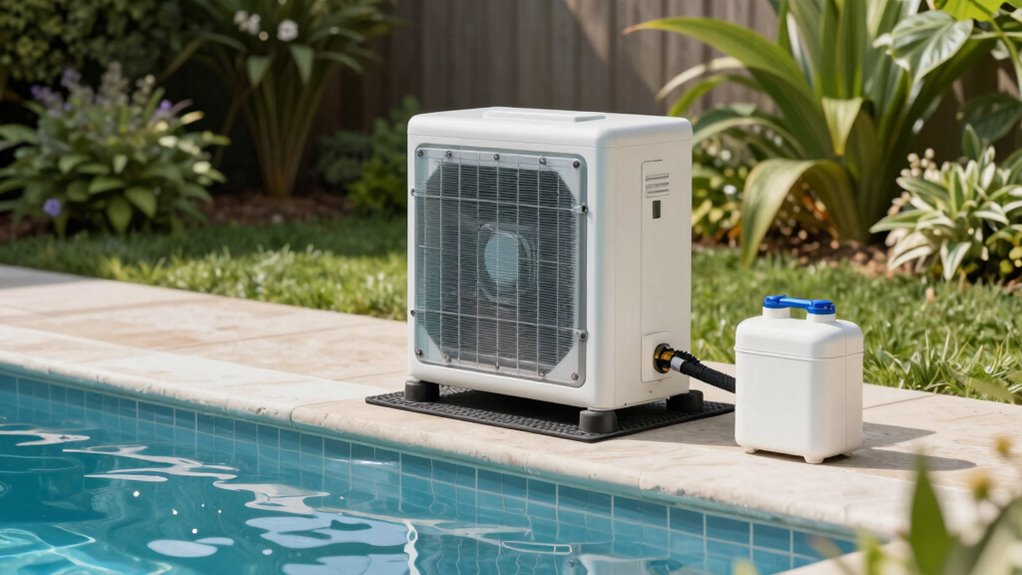
To reduce noise from your pool heaters and chlorinators, start by insulating and covering the equipment to dampen sound. Installing vibration dampers can also help absorb vibrations that cause noise. These simple steps can make a noticeable difference in keeping your pool area quieter. Additionally, selecting quiet air purification solutions for your pool area can further improve the overall noise levels and air quality. Using vetted equipment options designed for noise reduction ensures better performance and peace of mind. Incorporating sound-dampening materials into your setup can further enhance the effectiveness of these noise-reducing measures, especially when combined with proper equipment placement and maintenance. Remember that regular equipment maintenance can prevent unnecessary noise caused by worn or loose parts, contributing to a more peaceful pool environment.
Insulate and Cover Equipment
Insulating and covering your pool equipment can considerably cut down on noise that often disturbs nearby areas. Using a pool cover or applying equipment insulation helps absorb sound and reduce vibrations. Here are three easy steps to get started:
- Install a pool cover over your equipment to contain noise and prevent debris buildup.
- Add equipment insulation around noisy components like pumps and chlorinators to dampen vibrations.
- Create a barrier by positioning soundproof panels or fencing near your equipment to block noise from spreading.
- Incorporate simple soundproofing techniques to further reduce noise transfer and improve your pool area’s tranquility. Additionally, selecting equipment with quieter operation features can significantly diminish ongoing noise issues.
These simple fixes make a big difference in quieting your pool area. Proper insulation and covering not only minimize noise but also protect your equipment from weather damage, extending its lifespan.
Install Vibration Dampers
Installing vibration dampers is an effective way to minimize noise from your pool heaters and chlorinators, especially when they generate vibrations that travel through surfaces and amplify sound. Vibration dampers absorb these vibrations, preventing them from transferring to surrounding structures. You can easily add vibration dampers by attaching mounting pads between the equipment and their mounting surfaces. These pads act as shock absorbers, reducing the impact of vibrations and lowering noise levels. Verify the dampers are compatible with your equipment and securely installed to maximize their effectiveness. Regularly check and replace worn or damaged mounting pads to maintain quiet operation. By incorporating vibration dampers, you’ll notice a significant reduction in the overall noise, making your pool area more peaceful.
Soundproofing Tips to Quiet Your Pool Area Effectively

If you want to keep pool equipment noise from disturbing your backyard, soundproofing is essential. Start by choosing materials that blend with your pool aesthetics, like decorative fencing or plant barriers, which can absorb sound naturally. Next, consider installing soundproof enclosures around noisy equipment—these help block sound waves and reduce noise pollution. Finally, pay attention to water chemistry; maintaining proper water balance reduces strain on equipment, which in turn minimizes noise caused by equipment strain or malfunction. By implementing these three steps, you’ll create a more peaceful pool area that’s enjoyable for everyone. Soundproofing not only improves your backyard serenity but also keeps the noise from equipment from disrupting your outdoor experience.
When to Call a Professional for Pool Equipment Noise Fixes
Sometimes, despite your efforts to soundproof your pool equipment, the noise persists or worsens, signaling it’s time to consult a professional. If your current setup isn’t providing adequate noise reduction, a professional can assess whether pool equipment upgrades are necessary. They can identify underlying issues, such as worn-out parts or improper installation, that simple noise reduction techniques can’t fix. Professional repairs or upgrades often involve replacing noisy components, installing sound barriers, or adjusting equipment placement for ideal quiet operation. Calling in an expert ensures your pool equipment operates efficiently and quietly, preventing further damage or noise escalation. Recognizing when to seek professional help saves you time and money and guarantees that your pool remains a peaceful oasis.
Simple Maintenance Habits to Keep Your Pool Equipment Quiet
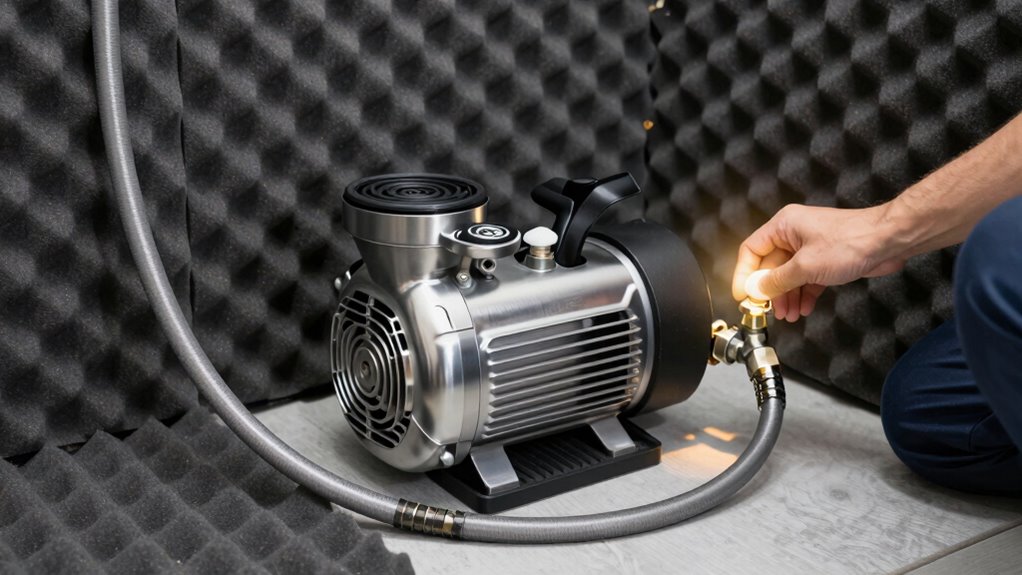
Regular maintenance is key to keeping your pool equipment operating quietly and efficiently. Staying on top of routine pool maintenance prevents unnecessary noise and extends equipment lifespan. To do this, consider these simple habits:
Regular pool maintenance ensures quiet, efficient operation and longer equipment life.
- Clean skimmer baskets and filters regularly to prevent strain on the pump.
- Check for loose bolts, fittings, and mounting brackets, tightening them as needed.
- Schedule periodic equipment upgrades when parts wear out or become outdated to ensure smooth operation.
Cost-Effective Fixes for Common Pool Equipment Noises
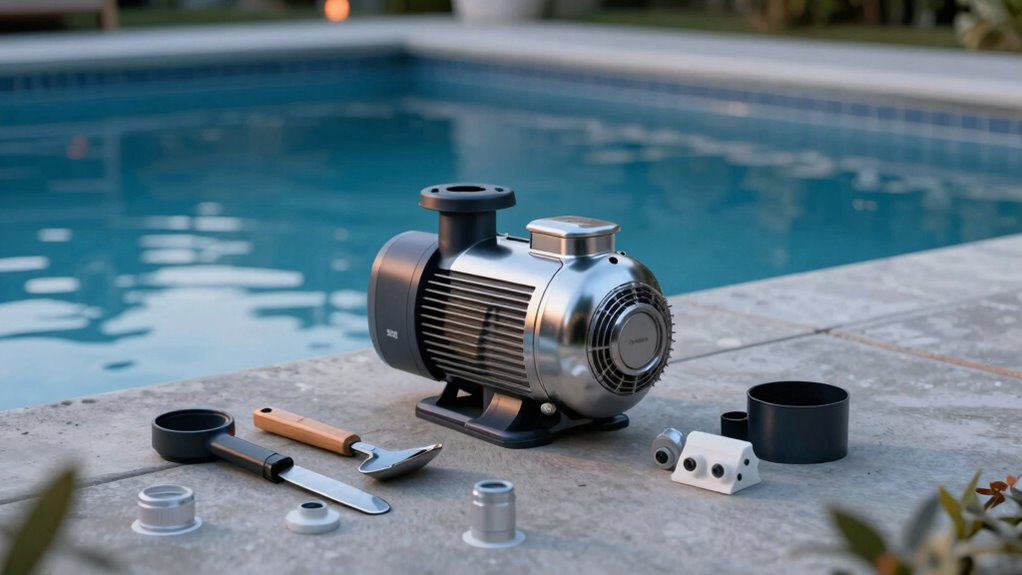
Many common pool equipment noises can be reduced with simple, budget-friendly solutions. Upgrading key components, like installing vibration pads or soundproof enclosures, often makes a noticeable difference without breaking the bank. Consider basic pool equipment upgrades, such as replacing worn-out bearings or loose parts, to minimize rattling and squeaking. Noise reduction techniques like tightening fittings or securing loose panels help prevent vibrations that cause noise. Regularly cleaning filters and pumps also improves efficiency, reducing strain and noise. You don’t need expensive repairs—small adjustments and upgrades can substantially cut down on sound. By focusing on these cost-effective fixes, you’ll enjoy quieter operation and a more peaceful pool environment without overspending.
Frequently Asked Questions
Can Outdoor Weather Conditions Affect Pool Equipment Noise Levels?
Yes, outdoor weather conditions can affect pool equipment noise levels. Weather impact, like wind or rain, can cause equipment to vibrate or work harder, increasing noise. Climate influence also matters; extreme heat can cause equipment to overheat, making it noisier, while cold weather might make parts contract and produce creaks. By understanding these factors, you can better manage and reduce pool equipment noise.
Are There Specific Brands Known for Quieter Pool Equipment?
You’ll find that quiet pump brands like Hayward and Pentair are popular choices for low noise filters and pumps. These brands prioritize noise reduction with advanced insulation and vibration control, making your pool area more peaceful. When selecting equipment, look for models specifically designed for quiet operation. Installing soundproof enclosures or placing equipment on vibration pads can also markedly reduce noise, enhancing your swimming experience.
How Often Should I Inspect My Pool Equipment for Noise Issues?
You should inspect your pool equipment for noise issues at least once a month during routine maintenance. Listen for unusual sounds or vibrations that could indicate problems. If you notice persistent noise, consider equipment upgrades or repairs to reduce noise levels. Regular checks help catch issues early, keeping your pool quiet and efficient. Staying proactive guarantees your equipment runs smoothly and minimizes disruptions caused by unexpected noise.
Do Noise Levels Vary With Different Pool Sizes or Types?
Think of your pool as a symphony—bigger pools can create a louder orchestra, with noise levels fluctuating based on size and equipment type. Larger pools often require more powerful pumps, which may hum or whine more. Equipment differences, like a variable-speed pump versus a standard one, also influence noise. So, yes, your pool’s size and equipment type shape its soundscape, making some setups louder or quieter than others.
Can Noise Reduction Methods Extend the Lifespan of My Pool Equipment?
Yes, noise reduction methods like vibration dampening and sound insulation can extend your pool equipment’s lifespan. By reducing vibrations and dampening sound, you lessen stress on motor parts and prevent premature wear. Properly insulated and dampened equipment runs more smoothly, decreasing the chances of overheating or mechanical failure. Ultimately, investing in these noise reduction techniques not only makes your pool area quieter but also helps your equipment last longer.
Conclusion
By understanding what causes pool equipment noise and applying simple fixes, you can substantially reduce disruptions and extend your equipment’s lifespan. Regular maintenance and soundproofing can create a more peaceful pool area, proving that sometimes, quiet solutions are just a few easy steps away. Notably, the theory that noise levels impact equipment longevity holds some truth—less stress on components often means fewer repairs, making your backyard oasis both serene and efficient.