
TL;DR
Gardening Know How recommends October division for eight perennial types, including hostas, sedum, peonies, bearded irises, astilbes and bee balm. The method can produce new plants from established clumps, but timing, careful handling and enough time for roots to re-establish before frost matter.
Division involves lifting a mature perennial and separating its root system into sections that each have roots and, where appropriate, growing shoots or buds. The report says the technique applies to perennials, not annuals, and advises against dividing in summer heat or the depths of winter. Early spring is another suitable period for many perennials, according to the article.

Get pool and patio gear delivered free with Prime
- Fast, free delivery on millions of items
- Prime Video, Amazon Music and more included
- Member-only deals all year
The eight plants named are hostas, sedum, peonies, bearded irises, astilbes, bee balm, bleeding heart and daylilies. The supplied source excerpt gives specific instructions for the first six; it does not include the full entries for bleeding heart or daylilies, so their individual procedures cannot be confirmed from the material provided.
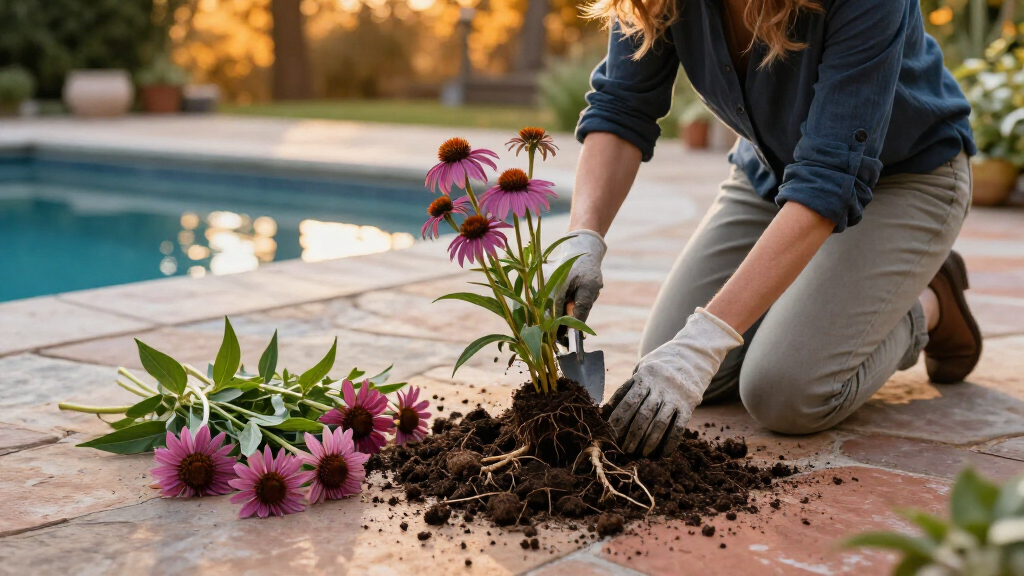
For the general process, the report advises digging around the plant with a sharp spade or garden fork, lifting the rootball and separating it with hands or a clean, sharp tool. Each division should be replanted promptly at its previous depth, with soil firmed around it and thorough watering. The article recommends keeping the soil consistently moist for several weeks while roots re-establish.
More Plants From Established Clumps
Division offers gardeners a way to propagate plants without buying additional specimens, while also managing perennials that have become too large for their space. Unlike growing from seed, the process starts with an existing plant and its established root system. The report presents it as a practical option for gardeners looking to fill beds or relocate sections of a clump.
The October timing is tied to the need for roots to settle before the first frost. That makes the recommendation seasonal rather than universal: gardeners should account for their local frost date and conditions, and avoid dividing a plant if it will not have a reasonable establishment period. The source does not provide region-specific dates or guarantee that every plant will thrive after division.
Products Worth Considering

Dyson Cyclone V10 Origin Cordless Vacuum

Philips Hue Play Gradient Light Tube, Large, Black

Shark PowerPro Reveal Plus Cordless Stick Vacuum, Charcoal, IZ376H
As an affiliate, we earn on qualifying purchases.
How the October Advice Works
The Gardening Know How report frames division as a simple propagation method, but the details differ by plant. For hostas, it advises lifting the plant and separating the clumps. For sedum, it recommends dividing after flowering, with each section retaining stems and roots. Peonies need more care: each division should have strong roots and at least three pink “eyes”, planted no more than about 2 inches (5 centimeters) below the soil surface.
For bearded irises, the article says to cut foliage back to about 6 inches (15 centimeters), divide the clump, allow it to dry for a day and replant with the rhizome tops at soil level. Established astilbes can be divided every few years. Bee balm should be divided after flowering but before frost; the report says to discard the old, woody center and retain sections with three shoots or growing buds.
““October is one of the very best times to propagate your perennials by division””
— Gardening Know How report
Local Conditions and Plant Details
The guidance is general and does not specify a climate zone, local frost dates or soil conditions. The right October window therefore varies by location; the report’s stated aim is to give divisions time to establish before the first frost, not to set a single date for every garden.
The source material provided names bleeding heart and daylilies but cuts off before their instructions. It also does not provide a cited study, survival rates or evidence that division is suitable for every cultivar or plant in every condition. Gardeners should check plant-specific guidance if unsure, particularly before disturbing a plant that is stressed, newly planted or not yet established.
Replant and Monitor Before Frost
Gardeners following the advice should check local weather and frost timing, then divide only established perennials that can be replanted promptly. Water the soil ahead of digging, replant sections at the original depth and water thoroughly afterward. Keep the soil moist for several weeks without leaving it waterlogged, and monitor the new sections as temperatures fall.
The article provides no later outcome data or follow-up assessment. Whether a division takes hold will depend on the plant and growing conditions; readers seeking instructions for bleeding heart or daylilies should consult a complete, plant-specific guide before proceeding.
Key Questions
Which perennials does the report recommend dividing in October?
It names hostas, sedum, peonies, bearded irises, astilbes, bee balm, bleeding heart and daylilies. The supplied excerpt includes detailed directions only for the first six.
Can annual plants be divided this way?
No. The report says division is for perennial plants, whose established root systems can be separated into rooted sections.
How soon should divided sections be replanted?
The article advises replanting divisions immediately, at the same depth the plant was previously growing, then firming the soil and watering thoroughly.
How long should new divisions be watered?
Gardening Know How advises keeping the soil consistently moist for several weeks while roots re-establish. Local rainfall, soil drainage and plant needs will affect watering.
Source: rss