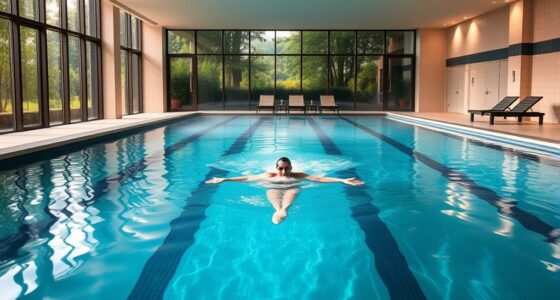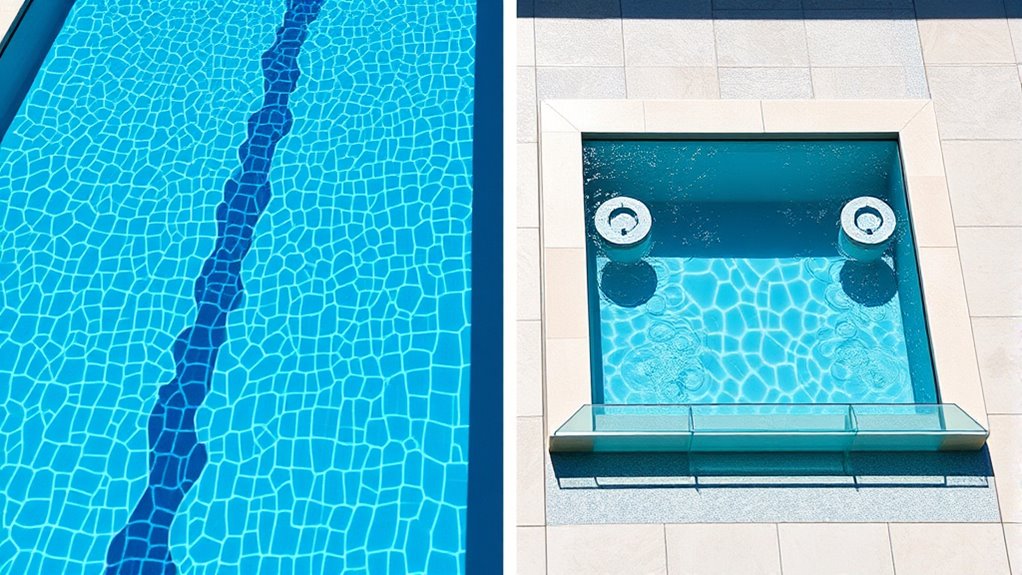

Lap pools are long, rectangular pools designed for serious swimmers, offering steady water flow along their length. Endless pools are compact, often circular or linear, with built-in systems that create a continuous current for indoor use. While lap pools require larger pumps and more maintenance, they suit larger spaces and dedicated swimmers. Endlessly practical for limited spaces and energy-efficient, they are ideal for casual swimmers. Keep exploring to understand how these differences can shape your perfect swimming setup.
Key Takeaways
- Lap pools are larger, rectangular, ideal for serious swimmers, while endless pools are compact, circular or linear, suitable for limited space.
- Water in lap pools flows steadily along the length, whereas endless pools generate a continuous current for indoor swimming.
- Endless pools use smaller pumps and are more energy-efficient compared to larger, traditional lap pools requiring bigger filtration systems.
- Maintenance is generally easier in endless pools due to integrated circulation systems, while lap pools may need more frequent upkeep.
- Choice depends on space availability, swimming goals, and budget; endless pools suit small spaces and casual swimmers, lap pools for dedicated training.
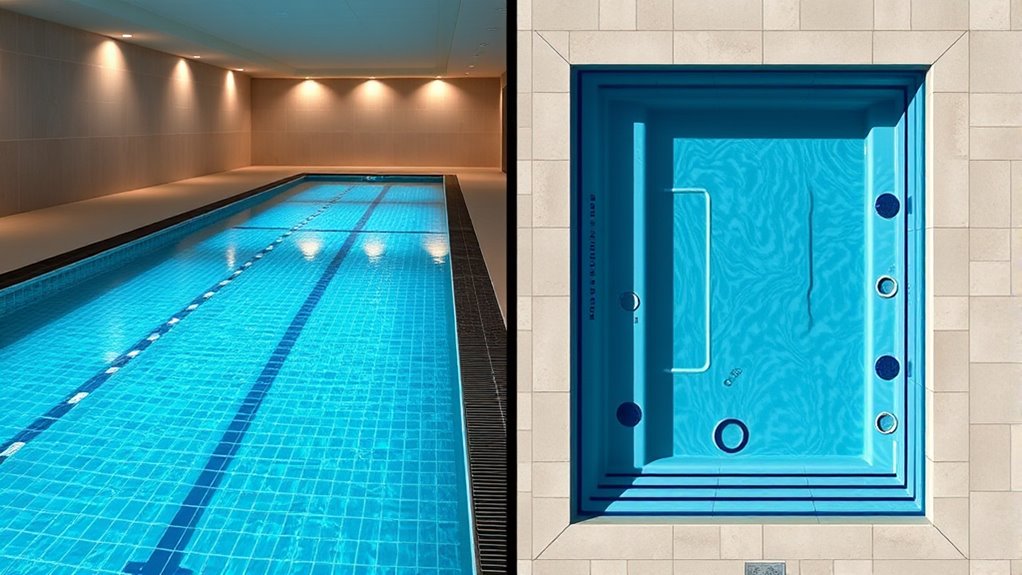
When choosing a pool for your home, you’ll find two popular options: lap pools and endless pools. Both offer unique benefits, but understanding their differences can help you decide which one suits your lifestyle best. One key aspect to contemplate is how each pool manages water circulation. Lap pools are usually long and rectangular, designed for swimming laps back and forth. Their size and shape promote efficient water circulation because the water moves steadily along the length of the pool, reducing stagnation. This continuous flow helps keep the water cleaner and reduces the need for frequent chemical treatments. Additionally, traditional lap pools often require larger pumps and filtration systems to maintain proper water movement, which can impact energy efficiency. If you’re concerned about running costs, you’ll want to look closely at the pool’s filtration and circulation setup to ensure it’s optimized for energy savings. Proper water circulation is essential for maintaining water quality and minimizing chemical use over time.
Endless pools, on the other hand, are compact and typically feature a current generator that creates a steady flow of water in a circular or linear pattern. The water circulation in endless pools is actively managed by a built-in system that constantly moves water, providing a smooth, continuous swim experience. Because of their size, endless pools often use less water and require smaller pumps, which can be more energy-efficient. Their design also allows for customizable water flow speeds, so you can adjust the current to match your swimming ability and preferences. This flexibility makes endless pools particularly appealing if space is limited or if you want a pool that’s easy to operate and maintain without high energy costs. Plus, the integrated circulation system in endless pools ensures that water stays fresh and clean, reducing the need for frequent filtration cycles and chemical use.
Both options can be energy efficient if designed well, but the efficiency depends largely on the quality of the pump and filtration system used. Lap pools, with their larger size, may require more energy to keep water moving, especially if not fitted with high-efficiency equipment. Endless pools tend to be more energy-efficient because their smaller size and targeted circulation systems demand less power. When choosing between the two, think about your space constraints, swimming goals, and budget for ongoing maintenance. If you want a traditional lap pool for serious training and don’t mind higher energy costs, it might be the right choice. However, if you prefer a compact, energy-efficient solution that still provides a good swim experience, an endless pool could be the better fit. Ultimately, both pools can offer efficient water circulation and low-maintenance operation when properly equipped. Optimizing water circulation systems can significantly enhance energy efficiency and water quality in either type of pool.
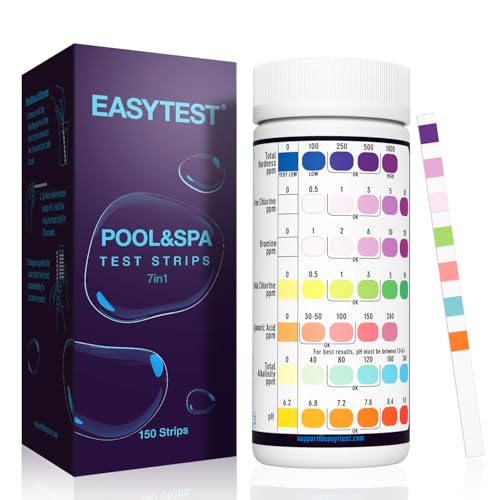
EASYTEST 7-Way Pool Test Strips, 150 Strips Water Test for Hot tub and Spa
- 150 Test Strips Included: Enough for multiple water tests
- Fast and Accurate Results: Soak for 1 second, read in 15 seconds
- 7-in-1 Water Testing: Tests Bromine, pH, Chlorine, Alkalinity, Hardness, Cyanuric Acid
As an affiliate, we earn on qualifying purchases.
Frequently Asked Questions
What Is the Average Cost Difference Between Lap Pools and Endless Pools?
You’re wondering about the cost comparison between lap pools and endless pools. Generally, lap pools tend to be more expensive, with a price range of $20,000 to $50,000 or more, depending on size and features. Endless pools are more budget-friendly, usually costing between $4,000 and $15,000. Your choice depends on your budget and space, but knowing the price range helps you make an informed decision.
Which Pool Type Requires Less Maintenance Over Time?
Imagine you install an endless pool in your basement, and it requires less maintenance over time. You find that endless pools generally need fewer chemical adjustments and less regular cleaning, reducing overall maintenance requirements. Unlike lap pools, which often have larger surfaces and more complex plumbing, endless pools’ compact design makes chemical balancing simpler and less time-consuming, making them a more convenient choice for low-maintenance swimming options.
Can Endless Pools Be Installed Outdoors Like Lap Pools?
Yes, you can install endless pools outdoors, but it requires careful planning for outdoor installation and weather durability. Make sure the pool is built with weather-resistant materials to withstand sun, rain, and temperature changes. Proper shelter or covers can protect it from harsh weather, prolonging its lifespan. With the right setup, an endless pool can be a durable, enjoyable outdoor addition, offering flexibility and convenience just like a lap pool.
How Long Does It Take to Install Each Type of Pool?
Did you know installation timelines can range from a few days to several weeks? For both types, the process begins with site preparation, which can take a few days depending on your location. Endless pools often install faster due to their compact size, while lap pools may require more extensive site prep and structural work, extending the timeline. Overall, plan for about one to three weeks for a smooth installation.
Are There Specific Safety Features Unique to Either Pool Type?
You should know that safety features differ between pool types. Endless pools often come with safety alarms to alert you if someone enters unexpectedly, enhancing security. Both pool types typically include non-slip surfaces to prevent accidents. While these safety features are common, you might find additional options like fencing or covers more readily available with lap pools. Always check the specific safety features offered to guarantee your pool remains secure.
Conclusion
Whether you choose a lap pool or an endless pool, understanding their differences helps you make the best decision for your fitness goals. Did you know that indoor pools can improve mental health and reduce stress by up to 30%? Both options offer unique benefits, so consider your space, budget, and workout preferences. Whichever you pick, swimming is a great way to stay active and boost your well-being. Immerse yourself and enjoy the benefits today!