To avoid costly mistakes with your DIY endless pool, start by thoroughly preparing your site, ensuring the ground is level and stable. Check local building codes and secure permits to stay compliant. Pick a suitable location that promotes good drainage and accessibility. Plan electrical wiring carefully and use quality materials for durability. Follow a detailed installation plan, don’t rush, and keep up with regular maintenance. Stay safe by including safety features—continue for key insights that set your project up for success.
Key Takeaways
- Ensure proper site assessment and level foundation to prevent uneven settling and structural issues.
- Follow local building codes and obtain necessary permits to avoid legal and safety complications.
- Use high-quality, pool-specific materials and proper insulation to improve durability and energy efficiency.
- Hire qualified professionals for electrical wiring, plumbing, and structural support tasks to ensure safety and compliance.
- Implement regular maintenance and safety measures, including water testing and safety barriers, to ensure long-term pool safety and functionality.
Skipping Proper Site Preparation and Foundation Checks

Skipping proper site preparation and foundation checks can lead to serious problems down the line. If you neglect to evaluate the ground where you plan to install your endless pool, you risk uneven settling or shifting that can damage the structure. Before installation, confirm the site is level, stable, and free of debris or underground obstacles. A solid foundation is essential for supporting the weight of the pool and preventing future cracks or leaks. Use a level to check the surface and consider adding a concrete slab or compacted gravel base for extra stability. Proper site assessment is crucial to identify potential issues early and ensure a durable installation. Skipping these steps might save time initially, but it will likely cause costly repairs later. Taking the time to prepare and verify the site will save you headaches and money in the long run.
Ignoring Local Building Codes and Permitting Requirements
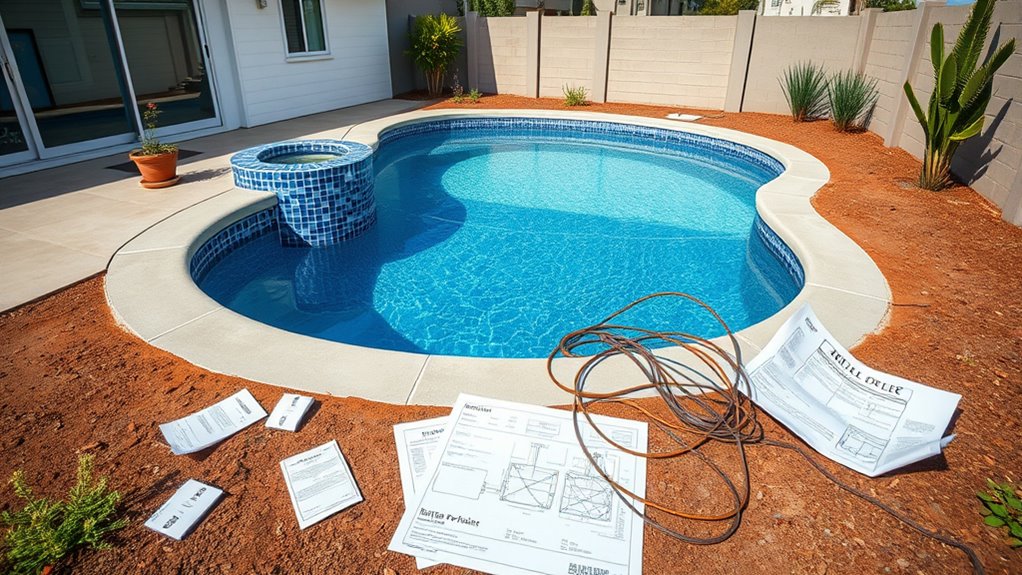
Neglecting to check local building codes and obtain necessary permits can lead to legal complications and costly delays. Before you start, research your municipality’s regulations to guarantee your project complies. Failing to secure permits might result in fines, forced removal of your pool, or insurance issues if accidents occur. Some codes specify foundation requirements, electrical standards, and safety measures that you must follow. Ignoring these rules can compromise your pool’s safety and longevity. It’s tempting to skip paperwork to save time, but doing so risks significant setbacks later. Always consult local authorities or a professional familiar with regional regulations. Taking the time to secure permits and adhere to codes saves you from potential legal trouble and ensures your DIY project remains compliant and safe. Developing your creative practice can help you approach problem-solving with a more innovative mindset, making it easier to navigate complex regulations and find effective solutions.
Choosing an Inappropriate Location for Your Pool
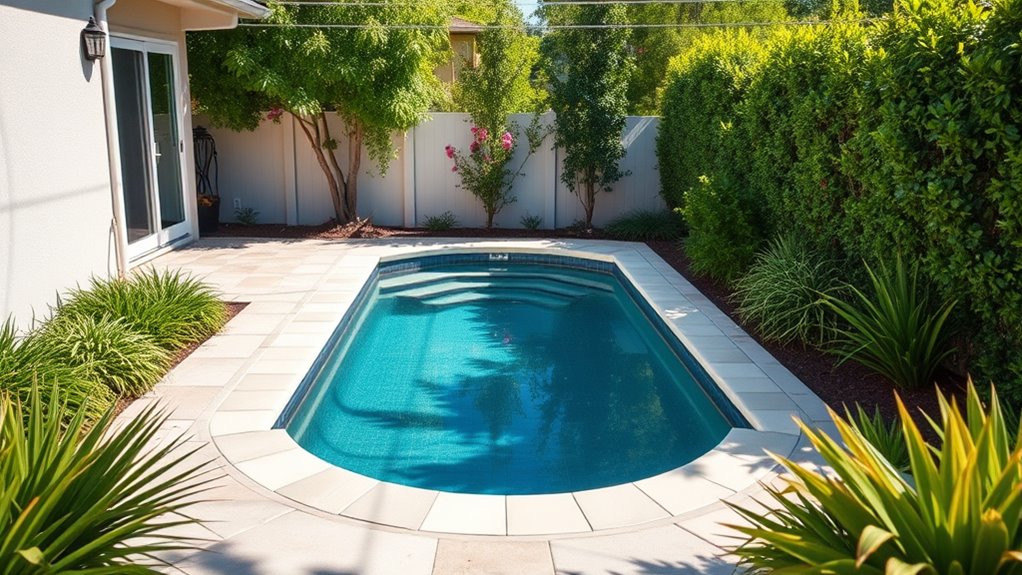
Choosing the right spot for your DIY pool can make or break your project’s success. Selecting an unsuitable location can cause drainage issues, structural problems, and accessibility concerns. Avoid placing the pool where it’s exposed to excessive sunlight, which can lead to algae growth and increased heating costs. Steer clear of areas prone to flooding, as water damage can ruin your investment. Make sure the ground is level and solid; uneven terrain can cause instability and leaks. Consider proximity to your home for easy access, but keep enough space for maintenance and safety. Additionally, don’t overlook local regulations or setbacks that restrict where you can install the pool. Proper placement ensures longevity, safety, and enjoyment of your DIY endless pool. Incorporating a properly calibrated projector setup can further enhance your home entertainment experience.
Overlooking Adequate Electrical Planning and Safety Measures

You need to guarantee your electrical setup can handle the pool’s power demands to avoid overloads. Proper grounding procedures are essential to prevent electrical shocks and ensure safety. Ignoring circuit capacity requirements can lead to hazards and costly repairs down the line.
Circuit Capacity Requirements
Making certain your circuit capacity can handle the electrical load of an endless pool is essential for safe and efficient operation. You need to calculate the pool’s power requirements, including pumps, heaters, and lighting. Overloading a circuit can cause tripped breakers or electrical fires, risking both safety and equipment damage. Check the manufacturer’s specifications for each component and add them up to determine the total amperage needed. Always provide a dedicated circuit to prevent interference from other appliances. Consult a qualified electrician to install appropriately rated wiring and circuit breakers. Skipping this step or underestimating the load can lead to frequent outages, safety hazards, or costly repairs. Proper planning ensures your pool runs smoothly without electrical issues. Additionally, understanding the circuit capacity requirements can help you select the right electrical components and avoid future complications.
Proper Grounding Procedures
Proper grounding is a critical safety step that should never be overlooked when installing an endless pool. Without proper grounding, electrical faults can pose serious risks, including shocks or fires. To ensure safety, follow these essential procedures:
- Verify that your electrical system has a dedicated grounding wire connected to a grounding rod or metal underground water pipe.
- Use a GFCI (Ground Fault Circuit Interrupter) outlet to cut power instantly if a leak or fault occurs.
- Ensure all electrical components, including pumps and heaters, are properly bonded to the grounding system.
- Hire a qualified electrician to inspect your setup before powering on the pool, confirming all grounding measures are correctly implemented.
- Remember that proper electrical planning is vital to prevent dangerous situations and ensure long-term safety.
Neglecting Proper Water Circulation and Filtration System Setup
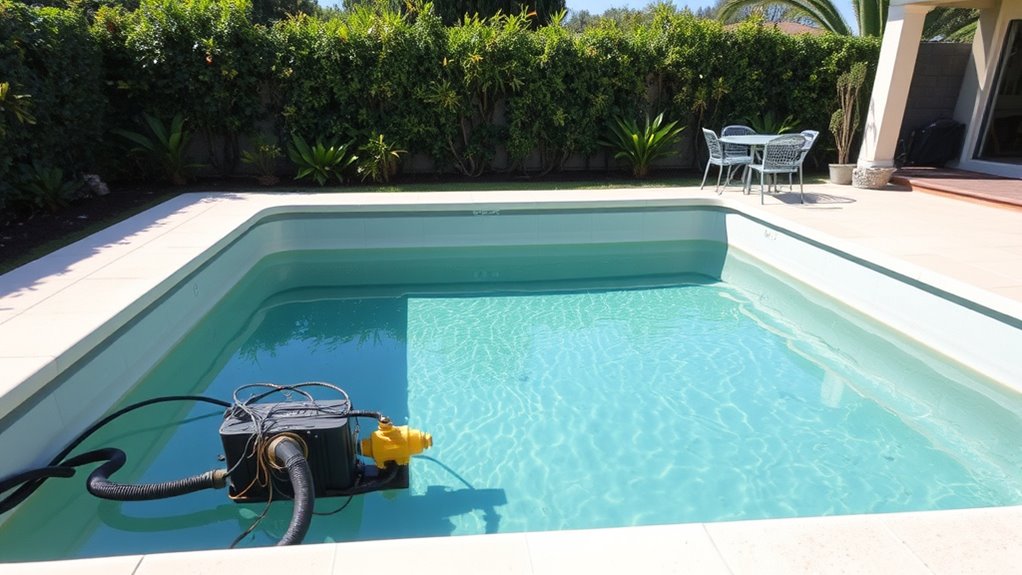
If you don’t position your pump correctly, your pool water won’t circulate properly, leading to stagnant spots. You also need to stay on top of filter maintenance to keep the water clean and clear. Ignoring these steps can compromise your pool’s performance and safety. Additionally, understanding the natural water flow principles can help optimize circulation and prevent issues.
Correct Pump Placement
Placing the pump correctly is crucial for maintaining efficient water flow in your DIY endless pool. Proper placement ensures consistent circulation, prevents dead spots, and keeps the water clean. To get this right, consider these tips:
- Position the pump near the filter outlet to maximize flow efficiency.
- Keep the pump elevated or on a stable surface to avoid vibrations and noise.
- Place the intake close to the water surface but away from skimmers or debris sources.
- Avoid placing the pump directly on the pool floor; this can cause blockages and reduce lifespan.
- Ensuring the pump’s compatibility with your filtration system helps maintain optimal performance and longevity.
Regular Filter Maintenance
Regular filter maintenance is essential to keep your DIY endless pool functioning smoothly. If you neglect this, water quality will decline, leading to cloudy water, unpleasant odors, and potential health issues. You should regularly clean or replace your filter according to the manufacturer’s instructions. Check for debris and buildup that can clog the system and reduce circulation. Proper water flow depends on a well-maintained filter, which ensures the pump operates efficiently and prevents strain. Schedule routine inspections to identify and address issues early. Remember, a clean filter extends the lifespan of your filtration system and keeps your pool water safe and inviting. Failing to maintain your filter properly can cause costly repairs and compromise your swimming experience. Additionally, understanding retirement planning strategies can help you prepare financially for future needs, ensuring peace of mind during your retirement years.
Failing to Insulate and Weatherproof the Pool Area

Failing to properly insulate and weatherproof your pool area can lead to significant energy loss and increased maintenance costs. Without proper insulation, your pool heats less efficiently, forcing your heater to work harder. Weatherproofing prevents damage from rain, snow, and humidity, which can cause mold and structural issues. To avoid these pitfalls, consider these key tips:
- Seal gaps around doors and windows to prevent drafts.
- Use insulated panels or blankets to retain heat.
- Install weatherproof roofing or enclosures to shield from the elements.
- Add drainage solutions to prevent water buildup and damage.
- Incorporate HVAC considerations to ensure optimal climate control within the pool area.
Neglecting these steps can turn your DIY project into a costly, energy-draining mistake. Proper insulation and weatherproofing ensure comfort, efficiency, and longevity of your pool.
Underestimating the Importance of Professional Assistance for Key Tasks
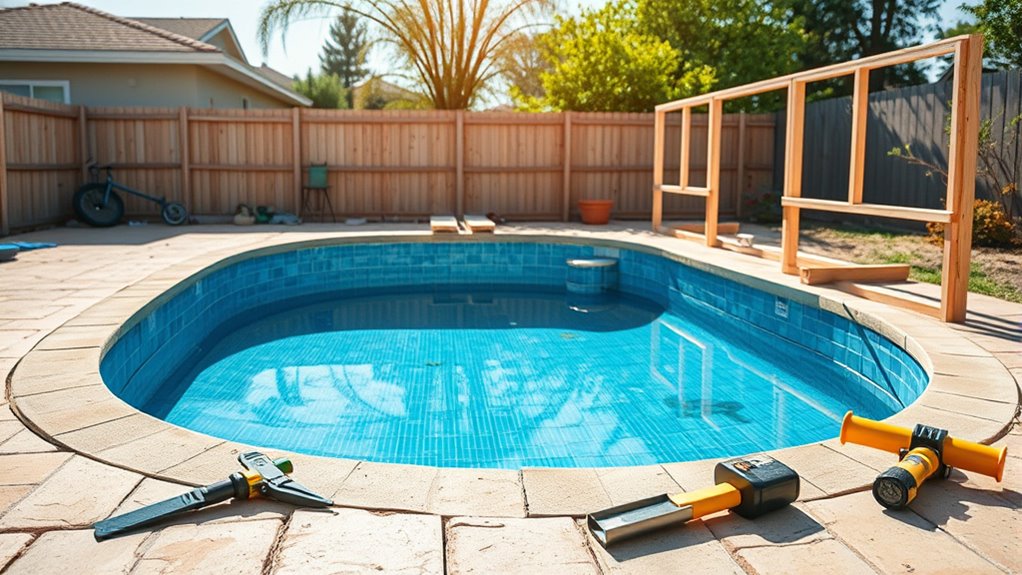
While tackling a DIY endless pool can be rewarding, underestimating the need for professional assistance can lead to costly mistakes and safety risks. Key tasks like electrical wiring, plumbing, and structural support require expertise to guarantee safety and compliance with local codes. Without professional help, you might overlook critical details, resulting in leaks, electrical hazards, or unstable foundations. These errors can be expensive to fix and could jeopardize your safety. Recognizing when to call in licensed professionals is crucial; they have the experience to handle complex aspects efficiently and correctly. Rushing through these steps or attempting them without proper knowledge increases the risk of failure. Prioritizing professional assistance helps ensure your pool is installed safely, functions properly, and saves you money in the long run. Additionally, understanding cruise FAQs can inform you about safety protocols and proper procedures that are essential for successful installation and maintenance.
Using Inferior or Incorrect Materials During Construction
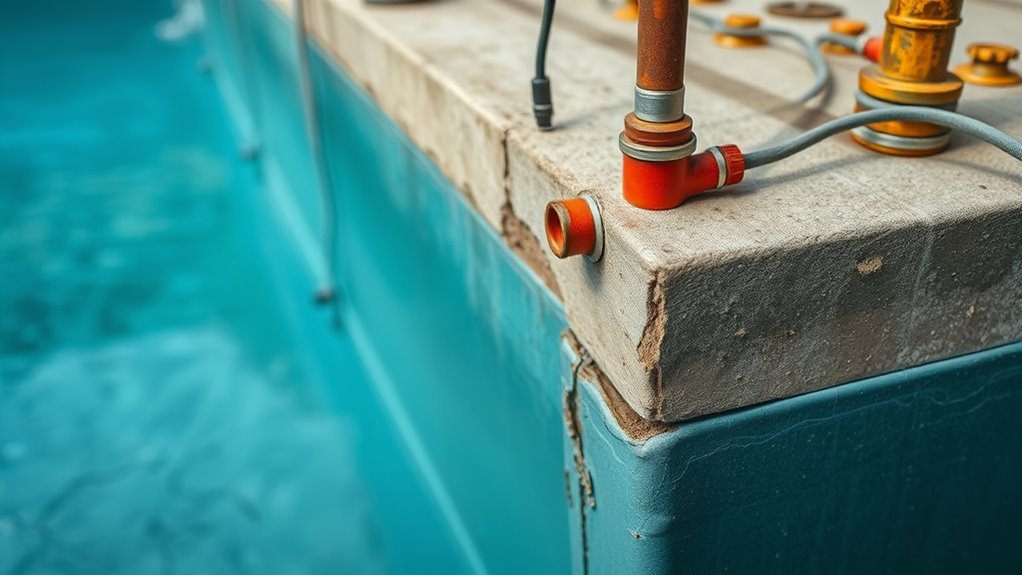
Choosing the right materials is essential for guaranteeing your DIY endless pool’s durability and safety. Using inferior or incorrect materials can lead to costly repairs, leaks, or even safety hazards. You need to select high-quality, pool-specific materials that withstand water exposure and chlorine.
Here are some common mistakes to avoid:
- Using cheap, non-waterproof sealants that can break down and cause leaks.
- Selecting inappropriate framing materials that aren’t resistant to moisture or corrosion.
- Choosing low-grade tiles or lining materials that may crack or peel over time.
- Ignoring the importance of proper insulation materials to prevent heat loss and ensure energy efficiency.
Always prioritize quality to ensure your pool’s longevity and safety.
Rushing the Installation Process Without Following a Detailed Plan
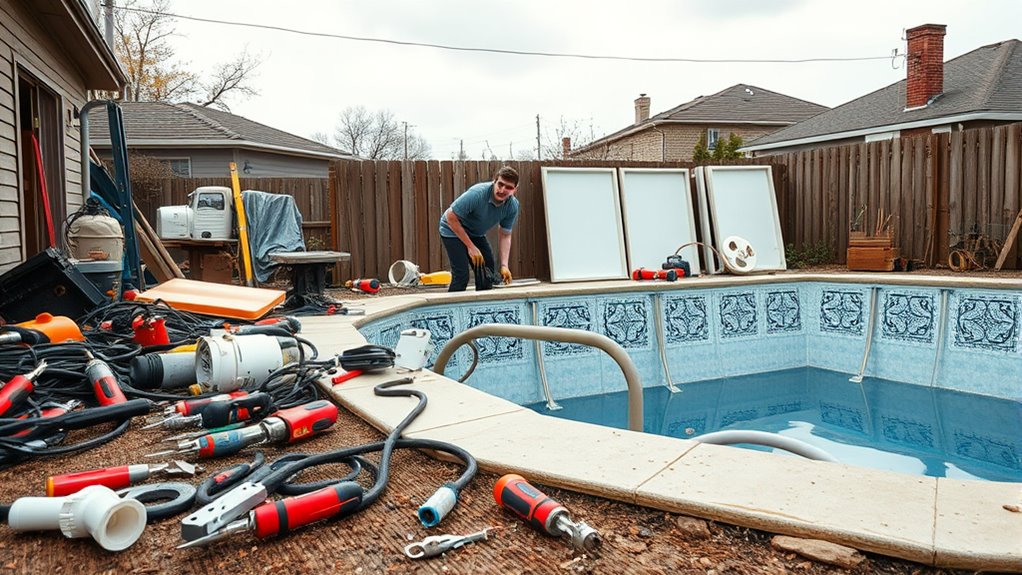
Skipping the detailed planning stage and rushing through installation can compromise the integrity of your DIY endless pool. When you skip steps or rush, you risk overlooking critical measurements or necessary adjustments, which can lead to uneven surfaces or structural weaknesses. Without a clear plan, you might misalign components or forget essential connections, causing leaks or unstable foundations. Rushing often leads to mistakes that are costly and time-consuming to fix later. Take the time to map out every step, gather all materials, and double-check measurements. Patience during installation guarantees that each component fits correctly, reducing the risk of future issues. Remember, rushing might save you time initially, but it can jeopardize the pool’s safety and longevity in the long run.
Overlooking Regular Maintenance and Inspection Needs
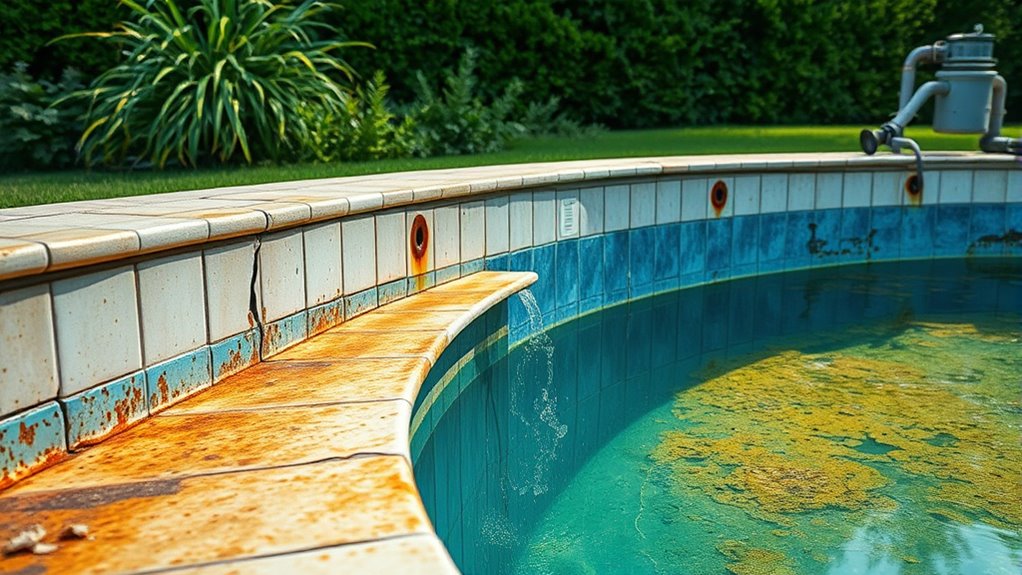
Neglecting regular maintenance and inspections can quickly lead to costly repairs and safety hazards for your DIY endless pool. Without proper upkeep, small issues can escalate, causing equipment failure or water quality problems. To keep your pool running smoothly, stay on top of these essentials:
Neglecting regular maintenance risks costly repairs and safety hazards for your DIY endless pool.
- Check and clean the filtration system weekly to prevent clogs.
- Test water pH and sanitizer levels regularly to ensure safe, clean water.
- Inspect pumps, heaters, and seals for leaks or wear.
- Schedule seasonal draining and thorough cleaning to prevent buildup and corrosion.
Neglecting Safety Features and Emergency Preparedness Measures
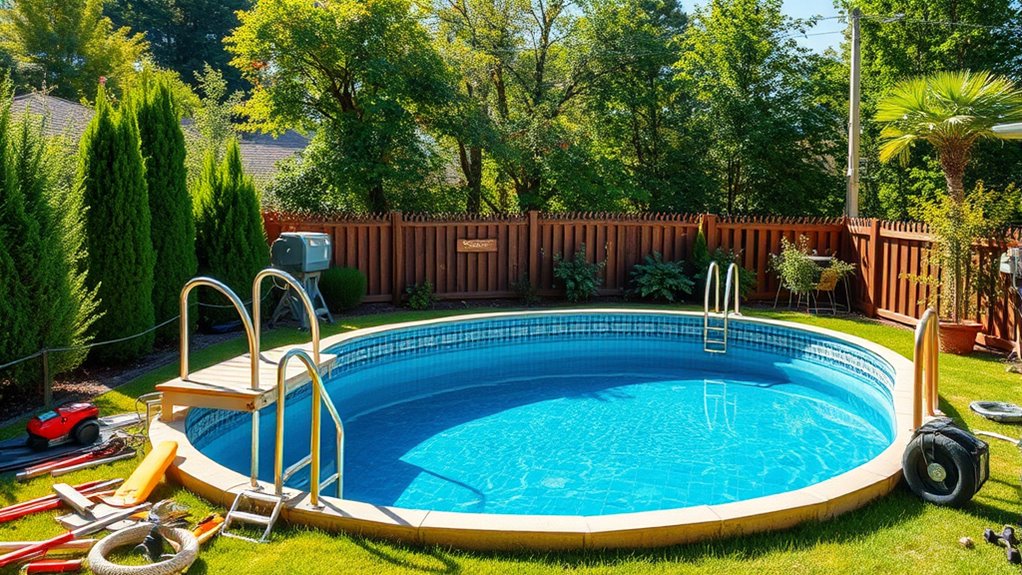
Failing to install and regularly test safety features can turn your DIY endless pool into a hazardous environment. Without proper safety measures, accidents become likely, especially in emergencies. Make certain you have safety alarms, barriers, and clear signage. Emergency preparedness includes accessible rescue equipment and a communication plan. Regularly inspect safety devices to confirm they function correctly. Here’s a quick overview:
| Safety Feature | Purpose |
|---|---|
| Safety Alarms | Alert you to issues immediately |
| Emergency Shut-off | Prevent damage or injury |
| Rescue Equipment | Facilitate quick assistance |
Neglecting these elements can lead to dangerous situations. Prioritize safety to keep your pool safe and enjoyable.
Frequently Asked Questions
How Long Does a Typical DIY Endless Pool Installation Take?
A typical DIY Endless Pool installation takes about 1 to 3 days, depending on your experience and the complexity of your space. You’ll spend time preparing the site, assembling the components, and ensuring all connections are secure. If you’re familiar with basic tools and plumbing, the process speeds up. Rushing or skipping steps can cause issues, so take your time and follow instructions carefully for a smooth setup.
What Are the Hidden Costs Involved in Installation?
Did you know that hidden costs can add up to 30% beyond your initial budget? When installing your DIY Endless Pool, expect surprises like electrical upgrades, permits, or additional plumbing. You might also need specialized tools or professional help for tricky parts, which can quickly increase expenses. Always budget extra for unforeseen issues to avoid running out of funds halfway through. Careful planning helps you stay on top of these hidden costs.
Can I Install an Endless Pool Indoors or Only Outdoors?
You can install an endless pool indoors or outdoors, but indoor installation requires careful planning. Make certain you have enough space, proper ventilation, and a reinforced floor to support the weight. Consider humidity control and access to power and water sources. Indoor setups offer convenience and privacy, but they demand additional modifications and inspections. Assess your space and consult professionals to avoid costly mistakes and ensure safe, successful installation.
What Maintenance Skills Are Needed for Long-Term Operation?
You’ll need basic maintenance skills like checking and cleaning the filter regularly, monitoring water chemistry, and topping off water levels. It’s important to test the pH, chlorine, and alkalinity weekly to prevent buildup and bacteria growth. You should also inspect the pump and heater for any issues and drain or clean the pool annually. Staying consistent with these tasks guarantees your pool remains safe, clean, and functions smoothly over time.
How Do I Troubleshoot Common Electrical or Plumbing Issues?
Think of your endless pool as a well-oiled machine—when electrical or plumbing issues strike, you’re the mechanic. First, check the power supply and reset circuit breakers if needed. For plumbing, look for leaks or clogs disrupting the flow. Use a multimeter to test electrical connections, and inspect hoses for cracks or blockages. Address problems promptly to keep your pool running smoothly, like a symphony in perfect harmony.
Conclusion
So, if you want your DIY endless pool to turn into a DIY disaster, ignore these mistakes. Skip the site prep, forget permits, choose a shady spot, and neglect safety—what could possibly go wrong? Remember, rushing and skimping on materials might save time now, but will definitely cost you later. Follow these tips, or enjoy the thrill of turning your backyard oasis into a never-ending pool of regret. Happy building—or not!