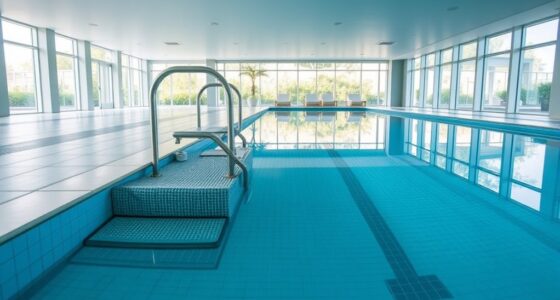
Yes, you can install an endless pool indoors by carefully considering ventilation, moisture control, and structural support. Guarantee your space has proper airflow with exhaust fans and humidity sensors, and choose moisture-resistant materials like waterproof drywall and tiles. Make sure the ceiling height, drainage, and access points meet safety standards. Planning these details helps create a safe, comfortable environment. Keep exploring how to optimize your indoor pool setup for long-term enjoyment.
Key Takeaways
- Ensure ceiling height, floor strength, and structural support meet the water and equipment weight requirements.
- Install a dedicated ventilation system with humidity control to prevent mold and moisture buildup indoors.
- Use moisture-resistant materials like waterproof drywall, tiles, and vapor barriers to protect structural elements.
- Incorporate proper drainage and sloped floors to manage water runoff and avoid standing water.
- Maintain regular maintenance, including cleaning filters and inspecting seals, to ensure a safe, healthy indoor pool environment.
Assessing Your Space and Structural Requirements
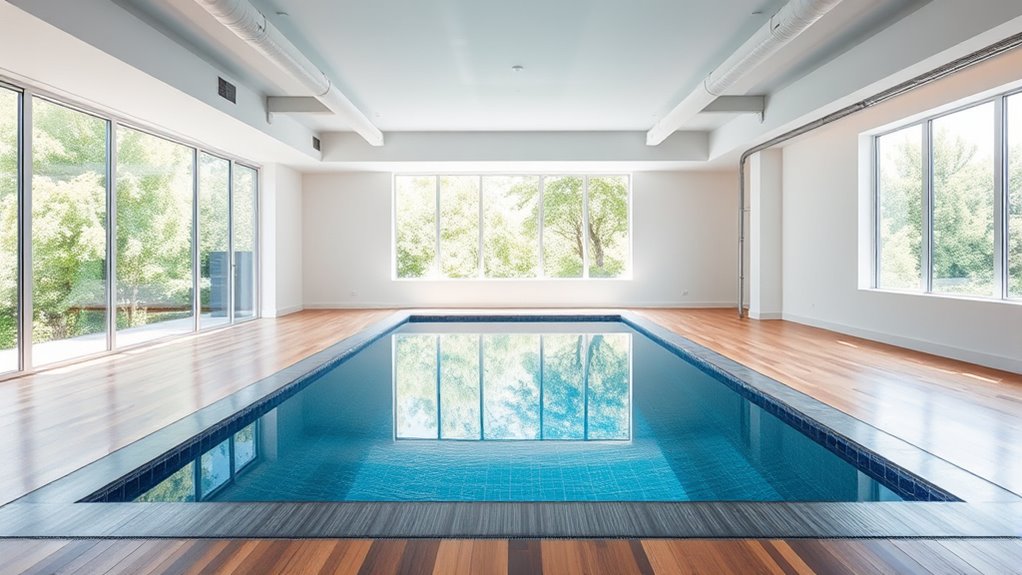
Before installing an endless pool indoors, you need to carefully evaluate your available space and its structural capacity. Measure the area to make sure there’s enough room for the pool and safe movement around it. Consider ceiling height, as you’ll need adequate clearance for entry, maintenance, and possible equipment installation. Check the floor’s strength—concrete slabs are ideal, but other sturdy surfaces can work if reinforced. Keep in mind that water weight adds significant load; for example, a 10-foot pool can weigh several thousand pounds when filled. You’ll also want to identify nearby support beams or load-bearing walls that can handle this weight. Proper assessment helps prevent structural issues and guarantees your space can safely accommodate the pool. Additionally, understanding the importance of structural integrity can help ensure your indoor installation remains safe and durable over time.
Proper Ventilation Strategies for Indoor Pools

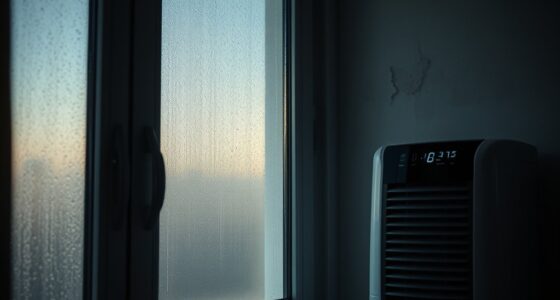
Effective ventilation is essential for maintaining a healthy indoor pool environment, as it controls humidity, reduces airborne contaminants, and prevents mold growth. To achieve this, install a dedicated ventilation system designed specifically for pools, such as an exhaust fan paired with an intake vent. Ensure the system maintains a slight negative pressure to prevent moisture from escaping into other areas. Use high-quality filters to capture airborne particles and reduce odors. Regularly inspect and maintain your ventilation equipment to guarantee maximum performance. Consider integrating a dehumidification unit if your space is particularly humid. Proper placement of vents is vital—position exhaust vents near the pool and high on walls to effectively remove moist air. Consistent, well-designed ventilation keeps your indoor pool environment safe and comfortable. Incorporating AI automation into your ventilation system can optimize airflow and reduce energy consumption over time.
Controlling Humidity and Moisture Levels

You need to keep humidity levels in check to prevent damage and mold growth. Using effective monitoring techniques helps you stay on top of moisture fluctuations, while moisture-resistant materials safeguard your space from long-term issues. Combining these strategies ensures your indoor pool remains comfortable and well-maintained. Incorporating sound design techniques can further enhance the atmosphere and safety of your indoor pool environment.
Humidity Monitoring Techniques
Monitoring humidity levels is essential for maintaining a comfortable and healthy indoor pool environment. To do this effectively, use a reliable hygrometer to measure moisture in the air regularly. Digital hygrometers provide accurate, real-time readings and can be placed at different heights to monitor variations. Consider installing a smart humidity sensor connected to your ventilation system for continuous oversight. Keep track of fluctuations, especially after use or during different seasons, to adjust your ventilation or dehumidification strategies accordingly. Additionally, a humidistat can automatically activate dehumidifiers when humidity exceeds preset levels, ensuring consistent control. Regular monitoring helps prevent excess moisture buildup, reduces the risk of mold, and keeps your indoor pool area safe and comfortable. Incorporating humidity monitoring techniques is crucial for effective moisture control and maintaining optimal indoor conditions.
Moisture-Resistant Materials
Choosing the right materials for your indoor pool space can considerably reduce moisture issues. Use moisture-resistant materials like ceramic tiles, epoxy coatings, or waterproof drywall to prevent water infiltration and mold growth. These materials help contain humidity and protect your walls and floors from damage. Avoid porous surfaces that absorb moisture, which can lead to deterioration over time. Seal all joints and seams thoroughly to prevent leaks and moisture buildup. Consider installing vapor barriers behind walls and under flooring to further control humidity. Using durable, water-resistant materials not only extends the lifespan of your space but also minimizes maintenance needs. Additionally, proper ventilation is critical to manage humidity levels effectively and prevent condensation. Proper material selection is essential for creating a safe, healthy indoor pool environment that withstands moisture challenges effectively.
Choosing the Right Location Within Your Home

Selecting the ideal spot for your indoor endless pool guarantees it fits seamlessly into your home and lifestyle. Consider proximity to plumbing and electrical systems to simplify installation. Choose a space with enough ceiling height for comfortable swimming and ventilation. Avoid placing it near bedrooms or quiet zones to minimize noise disruptions. Ensure the area has good airflow to reduce humidity buildup. Use the table below to evaluate potential locations:
| Criteria | Considerations |
|---|---|
| Space Size | Sufficient room for pool and accessories |
| Ventilation | Easy access to HVAC or exhaust systems |
| Privacy & Noise | Minimize disturbances to daily life |
| Accessibility | Convenient for maintenance and use |
Properly ventilated areas are essential for maintaining moisture control and ensuring a comfortable environment. Careful planning guarantees your indoor pool complements your home’s layout and your lifestyle.
Ensuring Adequate Drainage and Water Management
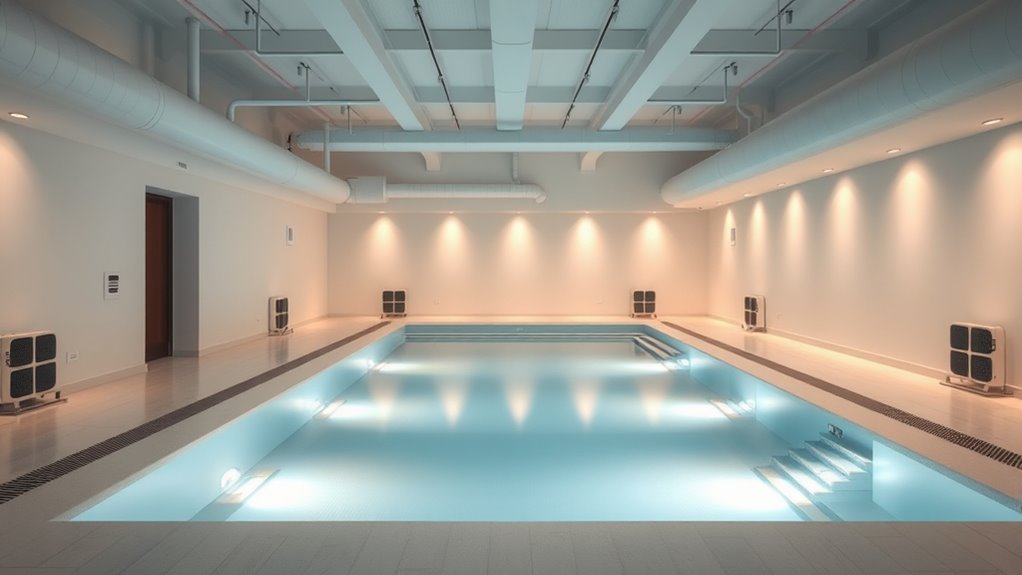
Proper drainage and water management are essential to prevent flooding and water damage in your indoor pool area. You should install a reliable drainage system that directs excess water away from the pool and surrounding areas. Consider using a sloped floor that directs water toward drains, reducing the risk of standing water and leaks. Regularly inspect and maintain drainage components to ensure they function properly. Additionally, install a moisture barrier beneath the pool to prevent water seepage into structural elements. Using high-quality, waterproof sealants around fixtures and joints helps avoid leaks. Proper ventilation combined with effective drainage minimizes humidity buildup and prevents mold growth. By prioritizing these water management strategies, you protect your home’s integrity while maintaining a safe, functional indoor pool environment.
Selecting Suitable Pool Models for Indoor Use
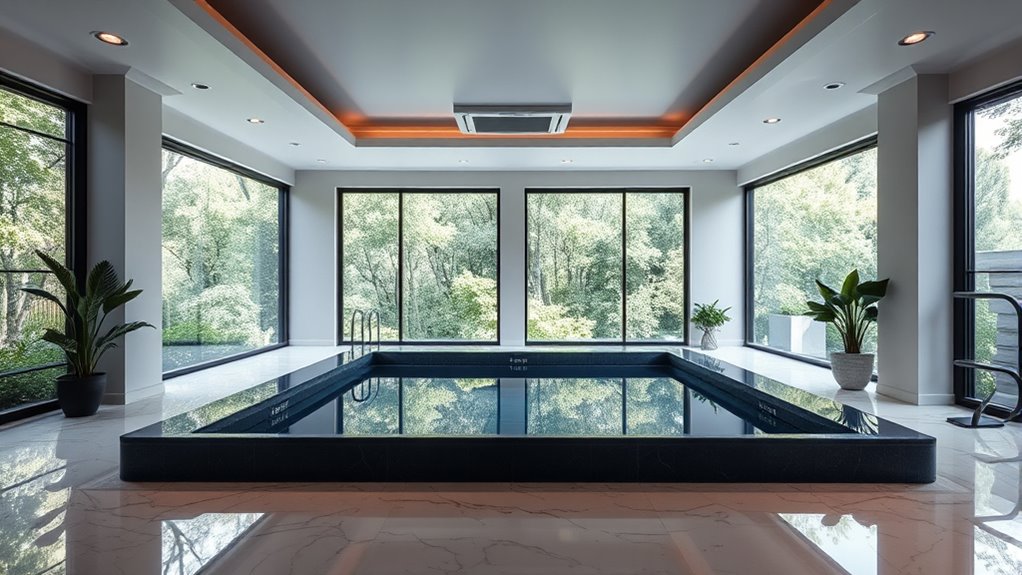
When deciding on a pool for your indoor space, it’s important to contemplate models that fit the room’s size, layout, and ventilation capabilities. Compact Endless Pools are often ideal because they require less space and can be easily integrated into existing rooms. Consider models with adjustable water flow and customizable lengths to match your swimming needs. Above-ground or semi-in-ground pools are also good options if space is limited, as they can be installed with minimal structural changes. Ascertain the pool’s dimensions align with your available area, leaving room for proper ventilation and moisture control. Additionally, prioritize models with efficient filtration and heating systems to maintain water quality and comfort without overtaxing your indoor environment. Proper bicycle tire longevity in storage practices, such as controlling humidity and inspecting for damage, can help preserve the equipment used to maintain your pool area.
Incorporating Safety Measures and Access Points
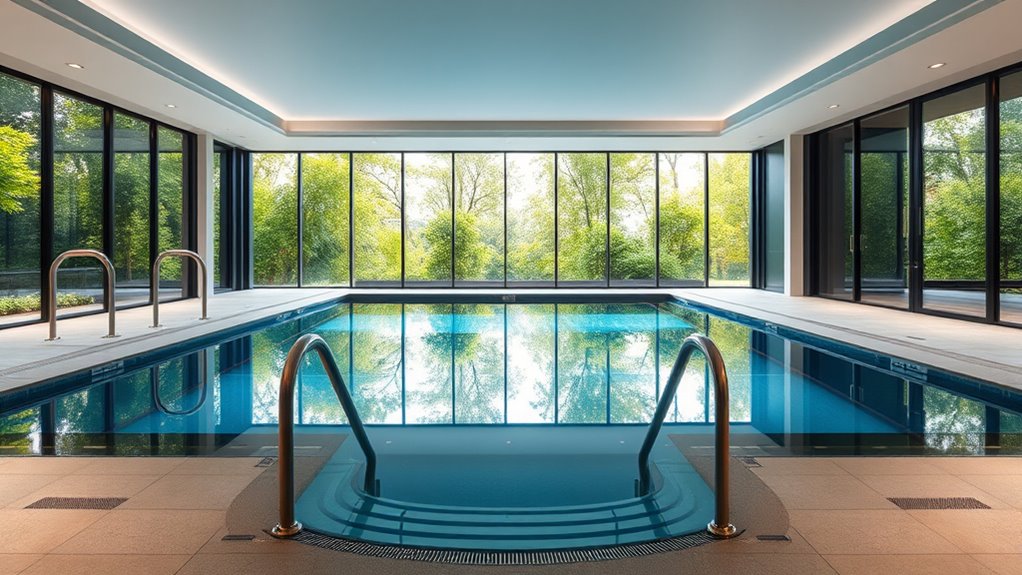
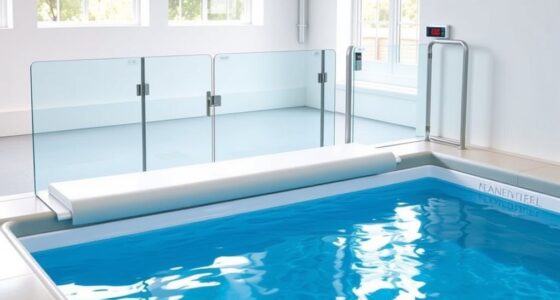
Ensuring safety and easy access are essential when installing an indoor Endless Pool. You should install sturdy, slip-resistant flooring around the pool to prevent accidents. Make sure your access points, like doors or walkways, are wide enough for comfortable entry and exit, especially if you plan to add safety rails or steps. Consider installing safety features such as handrails, grab bars, and non-slip surfaces near the pool area. Adequate lighting is vital so you can see clearly at all times, reducing the risk of slips or falls. Additionally, create a clear and unobstructed path for emergency exits and maintenance access. Properly planned safety measures and accessible entry points will help you enjoy your indoor pool confidently and safely every day. Incorporating body awareness into your safety planning can help prevent accidents by making you more conscious of your movements around the pool area.
Maintaining Air Quality and Reducing Odors

Good ventilation is key to maintaining fresh air and preventing odors from building up in your indoor Endless Pool area. Guarantee your space has proper airflow by installing exhaust fans or air exchange systems that regularly remove humid, stale air. Use high-quality air filters to trap airborne particles and reduce musty smells. Regularly clean the pool and surrounding area to prevent mold and bacteria growth, which can cause odors. Consider using dehumidifiers to control moisture levels, as excess humidity can intensify smells and create an environment conducive to mold. Avoid overcrowding the space and keep it well-organized to facilitate airflow. Proper ventilation and cleanliness are essential for a healthy, odor-free environment that makes your indoor pool experience enjoyable. Additionally, implementing air quality monitoring devices can help you keep track of humidity and pollutant levels, ensuring optimal conditions at all times.
Long-Term Maintenance and Upkeep Tips
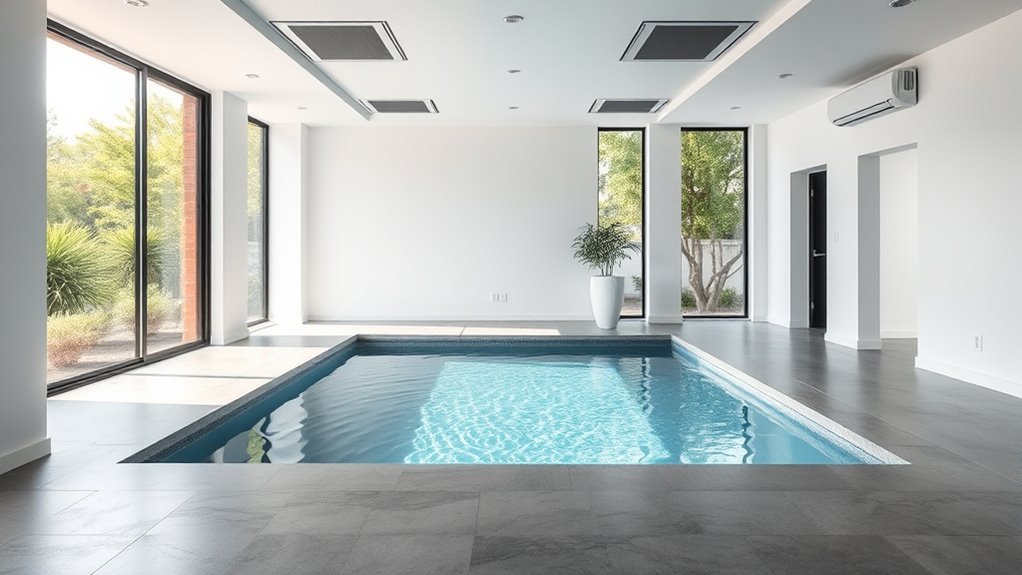
Keeping your indoor pool in top shape requires consistent effort. You should establish regular cleaning routines and stay on top of seasonal maintenance tasks. Doing so guarantees your pool stays clean, safe, and ready for use year-round. Incorporating proper water quality management helps prevent issues like mineral buildup and bacteria growth, ensuring healthier water for swimmers.
Regular Cleaning Routines
Regular cleaning is essential to keep your indoor endless pool functioning smoothly and looking its best over time. You should wipe down the surfaces regularly to prevent the buildup of dirt, oils, and algae. Use a gentle, non-abrasive cleaner suitable for pool finishes to avoid damage. Keep the water circulating by running the pump daily, which helps distribute chemicals evenly and reduces stagnation. Check and clean the filter frequently to guarantee ideal performance. Skimming the water surface removes debris like leaves or dust, maintaining clarity. Regularly inspect the pool’s interior for signs of wear or mold, addressing issues promptly. Consistent cleaning not only prolongs your pool’s lifespan but also creates a healthier, more inviting environment for your enjoyment.
Seasonal Maintenance Tasks
As the seasons change, it’s important to guarantee your indoor pool maintenance to ensure it stays in top condition year-round. Seasonal tasks help prevent issues like mold, corrosion, and equipment wear. In spring, focus on inspecting your ventilation system and cleaning filters thoroughly. During winter, check for drafts and ensure the heating system functions efficiently. Summer requires monitoring humidity levels and running dehumidifiers as needed. Here’s a quick guide:
| Season | Tasks |
|---|---|
| Spring | Inspect ventilation, clean filters, test equipment |
| Summer | Control humidity, run dehumidifiers, check chemistry |
| Winter | Insulate pipes, verify heater performance |
Regular seasonal upkeep keeps your pool safe, efficient, and enjoyable all year.
Frequently Asked Questions
Can an Indoor Endless Pool Be Used Year-Round in All Climates?
Yes, you can use an indoor endless pool year-round in all climates if you properly manage ventilation, humidity, and temperature. To guarantee comfort and safety, install good ventilation systems to prevent moisture buildup and mold. Use insulation to maintain consistent water temperature, and consider climate control options like heaters or air conditioners. With the right setup, your indoor pool remains a year-round oasis, regardless of outside weather conditions.
What Are the Electrical Requirements for Installing an Indoor Endless Pool?
You’ll need a dedicated 220-240V circuit with a proper breaker, like in the Johnson case, who installed a 50-amp circuit for his indoor pool. Make certain your electrical system meets local codes and is installed by a licensed electrician. You might also require GFCI outlets for safety. Proper wiring and grounding are essential to handle the pool’s load, preventing electrical hazards and ensuring reliable operation year-round.
How Does Indoor Installation Affect the Pool’s Energy Consumption?
Indoor installation can increase your pool’s energy consumption because you’ll need to power additional systems like heaters, ventilation, and dehumidifiers to maintain comfortable conditions. Keep in mind that insulation and energy-efficient equipment help reduce costs. Properly sealing the space and using quality insulation minimizes heat loss, saving you money. Overall, expect higher energy bills, but smart design choices can make indoor pool use more economical and comfortable.
Are There Specific Building Codes or Permits Needed for Indoor Pools?
Yes, you’ll need to check local building codes and obtain permits before installing an indoor pool. Imagine the blueprint unfolding as inspectors scrutinize your plans, guaranteeing safety, ventilation, and moisture controls meet strict standards. Permits ensure your project complies with zoning laws and structural requirements. Skipping this step risks costly delays or legal issues, so always consult your local authorities early to secure approval and avoid surprises during construction.
Can an Indoor Pool Be Integrated With Existing Home Automation Systems?
Yes, you can integrate an indoor pool with your existing home automation system. You’ll need compatible smart devices and a central hub to connect everything seamlessly. make sure your automation system supports water temperature, lighting, and safety features. It’s best to work with a professional to set up the integration properly, so your pool functions smoothly and safely alongside your home’s other smart systems.
Conclusion
Think of installing an indoor endless pool like planting a delicate garden indoors—you need the right environment, proper care, and regular attention. When you prioritize ventilation, moisture control, and safety, your pool becomes a invigorating oasis rather than a potential headache. With careful planning, you’ll enjoy many relaxing laps without worry. Just like tending to a garden, nurturing your indoor pool transforms your space into a personal retreat, blooming with comfort and joy for years to come.