Using mirrors and cameras in endless pools gives you instant visual feedback to improve your stroke technique, body position, and efficiency. Mirrors let you see your form and alignment in real time, while cameras provide detailed views from multiple angles and slow-motion playback to spot subtle flaws. This visual feedback helps you make quick corrections and develop better habits faster. Keep exploring to discover how these tools can take your swimming to the next level.
Key Takeaways
- Mirrors provide instant visual feedback on body alignment and stroke form during swim practice.
- Cameras allow recording from multiple angles to analyze technique and identify subtle flaws.
- Slow-motion playback with cameras helps refine arm movement, kick timing, and overall mechanics.
- Visual feedback tools enable real-time corrections, improving training efficiency and technique precision.
- Combining mirrors and cameras enhances overall stroke analysis, body positioning, and skill development in Endless Pools.
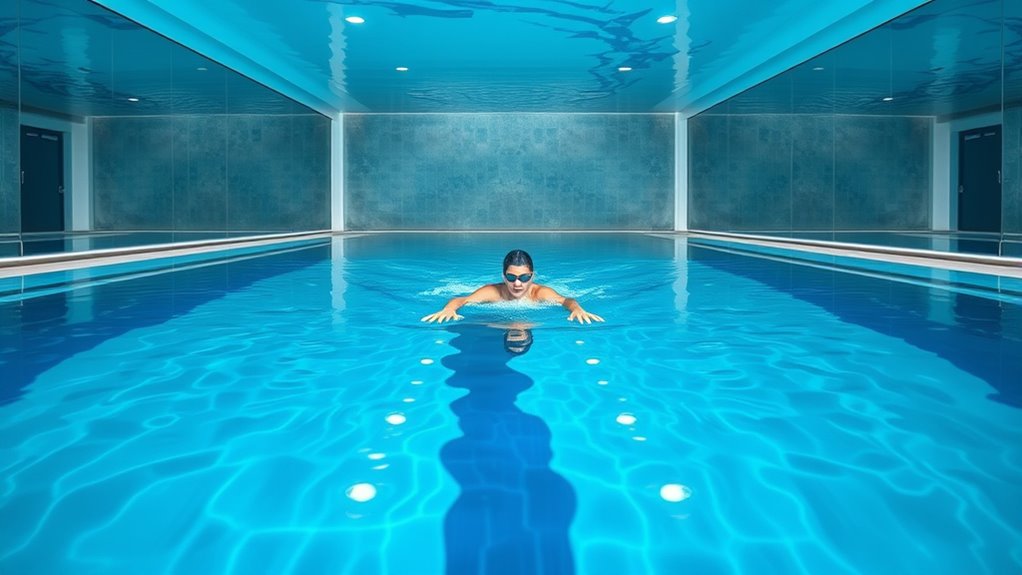
If you want to improve your swimming technique in an endless pool, incorporating mirrors and cameras can be highly effective. These tools give you instant visual feedback, allowing you to better understand your stroke analysis and body positioning. When you swim, it’s easy to develop habits that may seem effective but actually hinder your efficiency. By using mirrors, you can observe your form in real-time, making immediate adjustments. Cameras take this a step further, capturing your movements from multiple angles so you can analyze your technique in detail afterward. This combination helps you identify subtle flaws in your stroke, such as uneven arm pulls or improper kick timing, that you might not notice while swimming.
Focusing on stroke analysis becomes much easier when you utilize mirrors and cameras. You can see your arm entry, pull, and recovery phases, ensuring they align with ideal swimming mechanics. For example, if your hands enter the water too wide or too narrow, you can correct it right away. Cameras also enable slow-motion playback, which is invaluable for spotting issues with your body positioning. You might discover that your hips drop or your head tilts during certain phases of your stroke, impairing your overall efficiency. Recognizing these flaws promptly allows you to make targeted corrections, leading to faster progress and more efficient swimming.
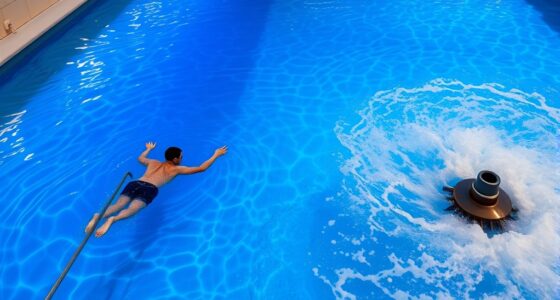
Body positioning is vital for reducing drag and increasing propulsion. Mirrors provide immediate visual cues about your overall posture and alignment. You can see if your body stays straight in the water or if it leans to one side. This instant feedback helps you develop a better sense of how to maintain ideal body position throughout your swim. Cameras are especially useful for tracking body position over longer intervals, helping you see patterns and tendencies that might be difficult to feel or notice otherwise. With this knowledge, you can focus on drills or cues that promote better alignment, such as engaging your core or adjusting your head position. Additionally, incorporating robotics technology can further enhance your training by providing precise motion analysis and feedback.
Using mirrors and cameras in an endless pool doesn’t just make your training more effective; it makes it more precise. You gain a clearer understanding of how your stroke mechanics and body positioning impact your performance. This targeted feedback accelerates your learning curve, enabling you to correct flaws early and develop more efficient swimming habits. Over time, this leads to improved speed, endurance, and overall technique. Whether you’re a competitive swimmer or someone looking to swim more comfortably, these visual tools give you the insight needed to refine your craft and swim with greater confidence.

Hikeen Swimming Training Belt 4M Swimming Tether Swim in Place Harness Stationary Aquatic Resistance Belt
Designed for stationary swimming in home & lap pools with adjustable bungee cord for resistance training
As an affiliate, we earn on qualifying purchases.
Frequently Asked Questions
Can Mirrors Help Improve My Swimming Speed?
Yes, mirrors can help improve your swimming speed by providing visual feedback that highlights your form and technique. When you see your strokes in real-time, you can spot areas needing correction and make adjustments quickly. This immediate feedback allows you to refine your technique more efficiently, leading to smoother, more effective movements. Over time, these improvements can translate into increased speed and better overall performance in the pool.
Are Cameras Suitable for All Swimming Skill Levels?
Cameras are suitable for all swimming skill levels, with over 85% of advanced swimmers using video analysis to refine techniques. They provide real-time feedback, making them valuable training tools. For beginners, cameras can boost confidence and help develop proper form. Just remember, effective training techniques include regular practice and proper pool maintenance to guarantee your equipment functions well. Cameras adapt to your progress, supporting continuous improvement at any skill level.
Do Mirrors Affect Water Temperature or Quality?
Mirrors don’t affect water temperature or quality directly, but their placement can influence water clarity by creating shadows or reflections that trap dirt or debris. If mirrors are positioned poorly, they might make maintenance harder, impacting water clarity over time. To keep your pool in top shape, make certain proper mirror placement, clean them regularly, and monitor water quality. This helps maintain a clear, healthy swimming environment.
How Often Should I Adjust Camera Angles for Best Results?
You should adjust your camera placement and angle adjustments regularly, ideally before each session or whenever your technique changes considerably. Aim for consistency by setting a stable position that captures your full stroke and body alignment. Revisit and tweak the angles if you notice your form slipping or if you want a different perspective. Doing this keeps your footage clear, useful, and helps you track progress effectively.
Are There Privacy Concerns With Camera Use in Pools?
While cameras can boost your swim technique, privacy concerns with camera placement are valid. You should make sure they’re positioned discreetly and away from sensitive areas to respect personal boundaries. Use cameras only during practice sessions, and inform everyone involved. Properly securing footage and adhering to privacy policies helps prevent misuse. Balancing technological benefits with privacy ensures you can focus on improving without compromising comfort or trust.

UCEDER Swim Belt Swim Training Belt with 2.2M Bungee Cord Adjustable Swim Tether for Swim in Place Swimming Pool Trainer Belt for Stationary Harness Aquatic Resistance Water Exercise (Black)
🧵 High Quality Material:The Swim Belt is made of high grade natural latex and neoprene material, soft,skin-friendly,comfortable and...
As an affiliate, we earn on qualifying purchases.
Conclusion
By incorporating mirrors and cameras into your endless pool routine, you’re giving yourself a clear shot at perfecting your technique. These tools help you spot flaws and make quick adjustments, turning practice into progress. Remember, practice makes perfect, and with these visual aids, you’re more likely to stay ahead of the curve. Keep at it, and soon enough, you’ll be swimming like a fish in water, confident and in control of every stroke.

3 Ways to Use Swim Tether Stationary Swimming Training Belt,Swim Equipment Kit,Swim Belt for Adults,Swimming Resistance Belt,Ankle Bands,Parachute,Swim Trainer,Bungee Cords, Static Harness
Our swimming tether trainer kit includes, bungee rope, waist teather training, static strap , storage bag, we include...
As an affiliate, we earn on qualifying purchases.

Swim Ankle Strap Stationary Swimmer Swim Lap Swim Training Leash
Adjustable neoprene ankle straps keep you stationary while swimming laps
As an affiliate, we earn on qualifying purchases.