
Aquatic exercise provides a joint-friendly way to manage arthritis by using water’s buoyancy to reduce joint stress while still building strength and flexibility. You can start with simple movements like walking or gentle stretching, and progress to water aerobics or resistance exercises with minimal equipment. The warmth of water relaxes muscles and reduces stiffness, making exercises more comfortable. Keep exploring to discover tailored routines that help ease pain and improve mobility.
Key Takeaways
- Aquatic exercise reduces joint stress through water’s buoyancy, supporting movement and easing arthritis pain.
- Water resistance strengthens muscles and stabilizes joints without excessive impact or injury risk.
- Warm water therapies relax muscles, decrease stiffness, and improve circulation for better joint mobility.
- Exercises like walking, stretching, and water aerobics can be tailored to individual mobility levels.
- Regular aquatic routines promote sustainable, enjoyable activity that helps manage arthritis symptoms long-term.
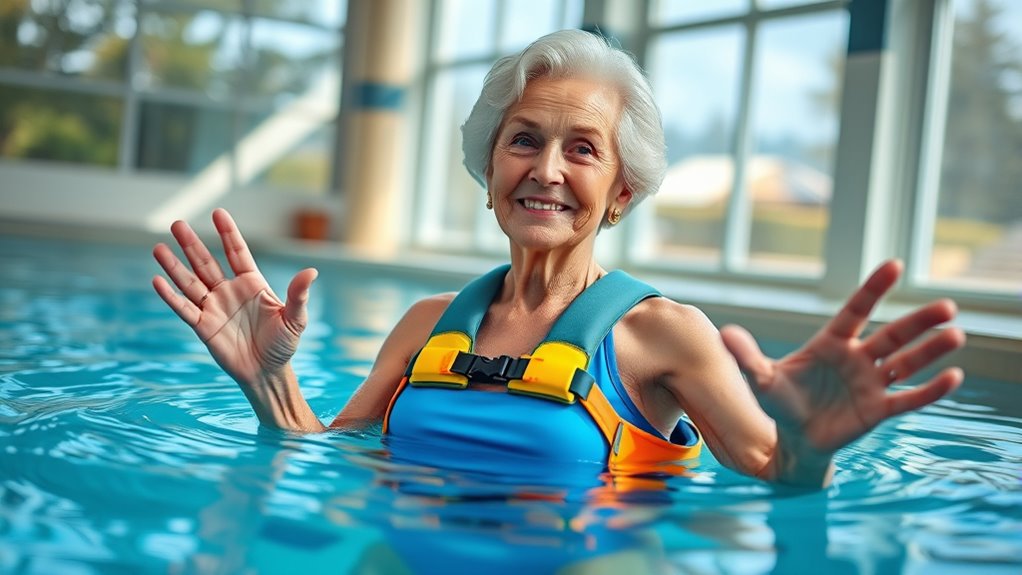
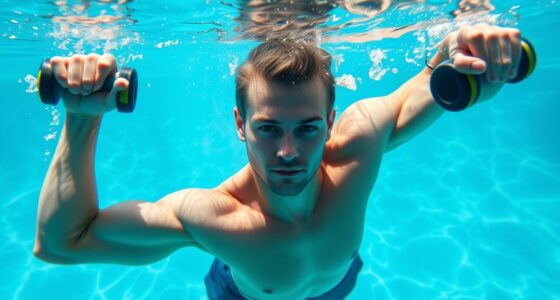
If you have arthritis, finding ways to stay active can be challenging but essential for managing your symptoms. One highly effective option is aquatic exercise, which leverages water’s properties to reduce joint stress while providing a full-body workout. Hydrotherapy benefits are well-known for easing pain and improving mobility because the buoyancy of water supports your body weight, decreasing the load on painful joints. This support can make movement easier and less painful, encouraging you to stay active without fear of aggravating your condition. Water resistance training is another key element of aquatic exercise, as it uses the natural resistance of water to strengthen muscles around your joints. Unlike traditional weightlifting, water resistance training minimizes the risk of joint injury, making it particularly suitable if you suffer from arthritis.
Engaging in water-based routines helps you work on your strength and flexibility without the pounding impact that land-based exercises often cause. The gentle resistance of water challenges your muscles, promoting endurance and stability, which can translate into less joint pain and better function in daily activities. As you move through water, you can target specific muscle groups, helping to stabilize weakened joints and improve overall mobility. The soothing nature of water also helps reduce inflammation and stiffness, which are common issues in arthritis. Additionally, the warmth of heated pools can further relax muscles and promote circulation, enhancing healing and easing discomfort.
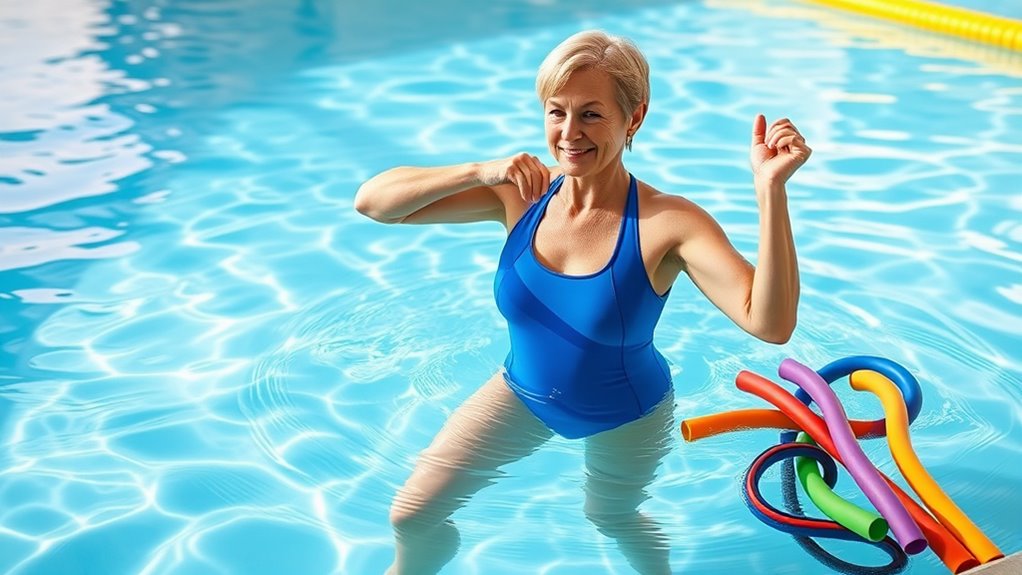
Aquatic exercise routines are adaptable to your specific needs and fitness level. You can start with simple movements like walking or gentle stretches and gradually incorporate more dynamic exercises such as water aerobics or resistance exercises with water weights. Because water provides natural resistance, you don’t need heavy equipment to see benefits—your own body and the water’s resistance work together to build strength. Consistency is key, and many find that exercising in water a sustainable, enjoyable way to stay active long-term. It’s also accessible for most people, regardless of age or mobility level, making it a practical choice for managing arthritis symptoms.
Frequently Asked Questions
Can Aquatic Exercise Cure Arthritis?
No, aquatic exercise can’t cure arthritis, but it can markedly help with arthritis management. The water exercise benefits include reducing joint pain, improving flexibility, and increasing strength without putting stress on your joints. You can incorporate water workouts into your routine to stay active and manage symptoms effectively. Remember, while it doesn’t cure arthritis, regular water exercise can enhance your overall quality of life and help control symptoms.
How Often Should I Do Aquatic Exercises for Arthritis?
You should aim for aquatic exercises at least 3 to 5 times a week, as this can be a game-changer for managing arthritis. Following the frequency guidelines and maintaining exercise consistency helps reduce joint pain and improve mobility. Don’t overdo it—listen to your body—but making exercise a regular part of your routine can truly transform your joint health and overall well-being.
Are There Specific Water Temperatures Recommended?
You should aim for water temperatures between 83°F to 88°F (28°C to 31°C) for your aquatic exercises. This range helps improve your exercise benefits by reducing joint pain and stiffness while maintaining comfort. Warmer water can relax muscles and increase blood flow, making movements easier and less painful. Staying within this temperature guarantees you get the most out of your workout without risking overheating or discomfort.
Is Aquatic Exercise Safe for All Arthritis Types?
Yes, aquatic exercise is generally safe for most arthritis types, but you should check with your doctor first. It helps reduce arthritis pain and improves joint mobility by providing low-impact movement in warm water. The buoyancy supports your joints, making exercises gentler. Just make certain the water temperature isn’t too hot or cold, and listen to your body to avoid overexertion.
Do I Need Special Equipment for Aquatic Workouts?
You don’t need special equipment for aquatic workouts, but having swimming gear and water shoes can enhance your experience. Swimming gear like goggles and caps keeps you comfortable and focused, while water shoes provide stability and protect your feet. These items help you move confidently, stay safe, and enjoy your routine. By choosing the right gear, you make your aquatic exercise more effective and enjoyable, supporting your joint health and fitness goals.
Conclusion
So, immerse yourself in the pool and let water do the heavy lifting for your joints! With aquatic exercise, you’ll turn pain into pure joy so intense, it’s like your joints are throwing a celebration every time you move. Forget stiffness—think of your joints as sparkling, dancing stars, all thanks to these joint-friendly routines. Make a splash today and watch your arthritis melt away faster than ice cream on a sunny day!