
After ACL reconstruction, you can start safe pool rehab by initially walking in shallow water to reduce joint load and improve mobility. Gradually progress to water resistance exercises like leg lifts and gentle kicks to strengthen muscles and boost proprioception. Water’s buoyancy and resistance help you build confidence and improve balance while minimizing pain and swelling. Following a structured water therapy plan can optimize your recovery; explore further to discover effective progressions tailored for your rehab journey.
Key Takeaways
- Begin with walking in shallow water to promote gentle movement and reduce knee load.
- Gradually incorporate water resistance exercises like leg lifts and kicks to rebuild strength safely.
- Progress to water walking and dynamic movements as knee stability and mobility improve.
- Focus on exercises that challenge balance to enhance proprioception and reduce reinjury risk.
- Monitor pain and swelling, advancing exercises only when tolerated to ensure a safe recovery progression.
Have you recently undergone ACL reconstruction and wonder what to expect during your recovery? One effective way to regain strength and mobility is through aquatic therapy, which uses the unique properties of water to support and challenge your body. Water resistance plays a pivotal role in your rehab, providing a gentle yet effective way to rebuild muscle without putting excessive stress on your healing knee. As you begin your post-surgery journey, your physical therapist may recommend water-based exercises to help you gradually improve range of motion and strength.
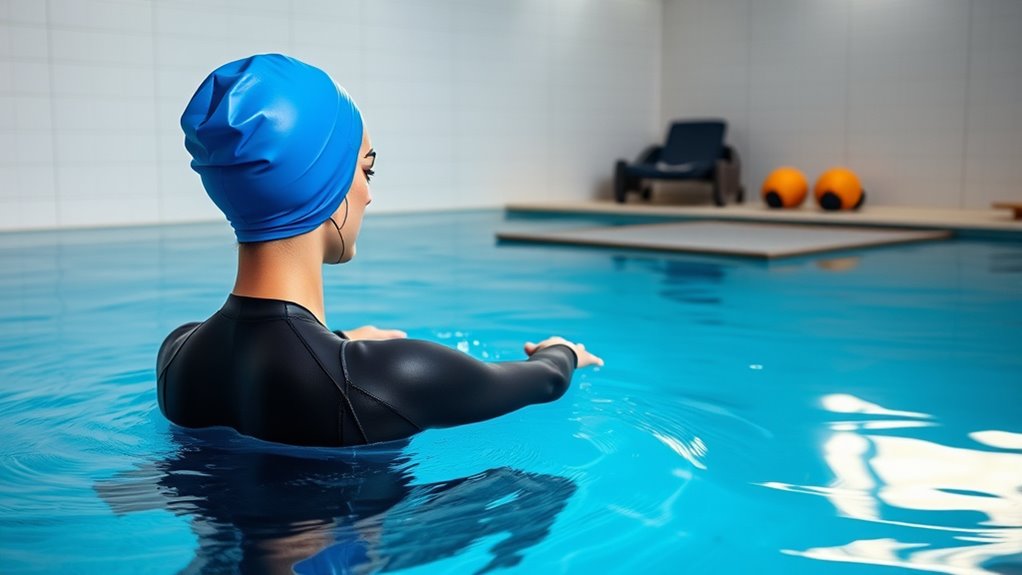
When you start aquatic therapy, you’ll likely find yourself walking in a shallow pool. The water’s buoyancy reduces the load on your knee, making movement less painful and safer. This supportive environment allows you to focus on proper gait mechanics and joint mobility without fear of falling or reinjury. Water resistance, on the other hand, adds a gentle but effective challenge to your muscles. Moving your leg against the water’s resistance helps stimulate muscle activation and promotes circulation, which is essential for healing.
As you progress, your therapist will introduce more dynamic water exercises, such as leg lifts, gentle kicks, or water walking. These activities leverage water resistance to strengthen the quadriceps, hamstrings, and surrounding stabilizers that support your ACL. The resistance is adjustable—by increasing your speed or changing your movement patterns, you can make the exercises more challenging as your strength improves. This controlled environment allows you to push yourself safely, building confidence and endurance with each session.
Water therapy also encourages better proprioception—your body’s awareness of joint position—which is essential during ACL recovery. Moving in water challenges your balance and coordination more than traditional land exercises, helping you regain control over your knee and reduce the risk of future injury. The soothing nature of water can also decrease swelling and inflammation, accelerating your overall healing process. Incorporating air quality considerations, such as proper ventilation in therapy facilities, can further enhance your comfort and recovery experience.
Frequently Asked Questions
How Soon Can I Start Swimming After ACL Surgery?
You can typically start swimming around 4 to 6 weeks after ACL surgery, but always follow your surgeon’s advice. Begin with gentle swimming techniques, like walking in the pool or using a kickboard, to avoid strain. Remember to prioritize pool safety, such as avoiding slippery surfaces and shallow water, and listen to your body. Gradually increase your activity level as your knee gains strength and mobility.
Are There Specific Pool Exercises to Avoid During Rehab?
You should avoid exercises that put too much strain on your knee, especially in colder water, which can increase stiffness and swelling. Stay away from deep water exercises that require deep pool depth restrictions, like jumping or deep running. Focus on gentle, supervised movements in warm water where water temperature is comfortable. Always follow your physical therapist’s guidance to prevent setbacks and ensure safe, effective rehab progress.
When Can I Fully Return to Competitive Swimming?
About 85% of athletes return to competitive swimming within a year after ACL reconstruction. You can usually resume full competition when your swimming endurance and stroke technique are back to pre-injury levels, and your physical therapist clears you. Focus on gradually increasing intensity, monitoring pain, and ensuring proper form. Rushing too soon risks re-injury, so patience and consistent rehab are key for a safe, successful return.
How Does Water Therapy Benefit ACL Recovery?
Water therapy benefits your ACL recovery by providing aquatic resistance, which helps improve strength and muscle endurance without overloading your joint. The water’s buoyancy reduces joint stress, allowing you to move more freely and safely during rehab. This combination encourages gradual, controlled movements, promoting healing and restoring mobility. As you progress, water therapy helps you build confidence and prepares you for a safe return to full activity.
What Signs Indicate I Should Stop Pool Exercises?
Your recovery journey is like a delicate sailboat steering calm waters; listen closely to your body’s signals. If you experience sharp pain, swelling, dizziness, or excessive fatigue, it’s time to stop exercising. Prioritize pool safety and watch for exercise indicators like tingling or instability. Ignoring these signs risks setbacks. Trust your body’s cues, and when in doubt, consult your therapist before resuming.
Conclusion
As you carefully follow these rehab progressions, it’s almost like the pool’s calm surface mirrors your steady recovery. Each safe step you take seems to align perfectly with your dedication, creating a coincidence of strength and patience. Before you know it, the gentle ripple of progress will turn into confident strides. Trust the process, stay consistent, and soon, the water’s embrace will feel like a natural part of your renewed movement. Your journey is unfolding beautifully.