
TL;DR

Get pool and patio gear delivered free with Prime
- Fast, free delivery on millions of items
- Prime Video, Amazon Music and more included
- Member-only deals all year
An Ideal Home guide compares resin and gravel driveways, finding that gravel generally costs less upfront and may be suitable for some DIY projects, while resin requires specialist installation and typically costs more. The right option depends on budget, preferred appearance and tolerance for ongoing upkeep; actual performance and lifespan depend on materials and installation.
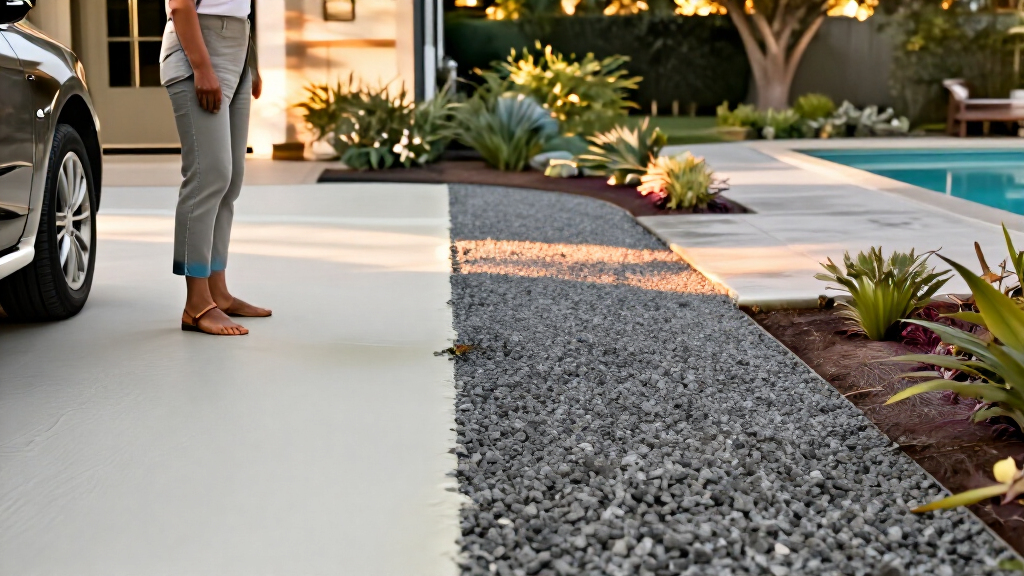
Ideal Home has published a comparison of resin and gravel driveways to help homeowners weigh installation, cost, appearance and upkeep before choosing a surface. Its experts describe gravel as the lower-cost option that may be possible to lay yourself, while resin generally costs more and needs specialist installation; neither material is presented as the right choice for every property.
The guide gives typical UK prices of £50–£70 per square metre for gravel and £90–£130 per square metre for resin, citing Zaeem Chaudhary, director of AC Design Solution. The figures are estimates in the article, not a dated national survey, and the source does not specify whether they include every preparatory or finishing cost. Gravel can also need topping up, adding to its long-term expense.
Installation is another point of difference. The guide says gravel is relatively straightforward to lay and may suit a carefully planned DIY project, while resin requires a professional installer. Fergus Wickland of Beauxfort Landscaping Systems warns that resin is difficult to lay and that poor technique or unsuitable weather can produce a patchy finish. Samantha-Jane Agbontaen, founder of House Designer, says a gravel installation can take a couple of days with minimal groundwork; timing and preparation will vary by site.
Chaudhary estimates that properly installed resin can last 15–20 years, while gravel may last longer overall but needs more regular attention. The guide also notes resin can develop moss or algae and may discolour, while damage or movement beneath the surface can make repairs conspicuous. Gravel’s loose stones can be replenished, but that means ongoing maintenance. These are expert observations, not guarantees for every driveway.
How the Choice Affects Homeowners
A driveway has both a practical role for parking and manoeuvring and a visible effect on a home’s approach. Choosing solely by the quoted installation price could overlook recurring costs: gravel may need topping up, whereas resin’s higher initial outlay is tied to materials and skilled work, and repairs can be difficult to blend in.
The comparison is useful at the planning stage because it frames the decision around trade-offs rather than a single best material. Homeowners need to consider their available budget, preferred surface, willingness to maintain it and the condition of the site. The guide does not provide a project-specific quote or assess individual drainage, access or ground conditions, so those details still need to be checked before work begins.
As an affiliate, we earn on qualifying purchases.
What the Guide Compares
The supplied Ideal Home report focuses on resin and gravel, two common driveway choices, and compares them across installation, price, longevity and appearance. It distinguishes resin-bound surfaces, described as the more common option with lower maintenance needs than resin-bonded, from gravel’s loose-stone surface. Both approaches depend on suitable preparation; the article cautions that rushed groundwork can lead to later problems.
The source material includes the start of its appearance comparison but ends before completing it. It establishes that both materials come in different colours and styles and can suit different property types, but does not provide the full comparison or a final recommendation. No publication date is supplied, so readers should treat the quoted UK prices as figures reported by the guide rather than a current quotation.
““Resin is notoriously difficult to lay, and if not done correctly or laid in the wrong weather conditions, it can result in a poor and patchy finish.””
— Fergus Wickland, project consultant at Beauxfort Landscaping Systems
Costs and Performance Vary
The source does not give a publication date for its price estimates, explain precisely which job costs are included, or provide a quotation for a specific property. It also does not set out a full appearance comparison: the supplied text ends partway through that section. The cited lifespan and maintenance observations are attributed expert guidance, not independently verified performance data for all products and sites.
Factors such as preparation, workmanship, weather during installation, surface use and ongoing care can affect results. The source does not assess any particular home’s ground, drainage or access, and it does not establish that either material will suit a given property. Homeowners should seek site-specific advice and written quotes before deciding.
Get a Site-Specific Quote
The report does not announce a new product, policy or scheduled follow-up; it offers a comparison for homeowners considering a driveway project. The practical next step is to ask contractors to inspect the site, explain the required groundwork and provide comparable written estimates for both materials where suitable. Quotes should clarify preparation, installation, maintenance expectations and what repairs or replacement would involve.
Before committing, homeowners can also request examples of completed work and confirm the type of resin or gravel being proposed. Any decision should account for both the upfront amount and expected upkeep. The guide’s figures are a starting point for comparison, not a substitute for current local pricing or professional advice about the property.
Key Questions
Which driveway material is cheaper to install?
The guide quotes typical UK costs of £50–£70/m² for gravel and £90–£130/m² for resin. It does not give a price date or specify all inclusions, so homeowners should obtain current, site-specific quotes.
Can I install a gravel driveway myself?
The report says a gravel driveway may be suitable for a well-researched DIY project and is generally simpler to lay than resin. Whether that is practical depends on the site and preparation required; the guide says resin should be installed by a specialist.
How long can a resin driveway last?
Zaeem Chaudhary estimates that properly installed resin can last 15–20 years. That is an expert estimate rather than a guarantee, and the source says installation quality affects longevity.
Does gravel need more maintenance?
The guide says gravel may last longer overall but needs more ongoing attention, including topping up over time. Resin can also require care: the report mentions moss or algae and possible discolouration or visible repairs.
Which driveway looks better?
The supplied report says resin and gravel suit different kinds of property and both come in a range of colours and styles, but the source excerpt does not include its full appearance comparison. The choice depends on the home and the homeowner’s preferred finish.
Source: rss
Columbus Day / Indigenous Peoples' Day Picks
long weekend sales
As an affiliate, we earn on qualifying purchases.