
TL;DR

Get pool and patio gear delivered free with Prime
- Fast, free delivery on millions of items
- Prime Video, Amazon Music and more included
- Member-only deals all year
A Gardening Know How article recommends serviceberry as a native alternative for homeowners considering an ornamental tree instead of Bradford pear. Serviceberries offer spring flowers, edible berries and fall color, but their size and growth habits vary by species and cultivar.
Gardening Know How is recommending serviceberry as a native alternative for homeowners choosing an ornamental tree instead of Bradford pear, pointing to its spring flowers, edible berries and autumn foliage. The article also says Bradford pears can have unpleasant-smelling flowers, weak branches prone to splitting and a role in the spread of invasive Callery pears.
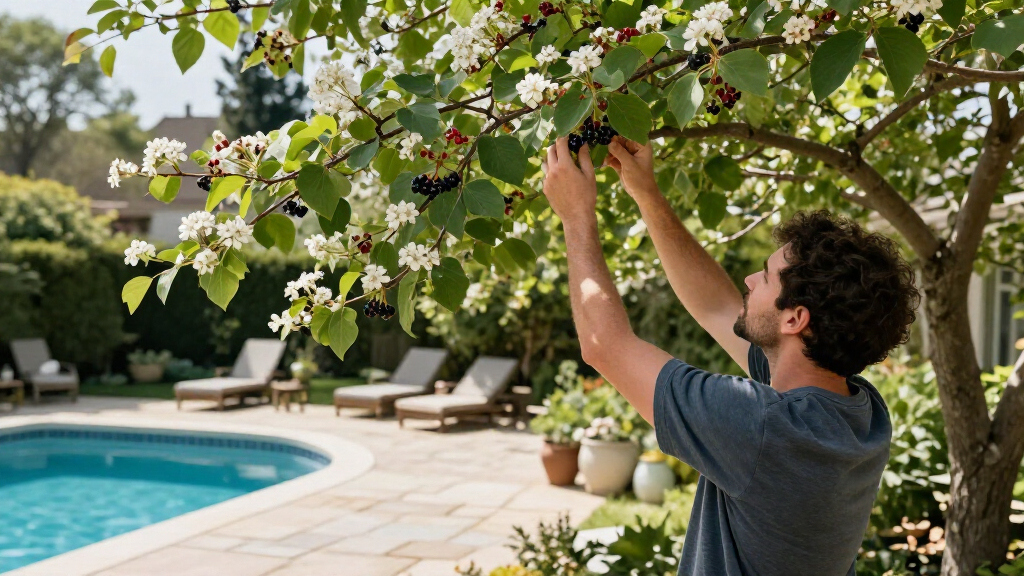
Serviceberry is the common name for trees and shrubs in the Amelanchier genus, also known as juneberry or shadbush. The source says species and varieties differ in size, with some growing as large shrubs and others as small trees—an option for yards where a full-sized shade tree would be too large.
The article describes a sequence of seasonal features: blossoms in spring, berries that can be eaten or used in pies and jams, and fall leaves that may turn yellow, orange or red. The berries also provide food for birds, while the flowers offer an early source of nectar and pollen for pollinators, according to the report.
For planting, Gardening Know How says most serviceberries grow in full sun or partial shade and need well-draining soil. It cautions that serviceberry may not grow as quickly as Bradford pear or develop the same uniform, upright shape. The source does not identify a single best variety for every location or provide region-specific planting advice.
A Tree With More Than Spring Blooms
The recommendation matters to homeowners looking for an ornamental tree that provides interest beyond a short flowering period. A serviceberry can combine flowers, fruit and fall color in a relatively compact plant, while also offering food and habitat value for local wildlife, as described in the source report.
Replacing Bradford pear is not simply a matter of choosing a tree with similar white flowers. The report highlights trade-offs: serviceberry may have a less uniform form and slower growth, but its fruit and wildlife benefits add functions that a purely ornamental planting may not provide. The right choice depends on a property’s space, soil, climate and the characteristics of the selected cultivar.
The article’s recommendation is gardening advice, not a government directive or a claim that all Bradford pears are being removed. It gives readers a candidate to research before planting; it does not establish that serviceberry will thrive in every garden or that it is suitable for every region.
Products Worth Considering

Dyson V15 Detect Cordless Vacuum

Philips Hue Essential Starter Kit with Bridge and 4 E26 Smart Bulbs

eufy Security Essential Alarm System, 7-Piece
As an affiliate, we earn on qualifying purchases.
Why Bradford Pear Is Being Reconsidered
Bradford pear is a cultivar of Callery pear, widely planted as an ornamental tree in the United States. Its spring display and familiar shape helped make it popular. Gardening Know How says the tree’s flowers can smell unpleasant and its branches are prone to splitting.
The source also raises concern about Callery pears contributing to the spread of invasive trees. It does not provide local spread data, identify a specific state or municipality, or cite a particular study in the supplied material. The report therefore presents this as a reason to consider alternatives, rather than offering a quantified assessment of the problem.
Serviceberry is not one uniform tree: the genus includes multiple species and varieties with different growth forms. That variation is relevant to planting decisions. A serviceberry suited to one yard or climate may not be the best choice elsewhere, so gardeners should check local recommendations and the mature size of the variety they plan to buy.
“The Bradford pear’s branches are prone to splitting, and these trees can contribute to the spread of invasive Callery pears, too.”
— Gardening Know How
Which Serviceberry Fits Each Garden
The source does not specify the best serviceberry species or cultivar for particular climates, soil types or growing zones. It also does not give expected mature dimensions, maintenance requirements or a planting timeline for individual varieties. Gardeners should check local nursery and extension-service guidance before selecting a tree.
The report provides no quantified comparison of wildlife benefits, fruit yields, growth rates or invasive Callery pear spread. Its description of serviceberry as a wildlife-friendly alternative is a general recommendation, not a guarantee that every planting will attract particular species or produce a dependable harvest. It is also not clear from the supplied material when the article was published.
Check Local Advice Before Planting
Homeowners considering a replacement can compare serviceberry species and cultivars with the conditions in their yard, including available space, sun exposure and drainage. Before purchasing, they should confirm the expected mature size and local suitability with a regional nursery, cooperative extension service or other trusted horticultural source.
The article does not announce a removal program, new regulation or scheduled follow-up. Its practical next step is a planting choice: gardeners can weigh serviceberry’s flowers, berries and fall color against its different growth rate and shape, then select a variety suited to their site.
Key Questions
What tree does the report recommend instead of Bradford pear?
It recommends serviceberry, a group of native trees and shrubs in the Amelanchier genus. The source says varieties differ in size and form.
What does serviceberry offer through the year?
According to Gardening Know How, serviceberry can provide spring flowers, berries and fall foliage. Its flowers offer nectar and pollen, and birds eat the berries.
Can people eat serviceberries?
The report describes the berries as edible and says they can be used in foods such as pies and jams. It also notes that birds feed on them.
Where should a serviceberry be planted?
The source says most species grow in full sun or partial shade and recommends well-draining soil. Local advice is needed because species and cultivars vary.
Will serviceberry look and grow like a Bradford pear?
Not necessarily. Gardening Know How says serviceberry may grow more slowly and may not have Bradford pear’s uniform, upright shape.
Source: gardeningknowhow.com