
TL;DR

Get pool and patio gear delivered free with Prime
- Fast, free delivery on millions of items
- Prime Video, Amazon Music and more included
- Member-only deals all year
A Homes & Gardens gardening report recommends checking seven kinds of deciduous trees for pruning after leaf drop, while they are dormant. It highlights disease, storm damage and tree structure as reasons to prune selectively; local climate and each tree’s condition affect timing.
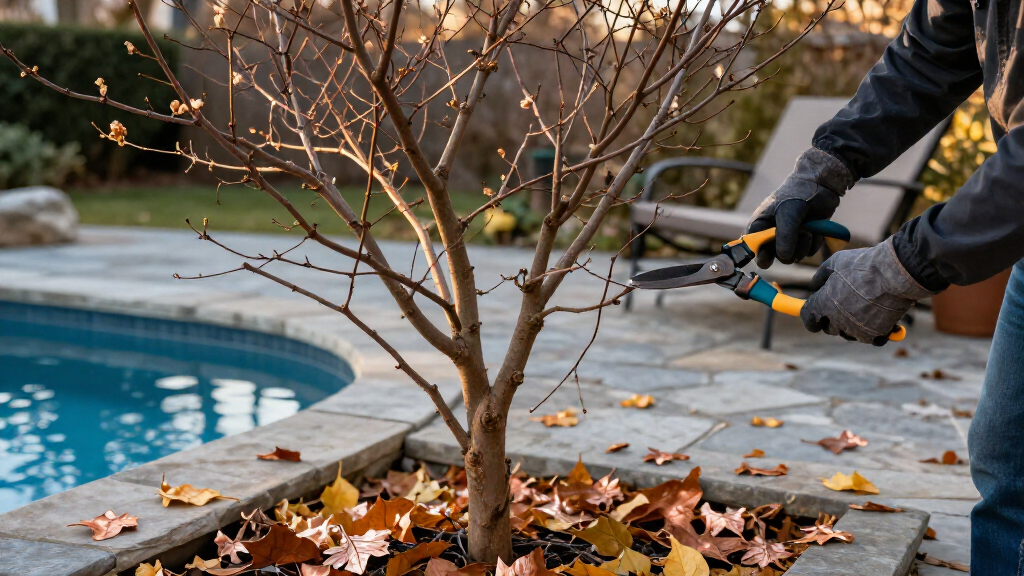
Homes & Gardens has published a November pruning guide covering seven deciduous tree types, advising gardeners to assess trees after leaf drop and prune selectively during dormancy. The recommendations focus on removing dead, damaged or crossing limbs and addressing structural or safety concerns, with winter timing also limiting exposure to some tree pests and diseases.
The report lists Northern red oak, American sycamore, white ash, American elm and mountain ash, along with apples and pears. It says dormant-season pruning can make a tree’s branch structure easier to inspect after leaves fall. The guidance is not to cut every tree simply because November has arrived: pruning should respond to the tree’s health, shape, size or safety needs.
For oaks, the report recommends pruning during dormancy, with mid-November marking the start of the season in many climates. It says winter pruning reduces the risk of oak wilt, whose sap-feeding beetle carriers are active in spring and summer; red oaks are described as especially susceptible. For white ash, it advises waiting until leaf drop and limiting cuts to health, structural or safety needs, removing no more than 25% of the canopy in one year.
The guide says sycamores should be checked for dead, diseased or damaged limbs and weak branch attachments, which may create hazards in storms. American elms can be lightly pruned from late fall to early spring, when elm bark beetles are inactive, and the report stresses removing deadwood. Mountain ash, also called rowan, can be pruned during dormancy from November through February. For apples and pears, the article identifies November as the opening of the pruning window but the supplied source text cuts off before giving its full instructions.
Pruning Can Reduce Winter Risks
Selective pruning can help gardeners address deadwood, weak branch unions and limbs near buildings or power lines before winter storms. It can also support tree structure and airflow, while removing problematic branches may reduce some pest or disease risks described in the report. These are reasons to inspect trees, not a guarantee that pruning will prevent damage or infection.
The recommendations matter because timing and restraint differ by species. The white ash guidance, for instance, warns against removing more than one-quarter of the canopy in a year, while taller sycamores may need professional help. Cutting too much or pruning at an unsuitable time can cause harm, so gardeners should not treat the list as a one-size-fits-all schedule.
Products Worth Considering

LEVOIT Vital 200S-P Smart Air Purifier for Large Rooms

Shark PowerDetect Corded Stick Vacuum with HEPA Filtration, Purple (HZ4001AMZ)

Samsung 75-Inch M80H Series Mini LED 4K Smart TV (2026)
As an affiliate, we earn on qualifying purchases.
Dormancy Sets the Pruning Window
Many deciduous trees lose their leaves in late fall and enter dormancy, making branch structure more visible. The report describes November as a useful starting point in many places, but its recommendations span different windows: dormant-season pruning for several trees, and a November-to-February period for rowan. Climate affects when dormancy begins, so the calendar alone does not establish that a particular tree is ready.
The disease context also varies. The article links winter timing for oaks to reduced risk from oak wilt transmission by beetles active in warmer months. It notes the threat of emerald ash borer to native ash and Dutch elm disease to American elm, and says the relevant beetles are inactive during the dormant season. The report does not claim pruning cures or prevents these diseases.
Local Timing and Tree Condition
The source does not specify a geographic zone or provide local weather thresholds, so the right pruning date depends on location and actual dormancy. It also does not provide complete instructions for apple and pear pruning: the supplied text ends mid-sentence. The guide’s seven-tree framing includes apples and pears together as one category, and does not establish that every tree in each category needs pruning every November.
It is also unclear from the source whether any individual tree has a disease, structural defect or hazard requiring immediate attention. The recommendations are general gardening guidance, not a diagnosis. Large trees, limbs near utility lines, or work requiring climbing may need a qualified arborist; the article specifically notes that old sycamores may require professional climbers.
Inspect Before Making Cuts
Gardeners can first check whether leaves have fallen and the tree is dormant, then look for dead, diseased, damaged, crossing or weakly attached branches. The report advises pruning only on dry days, postponing work if a severe freeze is forecast, and using clean, sharp tools suited to the branch size. For ash, it sets a specific limit: do not remove more than 25% of the canopy in one year.
Before cutting large limbs or working near buildings, power lines or a tall canopy, seek professional advice rather than attempting hazardous work from a ladder. Local extension services or a certified arborist can help confirm species-specific timing and assess suspected disease. The next step for apple and pear owners is to consult complete, locally applicable guidance, since the supplied article excerpt does not include those pruning details.
Key Questions
Which trees does the November guide cover?
It covers Northern red oak, American sycamore, white ash, American elm, mountain ash (rowan), apples and pears. Apples and pears are grouped together.
Should every listed tree be pruned in November?
No. The report recommends assessing trees and pruning when there is a health, structural, size or safety reason. Timing depends on local conditions and whether the tree is dormant.
How much of a white ash canopy can be removed?
The guide says to make minimal cuts and never remove more than 25% of the canopy in one year.
When should rowan trees be pruned?
The report gives a dormant-season window of November to February, and recommends focusing on dead, diseased, damaged, crossing or congested branches.
What precautions does the report recommend?
Prune on dry days, delay work if a severe freeze is forecast, and use clean, sharp tools suited to the branch. Hire a professional for hazardous work, tall canopies or limbs near utility lines.
Source: homesandgardens.com