
TL;DR
Grow Organic’s gardening guide advises gardeners to identify potential frost pockets by mapping low spots and comparing minimum temperatures over several nights. It says readings should be taken at crop height with consistently placed, shielded sensors; one cold morning or a general weather forecast is not enough to establish a garden’s pattern.
Grow Organic has published guidance for identifying garden frost pockets before winter, recommending that gardeners map slopes and low areas and compare overnight minimum temperatures across several sites. The advice matters because cold air can settle unevenly in a yard, leaving some plants exposed to frost even when nearby beds appear warmer, so gardeners may also want to learn which plants need winter protection.

Get pool and patio gear delivered free with Prime
- Fast, free delivery on millions of items
- Prime Video, Amazon Music and more included
- Member-only deals all year
The report defines a frost pocket as a place where cold air collects. On clear, calm nights, the ground loses heat and cools the air near it. Dense cold air can flow downhill and pool in low areas; a solid fence across a slope may also impede that drainage. A shallow dip or enclosed corner may be a candidate, but its shape alone does not confirm that it is consistently colder.
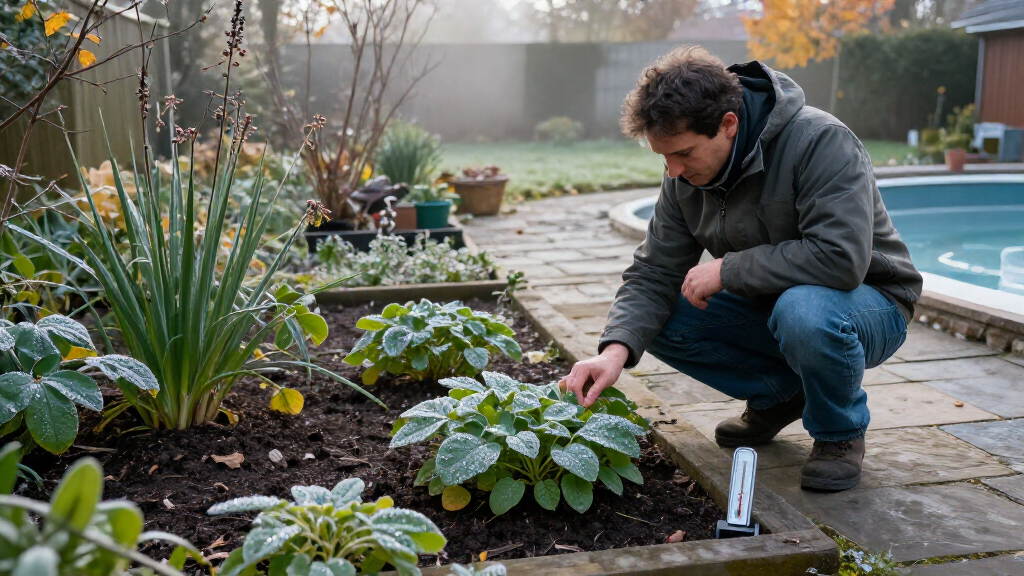
Grow Organic recommends sketching beds, slopes, walls, fences and trees, then marking low spots to investigate. Gardeners should visit in the early morning to note frost and lingering shade, and compare those observations with thermometer readings. The guide suggests checking sensors side by side first, then placing them at the same height near the crops being assessed, with similar ventilated radiation shields and in line with the instruments’ exposure instructions.
Read each sensor’s overnight minimum the next morning and record the date, location, sensor height, temperature, cloud and wind conditions, and whether frost was observed. Repeat the process over several nights and under different weather conditions. The guide says to use the results to prioritize tender crops for protection or relocation, including protecting potted plants before the first frost, rather than assume that a single forecast or one chilly morning represents the whole garden.
Use Local Readings to Protect Crops
A garden-wide forecast cannot show how cold air behaves in every bed. Repeated, site-specific measurements can help gardeners identify which plants may need attention first, allowing them to plan coverings, move vulnerable crops where practical, or harvest crops that are ready before damaging cold. These are planning measures, not a guarantee that plants will avoid frost damage.
The distinction between air, leaf and soil temperatures also matters: they are different measurements, and one sensor cannot represent all three. Grow Organic cautions against assuming a fixed difference between a garden bed and the forecast. A map based on readings can guide decisions, but conditions vary with weather, site and season.
Products Worth Considering

Ring Battery Doorbell Plus, Satin Nickel

Bose Lifestyle Ultra Soundbar and Ultra Subwoofer Bundle

Coway Mighty AP-1512HH Air Purifier, Black
As an affiliate, we earn on qualifying purchases.
How Yard Features Shape Cold Air
Temperature patterns can differ over short distances. According to the guide, a temperature inversion occurs when colder air sits below warmer air. In that pattern, plants near the ground may face freezing conditions even if a weather station reports above-freezing temperatures. Strong winds or an incoming cold air mass can create a different pattern, so sheltered spots are not guaranteed protection in a widespread freeze.
Other features may shape garden conditions. In the United States, south-facing slopes generally receive more sun; masonry can absorb heat during the day and release some after sunset, while nearby buildings and pavement can add warmth. These effects depend on the local climate and do not establish that a particular bed will stay frost-free. The report treats labels such as “frost basin” and “inversion pocket” as descriptive notes, not formal scientific categories.
Readings Must Confirm Suspected Cold Spots
The report does not provide measured temperature results for a particular garden or establish how many degrees colder a low spot might be. Whether any given yard has a persistent frost pocket remains a local question that requires observations and comparable readings. The guide also gives no universal number of nights that guarantees a reliable map.
Conditions can change from night to night, and a sheltered site may still freeze during a broader cold spell. The guide does not specify a single thermometer model or a protection method that suits every crop and garden. Its product examples are options to evaluate, not evidence that a particular device or cover will work in all conditions.
Track Temperatures Before Protecting Plants
Gardeners following the guidance can begin with a site sketch, check that their sensors agree, and start a log before cold weather arrives. After several comparable overnight readings, they can mark locations that repeatedly run colder and focus protection on vulnerable beds. The guide advises following crop-specific guidance when deciding whether to cover, relocate or harvest plants.
It also recommends continuing to monitor conditions and updating the map each season. A daytime warm spell does not establish overnight safety, and an unheated greenhouse can still freeze; gardeners should monitor temperatures inside such structures as well.
Key Questions
What is a garden frost pocket?
A frost pocket is a low or enclosed area where cold air can collect. A suspected pocket should be confirmed with repeated observations and temperature readings.
How can I check whether a bed is colder than another?
Compare sensors that have first been checked side by side. Place them at matching heights near the crops, use similar ventilated shields, and record overnight minimums across several nights.
Can a wall or sheltered corner prevent frost?
Walls and buildings may affect warmth and shelter, but they do not guarantee frost protection. Local readings are needed, and widespread cold or wind can change conditions.
Does one sensor measure air, leaf and soil temperatures?
No. Air, leaf and soil temperatures are different measurements, and one sensor cannot represent all three. Place and label a thermometer according to the garden question being measured.
When should I cover plants?
Use your readings to prioritize vulnerable plants, then follow guidance suited to the crop and cover. The guide does not give one protection schedule for every garden or plant.
Source: groworganic.com