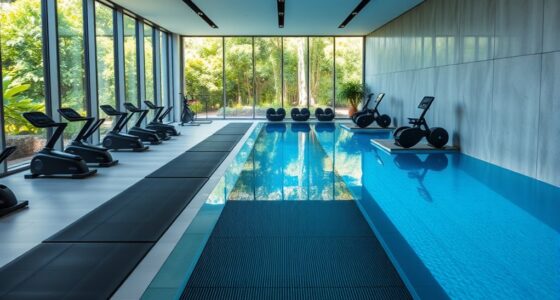
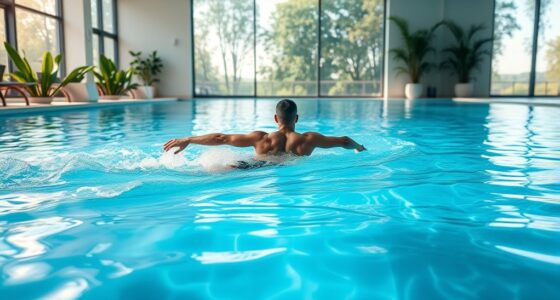
For a lap pool, a depth of about 4 to 4.5 feet strikes the right balance between safety, water circulation, and equipment needs. This depth prevents you from hitting the bottom during vigorous strokes or flip turns, while being safe for most swimmers. It also supports essential equipment like lane markers and starting blocks. If you want to know how to choose the perfect depth for your goals, keep exploring the details below.
Key Takeaways
- Aim for a depth of around 4 feet for safety and comfortable standing during laps.
- Deeper pools (4.5 to 5 feet) are ideal for lane markers, starting blocks, and competitive swimming.
- Shallow pools below 3.5 feet increase risk of hitting the bottom during vigorous turns.
- Maintain uniform depth (about 4 to 4.5 feet) for easier water circulation and easier maintenance.
- Consider your swimming goals and safety needs when choosing a depth, consulting professionals if necessary.

Have you ever wondered how deep a lap pool should be for ideal swimming and safety? The depth of your lap pool plays a vital role in ensuring a safe, enjoyable swimming experience. When considering pool safety, it’s imperative to choose a depth that minimizes risks like collisions, entrapment, or injuries, especially if you’re swimming laps regularly. Most standard lap pools are designed to accommodate various skill levels, but the depth directly impacts safety and equipment requirements.
A typical lap pool depth ranges from 3.5 to 5 feet. This range strikes a good balance between safety and functionality. If your pool is too shallow, there’s a risk of hitting the bottom during vigorous strokes or flip turns, especially for taller swimmers. Conversely, if it’s too deep, it may present hazards for less experienced swimmers or those who prefer standing in the water. For safety reasons, a depth of around 4 feet is often recommended because it allows swimmers to touch the bottom comfortably and reduces the risk of accidental drowning or injuries.
Beyond safety considerations, the depth also influences the equipment requirements for your pool. For example, if you plan to install lane markers or starting blocks, you’ll need a deeper pool—usually at least 4.5 to 5 feet—to accommodate these features securely. A deeper pool also requires stronger, more robust railings and reinforced structures to support additional equipment and guarantee stability. On the other hand, shallower pools may need fewer safety features and less specialized equipment, simplifying maintenance and reducing costs.
It’s also important to think about how the pool’s depth affects water circulation and filtration. Deeper pools often require more powerful pumps to keep the water clean and well-circulated, which can influence energy consumption and operational costs. If you’re aiming for a pool primarily for lap swimming rather than recreational use, maintaining an even depth around 4 to 4.5 feet simplifies water management and ensures consistent conditions throughout the pool.
Ultimately, the ideal lap pool depth hinges on your swimming goals, safety considerations, and the equipment you plan to use. Prioritize safety by selecting a depth that allows comfortable standing and minimizes injury risks. Make sure your equipment choices align with the pool’s depth to enhance functionality without compromising safety. Consulting with pool professionals can help you determine the best depth and equipment setup for your specific needs, guaranteeing a safe, efficient, and enjoyable lap swimming environment.
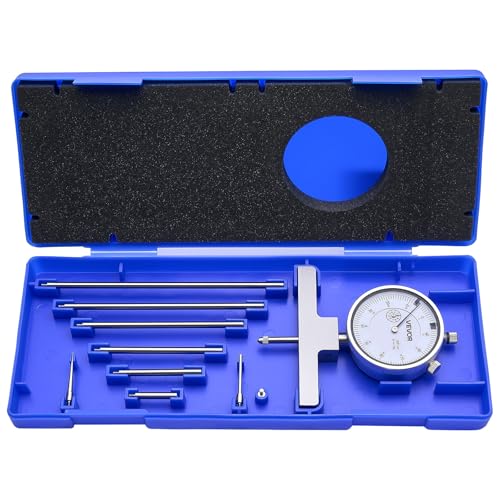
VEVOR Depth Gauge, Depth Micrometer 0-22 inch Measuring Range, 0.001" Resolution, with 4 Anvils & 6 Standard Rods, Precision Easy to Read Mechanical Tool for Measuring Groove, Step, Hole
- Measuring Range: 0-22 inches with 0.001 inch resolution
- High Precision: ±0.001 inch accuracy for reliable measurements
- Durable Construction: Corrosion-resistant and scratch-proof design
As an affiliate, we earn on qualifying purchases.
As an affiliate, we earn on qualifying purchases.
Frequently Asked Questions
Are There Safety Concerns With Deeper Lap Pools?
Deeper lap pools can raise safety concerns, especially regarding diving safety and pool accessibility. You might worry about accidents if the pool is too deep for casual swimming or if diving isn’t properly managed. To stay safe, verify the pool’s depth is appropriate for its intended use, limit diving areas, and provide clear signage. Proper design and safety measures help prevent accidents and make the pool accessible for all swimmers.
Can Shallow Lap Pools Be Used for Competitive Swimming?
Imagine a race where a shallow stream challenges your speed—can it truly test your limits? Shallow lap pools can be used for competitive swimming, but they limit certain training drills and pool accessories like flip turns and diving starts. While they’re great for technique and endurance, they may not meet official competition standards. You’ll want a deeper pool for serious racing, but shallow pools still serve as excellent practice spaces.
How Does Pool Depth Affect Water Temperature?
Pool depth impacts water temperature through thermal regulation and energy efficiency. When you have a deeper pool, it retains heat better, helping maintain consistent water temperature and reducing energy costs for heating. Shallow pools lose heat more quickly, making it harder to keep the water warm. So, if you’re aiming for stable temperatures and energy savings, a deeper lap pool is more effective, especially in cooler climates.
What Are the Maintenance Costs for Different Depths?
Sure, because everyone dreams of diving into a pool that costs a fortune to maintain, right? When considering maintenance costs for different depths, you’ll want to do a thorough cost analysis. Deeper pools often mean higher costs for filtration, reinforcement, and water treatment. So, if budget considerations are tight, stick to a shallower design. Remember, saving a few inches in depth can save you thousands in ongoing expenses!
Do Depth Variations Impact Swimming Stroke Technique?
Depth variations can substantially impact your swimming technique and stroke efficiency. When the pool’s depth changes, you may need to make technique adjustments to maintain proper form and balance. Shallow areas can cause you to lift your head more, affecting your streamline, while deeper sections help improve your body position. By adapting your technique to these variations, you enhance your overall stroke efficiency and reduce fatigue.
Conclusion
When choosing your lap pool depth, aim for at least 4 to 5 feet to comfortably accommodate all swimmers and strokes. Did you know that most competitive swimmers prefer a minimum depth of 4 feet to prevent injuries and ensure smooth turns? By selecting the right depth, you’ll enjoy safer, more effective workouts. So, whether you’re training seriously or just swimming for fun, making the right depth choice helps you get the most out of your pool experience.