TL;DR

Get pool and patio gear delivered free — and shop member deals
- Fast, free delivery on millions of items
- Access to Prime Big Deal Days deals on October 6–7
- Prime Video, Amazon Music and more included
Automatic pool cleaners come in three types: suction-side (cheapest, $100–$300), pressure-side ($300–$700), and robotic ($500–$1,500). Robotic cleaners scrub floors and walls independently of your filter system, saving on chemicals and electricity despite the higher purchase price. Match the cleaner to your pool type, debris load, and how much you hate scrubbing.
You bought a pool to swim, not to spend Saturday mornings wrestling a pole and a net. Yet that’s exactly where most pool owners end up — skimming leaves, brushing the steps, and vacuuming a floor that somehow refills itself with debris overnight.
An automatic pool cleaner changes that. These machines crawl around your pool on their own, gobbling up leaves, sand, and algae before it sinks and stains. The right one can cut your manual cleaning from hours a week to minutes.
But choosing the wrong one wastes money and patience. Here’s what each type actually does, what they cost, and how to pick the one that fits your pool — plus the safety habits that matter when kids are around.
Match the cleaner to your debris: suction for light silt, robotic or pressure for leaves, acorns, and heavy fall.
Robotic cleaners use about 5 cents of electricity per cycle and typically pay back their higher price in 2–3 years through lower pump and chemical costs.
Suction-side cleaners are cheap upfront ($100–$300) but push debris into your filter and raise monthly pump electricity by $20–$40.
Remove all cleaners, cords, and hoses from the pool before anyone swims — and never substitute equipment for active supervision of children.
Empty the filter after every cycle, rinse tracks monthly, and store the unit shaded and dry to double its working life.
The 3 Types of Automatic Pool Cleaners (And What Each One Actually Does)
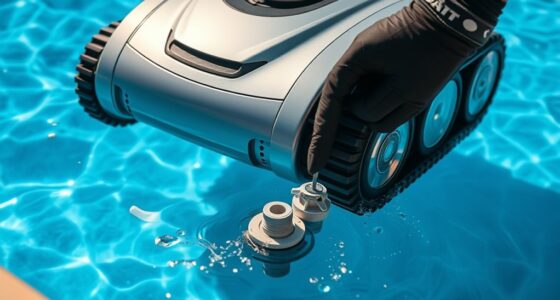
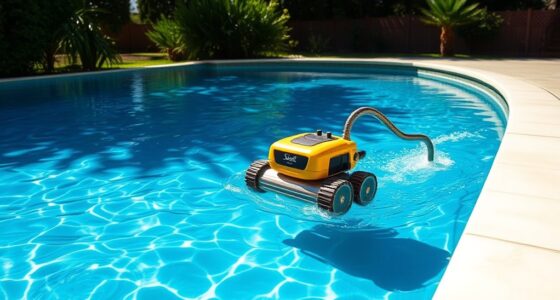
Automatic pool cleaners fall into three categories: suction-side, pressure-side, and robotic. Suction cleaners attach to your skimmer and use your pool pump’s suction to crawl and vacuum. Pressure cleaners use a dedicated water jet line to blast debris into a bag. Robots are self-contained units with their own motors, filters, and tracks that scrub your pool independently.
Think of it like cleaning your house. A suction cleaner is a Roomba that runs off your vacuum cleaner’s hose. A pressure cleaner is a leaf blower with a net behind it. A robot is a fully independent cleaning crew with its own power supply.
The distinction matters because it drives everything else: price, cleaning power, and what it costs your existing equipment. According to pool industry data, robotic cleaners now account for the fastest-growing share of new cleaner sales, largely because they don’t burden your filter system at all.
| Feature | Suction-Side | Pressure-Side | Robotic |
|---|---|---|---|
| Typical price | $100–$300 | $300–$700 | $500–$1,500 |
| Power source | Your pool pump | Dedicated booster pump or return jet | Standard electrical outlet |
| Cleans walls | Some models | Limited | Yes, floor to waterline |
Why Robots Clean Better (And When They Don’t)
Robotic cleaners outperform the other types because they scrub rather than just vacuum. Their rotating brushes physically scrub algae and grime off surfaces, while suction and pressure cleaners only pick up debris that’s already loose. Most robots also filter water independently, trapping particles as fine as 2 microns — finer than many cartridge filters catch.
Consider a real scenario: an oak tree drops acorns and fine pollen over your pool every September. A suction cleaner clogs on the acorns. A pressure cleaner bags them but ignores the pollen film on the walls. A robot with a large debris basket handles both in one pass.
Where robots fall short: very large above-ground pools with uneven floors can confuse cheaper models, and bargain robots under $400 often have weak brush motors that skip the waterline tile. If your pool is mostly open floor with light debris, a robot’s advantages shrink.
Rule of thumb: the heavier and messier your debris load, the more a robotic cleaner earns its price tag.
What Each Type Really Costs Over 5 Years
Suction-side cleaners are the cheapest to buy but the most expensive to run. Because they rely on your main pump running at full power for 3–4 hours per cleaning cycle, they add roughly $20–$40 per month to your electric bill in season. They also push every leaf they collect straight into your filter, which means more backwashing and earlier filter replacement.
Robotic cleaners flip that math. A typical robot draws about 180 watts — around 5 cents of electricity per 2-hour cycle. Run it three times a week and you’re spending under a dollar a week on power. Combine that with reduced pump run time and fewer chemicals (less organic debris means less chlorine demand), and many owners offset a $700 robot’s price within 2–3 years.
Pressure cleaners sit in the middle: the booster pump alone can add $30–$50 a month in electricity if you run it daily. That’s why pressure cleaners make sense mainly for pools already plumbed with a dedicated line — retrofitting one costs $500+ in plumbing alone.
How to Pick the Right Cleaner in 4 Steps
Choosing well comes down to four honest questions about your pool and your habits. Work through them in order and the decision almost makes itself.
- Identify your dominant debris. Fine sand and suit? Suction works fine. Acorns, twigs, heavy leaf fall? You need a robot or a pressure cleaner with a large bag.
- Check your pool surface. Vinyl liners favor robots or suction cleaners with soft tires — metal-wheeled pressure cleaners can scuff liners. Gunite and tile handle anything.
- Measure your pool size and slope. Pools over 40 feet or with sharp floor transitions need a robot rated for that length; cheap suction cleaners stall on steep slopes.
- Set a real budget. Include operating cost, not just the sticker. A $200 suction cleaner plus 5 years of extra pump electricity often exceeds a $600 robot’s total cost.
A concrete example: a friend with a 32-foot vinyl-lined pool and two maple trees bought a $180 suction cleaner, spent two seasons unclogging it weekly, then bought a $650 robot. His verdict: “Should have started here.”
Safety First: Cleaners, Cords, and Kids Don’t Always Mix
Automatic cleaners are safe when the pool is unoccupied, but they create real hazards around children. Power cords and hoses can entangle a swimmer, and a running robot is an attraction — kids naturally want to grab it. The American Red Cross and CPSC both recommend removing all cleaning equipment from the pool before anyone swims.
Make it a hard household rule: the cleaner runs overnight or when no one is home, and it comes out — cord, hose, and all — before swimming. Store the robot’s power supply well away from the pool edge, and plug it only into a GFCI-protected outlet, which shuts off power instantly if current escapes.
Never treat a cleaner as a substitute for supervision. Drowning prevention means constant, undistracted adult watch on any child in the water — layers of protection like fences, alarms, and CPR training do the saving, not the machine at the bottom of the pool.
Remember: no pool equipment replaces active adult supervision — not for one minute, not for a “quick task.”
Make Your Cleaner Last: 3 Maintenance Habits That Add Years
Most cleaners die early from neglect, not defects. Three habits cover 90% of the maintenance battle.
- Empty the filter or bag after every cycle. A full bag makes the motor work harder and leaves debris to decompose right back into your water.
- Rinse the tracks and brushes monthly. Hair, grass, and thread wrap around robot axles like fishing line on a reel — a 5-minute rinse prevents most motor burnouts.
- Store it shaded and dry. UV rays crack plastic housing and hoses; leaving a robot or hose baking on the deck can halve its lifespan.
Treat these like brushing your teeth — small, boring, and they save you a root canal. A $900 robot with decent care routinely lasts 5–7 years; the same unit left outside full of leaves often dies by season three.
Frequently Asked Questions
How often should I run my automatic pool cleaner?
Run it 2–3 times per week for typical use, or daily during heavy leaf fall in autumn. Robotic cleaners work best on a timer set for early morning — debris gets captured before it sinks and decomposes, which also cuts your chlorine demand.
Can a robotic cleaner replace brushing my pool walls?
Mostly, yes. Robots with active scrubbing brushes handle routine algae film and grime on walls and waterline. You’ll still want to hand-brush corners, steps, and behind ladders every couple of weeks, where most models can’t fully reach.
Do automatic pool cleaners work in above-ground pools?
Yes. Suction cleaners designed for above-ground pools start around $100, and several manufacturers make compact robots for flat-bottom above-ground pools. Avoid robots rated only for inground pools — they may struggle with the gentler slopes and smaller dimensions.
Is it safe to leave a pool cleaner running while kids swim?
No. Cords and hoses pose entanglement risks, and the CPSC recommends removing all cleaning equipment before swimming. Always plug robotic cleaners into a GFCI outlet, and remember that no equipment replaces constant adult supervision around water.
Why does my suction cleaner get stuck or move in circles?
Usually a worn foot pad, a hose that’s too short or too long, or a partially clogged diaphragm. Check the hose length first (it should reach the farthest wall plus 2 feet), then inspect the diaphragm for tears — a $15 part that fixes most movement problems.
Conclusion
If you take one thing from this: buy for your debris load and your honesty about maintenance, not for the lowest sticker price. A robotic cleaner is the right call for most inground pools; a basic suction cleaner still serves small, lightly-used pools well.
Picture the difference a season from now — you, coffee in hand, watching a quiet machine scrub the tile while your Saturday stretches out empty in front of you. That’s the whole point of the purchase.
Fall Picks
fall essentials
As an affiliate, we earn on qualifying purchases.