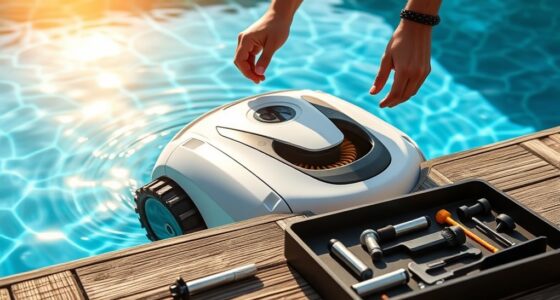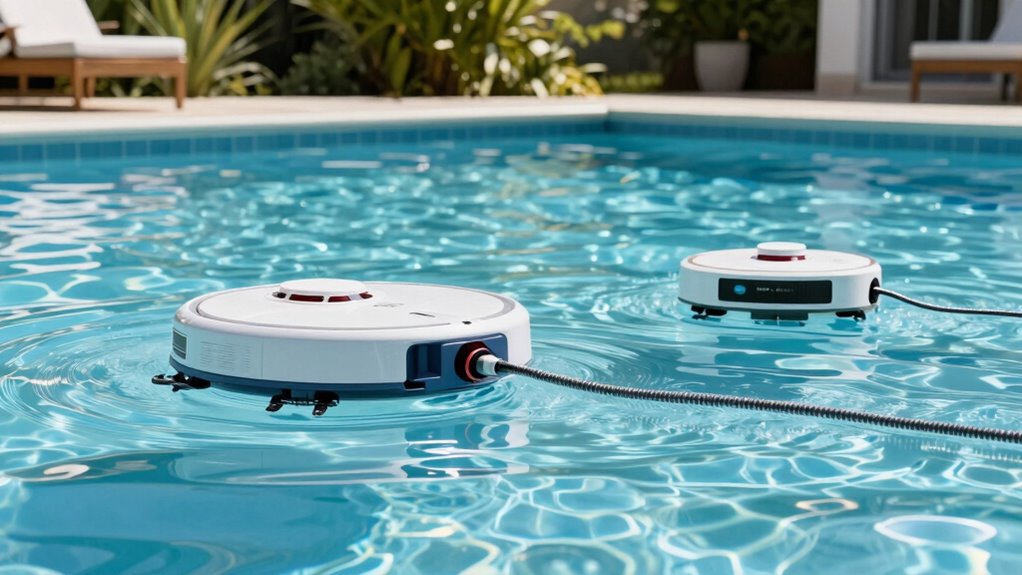
Corded pool robots provide consistent power for longer, uninterrupted cleaning sessions, making them ideal for large or complex pools. Cordless models rely on rechargeable batteries, so their runtime depends on battery capacity and efficiency. Advances like fast-charging and high-capacity batteries are improving cordless performance. If you keep your pool robot well-maintained and choose the right model, you can maximize power and runtime. Want to discover which option suits your pool best? Keep exploring for more insights.
Key Takeaways
- Corded pool robots provide continuous, stable power, ensuring longer, uninterrupted cleaning sessions without battery limitations.
- Cordless models depend on battery capacity, which limits runtime but benefits from quick charging and portability.
- Advanced battery tech and energy-efficient motors are improving cordless robots’ runtime and overall performance.
- Power stability in corded robots guarantees consistent cleaning, especially for large or complex pools.
- Proper maintenance and future battery innovations will enhance cordless robots’ runtime, making them more comparable to corded options.
How Do Corded and Cordless Pool Robots Differ in Power and Performance?
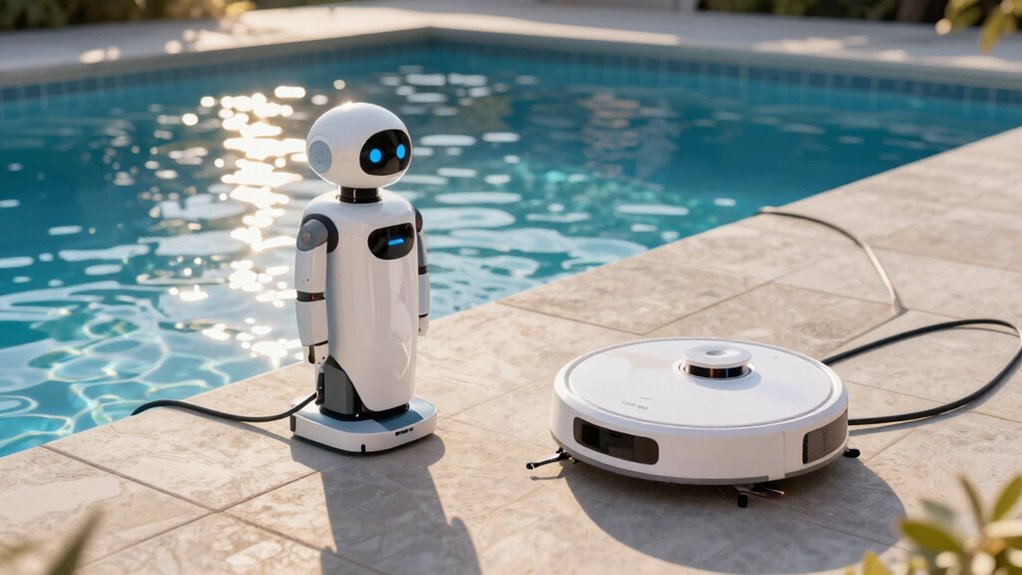
Corded pool robots typically deliver more consistent power because they draw electricity directly from a power outlet, allowing them to operate continuously without concern for battery life. Since they don’t rely on batteries, you won’t need to worry about battery lifespan or frequent recharges. This gives you better control over power management, ensuring steady performance throughout the cleaning session. Steady power allows for more efficient cleaning, especially over larger areas. Corded models can handle longer cleaning cycles without losing strength, making them ideal for larger pools. Additionally, the absence of batteries eliminates issues related to battery degradation, ensuring reliable operation over time. Furthermore, the power supply remains unaffected by environmental factors, providing consistent performance regardless of external conditions. Overall, corded pool robots offer stable, uninterrupted power, making them a reliable choice for consistent, efficient cleaning. For example, environmental factors like humidity or temperature fluctuations can impact battery health in cordless models, potentially reducing their effectiveness over time.
What Factors Affect How Long a Pool Robot Can Run?
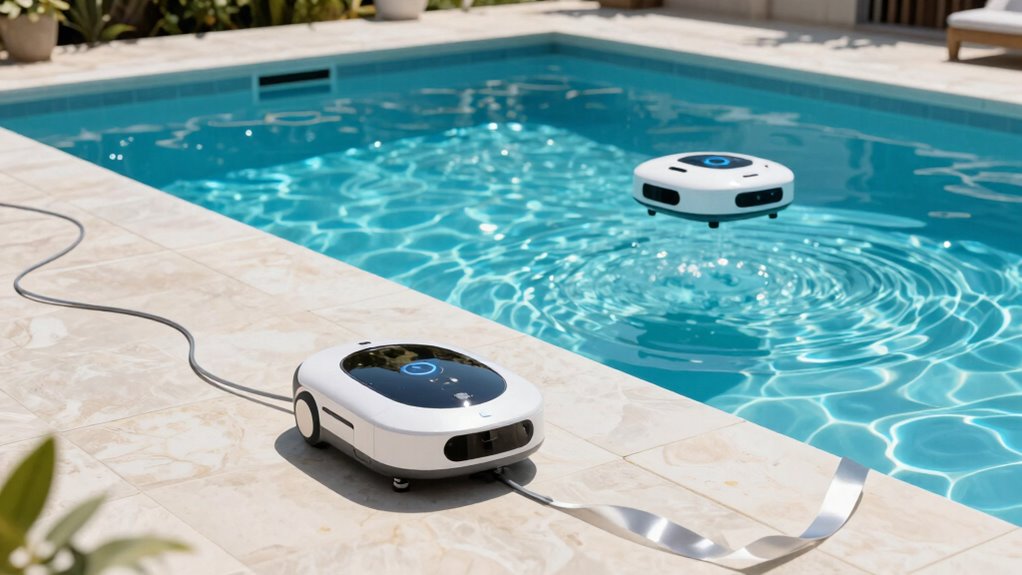
Several factors influence how long your pool robot can run on a single charge or corded connection. Key among these are power consumption and energy efficiency. Higher power consumption drains batteries faster and reduces runtime, while a more energy-efficient design extends operating time. Environmental conditions and debris levels also matter; a dirty or complex pool requires more effort from the robot. To visualize this, consider the following:
| Factor | Effect on Runtime | Example |
|---|---|---|
| Power consumption | Decreases runtime | Heavy motor use |
| Energy efficiency | Extends runtime | Modern, optimized motors |
| Pool conditions | Increases workload | Algae, debris |
| Battery capacity | Limits maximum runtime | Larger batteries last longer |
| Design features | Improve efficiency | Better navigation, sensors |
A more durable motor can also help maintain consistent runtime under varying conditions. Additionally, motor durability plays a significant role in ensuring the robot’s performance remains reliable over time. Regular maintenance and the use of quality components further contribute to extended operational longevity. Furthermore, the development of advanced battery technology continues to push the limits of runtime and efficiency for pool robots.
Are Cordless Pool Robots Limited by Battery Life, and How Can That Be Improved?
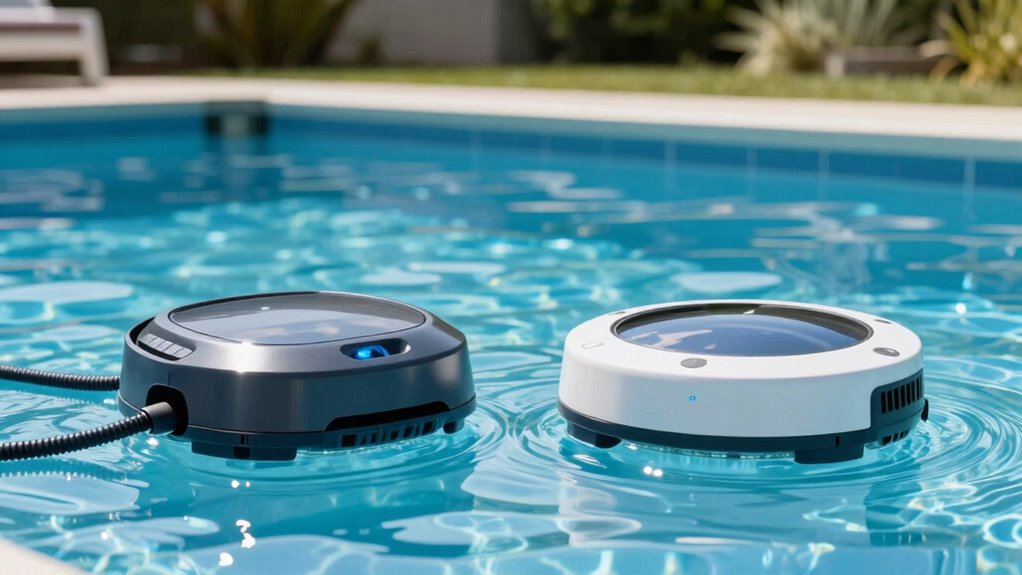
Battery capacity often limits how long cordless pool robots can clean before needing a recharge. You can improve this by using more efficient motors and smarter power management. Advances in technology promise even better options in the near future. Additionally, research into energy-efficient designs is paving the way for longer-lasting battery life and enhanced performance. Moreover, ongoing innovations in battery technology are expected to further extend runtime and reduce charging times, making cordless pool robots more practical for extensive cleaning sessions. Incorporating advanced power systems could also significantly boost efficiency and runtime, providing a more seamless cleaning experience. As these technologies evolve, the integration of high-capacity batteries will likely play a crucial role in overcoming current limitations.
Battery Capacity Limitations
While cordless pool robots offer greater freedom of movement, their battery life often limits how long they can operate before needing a recharge. Battery capacity is a key factor affecting runtime, with smaller capacities leading to shorter cleaning sessions. Over time, battery lifespan declines through repeated charging cycles, reducing overall efficiency. To maximize performance, choose models with higher capacity batteries and longer-lasting cells. Proper maintenance, such as avoiding full discharges, can extend battery life. Additionally, battery technology advancements are continually improving power storage and efficiency. For example, newer lithium-ion batteries provide higher capacities and longer cycle lives, enhancing overall runtime. It’s also important to consider the battery management system, which helps optimize charge cycles and prolong battery health. Regularly monitoring and managing battery health can further boost the lifespan and effectiveness of your pool robot’s power source. The development of fast-charging systems also contributes to reducing downtime and increasing operational availability. Here’s a quick comparison:
| Feature | Impact on Battery Life |
|---|---|
| Battery Capacity | Determines runtime per charge |
| Charging Cycles | Affects overall battery lifespan |
| Maintenance Practices | Extend battery health |
Improving Power Efficiency
The limited battery life of cordless pool robots often raises concerns about their efficiency and ability to complete cleaning sessions. To improve power efficiency, manufacturers focus on energy conservation and power optimization strategies. Using advanced motor technologies and lightweight components helps reduce energy consumption without sacrificing performance. Smart power management systems can monitor battery usage in real-time, adjusting cleaning patterns to maximize runtime. Additionally, optimizing the robot’s navigation and cleaning algorithms ensures it spends less energy on unnecessary movements. Incorporating efficient charging methods and battery management also extends overall battery health and lifespan. Furthermore, utilizing high-quality batteries designed specifically for longer endurance can significantly boost runtime. Advances in battery technology continue to enhance power capacity and longevity. Implementing energy-efficient components further contributes to reducing overall power consumption. By prioritizing energy conservation and power optimization, you can enjoy cordless pool robots that clean effectively while conserving power, making them a more reliable and eco-friendly choice for your pool maintenance needs.
Technological Innovations Ahead
Advances in technology promise to address the limitations of cordless pool robots, especially when it comes to battery life. Researchers and manufacturers are focusing on improving battery technology to extend runtime without sacrificing power. New developments, like solid-state batteries and faster charging methods, can substantially boost battery capacity and durability. Additionally, innovations in power efficiency are helping robots maximize every charge, allowing them to clean longer with less energy consumption. These improvements mean cordless pool robots will become more reliable and practical, reducing the need for frequent recharging. As technology continues to evolve, expect future models to feature smarter power management systems that optimize performance and extend operational time, making cordless options more competitive with corded alternatives.
Does the Power Source Impact Cleaning Effectiveness?
The power source can considerably influence how well your pool robot cleans. With a stable power supply, corded models often maintain consistent performance, while battery efficiency affects cordless units’ cleaning duration. Understanding these factors helps you choose a robot that delivers maximum cleaning effectiveness. Additionally, modern kitchen technology emphasizes the importance of automated systems and precise control, which can be compared to the role of reliable power sources in ensuring optimal operation. For example, battery technology advancements have significantly improved the runtime and performance of cordless models. Furthermore, power stability is crucial for preventing interruptions during cleaning cycles, especially in environments with fluctuating electrical supply.
Power Stability Benefits
Because power stability directly influences a pool robot’s performance, choosing the right power source can make a noticeable difference in cleaning effectiveness. When you opt for a corded robot, you benefit from consistent voltage levels, ensuring steady power supply. This voltage consistency helps the robot maintain peak motor performance, leading to more thorough and reliable cleaning sessions. On the other hand, cordless models rely on batteries, which can experience fluctuations in power output as they drain, potentially causing inconsistent cleaning. Stable power from a corded source minimizes interruptions and ensures the robot operates at full strength throughout its cycle. Ultimately, better power stability means your pool gets cleaned more effectively, saving you time and effort.
Battery Efficiency Factors
A battery’s capacity and health play a crucial role in a cordless pool robot’s cleaning effectiveness. A longer battery lifespan ensures consistent performance over time, minimizing interruptions during your pool cleaning. Effective power management is essential; it helps optimize how energy is used, allowing the robot to clean more thoroughly with each charge. Poor power management can lead to rapid battery drain, reducing runtime and leaving areas uncleaned. To maximize cleaning efficiency, choose a robot with smart battery technology that adapts to usage patterns. Regularly maintaining the battery, such as avoiding complete discharges, also helps extend its lifespan. Ultimately, understanding how battery health and power management influence performance can help you select a cordless robot that delivers reliable, efficient cleaning.
How Does Battery Technology Help Extend Cordless Pool Robot Runtime?
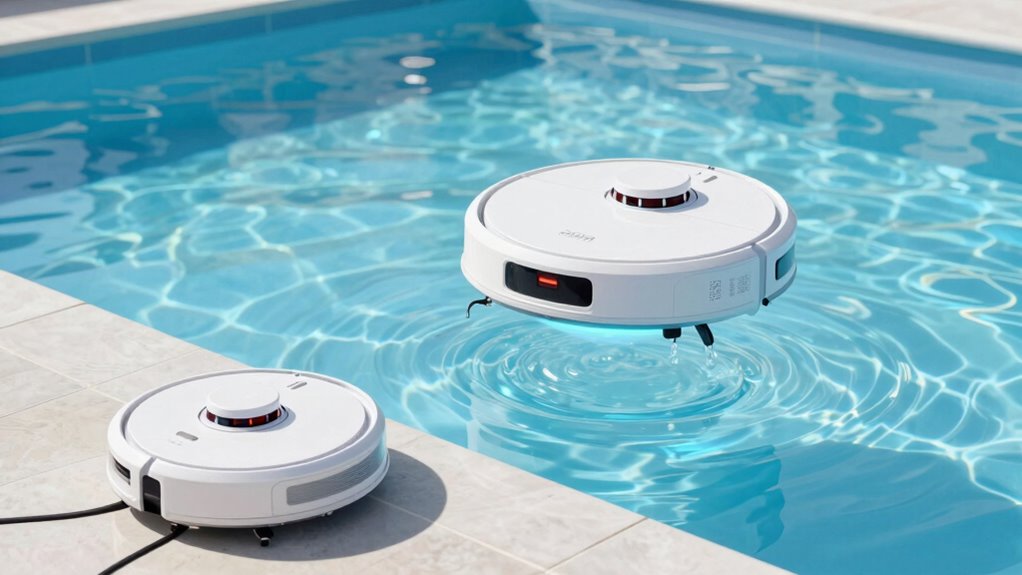
Advancements in battery technology play a crucial role in extending the runtime of cordless pool robots, allowing you to clean your pool more efficiently without frequent interruptions. Battery innovation focuses on improving energy storage, which directly enhances how long your robot can operate on a single charge. Modern batteries now offer higher capacity in a compact form, meaning more power is stored without increasing weight or size. This progress also includes faster charging times and better durability, so your robot stays ready for use longer. Enhanced energy storage means less downtime and more thorough cleaning sessions. As battery technology advances, you’ll benefit from longer runtimes, making cordless pool robots more practical and efficient for maintaining your pool effortlessly.
What Can I Expect in Terms of Runtime and Power for Different Pool Robots?
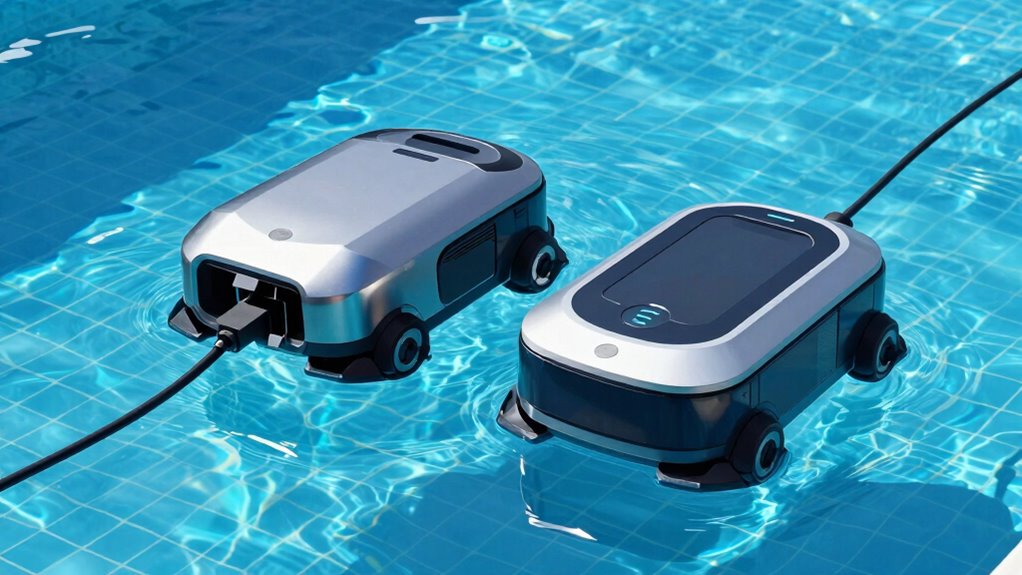
Battery technology improvements have substantially impacted the runtime and power of cordless pool robots, making them more capable of handling larger or more complex cleaning tasks. Modern batteries now offer longer lifespans, allowing your robot to clean for extended periods before needing a recharge. Typically, cordless models provide anywhere from 60 to 120 minutes of operation, depending on battery capacity and the task’s complexity. Keep in mind that a longer cord length in corded models ensures continuous power supply, often allowing for uninterrupted cleaning sessions. Power levels generally remain consistent throughout the runtime, but as batteries age, their lifespan diminishes, reducing overall performance. Understanding these factors helps you choose the right robot based on expected runtime and power for your pool’s size and cleaning needs.
Which Pool Robots Are Best for Large or Complex Pools?
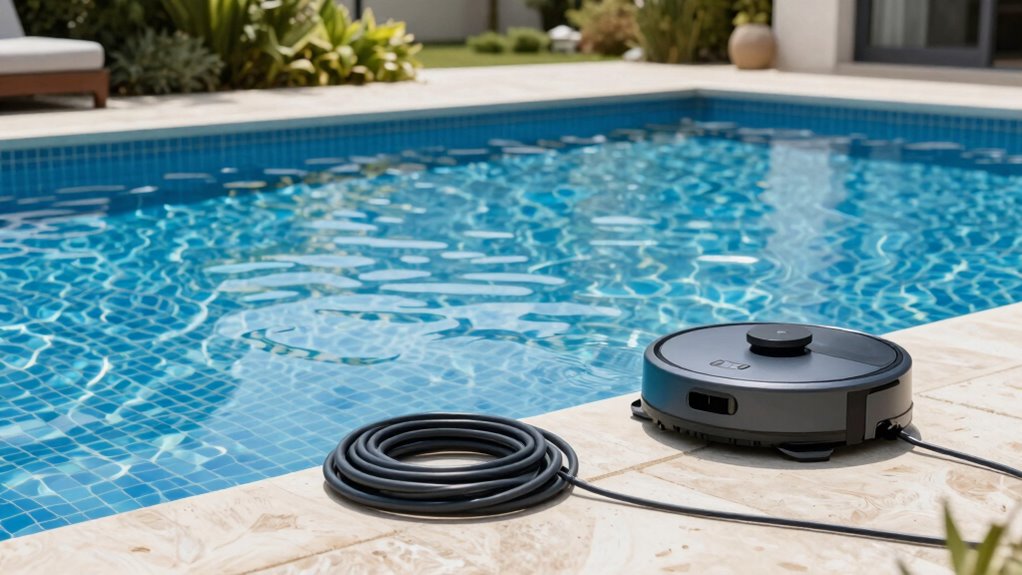
When dealing with large or complex pools, selecting the right robot is essential for effective cleaning. You need a device that can handle extensive water circulation and reach every corner. Look for models with powerful motors, large debris bins, and advanced navigation systems. These features ensure thorough pool maintenance, even in intricate layouts.
| Features | Recommended Robots | Benefits |
|---|---|---|
| Long runtime | Corded models | Extended cleaning sessions |
| Navigation tech | Advanced algorithms | Better coverage in complex pools |
| Water circulation | Strong suction | Effective debris pickup |
| Large debris bins | High-capacity bins | Less frequent emptying |
| Flexibility | Adjustable cleaning paths | Adapt to pool shape |
How to Choose Between Corded and Cordless Pool Robots for Your Needs?
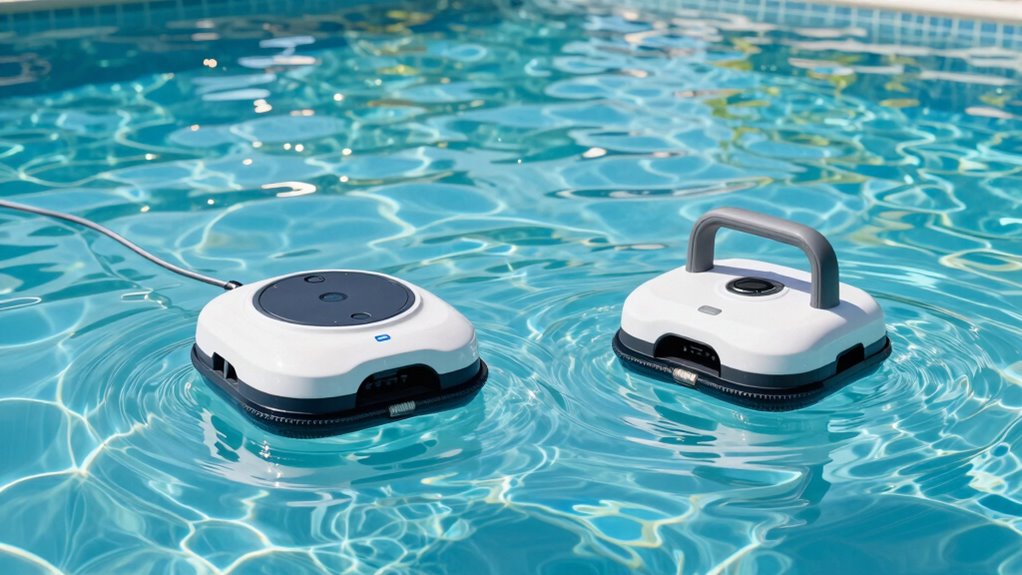
Choosing between corded and cordless pool robots depends on your specific cleaning needs and pool characteristics. If you prioritize energy consumption, cordless models often use less power and can be more energy-efficient since they operate without constant connection to a power outlet. They also offer greater user convenience, allowing you to move freely around your pool without worrying about cords or outlets. Corded robots, on the other hand, tend to have longer runtime and consistent power, making them ideal for larger or more complex pools. Consider your pool size, layout, and how often you want to clean when selecting a robot. Balancing energy efficiency with user convenience will help you pick the best option for your pool maintenance routine.
Tips for Maximizing Your Pool Robot’s Power and Runtime
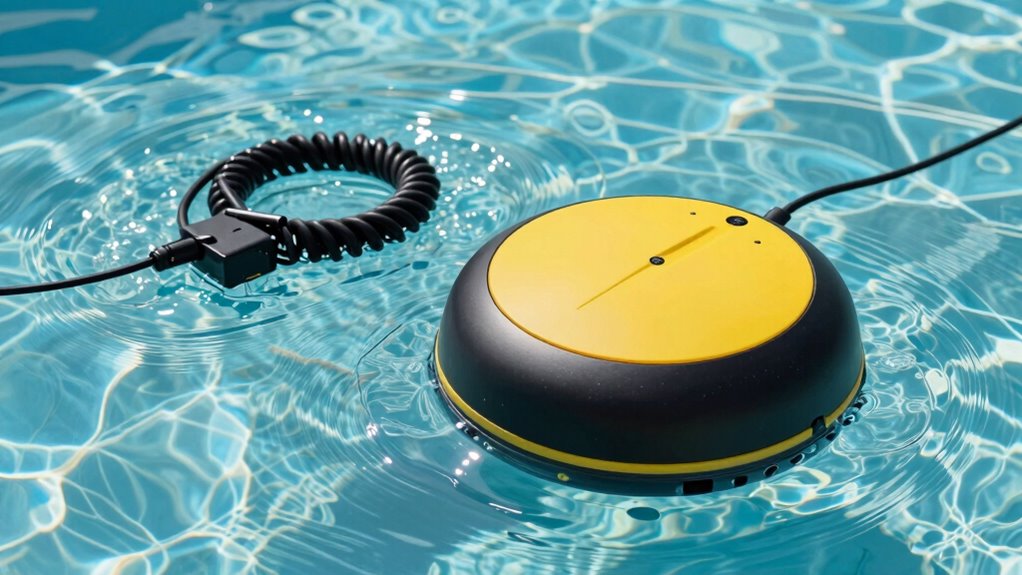
To get the most out of your pool robot’s power and runtime, it’s essential to optimize its cleaning cycles and maintenance routines. Proper battery management is key; avoid fully draining the battery frequently and recharge it promptly to extend its lifespan. Regularly clean the filters and brushes to prevent strain on the motor, which improves overall power optimization. Keep an eye on the robot’s schedule—running shorter, more frequent cycles can be more effective than long, infrequent sessions, conserving battery life. Also, store your robot in a cool, dry place when not in use, which helps maintain battery health. By managing the battery properly and focusing on power-efficient cleaning, you’ll maximize your pool robot’s performance and get the most value out of your investment.
Frequently Asked Questions
How Does Water Temperature Affect Pool Robot Battery Performance?
Water temperature directly impacts your pool robot’s battery lifespan. When water gets too hot, it accelerates battery degradation, shortening its performance over time. Conversely, cold water can slow down chemical reactions inside the battery, reducing its efficiency temporarily. To maximize your robot’s battery lifespan, try to keep water temperature stable and within the recommended range. Avoid extreme temperatures, as they can harm your robot’s power and longevity.
Are There Safety Concerns With Corded Versus Cordless Pool Robots?
You should be aware that corded pool robots pose safety concerns related to electrical shock, especially if the cord gets damaged or improperly handled. Always guarantee proper cord safety by keeping it away from water and sharp objects. Cordless robots eliminate this risk, but you still need to follow safety guidelines. Regularly inspect the device and charging station to prevent accidents, making your pool cleaning safer overall.
Can Multiple Batteries Extend a Cordless Pool Robot’s Runtime?
Yes, multiple batteries can extend your cordless pool robot’s runtime considerably. In fact, some models support battery swapping, allowing you to quickly replace a drained battery with a fresh one. Installing additional batteries at charging stations enables continuous cleaning without long interruptions. This setup ensures your pool stays pristine, giving you more cleaning time with minimal hassle. Just make sure your robot is compatible with multiple batteries for seamless operation.
Do Different Pool Shapes Influence Robot Cleaning Efficiency?
Different pool shapes do influence your robot’s cleaning efficiency. Irregular or complex shapes may challenge its navigation, causing it to miss spots or take longer. Conversely, simple, rectangular pools allow for more straightforward coverage, improving cleaning performance. To get the best results, choose a robot suitable for your pool’s shape and consider models with advanced navigation features that adapt to various pool designs, ensuring thorough cleaning every time.
How Often Should I Replace Batteries in My Cordless Pool Robot?
Did you know that most cordless pool robot batteries last about 300 to 500 charge cycles? You should replace your batteries every 1 to 2 years, depending on usage and battery lifespan. Regular replacement guarantees peak performance and longer robot life. Keep an eye on signs like reduced runtime or decreased cleaning efficiency, which indicate it’s time for a new battery to maintain your robot’s effectiveness.
Conclusion
Ultimately, whether you choose a corded or cordless pool robot, the decision hinges on your pool’s size and your cleaning needs. But as technology advances, new features promise longer runtimes and more power. Imagine a future where your robot effortlessly tackles even the most challenging pools without interruption. Are you ready to discover what’s next? Stay tuned—your perfect pool cleaning solution might be just around the corner.