GFCIs are a non-negotiable safety layer for your pool area, as they detect ground faults and instantly cut power to prevent electric shocks. Since pools are wet environments, ever-present risk of shock from faulty or stray currents makes GFCIs critical. They continuously monitor electrical flow and trip if an imbalance occurs, ensuring safety. Choosing the right GFCI with updated features greatly boosts protection. Keep going to discover how these devices work and how to set them up properly.
Key Takeaways
- GFCIs detect ground faults and trip immediately, preventing dangerous electrical shocks in wet pool environments.
- Installing GFCIs is a mandatory safety requirement to protect pool equipment and swimmers from electrical hazards.
- Modern GFCIs feature faster response times and advanced sensors for enhanced safety and reliability.
- Proper wiring, grounding, and regular testing of GFCIs ensure ongoing protection around pools.
- Compliance with local codes and professional installation are essential for effective GFCI safety layers.

INTEX 2,650 GPH Krystal Clear Sand Filter Pump and Saltwater Pool Chlorine System for Above Ground Pools, Pool Cleaner System with Automatic Timer
✔ FRESH AND CLEAN WATER – QX2600 uses sand for excellent filtration combined with the QS1200 saltwater system...
As an affiliate, we earn on qualifying purchases.
Why GFCIs Are Essential for Pool Safety
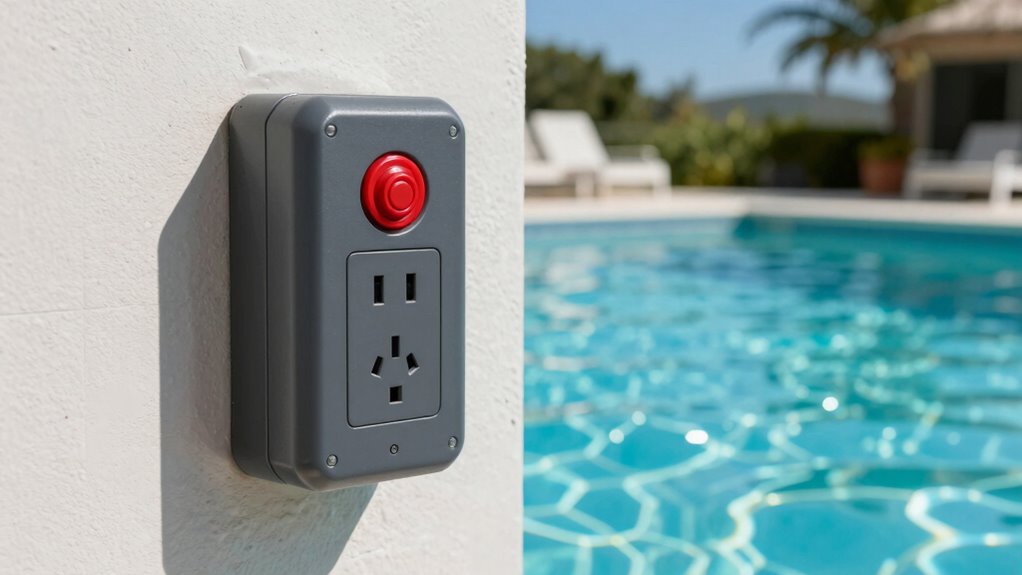
Because pools are wet environments, electrical equipment near the water poses a significant shock risk. Ground faults happen when electricity leaks from a device into the water, creating a dangerous situation. GFCIs are designed to detect these ground faults quickly, shutting off power before anyone gets hurt. Without GFCIs, you risk severe electrical shocks, which can be deadly. They’re an essential part of maintaining electrical safety around your pool. By constantly monitoring for imbalances in the electrical current, GFCIs prevent dangerous leaks from persisting. Installing GFCIs near pool equipment ensures that any ground fault is immediately interrupted, protecting swimmers and anyone handling electrical devices. Proper electrical wiring and grounding practices are crucial for effective safety. Additionally, understanding the thermal behavior of electrical components helps in designing safer outdoor systems. Regular testing and maintenance of GFCIs ensure they function properly in emergency situations, which is vital for safety. Incorporating ground fault protection into your electrical system can significantly reduce the risk of shock hazards. Keeping up with electrical safety standards can help prevent accidents and ensure reliable protection. If safety is your priority, GFCIs are a non-negotiable component of your pool’s electrical system.

Pool Lights for Inground Pool, 60W 10 Inch LED Inground Pool Light with Controller, Remote and APP Control for Wet Niche, Color Changing Underwater Swimming Pool Lights with 50 Foot Cord
【3 Ways to Control: APP + Controller + Remote】Traditional led pool lights often suffer from signal loss due...
As an affiliate, we earn on qualifying purchases.
How Do GFCIs Detect Electrical Leaks in Pool Equipment
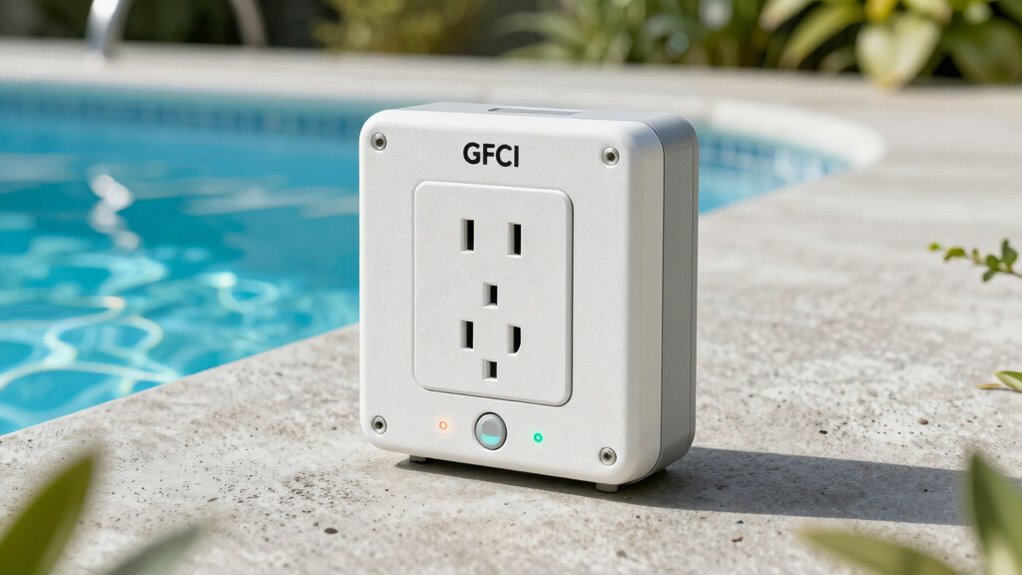
GFCIs detect electrical leaks by constantly monitoring the flow of current between the hot and neutral wires. They perform ground fault detection by sensing any imbalance, which indicates current escaping to the ground—potentially through water or a person. When a discrepancy is detected, the GFCI quickly trips, cutting off power and preventing shock hazards. This electrical leak detection capability makes GFCIs essential for pool safety, as they can spot dangerous faults before anyone gets injured, offering peace of mind and enhanced protection around water. Color accuracy in GFCIs ensures precise detection of electrical faults, further increasing their reliability. Incorporating trusted reputation in GFCI manufacturing helps ensure consistent and dependable performance in critical safety situations. Additionally, advanced sensing technology allows GFCIs to respond more rapidly to leaks, reducing the risk of harm even further.
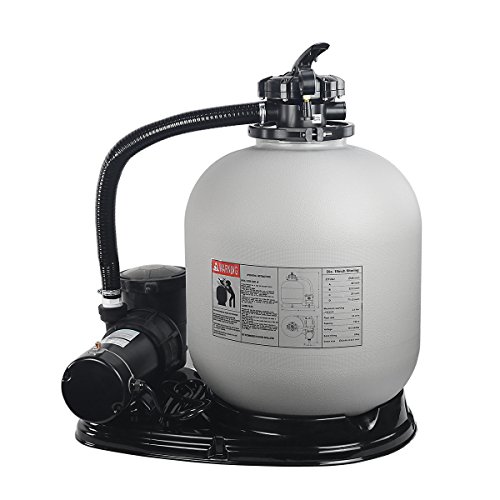
XtremepowerUS 19" Sand Filter 1.5HP Pump 4500 GPH Swimming Pumps System & Filters Combo Set Multi-Port Valve, for Domestic and Commercial Pools up to 18,000 Gallons Pool
Powerful, All-in-One Performance - With an impressive flow rate of 4,500GPH, 1.5HP sand filter pump is ideal for...
As an affiliate, we earn on qualifying purchases.
What’s Inside a Pool GFCI and How It Keeps You Safe
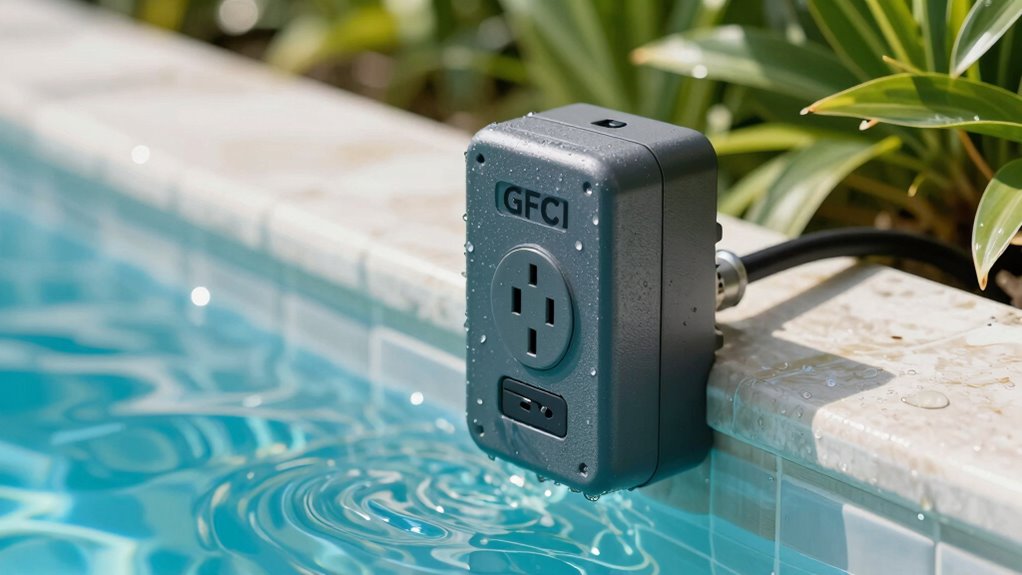
Inside a pool GFCI, a sensitive electronic circuit constantly monitors the flow of current between the hot and neutral wires. If it detects a ground fault—an unintended path where current leaks to ground—it quickly reacts. This immediate response interrupts power, preventing electrical shocks and reducing the risk of electrocution. The device’s internal components, including a differential current sensor, compare the current in both wires. If they’re mismatched, it indicates a ground fault, activating the GFCI’s circuit breaker. This rapid action enhances electrical safety around your pool, protecting you and your loved ones. By catching even small leaks, the GFCI acts as a vital safety barrier, ensuring that any ground fault doesn’t lead to dangerous situations, especially in an environment where water and electricity coexist.

HQUA PN01DC LED Inground Pool Lighting System RGBW Color Change 10 Inch 50W, Remote/App Control, 120V AC, 100 Feet Cord
【 RGBW Color Control 】 – With the LC01 system, PN01DC offers 10+ dynamic modes, including flashing, jumping...
As an affiliate, we earn on qualifying purchases.
Do I Need to Install GFCIs Around My Pool : Local Rules and Requirements

You need to verify your local building codes and regulations to see if GFCIs are required around your pool. State rules may also specify safety standards you must follow. Additionally, your insurance policy might have stipulations about GFCI installation to ensure coverage remains valid. Ensuring proper wiring and grounding is essential for maintaining electrical safety in pool areas.
Local Building Codes
Are local building codes requiring GFCIs around your pool? Many areas have strict regulations to guarantee electrical safety near water. These codes often mandate GFCIs on all pool-related electrical equipment to prevent shocks and accidents. Ignoring local building codes can lead to fines or unsafe conditions, so it’s essential to stay compliant.
A comprehensive understanding of electrical standards helps ensure your pool setup meets all safety requirements.
Key points include:
- Local building codes specify the placement and type of GFCIs needed around pools.
- Compliance helps protect you and your family from electrical hazards.
- Regulations can vary by region, so always check with your local authority.
Adhering to local building codes isn’t just about following rules; it’s about prioritizing electrical safety. Ensuring your pool’s electrical system meets local standards gives you peace of mind and a safe environment for everyone.
State Regulations Compliance
Understanding your state’s regulations is essential because requirements for GFCI installation can vary markedly across regions. Some states mandate GFCIs for all pool equipment, emphasizing proper electrical grounding and the use of circuit breakers to prevent electrical shock hazards. Others specify specific distances or equipment types that need GFCIs. Check local codes to ensure compliance and avoid penalties. Staying informed about Electrical Safety Measures can help you understand the importance of grounding and proper electrical safety measures around pools.
Insurance Requirements
Insurance policies often require homeowners to comply with local electrical safety standards**, including the installation of GFCIs around pools. This is especially important if you have a pool heater or lighting fixtures, as these increase the risk of electrical shock. Installing GFCIs can help prevent costly claims and ensure your coverage remains valid after an accident. Additionally, electrical safety standards** typically specify GFCI requirements for outdoor and poolside wiring to minimize hazards. Be aware that some insurers may specifically mandate GFCI protection for:
- Pool lighting fixtures to prevent shocks during nighttime swims
- Pool heater circuits to avoid electrical hazards from heating equipment
- Outlets and receptacles within a certain proximity to the pool area
Meeting these requirements not only keeps you compliant but also enhances safety and reduces liability. Always check with your insurer to understand specific GFCI mandates related to your pool setup, especially considering local regulations that may vary by jurisdiction. Ensuring proper GFCI installation can significantly reduce the risk of electrical shock incidents around your pool area. Additionally, regularly testing GFCI devices can ensure they are functioning correctly and providing the necessary protection.
How to Properly Install a Pool GFCI : DIY or Hire a Professional?
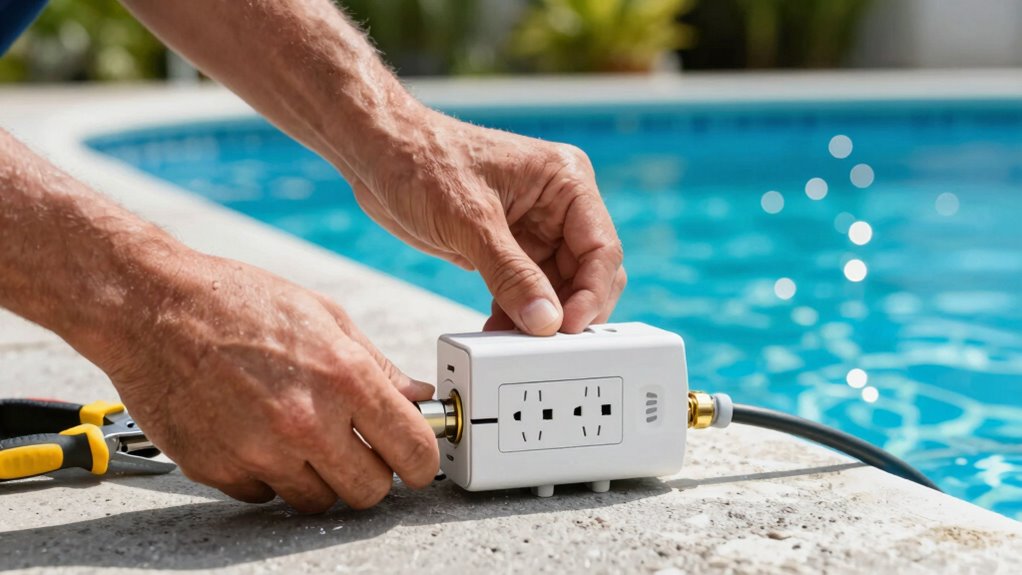
When installing a pool GFCI, proper wiring techniques are essential to guarantee safety and functionality. You also need to make sure your work complies with local codes and regulations. Deciding whether to do it yourself or hire a professional depends on your experience and comfort with electrical work. Consulting home security systems information can provide insights into ensuring your property remains safe and secure, much like properly installed GFCIs protect your pool area. Additionally, understanding modern safety standards can help you stay current with best practices for electrical safety in outdoor environments.
Proper Wiring Techniques
Proper wiring is essential to guarantee your pool GFCI functions safely and reliably. Using correct grounding techniques ensures any stray current is safely directed into the ground, reducing shock risks. Pay close attention to wiring color codes to distinguish hot, neutral, and ground wires, preventing misconnections. When wiring your GFCI, follow these key practices:
- Use appropriate connectors and secure all connections tightly
- Verify grounding techniques comply with local codes
- Label wires clearly to avoid confusion during future maintenance
A precise setup minimizes electrical hazards and ensures your GFCI provides effective protection. If you’re unsure about proper wiring techniques or local code requirements, consider hiring a professional. Proper wiring not only keeps your pool safe but also guarantees compliance and peace of mind.
Legal and Code Compliance
Installing a pool GFCI correctly requires understanding and following local electrical codes and regulations. Your safety and compliance depend on proper installation, especially when dealing with pool accessories and water chemistry. If you’re unsure, hiring a licensed electrician ensures adherence to these standards, reducing risks of electrical shock or code violations. The decision to DIY or hire professional help can evoke strong emotions—confidence or worry—so consider your skills carefully. Additionally, understanding vetted safety standards can help you make informed decisions about the installation process.
Signs That Your Pool GFCI Might Be Failing or Tripping Too Often
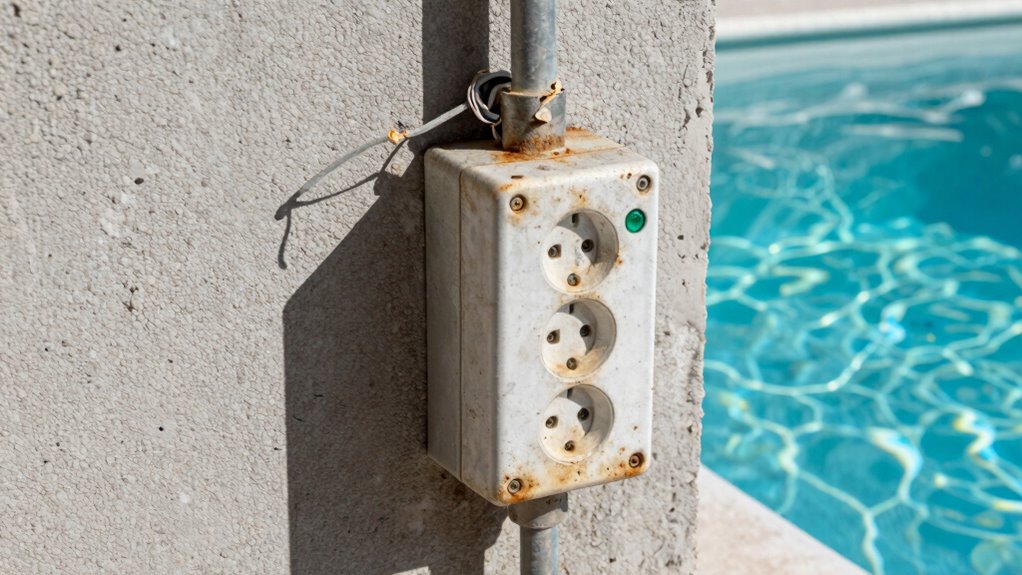
If your pool GFCI keeps tripping or seems to be failing frequently, it’s a clear sign something’s wrong. You might notice it repeatedly shutting off power to poolside lighting or outdoor outlets, disrupting your pool routine. Frequent trips could indicate internal faults or moisture issues affecting the GFCI’s performance. Additionally, if the GFCI trips even when no appliances are in use, it’s a warning sign that it may be malfunctioning. Other signs include a persistent inability to reset the GFCI or inconsistent trips without apparent cause. Regular tripping not only hampers pool maintenance but also compromises safety. Addressing these issues promptly helps ensure your GFCI functions reliably, keeping your pool area safe and your outdoor outlets protected from electrical hazards. Recognizing early failure signs can prevent more serious electrical problems down the line. Furthermore, understanding the proper maintenance of GFCIs can extend their lifespan and reliability. Proper inspection and testing of the GFCI’s internal components are essential components of GFCI maintenance to ensure ongoing safety. Conducting periodic testing of the GFCI using the test and reset buttons can help identify potential issues before they lead to failure. Being aware of internal component deterioration can also help you decide when replacement is necessary to maintain safety standards.
How to Troubleshoot GFCI Trips and Ensure Reliable Protection

When your GFCI keeps tripping, troubleshooting quickly can help identify the underlying issue and restore safe, reliable protection. Start by pressing the trip reset button; if it doesn’t stay reset, a ground fault may be present. Check for obvious signs of damage or moisture around the outlet, wiring, and equipment. Unplug all devices connected to the GFCI, then reset it; if it trips again, the problem likely lies with the GFCI itself or a ground fault in the circuit. Test the GFCI with a tester to ensure proper functioning. If it continues to trip under normal conditions, consider replacing it or consulting an electrician. Proper troubleshooting helps prevent future trips and ensures your pool equipment remains safely protected.
Best Practices for Maintaining and Testing Your Pool GFCIs
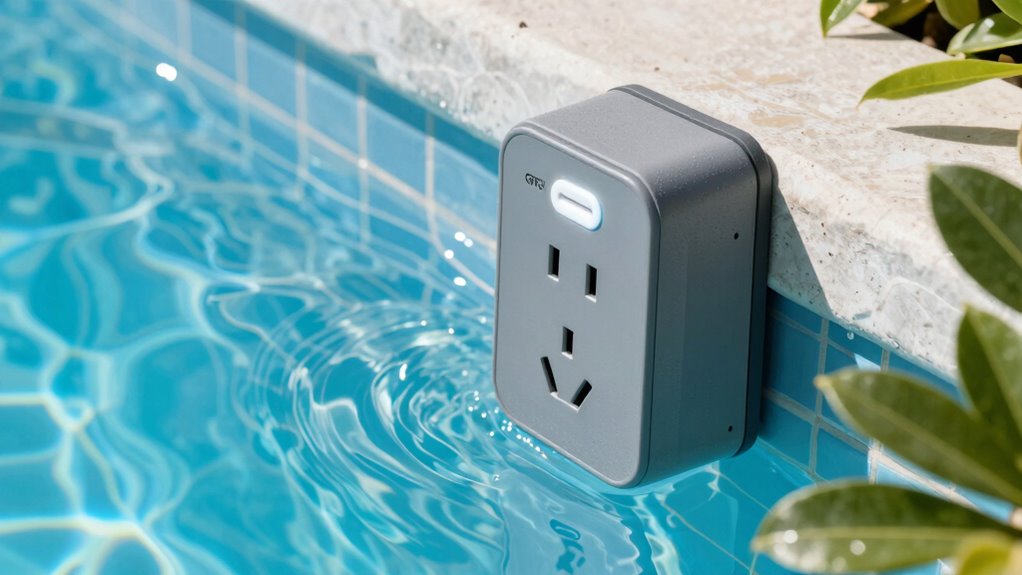
To keep your pool GFCIs working reliably, you need to follow regular testing procedures and proper maintenance techniques. Testing your GFCIs monthly guarantees they trip correctly and keeps you safe. Maintaining clean and dry connections also helps prevent false trips and prolongs their lifespan.
Regular Testing Procedures
Regularly testing your pool GFCIs is essential to guarantee they function properly and protect you from electrical hazards. Consistent testing ensures the device responds correctly to faults and maintains safety. You should perform testing at least once a month, following recommended testing frequency guidelines. When testing, use the built-in test button to confirm the GFCI trips properly. If it doesn’t, troubleshooting methods like inspecting connections or replacing the device are necessary. Regular testing helps identify issues early, preventing potential accidents. Keep a log of your test results for routine checks. Remember, a proactive approach to testing is key to maintaining your safety and ensuring your GFCIs work when you need them most. Stay vigilant and conduct these tests regularly.
Proper Maintenance Techniques
Maintaining your pool GFCIs properly is essential for ensuring they function correctly and provide ongoing safety. Regular pool maintenance includes inspecting GFCIs for signs of damage or corrosion, and testing them routinely to confirm proper operation. Keep the electrical components dry and free from moisture, which can compromise their effectiveness. Additionally, ensure your pool’s chemical balancing is maintained; improper chemical levels can lead to corrosion or buildup that affects GFCI performance. Always follow the manufacturer’s guidelines for cleaning and testing, and replace any faulty units immediately. By combining diligent pool maintenance with proper chemical balancing, you help prevent electrical hazards and extend the lifespan of your GFCIs, ensuring your pool remains a safe environment for everyone.
The Risks of Not Using GFCIs Around Pool Equipment

Without GFCIs, the risk of electric shock around pool equipment increases considerably. You could face dangerous incidents, especially with faulty wiring or water exposure. For example, pool lighting, if not protected, can become a shock hazard. Ignoring GFCI safety may also shorten their lifespan, leading to more frequent replacements and higher costs. Not using GFCIs leaves you vulnerable to accidental shocks from immersion or equipment malfunction. Additionally, water and electrical systems don’t mix well, increasing the chance of harm.
Without GFCIs, pool equipment risks dangerous shocks, equipment damage, and increased safety hazards.
- Electric shocks from pool lighting or pumps
- Shortened GFCI lifespan due to overloads
- Increased risk of electrocution during maintenance or repair
Upgrading to Modern GFCI Technology for Enhanced Pool Safety
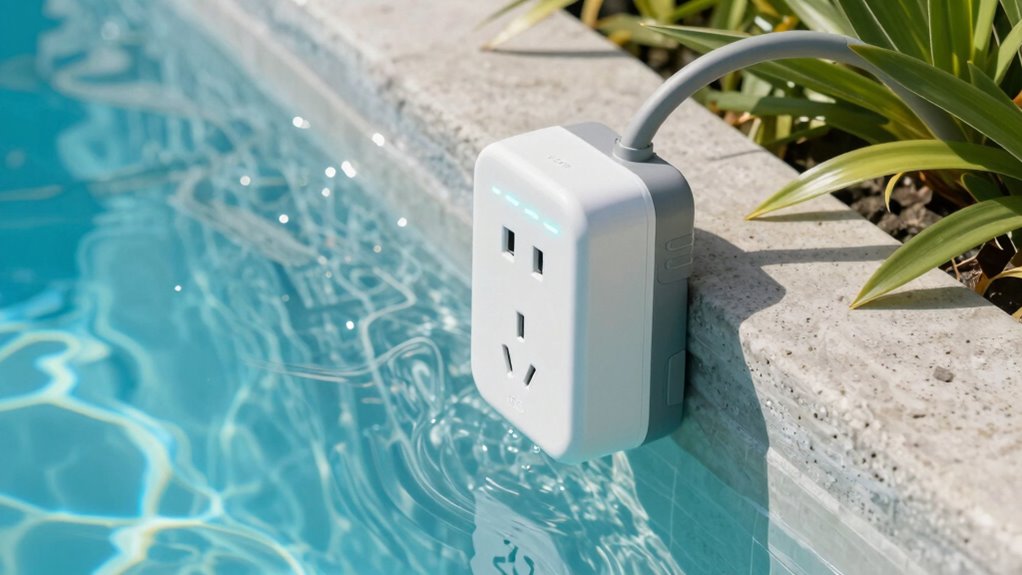
Upgrading to modern GFCI technology considerably boosts your pool area’s safety by providing faster and more reliable electrical fault detection. Newer GFCIs feature advanced circuitry that quickly trips upon detecting imbalance, improving circuit interruption response times. This ensures that electrical faults are addressed immediately, reducing risk of shock. Modern GFCIs also enhance electrical grounding, providing a safer connection to earth, which minimizes stray currents. These upgrades ensure your pool equipment remains protected while safeguarding swimmers. Selecting the right GFCI involves understanding these key features:
| Feature | Benefit | Impact |
|---|---|---|
| Faster Circuit Interruption | Reduces shock risk | Quicker response times |
| Improved Electrical Grounding | Enhanced safety | Better fault containment |
| Advanced Sensors | Precise fault detection | Increased reliability |
Frequently Asked Questions
Can GFCIS Be Used With Solar-Powered Pool Equipment?
Yes, GFCIs can be used with solar-powered pool equipment. You need to verify solar compatibility by selecting GFCIs rated for outdoor use and compatible with low-voltage systems. Pay close attention to wiring considerations, making sure all connections are waterproof and properly grounded. This setup not only enhances safety but also prevents electrical hazards, giving you peace of mind while enjoying your pool.
How Often Should I Test My Pool GFCI for Safety?
You should test your pool GFCI at least once a month to ensure safety assurance. Think of it as a quick tune-up to keep everything running smoothly and prevent surprises. Regular testing catches potential issues early, giving you peace of mind when you plunge in. Don’t wait for trouble to knock on your door—make testing your GFCI a routine part of your pool maintenance schedule.
Are There Portable GFCIS Suitable for Poolside Use?
Yes, there are portable GFCIs designed for poolside use that provide portable safety and outdoor compatibility. These units are easy to transport and plug into standard outlets, offering an extra layer of protection wherever you need it. Use them to safeguard equipment or add temporary GFCI protection during pool maintenance or setup. Just verify they are UL-listed and specifically labeled for outdoor use to guarantee safety and reliability.
What Are Common Causes of GFCI Nuisance Tripping?
Imagine your poolside evening disrupted by unexpected GFCI trips—frustrating, right? Common causes include ground faults that create unintended current leaks, often from moisture or damaged wiring. Wiring issues like loose connections or corrosion can also trigger nuisance trips. You might see the GFCI trip when you least expect it, but understanding these causes helps you troubleshoot and keep your pool safe, ensuring those peaceful nights by the water stay undisturbed.
Do GFCIS Interfere With Pool Lighting or Other Electronics?
GFCIs can sometimes interfere with pool lighting or other electronics due to electrical interference, especially if wiring isn’t properly shielded or grounded. This may cause nuisance tripping or lighting issues. To guarantee lighting compatibility, keep wiring neat and use proper shielding. If problems persist, consult an electrician to verify that your GFCI and other electronics are correctly installed and protected against electrical interference, maintaining safe operation.
Conclusion
You’d think safety around your pool would be obvious, but neglecting GFCIs proves otherwise. While these devices are designed to keep you safe, ignoring their importance can turn a relaxing swim into a dangerous gamble. So, don’t wait for a shock to remind you—install, test, and maintain your GFCIs diligently. After all, it’s ironic how something so simple can be the most vital layer of protection you shouldn’t forget.