To guarantee a perfect fit for your pool cover, use a reliable measuring tape or laser distance meter to carefully measure the pool’s length, width, and depth at multiple points, especially for irregular shapes or slopes. Add an extra 3 to 4 feet for the overhang for secure coverage. Double-check all measurements for accuracy. If you want detailed tips on choosing the right cover size and securing it properly, keep exploring for more expert advice.
Key Takeaways
- Measure the pool’s length, width, and depth at multiple points for accuracy, including irregular shapes or slopes.
- Use a reliable measuring tool like a tape measure or laser meter, double-checking each measurement.
- Add an extra 3 to 4 feet around the pool edges to account for overhang and secure fitting.
- Record all measurements carefully and verify by re-measuring to prevent errors.
- Select a cover size that extends beyond the pool edges, considering shape, overhang, and weather conditions for a proper fit.
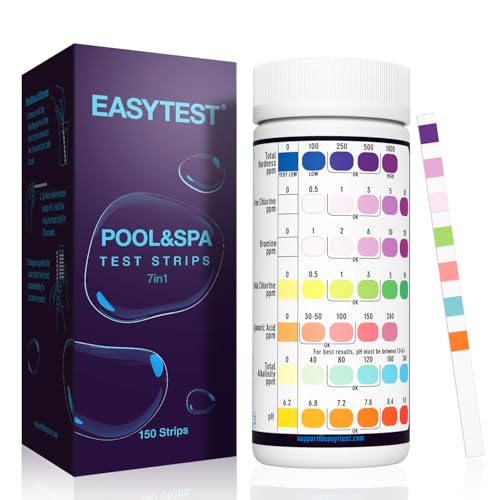
EASYTEST 7-Way Pool Test Strips, 150 Strips Water Test for Hot tub and Spa
- 150 Test Strips Included: Enough for multiple water tests
- Fast and Accurate Results: Soak for 1 second, read in 15 seconds
- 7-in-1 Water Testing: Tests Bromine, pH, Chlorine, Alkalinity, Hardness, Cyanuric Acid
As an affiliate, we earn on qualifying purchases.
How to Measure Your Pool’s Length, Width, and Depth Accurately

To guarantee your pool cover fits perfectly, you need to measure your pool’s length, width, and depth accurately. Start by noting the pool’s shape, whether it’s rectangular, oval, or freeform, as this affects your measurements. For length and width, use a tape measure to get the longest and widest points, ensuring your measurements reflect the pool’s actual dimensions. When measuring depth, check multiple spots to account for any slope or uneven water level, which can impact the cover’s fit. Keep in mind, the water level in the pool can influence your measurements—measure from the pool’s highest water point for an accurate fit. Additionally, understanding proper measurement techniques based on pool shape can help prevent sizing errors. Ensuring you measure the correct points accurately is crucial for a snug and secure fit, preventing gaps and potential damage. Being aware of measurement accuracy is essential to avoid costly mistakes and ensure the cover’s longevity. Using appropriate tools can further enhance measurement precision and help you achieve a perfect fit.
Determining the Right Overhang and Cover Fit for Your Pool
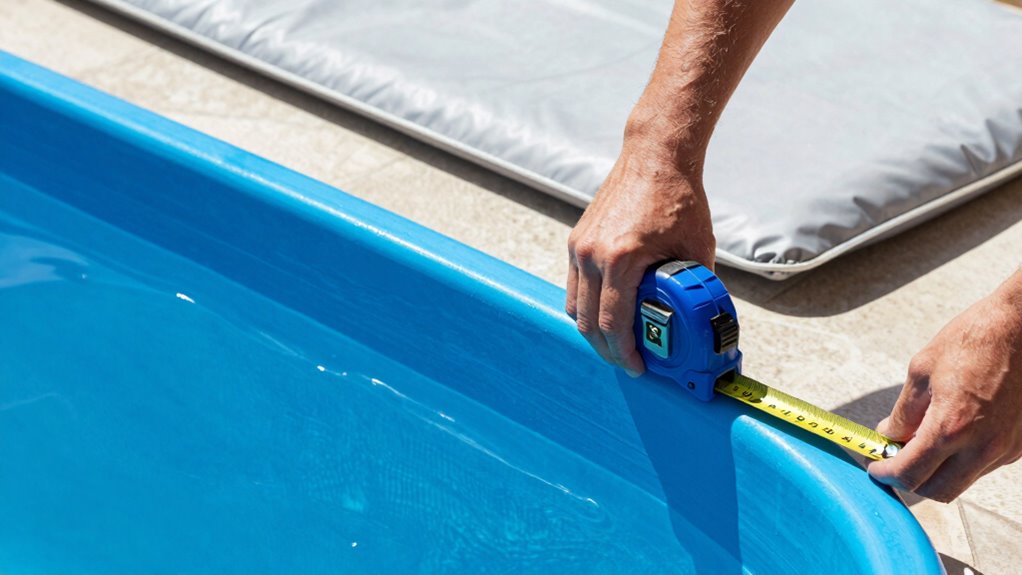
When choosing the right overhang and ensuring a proper fit for your pool cover, it’s vital to take into account how much extra material you’ll need beyond the pool’s edges. Different pool cover materials have specific overhang specifications, which influence coverage and durability. Typically, a 3 to 4-foot overhang provides enough space for securing the cover and accommodating wind or weather. Measure carefully to include this overhang when calculating your cover size. Remember, too little overhang can lead to inadequate coverage, while too much may cause excess material that’s hard to manage. Proper measurement techniques ensure you get an accurate fit and avoid costly mistakes. Additionally, considering local weather conditions can help determine the optimal overhang length for enhanced durability and protection. Knowing the standard overhang sizes recommended for your cover material can further guide your measurements and improve overall fit. Being aware of proper installation methods can also contribute to longer-lasting and more secure pool covers.
Choosing the Best Tools and Techniques for Precise Measurements

Accurate measurements are essential for selecting the right pool cover, and choosing the best tools and techniques can make all the difference. To guarantee measuring accuracy, select reliable tools like a sturdy tape measure, a laser distance meter, or a measuring wheel. These tools help you get precise readings of your pool’s length, width, and depth. Proper tool selection minimizes errors caused by slack or misreading, making your measurements more dependable. Use a tape measure for shorter distances and a laser device for larger spans, especially around irregular shapes. Always double-check measurements and record each reading carefully. Additionally, understanding Free Floating can help you troubleshoot minor measurement discrepancies or tool malfunctions. Being aware of piercing care and hygiene can also influence your approach to handling measuring tools, ensuring they stay clean and accurate. Consistently using the right tools and techniques ensures your measurements are accurate, reducing the risk of a poor fit and saving you time and money in the long run. Mastering Kitchen Tools can also help you understand proper handling and calibration to improve measurement precision.
Common Mistakes to Avoid When Measuring Your Pool

One common mistake is ignoring the specific shape of your pool, which can lead to inaccurate measurements. Using the wrong tools, like a standard tape measure instead of a flexible one, can also cause errors. Additionally, understanding the science behind measuring tools can help ensure your measurements are precise and your cover fits perfectly. To get an accurate fit, you need to pay attention to these details and choose the right measuring equipment. Recognizing various pool shapes and how they impact measurements can further improve your accuracy. Being aware of the best measuring techniques can also make the process more straightforward and reliable. Furthermore, considering measurement consistency ensures that your results remain accurate across multiple measurements.
Ignoring Pool Shape Variations
Ignoring pool shape variations can lead to serious measurement errors that compromise the fit and effectiveness of your pool cover. If you overlook the unique pool shape, especially with irregular boundaries, your cover may not fit properly. To avoid this mistake:
- Don’t assume your pool is perfectly rectangular; irregular boundaries require careful measurement.
- Measure along the actual outline, not just the main dimensions, to capture curves or angles.
- Use flexible measuring tools that can trace the shape accurately, especially around curves or deviations.
Using Incorrect Measuring Tools
Using the right measuring tools is key to getting an accurate fit for your pool cover. Avoid using rulers or tape measures that aren’t designed for larger distances, as they can lead to inaccurate measurements. Instead, use a flexible measuring tape that can easily navigate around pool contours and curves. Ensure your tools are sturdy and clearly marked for measurements, especially when considering pool cover materials that require precise sizing. Incorrect tools can cause errors, leading to ill-fitting covers that don’t account for seasonal adjustments like added slack for winter or wind. Always double-check measurements, and use tools suited for your pool’s shape and size. Proper measuring tools guarantee your cover fits well, providing reliable protection year-round. Additionally, understanding measurement accuracy can help prevent costly mistakes by ensuring your cover fits perfectly the first time. Employing proper measurement techniques also minimizes the risk of errors, saving you time and money. Using the correct tools also supports consistent measurements, which is essential for achieving a snug and secure cover fit every season. Recognizing measurement precision is crucial when working with different pool materials and cover types to avoid costly errors. To further improve your measurement process, consider utilizing digital measuring devices, which can enhance accuracy and reduce manual errors.
Recording and Double-Checking Your Measurements
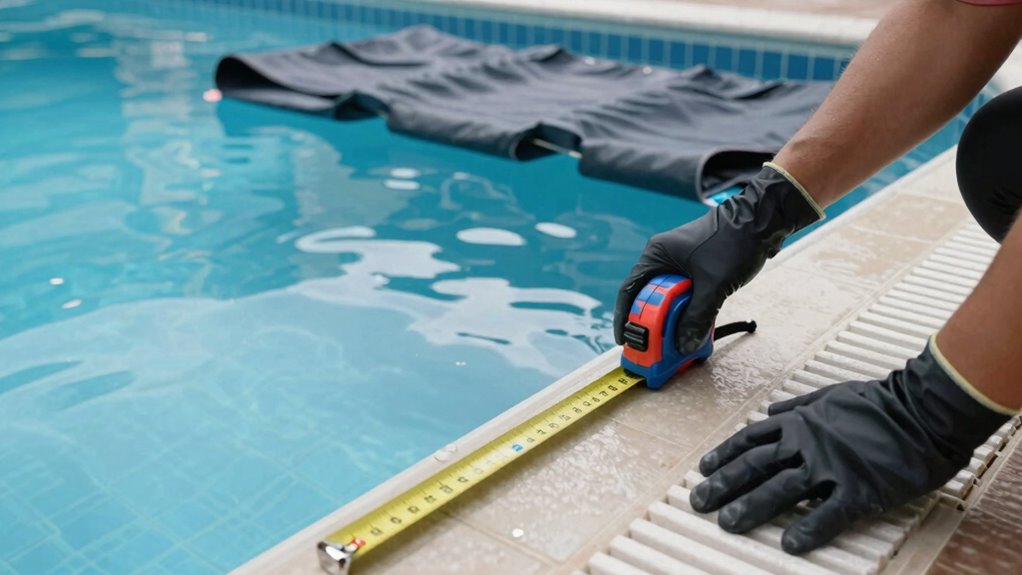
Make sure you use a measuring tape to record all your dimensions accurately. It’s important to note multiple measurements for each side to guarantee precision. Double-check your numbers carefully before proceeding to order your pool cover. Proper documentation can help you avoid mistakes and ensure your measurements are consistent.
Use a Measuring Tape
To guarantee your measurements are accurate, start by carefully recording each dimension with a reliable measuring tape. This ensures your pool cover materials fit perfectly, especially during seasonal maintenance. To do this effectively:
- Measure the length and width of your pool, noting the exact dimensions.
- Use the tape to check the depth at multiple points for a precise fit.
- Double-check all measurements by repeating each one to catch any errors.
A high-quality tape helps prevent mistakes caused by misreading or shifting. Accurate measurements reduce the risk of buying a cover that’s too tight or loose. Remember, precise dimensions are key to selecting the right pool cover, making seasonal maintenance smoother and more effective.
Record Multiple Dimensions
Since precise measurements are essential for a proper fit, it’s important to record multiple dimensions of your pool from different angles. Measure the length, width, and depth at several points to account for any irregularities. This helps ensure your chosen pool cover materials will fit snugly and securely. Taking multiple measurements also reduces the risk of errors that could compromise seasonal maintenance or leave gaps where debris can enter. Double-check each dimension to confirm consistency. Accurate measurements prevent ill-fitting covers that could cause damage or require costly replacements. By carefully recording these details, you set yourself up for a seamless fit, making installation smoother and ensuring your pool stays protected throughout the seasons. Proper measurement is the key to a reliable, long-lasting pool cover.
Confirm Measurements Carefully
Once you’ve recorded your pool’s dimensions from multiple angles, it’s important to double-check each measurement to guarantee accuracy. This step ensures your pool cover material fits perfectly and avoids costly mistakes. To confirm measurements effectively, follow these installation tips:
- Re-measure the length and width at the widest points to account for any irregular shapes.
- Cross-check depth measurements at several spots to capture variations.
- Compare your recorded measurements with the manufacturer’s guidelines before ordering.
Double-checking prevents miscalculations that could lead to ill-fitting covers. Accurate measurements ensure you select the right pool cover material, leading to easier installation and better protection. Taking the time to verify now saves hassle later and guarantees a snug, secure fit.
Selecting the Perfect Pool Cover Size Based on Your Measurements

Choosing the right pool cover size starts with accurate measurements of your pool. Once you have precise dimensions, you can select a cover that provides maximum protection. For pool safety, guarantee the cover extends slightly beyond the pool edges to prevent debris from entering and to secure the area. Consider weather considerations, like wind or snowfall, which might require a slightly larger cover to withstand harsh conditions. If your pool has irregular shapes, measure each section carefully and choose a cover designed for custom or semi-custom shapes. Remember, a cover that’s too small won’t protect properly, while one that’s too large might be difficult to secure. Accurate measurements help you pick a cover that fits snugly, enhancing safety, durability, and overall effectiveness.
Final Tips for Ensuring Your Cover Fits Securely and Looks Great
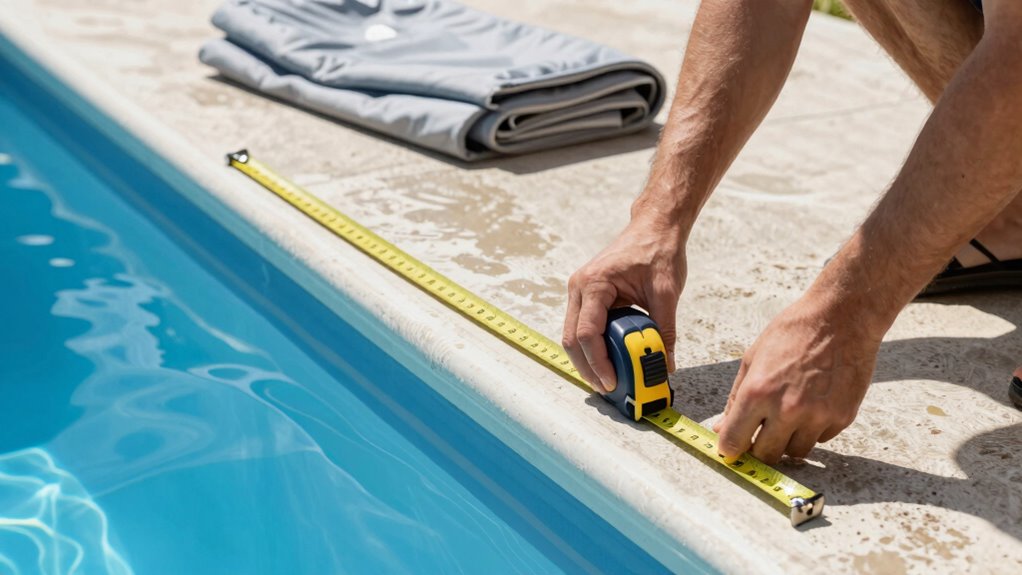
To guarantee your pool cover stays secure and looks great, focus on proper installation and adjustment. First, choose the right pool cover materials that suit your climate and usage, ensuring durability and ease of seasonal maintenance. Second, regularly inspect the cover for tears or wear, especially after harsh weather, and repair any damage promptly. Third, secure the cover tightly using the provided anchors, straps, or fasteners, adjusting them as needed for a snug fit. Proper installation prevents debris buildup and keeps your cover looking neat. Remember, well-maintained pool covers not only enhance appearance but also extend their lifespan, making seasonal maintenance simpler and more effective. These tips help your cover perform reliably and maintain a polished, attractive look year-round.
Frequently Asked Questions
How Often Should I Re-Measure My Pool Before Buying a Cover?
You should re-measure your pool before buying a cover at least once every season, especially after seasonal adjustments like winterizing or opening up for summer. Use reliable measurement tools to guarantee accuracy since your pool’s size can change slightly due to water level fluctuations or settling. Regular re-measurements help you get the perfect fit, preventing issues like slipping or gaps that could cause damage or debris accumulation.
Can I Measure My Pool During the Off-Season?
Ever wondered if you can measure your pool during the off-season? Absolutely! Seasonal adjustments and using proper measurement tools make this easy. Off-season measurements help ensure your cover fits perfectly when the season returns. Just make sure you keep your tools handy and account for any changes in water level or pool shape. Accurate measurements now save you hassle later, so don’t wait—measure when it’s convenient for you.
What Are the Signs of an Ill-Fitting Pool Cover?
If your pool cover shows tears, gaps, or sagging, it’s a sign of an ill-fitting cover. You might notice pool debris accumulating or water pooling on top, creating safety hazards. Damaged or poorly fitting covers can also lead to pool cover damage over time. Regularly inspect for these issues to make certain your cover fits correctly, keeps debris out, and maintains safety, preventing costly repairs and potential accidents.
Is It Necessary to Measure for a Custom Cover?
Yes, you should measure for a custom pool cover to guarantee a perfect fit. Accurate measurements help you choose the right pool cover materials and avoid gaps or slippage. Use reliable measurement tools like a tape measure and a level to get precise dimensions. This way, you get a snug, secure cover that protects your pool effectively, saving you time and money on adjustments or replacements later.
How Do Measurements Differ for Above-Ground Versus In-Ground Pools?
When measuring for pool safety covers, you’ll find that above-ground pools typically need measurements of the pool’s top rim, including any extensions, while in-ground pools require measurements of the entire perimeter and depth. Use appropriate cover materials for durability and safety. Accurate measurements guarantee a secure fit, preventing accidents or debris entry. Proper fit and quality cover materials are essential for maintaining pool safety and protecting your pool year-round.
Conclusion
Remember, measuring your pool isn’t unlike crafting a finely tailored suit—you need precision to make certain a perfect fit. Double-check your numbers like a skilled tailor inspecting stitches, and don’t rush the process. With careful measurements, your pool cover will fit snugly and look sharp, much like a masterpiece by Da Vinci. When you take your time, you’ll enjoy a secure, stylish cover that keeps your pool pristine all season long.