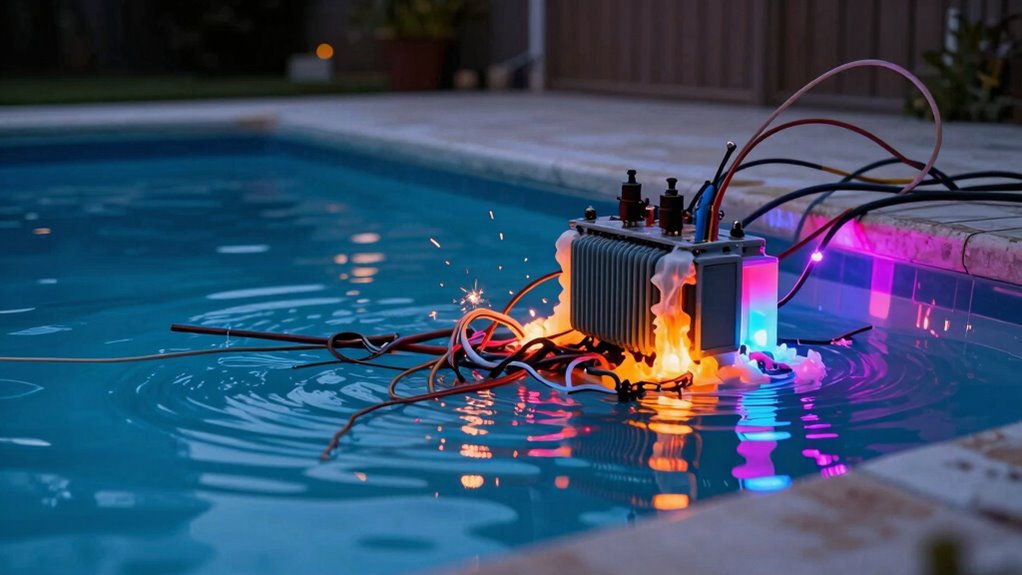

Using the wrong voltage is a common cause of transformer failure and damage to your LED pool lights. Overvoltage can overload transformers, cause overheating, and lead to blown fuses or lights burning out. Conversely, undervoltage results in dim lights and flickering. To prevent this, you must match your power supply and transformer to your lights’ specified voltage and check connections carefully. Continue to explore how proper voltage handling can save you money and headaches.
Key Takeaways
- Using voltage higher than the manufacturer’s specified range overloads and damages the transformer.
- Incorrect voltage selection causes overheating, leading to transformer burnout and potential fire hazards.
- Failing to verify supply voltage with a multimeter before installation can result in voltage mismatches.
- Reversing hot and neutral wires or improper wiring can lead to voltage spikes damaging the transformer.
- Skipping proper circuit protection or grounding increases the risk of voltage surges that blow the transformer.

DEWENWILS 300W Pool Light Transformer, Metal
- Voltage Conversion: Converts 120V AC to 12V/13V/14V AC
- Easy Installation: Includes knockouts and separate compartments
- Heat Dissipation: Elevated with two mounting holders
As an affiliate, we earn on qualifying purchases.
As an affiliate, we earn on qualifying purchases.
Why Proper Voltage Is Crucial for Your LED Pool Lights
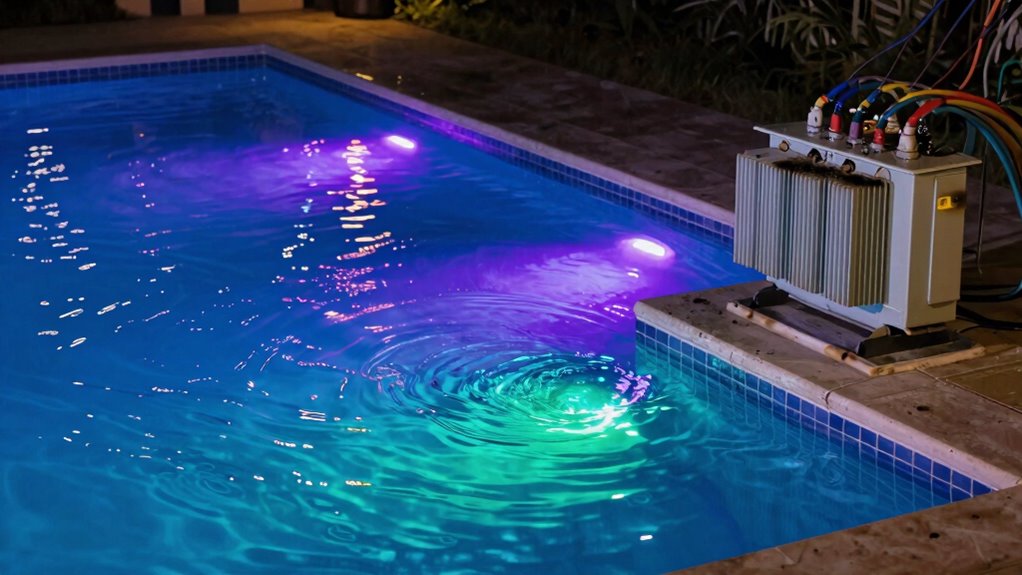
Ensuring your LED pool lights receive the correct voltage is vital for their ideal performance and longevity. Proper voltage regulation guarantees the lights operate within their designed electrical parameters, preventing flickering or dimming issues. When voltage is too high or unstable, it stresses the internal components, leading to potential failure. Circuit protection devices, like fuses and circuit breakers, are essential in safeguarding your lights from voltage spikes or surges. They act as barriers, stopping excess current that could damage delicate LED circuits. Maintaining correct voltage levels not only prolongs the life of your pool lights but also guarantees safe operation. Regularly checking your wiring and protection devices helps keep your LED pool lights functioning at their best, avoiding costly repairs or replacements down the line. Proper wiring and protection are key elements in ensuring safe and reliable operation of your lighting system. Additionally, understanding the importance of voltage regulation can help prevent common electrical issues and extend the lifespan of your LED lighting setup. Proper testing with a multimeter can help detect voltage fluctuations before they cause damage. Incorporating Circuit protection devices tailored for your specific setup further enhances safety and performance. Being aware of electrical standards ensures compliance and optimal safety for your entire system.
How Using the Wrong Voltage Can Damage Your Pool Lights and Transformer
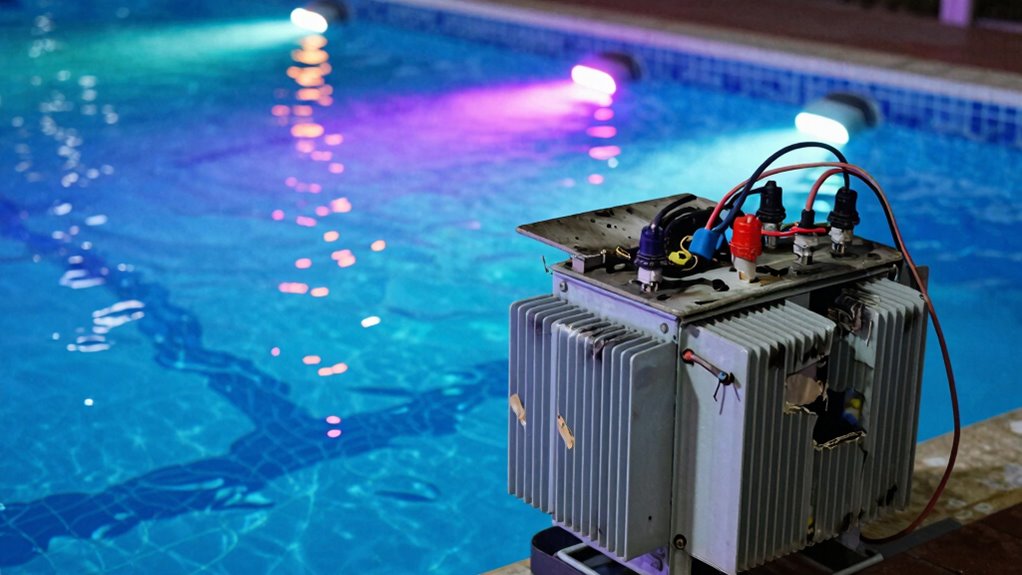
Using the wrong voltage for your pool lights and transformer can cause immediate and lasting damage. If voltage compatibility isn’t maintained, your transformer can overload, risking burnout or failure. Applying too high a voltage can cause components to overheat and short-circuit, while too low may prevent the lights from functioning properly. Proper voltage regulation is essential to ensure safe and reliable operation of your lighting system. Consider these risks: 1. Transformer overload due to excess voltage, leading to overheating or failure. 2. Damage to LED lights from voltage spikes, reducing lifespan. 3. Reduced efficiency or flickering caused by insufficient voltage. 4. Potential safety hazards, including electrical shorts or fires. Always verify your pool lights and transformer are matched correctly to prevent costly repairs and extend their lifespan. Proper voltage management is critical for safety to avoid these damaging issues, and understanding voltage compatibility can help prevent costly mistakes. Ensuring correct wiring is also vital to maintain system integrity and safety, especially when dealing with electrical loads and their proper distribution.
How to Choose the Correct Voltage for Your LED Pool Lights
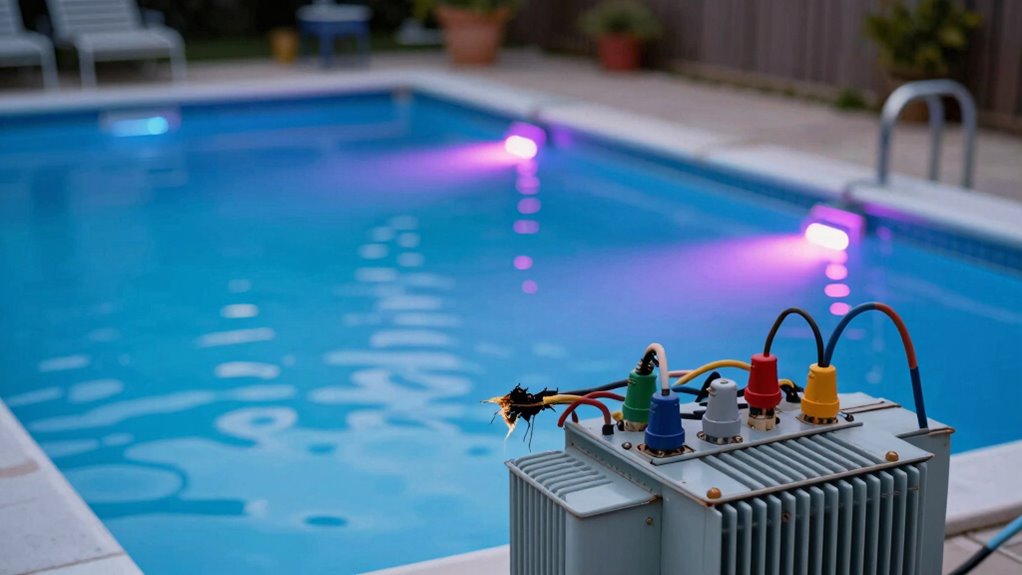
To guarantee your LED pool lights work safely and efficiently, you need to match their voltage requirements precisely. Understanding the power ratings helps you select a compatible transformer and avoid issues. Getting these details right guarantees reliable lighting and prevents damage. Additionally, verifying the voltage specifications ensures compatibility with your electrical system and enhances the longevity of your lights. Considering Free Floating landscape features can also influence your voltage setup, as different installations may have unique electrical needs. Being aware of transformer capacity is essential to prevent overloads and ensure smooth operation. Moreover, paying attention to installation environment can significantly impact the appropriate voltage and equipment choice, helping to sustain optimal performance over time. Consulting electrical codes can further ensure safety standards are met during installation and maintenance.
Match Voltage Requirements
Choosing the right voltage for your LED pool lights is essential to guarantee safe operation and ideal performance. Confirming voltage compatibility prevents transformer overloads and damage. To match your lights’ voltage requirements effectively, consider these steps:
- Verify the manufacturer’s specified voltage range for your LED pool lights.
- Select a transformer that matches this voltage range precisely.
- Avoid exceeding the recommended voltage to prevent overload and potential failure.
- Use a multimeter to confirm your power supply’s voltage before installation.
- Be aware that electric dirt bikes and other electric vehicles require proper voltage matching to ensure optimal performance and safety. Ensuring proper electrical compatibility is crucial for your entire system’s longevity. Additionally, understanding the voltage ratings of various electrical devices can help prevent inadvertent damage and enhance system reliability. Recognizing the importance of smart technology in modern electrical systems can further optimize your setup and prevent costly errors. Moreover, staying informed about voltage fluctuations can help you maintain consistent performance and protect your investment.
Matching voltage requirements helps avoid transformer overloads and extends your lighting system’s lifespan. Always double-check compatibility before connecting your pool lights to ensure safe, reliable operation. Proper voltage matching is critical to prevent costly damage and maintain optimal brightness.
Understand Power Ratings
Understanding the power ratings of your LED pool lights is essential for selecting the appropriate voltage. Power ratings indicate how much energy the lights consume and help you match them with your system’s voltage standards. Check the manufacturer’s specifications to find the wattage and recommended voltage. Using lights with incompatible power ratings can cause electrical issues or damage your transformer. Always ensure the total wattage of your lights stays within the transformer’s capacity. If you’re adding multiple fixtures, sum their power ratings to avoid overloads. Properly understanding these ratings guarantees your LED pool lights operate safely and efficiently, preventing costly mistakes like blowing transformers or shortening the lifespan of your lights. Correctly matching power ratings and voltage standards is key. power ratings are a crucial factor in ensuring the longevity and safety of your LED pool lighting system. Recognizing electrical compatibility helps prevent system failures and extends the lifespan of your components. Additionally, understanding warranty considerations may influence your choice of fixtures to avoid voiding manufacturer guarantees. Being aware of installation requirements can also ensure that your system meets safety codes and functions optimally.
Installing the Right Voltage: A Step-by-Step Guide
To guarantee your LED pool lights work safely and effectively, you need to choose the right voltage and install them correctly. This involves selecting the appropriate voltage level and following proper installation techniques. Let’s walk through each step to help you get it right.
Choosing Appropriate Voltage
Selecting the right voltage for your LED pool lights is crucial to guarantee safe operation and peak performance. Proper voltage safety ensures your lights won’t short out or cause electrical hazards. To choose the correct voltage, consider these steps:
- Verify the voltage requirements specified by the manufacturer.
- Ensure your power supply matches the specified voltage to prevent overloads.
- Check transformer compatibility to avoid damaging your lighting system.
- Use a multimeter to confirm voltage levels before installation.
Matching the voltage and transformer compatibility minimizes risks and extends the lifespan of your LED pool lights. Always follow manufacturer guidelines and avoid improvising with incorrect voltages, as this can lead to blown transformers or electrical failures. Proper voltage selection is essential for safe, reliable, and efficient lighting.
Proper Installation Techniques
Proper installation of your LED pool lights is essential to guarantee safe operation and long-lasting performance. Start by making certain your power supply matches the recommended voltage, as voltage fluctuations can cause damage over time. Use a dedicated circuit with appropriate grounding to prevent issues caused by power surges. Install a high-quality GFCI breaker to protect against electrical faults. When wiring, follow the manufacturer’s instructions carefully, securing all connections tightly to avoid loose contacts that could lead to shorts. Avoid running wires near sources of voltage fluctuations, like large electrical appliances. Regularly inspect the connections for corrosion or damage, especially after storms or power surges. Proper installation minimizes risks, prolongs the lifespan of your lights, and ensures safe, reliable operation year-round.
Recognizing the Signs of Voltage Problems in Your Pool Lighting
Voltage issues can cause your pool lights to flicker, dim, or fail altogether, signaling a potential electrical problem. If your LED pool lights aren’t performing correctly, watch for these signs:
- Unsteady flickering, especially during heavy solar energy use or after pool cleaning.
- Sudden dimming or inconsistent brightness, indicating voltage drops.
- Frequent tripping of circuit breakers or blown fuses.
- Overheating of transformers or wiring, risking damage to your lighting system.
Recognizing these signs early helps prevent costly repairs. Keep an eye on your pool lighting performance, especially if you notice irregularities after solar energy peaks or routine pool cleaning. Addressing voltage problems promptly can extend the lifespan of your LED lights and ensure safe, effective illumination.
Common Wiring Mistakes That Damage Pool Lights
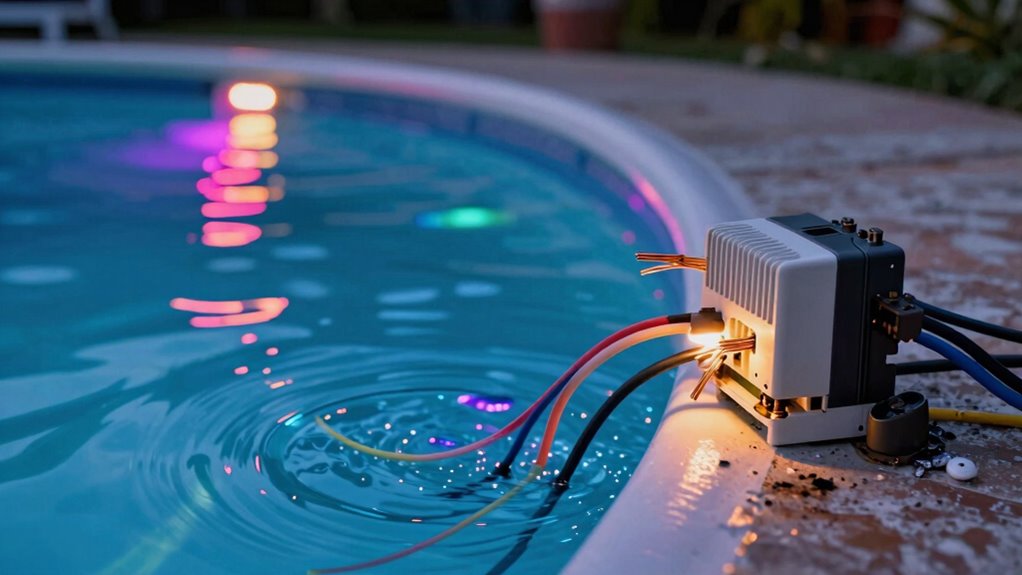
Incorrect wiring is a common culprit behind damaged pool lights. Grounding issues often cause electrical shorts or shocks, leading to early failure. Make sure your pool light is properly grounded to prevent stray currents that can harm the fixture. Wiring polarity mistakes are also a frequent problem; reversing the hot and neutral wires can cause the light to malfunction or blow out prematurely. Always verify that the wiring matches the manufacturer’s instructions, with correct polarity and secure grounding connections. Poor wiring practices increase not only the risk of damage but also pose safety hazards. Double-check all connections before powering the system. Proper wiring ensures your LED pool lights operate efficiently and last longer, avoiding unnecessary repairs and costly replacements.
Maintenance Tips to Prevent Voltage Issues and Protect Your Pool Lights
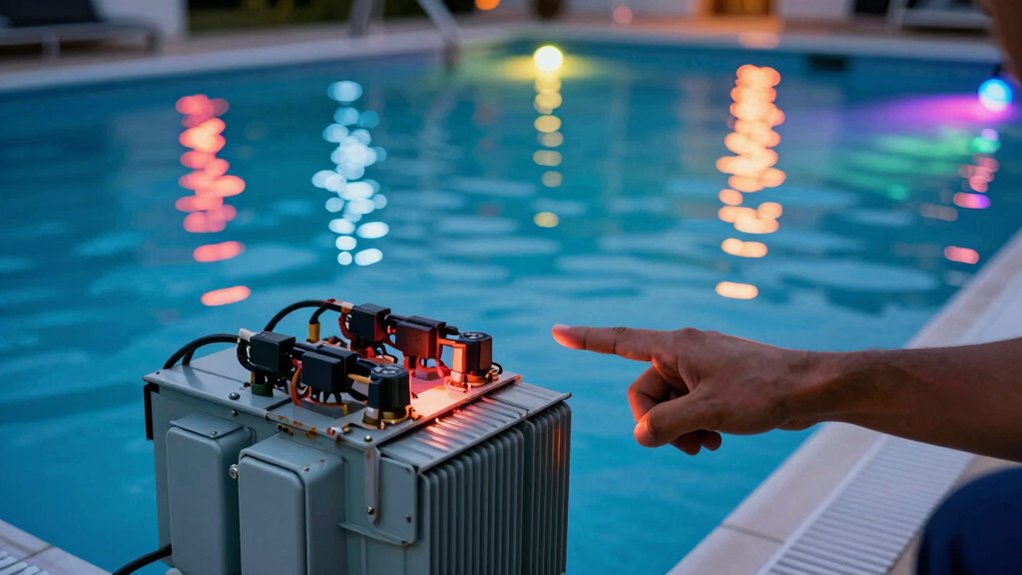
Regular maintenance is essential to prevent voltage issues that can damage your pool lights. Proper voltage regulation guarantees your LED lights receive consistent power, reducing the risk of blowouts. To protect your system, consider these tips:
- Inspect wiring connections regularly to ensure they’re secure and free of corrosion.
- Install circuit protection devices like GFCIs and surge protectors to guard against voltage spikes.
- Test voltage levels periodically with a multimeter, making sure they stay within recommended ranges.
- Keep transformers clean and dry, preventing moisture buildup that can cause fluctuating voltage.
What To Do If Your Pool Lights or Transformer Blow Due to Voltage Problems
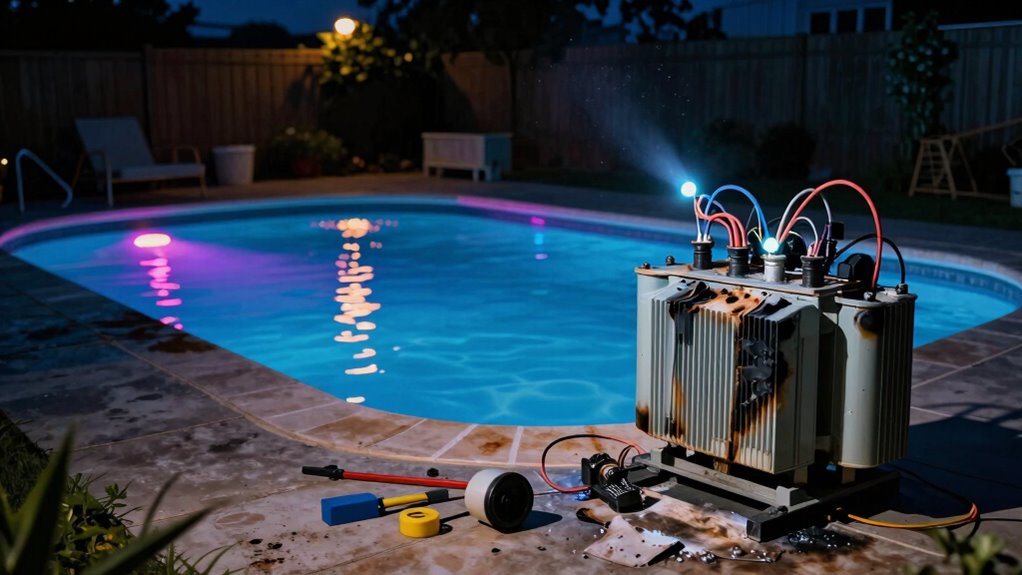
When your pool lights or transformer blow due to voltage problems, it’s a clear sign that something in your electrical setup needs attention. First, turn off the power to prevent further damage. Check for signs of transformer overload or poor voltage regulation, which can cause the lights to fail. To avoid future issues, install a proper voltage regulation device or a surge protector designed for pool lighting systems. Consider upgrading your transformer if it’s undersized or faulty. Always consult a licensed electrician to diagnose the problem accurately and replace any damaged components. Addressing voltage regulation issues promptly helps prevent repeated failures and protects your investment. Regular maintenance and proper electrical setup are essential for ensuring your LED pool lights operate safely and reliably.
Frequently Asked Questions
Can I Use a Regular Household Voltage for My Pool LED Lights?
No, you shouldn’t use regular household voltage for your pool LED lights. These lights require specific voltage compatibility, usually low voltage like 12V or 24V, to guarantee safety and proper functioning. Using the wrong voltage can damage your lights and blow the transformer. Always check the transformer requirements and match them to your LED pool lights’ specifications. This prevents electrical issues and keeps your pool safe.
What Safety Precautions Should I Take When Handling Pool Electrical Systems?
Did you know that electrical accidents in pools account for nearly 75% of pool-related injuries? When handling pool electrical systems, always guarantee proper electrical grounding to prevent shocks. Before working, perform circuit testing to confirm power is off, and use a ground-fault circuit interrupter (GFCI) for added safety. Wear insulated gloves and avoid water contact, keeping safety protocols a priority to protect yourself effectively.
How Often Should I Inspect My Pool Lighting for Voltage Issues?
You should perform voltage checks on your pool lighting at least once every three to six months. Regular inspection frequency helps catch potential voltage issues early, preventing damage to your transformer and ensuring safety. During each inspection, look for signs of flickering, dimming, or unusual buzzing. Always turn off power before inspecting, and consider consulting a professional if you notice any irregularities or if you’re unsure about the readings.
Are There Specific Brands Recommended for Voltage-Compatible Pool Lights?
Think of your pool lights like the legendary Excalibur—powerful but needs the right fit. For brand recommendations, choose reputable brands known for consistent quality and compatibility concerns, like Pentair, Jandy, or Hayward. These manufacturers design their LED pool lights to match standard voltages, reducing the risk of transformer blowouts. Always verify compatibility with your existing system to guarantee safety, longevity, and maximum performance.
What Is the Typical Lifespan of LED Pool Lights With Proper Voltage Management?
With proper voltage regulation, your LED pool lights typically last around 50,000 hours, which translates to about 5 to 7 years of reliable use. To maximize lifespan durability, verify you’re using the correct voltage and maintain regular checks on your wiring. Proper voltage management prevents damage and helps your lights perform at their best over time. You’ll enjoy vibrant, energy-efficient illumination for many seasons when you keep voltage levels in check.
Conclusion
Think of your pool lights as a gentle heartbeat, keeping your backyard alive and inviting. When you match the right voltage, you guarantee this heartbeat stays steady and strong, preventing costly blowouts and repairs. By understanding and respecting the power flowing through your system, you become the guardian of its glow. Keep that rhythm steady, and your pool will shine brightly, a symbol of care and harmony in your outdoor oasis.