
To prevent dead spots, you need proper placement of skimmers and returns so water flows evenly throughout your pool. Position skimmers near debris-prone zones like corners, and space them around the pool perimeter for maximum coverage. Adjust the return jets to push water toward the skimmers, ensuring continuous movement. Correct flow patterns keep debris from settling and maintain clarity. Keep your system optimized to turn stagnant areas into a smoothly circulating haven—learn more to perfect your setup.
Key Takeaways
- Proper placement of skimmers near debris-prone zones and evenly around the pool ensures effective debris removal and circulation.
- Positioning returns opposite skimmers promotes balanced water flow, preventing stagnation and dead spots.
- Adjusting return jets to direct water flow toward the center or opposite skimmers enhances circulation.
- Regular maintenance and flow rate checks optimize system performance and prevent stagnant areas.
- Coordinated operation of skimmers and returns creates steady, even circulation, maintaining water clarity and health.

Swimables Pool Skimmer Basket for Inground Pool Compatible with Pentair U-3 Skimmer Basket and Hayward SP1070 Pool Basket | Built-in Brass Weight | 316 Stainless Steel Handle & Convenient Rubber Grip
Heavy Duty: This weighted pool filter basket is designed to be very rugged even in extreme weather conditions….
As an affiliate, we earn on qualifying purchases.
As an affiliate, we earn on qualifying purchases.
Why Proper Pool Circulation Is Essential for Clean Water
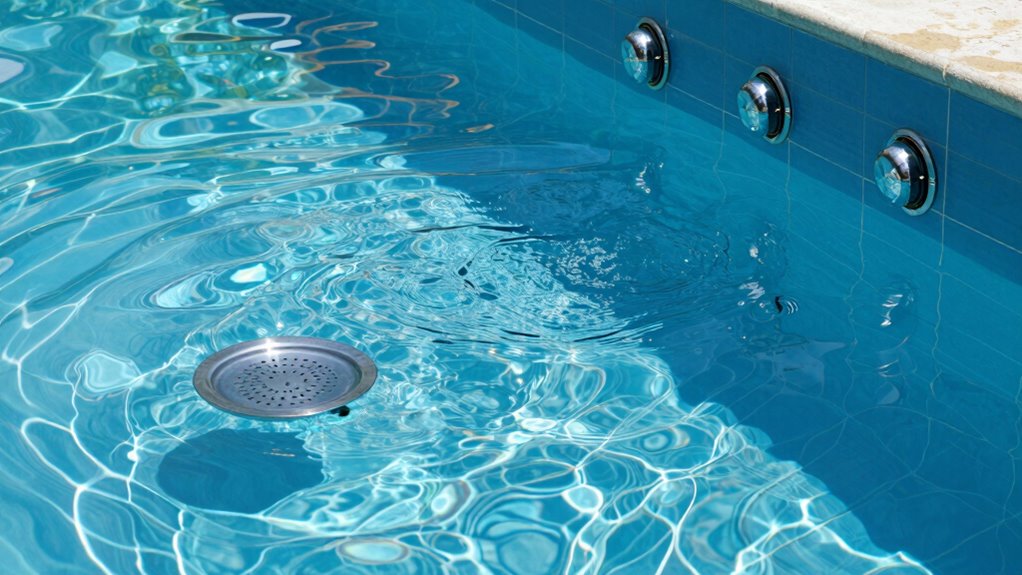
Proper pool circulation is essential because it keeps the water moving continuously, preventing stagnation and buildup of dirt. A well-functioning filtration system relies on consistent water flow to effectively remove debris and contaminants, ensuring clear, healthy water. When circulation is inadequate, dirt can settle, and algae or bacteria may thrive, making your pool unsafe and unsightly. Maintaining proper circulation also helps keep your chemical balance stable; chemicals like chlorine distribute evenly, working more efficiently to sanitize the water. Without proper movement, chemicals may concentrate in certain areas, leading to uneven disinfection and potential algae growth. Additionally, smart circulation systems can optimize flow patterns and improve overall water quality. Properly designed flow patterns ensure that all parts of the pool receive adequate circulation, preventing dead spots and promoting even cleaning. Implementing proper return placement is also vital to achieve uniform water movement and prevent areas of poor circulation. Ensuring that your pool has a reliable filtration system maximizes the effectiveness of circulation and maintains water clarity. Incorporating automated circulation controls can further enhance efficiency and ease of use. Therefore, a good circulation setup, including reliable filtration and strategically placed returns, is crucial for clean, balanced, and safe pool water.

The Circulator – Powerful, Automatic 360 Rotating Pool Return Jet for All types of swimming pools for Extreme Circulation
Helps to virtually eliminate Cloudy Pool Water with powerful circulation throughout your entire pool
As an affiliate, we earn on qualifying purchases.
As an affiliate, we earn on qualifying purchases.
How Pool Skimmers and Returns Work Together to Circulate Water
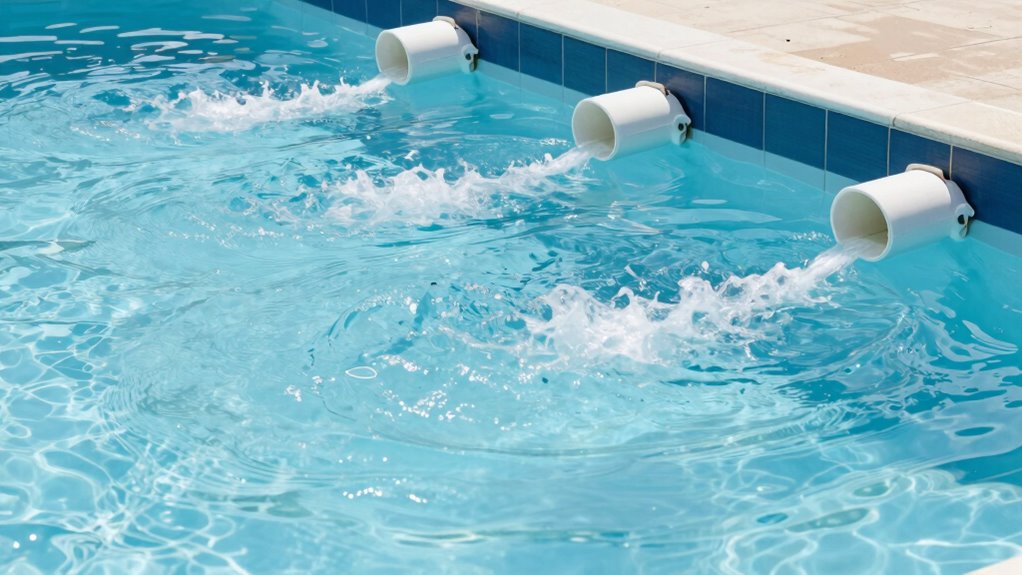
Your pool’s skimmers remove debris from the surface, while the returns push water back into the pool effectively. When these systems work together, they create a balanced flow that keeps the water moving smoothly. Proper coordination helps prevent dead spots and guarantees your pool stays clean and clear. Incorporating energy-efficient technology into your circulation setup further enhances sustainability and reduces operational costs. Additionally, understanding the contrast ratio and how it impacts water clarity can help optimize your pool’s visual appeal and overall quality. Recognizing the importance of free floating elements can also improve circulation efficiency and maintain healthy water conditions, especially when considering the wiring basics that ensure reliable operation of your circulation system. A well-designed setup can also minimize dead spots by ensuring even flow across all areas of the pool.
Skimmers Remove Surface Debris
Skimmers play a vital role in keeping your pool clean by removing surface debris before it sinks. By catching leaves, bugs, and other floating particles, skimmers prevent buildup that can promote algae growth. When debris remains on the surface, it can disrupt chemical balancing, making it harder to maintain proper pH and sanitizer levels. Regular skimming helps you keep the water clear and reduces the need for harsh chemicals. This process not only improves water quality but also supports algae prevention, saving you time and effort in maintenance. Ensuring your skimmer is functioning correctly maximizes its debris removal efficiency, helping to keep your pool inviting, balanced, and healthy for swimming. Proper maintenance of pool equipment is essential to ensure all circulation components work together effectively. Additionally, understanding Gold IRA markets can offer insights into safeguarding your investments during economic fluctuations. Maintaining proper circulation setup is also crucial for preventing dead spots where water stagnation can occur, leading to potential problems such as algae growth or water quality issues.
Returns Circulate Water Efficiently
Effective circulation of pool water depends on how well the skimmers and returns work together. Returns are designed to distribute clean, filtered water back into the pool, promoting consistent flow. When the return flow is properly positioned and adjusted, it helps push water throughout the entire pool, preventing stagnation. High skimmer efficiency ensures debris is removed at the surface, freeing up the filter to handle cleaner water. This synergy between skimmers and returns creates a steady circulation pattern, reducing dead spots and maintaining water clarity. Properly balanced return flow encourages even distribution of chemicals and heat, making your pool safer and more inviting. Incorporating proper water flow management techniques enhances overall circulation and helps prevent dead spots. Additionally, adjusting the return nozzle direction can significantly improve water movement throughout the pool. By optimizing both skimmer efficiency and return flow, you ensure your pool stays clean, healthy, and well-circulated.
Coordinated Flow Prevents Dead Spots
When pool water isn’t circulated properly, dead spots can form, leading to stagnation and uneven cleanliness. Coordinated flow between skimmers and returns ensures water moves smoothly throughout your pool. Proper skimmer maintenance keeps debris out of the circulation system, preventing blockages. Adjusting the return valve directs water flow toward areas prone to stagnation, promoting even circulation.
| Skimmer Maintenance | Return Valve Adjustment |
|---|---|
| Keeps surface debris clear | Ensures balanced flow |
| Prevents clogs | Avoids dead spots |
| Improves water quality | Enhances circulation efficiency |
| Requires periodic checks | Fine-tunes water movement |
Together, these adjustments keep your pool water fresh, preventing dead spots and promoting ideal circulation.
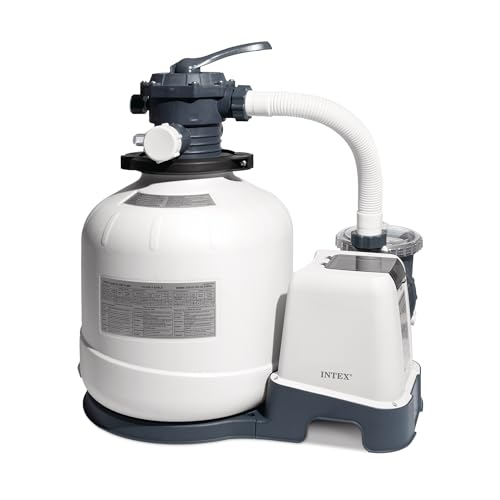
INTEX 3,000 GPH Krystal Clear Sand Filter Pump for Above Ground Pools, Swimming Pool Pump with Automatic Timer – Improved Circulation, Filtration, & Clarity
✔ EXCELLENT FILTRATION – SX3000 provides excellent water filtration with the 6-function valve that allows you to filter,…
As an affiliate, we earn on qualifying purchases.
As an affiliate, we earn on qualifying purchases.
Common Mistakes That Cause Dead Spots in Your Pool
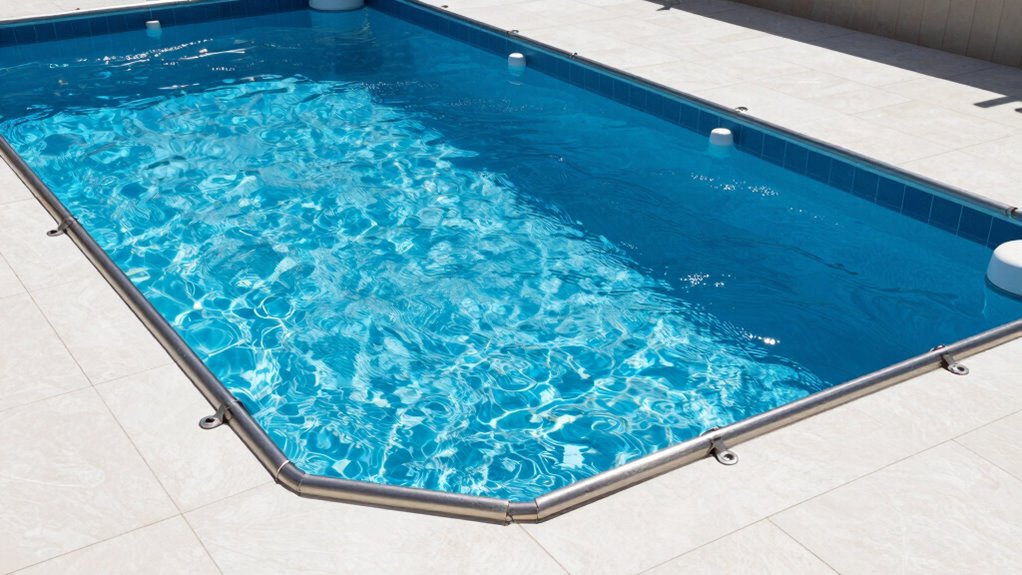
One common mistake that creates dead spots is improper skimmer placement, which prevents effective water circulation. Using an undersized pump also hampers flow, leading to stagnant areas in your pool. Additionally, poor return direction causes water to bypass certain zones, making dead spots worse. Incorporating advanced nanotechnology in pool filtration systems can help optimize circulation and eliminate these problematic areas. Proper skimmer placement and ensuring the pump is adequately sized are essential for maintaining consistent water flow throughout your pool. To enhance overall circulation, integrating smart automation can help regulate flow rates and optimize pump operation based on real-time conditions. Ensuring that all components work together harmoniously is crucial for preventing dead spots and maintaining clear, healthy water. Regular system maintenance is also vital in preventing blockages and ensuring optimal performance of circulation components.
Improper Skimmer Placement
Improper skimmer placement often leads to dead spots in your pool, where water circulation is limited and debris tends to accumulate. When your skimmer isn’t positioned correctly, it can’t effectively draw in surface debris or promote proper flow, which hampers overall circulation. Poor placement can also disrupt aquarium maintenance and upset the pool chemical balance, allowing algae and bacteria to thrive in stagnant areas. To prevent this, position your skimmer near high-traffic zones and away from corners or obstructions. Proper placement ensures even water movement, helping maintain clarity and cleanliness. Additionally, understanding the circulation setup can help optimize water flow and prevent future dead zones. Ensuring your skimmer works in harmony with other environmental considerations promotes a healthier pool environment, reducing the likelihood of stagnation. Being aware of water flow dynamics can further enhance your pool’s circulation efficiency and overall health.
Insufficient Pump Power
Could your pool’s pump be undersized for your system? If your flow rate isn’t strong enough, circulation suffers, creating dead spots. An underpowered pool pump may not move water efficiently, causing stagnation and poor filtration. To prevent this, make certain your pump matches your pool’s size and plumbing. Consider these points:
- Inadequate flow rate reduces water turnover, allowing debris to settle.
- Low pump horsepower limits circulation, resulting in dead zones.
- Oversized pump can cause turbulence but still lack proper flow if mismatched.
- Proper pump sizing is essential; an adequate flow rate ensures your system operates efficiently and prevents dead spots. Regularly check your pump’s flow rate to keep your pool clean and evenly circulated.
Poor Return Direction
Poor return direction is a common mistake that leads to dead spots in your pool. When returns aren’t aimed correctly, water circulation becomes uneven, causing stagnation and poor pool chemistry. This can result in algae growth, cloudy water, and ineffective sanitizer distribution. To avoid this, ensure your returns direct water flow toward the opposite side of skimmers, promoting better circulation. Adjusting the angle of the returns helps prevent dead zones where debris and contaminants settle. Proper circulation also supports maintaining safe water chemistry levels, reducing the risk of bacteria buildup. Always follow safety precautions when adjusting pool equipment, and periodically check the direction of your returns to optimize flow. Correct return placement is essential for a healthy, balanced, and safe swimming environment.
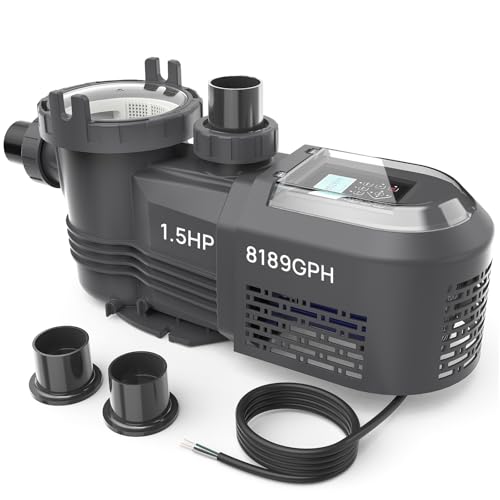
Aquastrong Variable Speed Pool Pump In/Above Pool Pump Energy Efficient High Flow Powerful Self Primming Swimming Pool Pumps with Filter Basket,Dark Black
Energy-Saving Design: Utilizing variable speed technology, our pump reduces energy consumption by up to 80% compared to traditional…
As an affiliate, we earn on qualifying purchases.
As an affiliate, we earn on qualifying purchases.
Best Practices for Placing Skimmers for Maximum Coverage

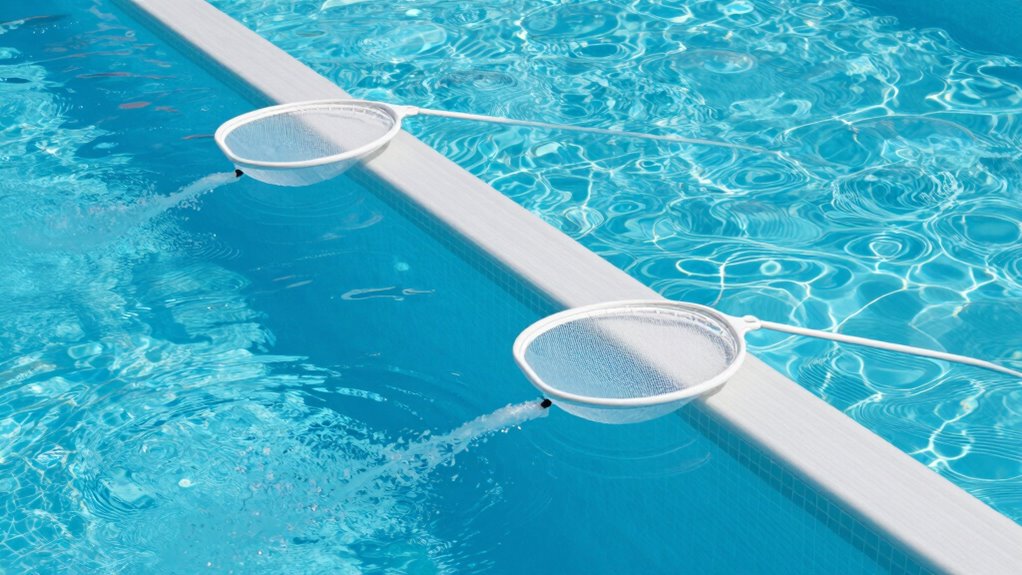
To guarantee your pool stays clean and clear, placing skimmers strategically is essential. Proper skimmer placement ensures maximum coverage optimization, preventing debris buildup in dead spots. Position your skimmers near high-traffic areas where debris tends to gather, such as corners or the surface’s surface edges. Aim for even distribution around the pool’s perimeter to cover all zones effectively. Consider the pool’s shape and flow patterns when deciding on placement. For irregularly shaped pools, use multiple skimmers to avoid dead zones. Also, avoid placing skimmers directly opposite each other, which can cause short-circuiting of water flow. Remember, well-placed skimmers work together with returns to create a balanced circulation, keeping your pool cleaner longer.
- Near high debris zones
- Evenly spaced around perimeter
- Avoid direct opposition of skimmers
Positioning and Adjusting Pool Returns for Even Water Flow
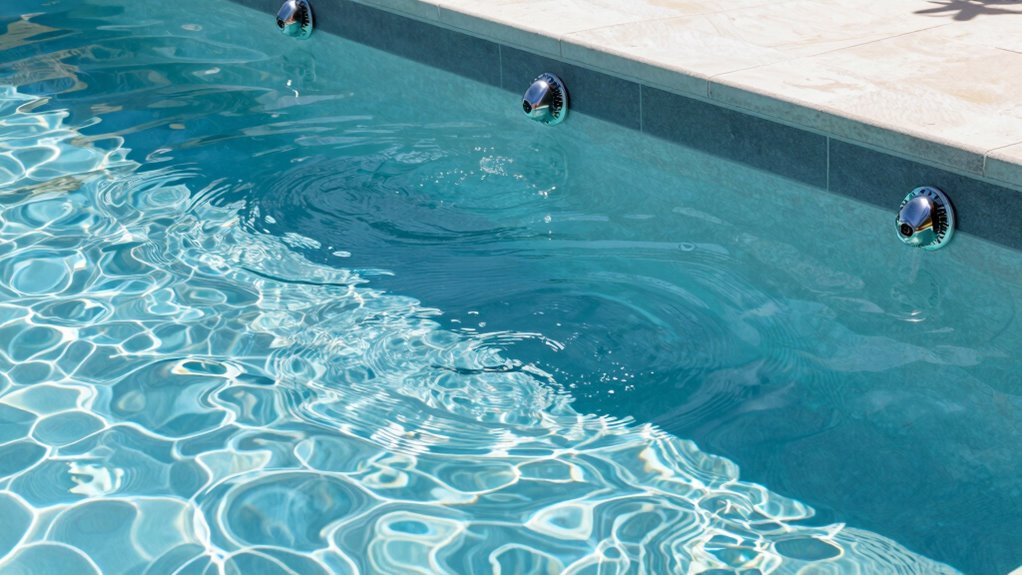
Properly positioning and adjusting your pool returns is key to achieving even water circulation. Correct return placement influences flow patterns, preventing dead spots and ensuring ideal filtration. Place returns opposite skimmers to promote circulation across the entire pool. Adjust the return jets to create a gentle, sweeping flow that moves debris toward skimmers. Use the table below to identify ideal return directions based on pool shape and size:
| Pool Shape | Return Placement | Flow Pattern Effect |
|---|---|---|
| Rectangular | Opposite skimmers | Circular, even circulation |
| Kidney | Corners outward | Prevents stagnation in curves |
| Freeform | Strategic points | Promotes thorough coverage |
| Above ground | Mid-wall outward | Circulates water effectively |
How to Adjust Skimmer and Return Settings for Better Circulation

Adjusting your skimmer and return settings can considerably improve water circulation in your pool. Proper skimmer maintenance ensures it functions effectively, removing surface debris and aiding flow. To maximize return flow, adjust the eyeballs or fittings to direct water evenly across the pool, preventing dead spots. Here are key ideas to improve circulation:
Optimize pool circulation by maintaining skimmers and adjusting return jets for even water flow.
- Clean and maintain skimmers regularly for ideal water removal
- Adjust return jets to promote even flow throughout the pool
- Balance the pool pump’s flow rate for efficient circulation
How to Assess If Your Pool Circulates Water Properly
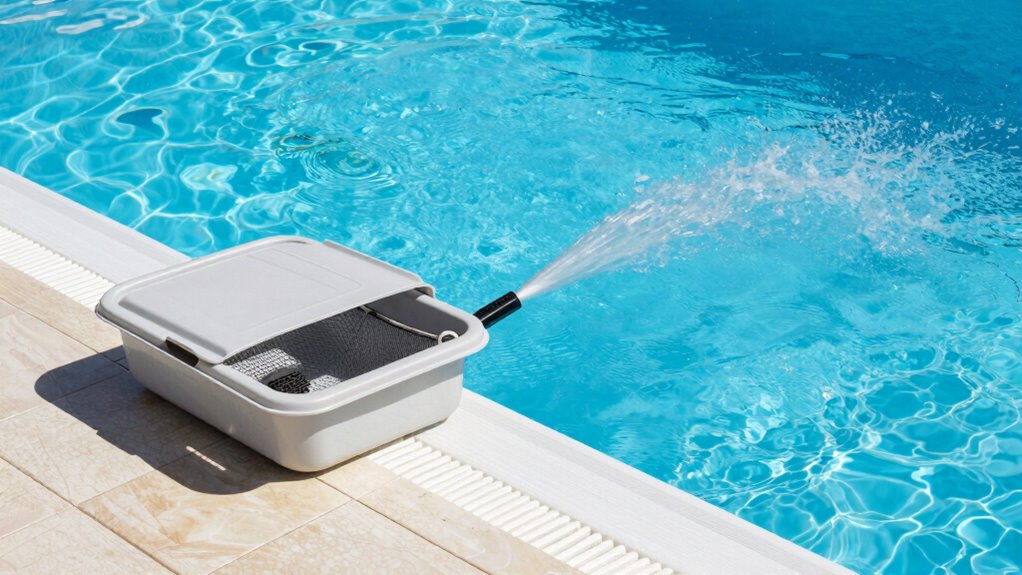
Evaluating whether your pool circulates water properly is essential for maintaining clear, healthy water. Start by inspecting the water surface; if debris accumulates or the water appears stagnant, circulation may be insufficient. Check if the pool’s water chemistry is balanced—pH, chlorine, and alkalinity levels should be within recommended ranges. Observe if your pool cover remains relatively dry after circulation; excess moisture suggests poor flow. Use the table below to assess circulation aspects:
| Aspect | Indicator |
|---|---|
| Water clarity | Clear water indicates good circulation |
| Surface debris | Accumulation suggests dead spots or poor flow |
| Water chemistry | Imbalanced levels point to circulation issues |
| Cover dryness | Wet cover may mean inadequate circulation |
Proper assessment helps ensure your pool maintains healthy water and avoids dead spots.
Troubleshooting Persistent Dead Spots and Circulation Problems
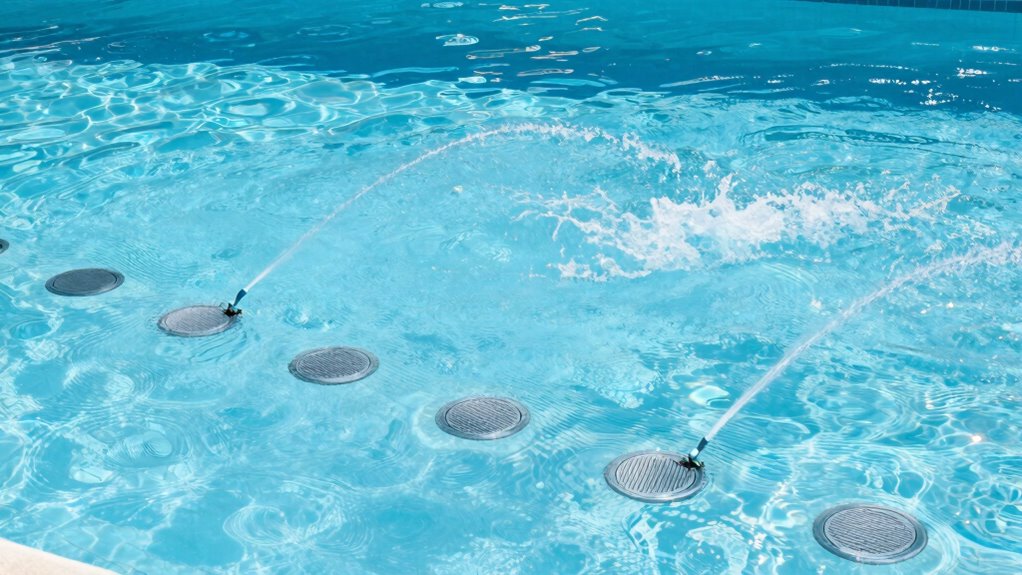
Dead spots in your pool can be stubborn, causing stagnant water and algae buildup despite regular cleaning. To troubleshoot circulation issues, start by checking your pool’s circulation system—make sure skimmers and returns are properly positioned and unobstructed. Inconsistent flow often results from poor pool chemistry or neglecting seasonal maintenance. Address these issues promptly by adjusting pump settings, cleaning filters, and balancing water chemistry. Also, consider adding additional jets or return fittings to improve water movement in problematic areas.
- Verify that all skimmers and returns are functioning correctly
- Ensure seasonal maintenance routines are up-to-date
- Balance pool chemistry to optimize water flow and clarity
Frequently Asked Questions
How Often Should I Clean My Pool Skimmers and Returns?
You should clean your pool skimmers and perform return cleaning at least once a week to keep your circulation system working effectively. Regular skimmer maintenance prevents debris buildup that can clog the skimmer basket, while consistent return cleaning ensures proper water flow. During heavy use or storms, increase the frequency to prevent dead spots and maintain clear, balanced water. Staying on top of these tasks keeps your pool in prime condition.
Can Improper Placement Cause Algae Growth?
Improper skimmer placement can definitely cause algae growth by creating dead spots where circulation is poor. When skimmers aren’t positioned correctly, debris and algae spores settle and thrive, making algae prevention harder. To avoid this, guarantee proper skimmer placement to promote even water flow. Good circulation keeps chemicals mixed, debris moving, and algae at bay, helping your pool stay cleaner and clearer.
What Tools Help Optimize Circulation Adjustments?
Sure, you could use a magic wand, but instead, focus on your tools. Pump adjustments are your secret weapon; tweak the flow to chase away those pesky dead spots. Don’t forget filter maintenance—clogged filters sabotage circulation faster than bad jokes. Use a flow meter, valve wrenches, or even a simple pool skimmer pole to fine-tune your setup. It’s all about keeping that water moving smoothly, no magic required.
How Do I Know if My Pool Has Dead Spots?
You can tell if your pool has dead spots by noticing areas with poor water flow or stagnation. Look for flow disruption, like debris settling in certain spots or uneven water movement. Check your equipment placement—if skimmers and returns aren’t properly positioned, dead spots may form. Regularly observe water clarity and circulation, and consider using a flow meter or visual cues to guarantee even circulation throughout your pool.
Are There Seasonal Factors Affecting Circulation Efficiency?
Think of your pool’s circulation as a dance, and seasonal changes as the rhythm. During colder months, lower temperatures slow water movement, making circulation less efficient. Sunlight exposure heats the water, encouraging flow and preventing stagnation. In summer, increased warmth and sunlight boost circulation, but in winter, you might notice dead spots forming if you don’t adjust your skimmers and returns. Keep an eye on seasonal shifts to maintain ideal flow.
Conclusion
Think of your pool as a lively dance floor, where skimmers and returns are your dance partners moving in perfect harmony. When they work together, water flows smoothly, like a gentle current guiding every swimmer to clean, clear depths. But missteps can create dead spots—still pools of stagnation. By fine-tuning your circulation setup, you guarantee your pool remains vibrant and inviting, a shimmering oasis that pulses with life and clarity.