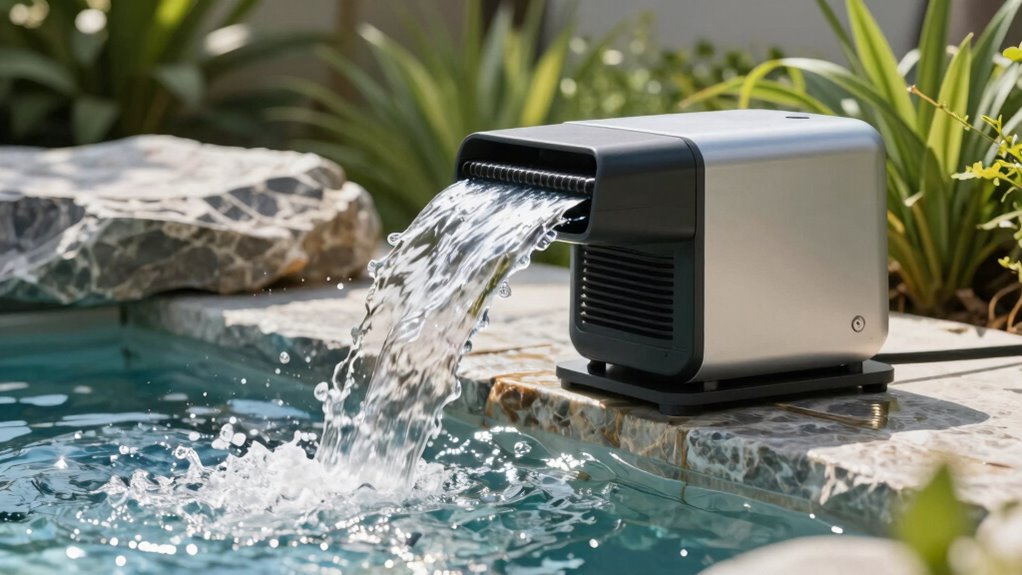

To avoid buying a pump that’s too weak, you need to accurately determine your water feature’s flow rate and total head height. Measure the vertical lift and estimate friction losses to select a pump that provides enough flow without causing splashing or noise. Oversized pumps waste energy, while undersized ones struggle, shortening the pump’s life. To learn how to size your pump correctly and prevent common mistakes, keep exploring these tips.

Get pool and patio gear delivered free — and shop member deals
- Fast, free delivery on millions of items
- Access to Prime Big Deal Days deals on October 6–7
- Prime Video, Amazon Music and more included
Key Takeaways
- Calculate the required flow rate based on your water feature’s volume and desired turnover to avoid undersized pumps.
- Measure total head height, including vertical lift and plumbing losses, to select a pump with adequate head capacity.
- Review pump performance curves to ensure the pump can deliver the necessary flow at your system’s total head.
- Avoid choosing pumps solely by flow rate; consider head height and system resistance for proper sizing.
- Properly match pump size to your water feature to prevent poor circulation, noise, and early equipment wear.
As an affiliate, we earn on qualifying purchases.
Why Choosing the Right Pump Size Matters
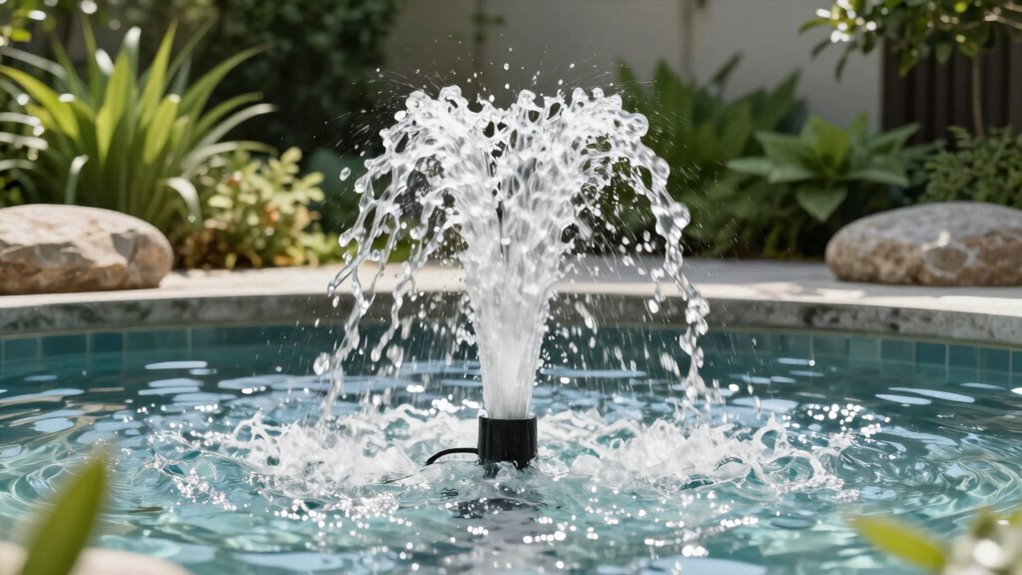
Choosing the right pump size is vital because an undersized pump won’t provide adequate flow, leading to poor water circulation and potential equipment strain. If your pump is too weak, you might notice increased pump noise, as it struggles to keep up, which can be frustrating. Proper installation tips are indispensable to minimize noise and guarantee smooth operation. For example, mounting the pump on a stable, vibration-absorbing surface can reduce noise levels. An appropriately sized pump improves water flow, prevents overheating, and extends equipment lifespan. Remember, a pump that’s too powerful can cause splashing or damage, so selecting the right size balances efficiency and quiet operation. Taking these factors into account will guarantee your water feature runs smoothly and quietly.
How to Calculate the Correct Water Flow Rate
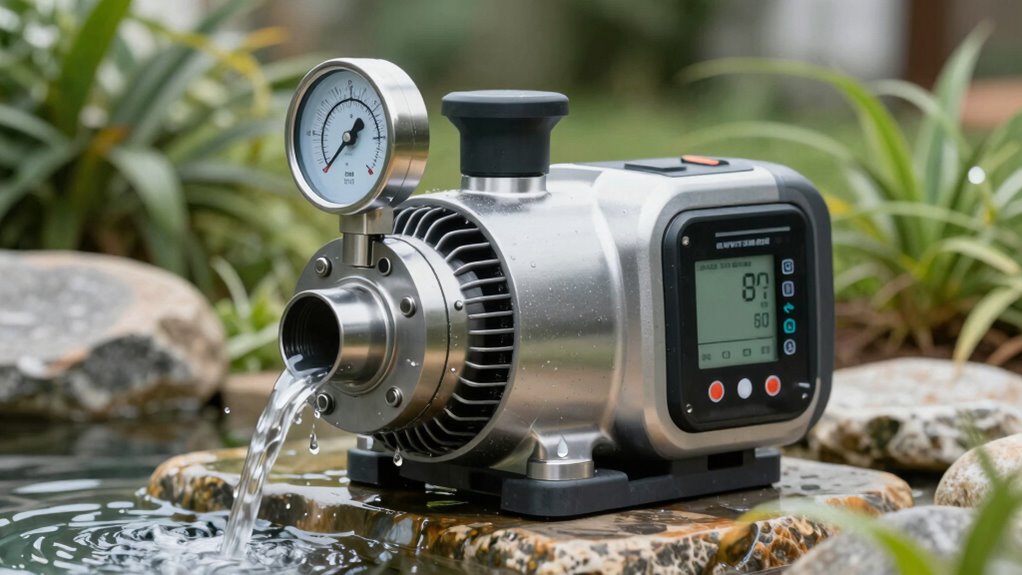
To guarantee your water feature functions smoothly, calculating the correct water flow rate is a key step. Start by determining the volume of your water feature in gallons or liters. Decide how many times you want the water to circulate per hour—typically 1-3 times for most features. This gives you the necessary flow rate in gallons per hour (GPH). Remember, choosing a pump with the right flow rate minimizes pump maintenance issues and ensures longevity. When installing, follow proper installation tips to avoid undersizing or oversizing the pump, which can cause noise, wear, or insufficient flow. Accurate calculations help you select a pump that meets your needs without overworking, ultimately saving you time and money while keeping your water feature looking and functioning its best. Additionally, considering the flow rate requirements ensures optimal performance and prevents potential damage to your system. Incorporating smart pump technology can further optimize efficiency and monitor performance remotely. Using precise calculations and selecting the correct pump size also contributes to energy efficiency, reducing long-term operational costs. Moreover, understanding the impact of flow rate on water quality can help maintain a healthy and clear feature over time. Being aware of system design considerations can also influence your pump choice and overall water feature performance.
What Is Head Height and Why Does It Matter?
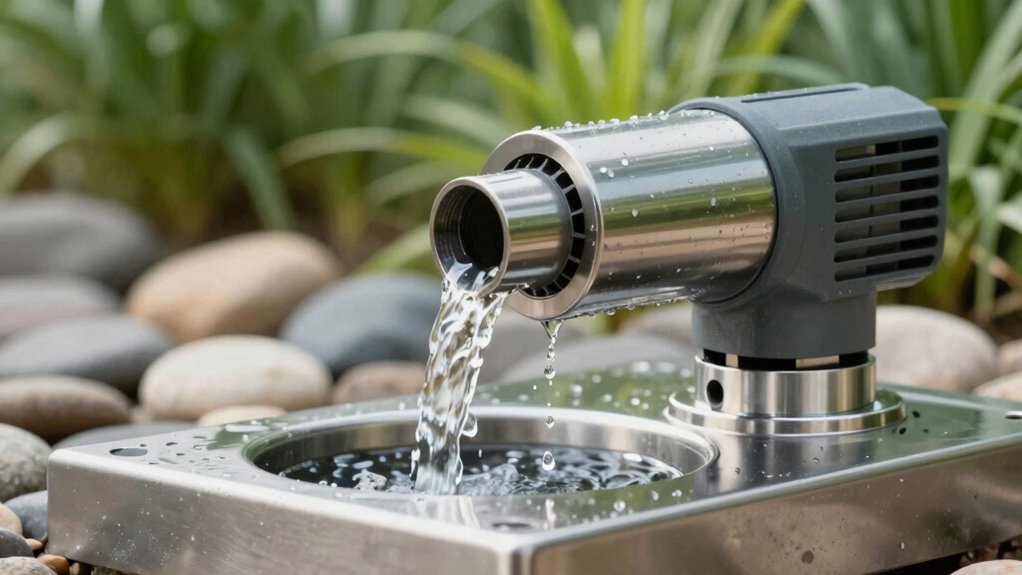
Head height is the vertical distance the pump needs to lift water, and it directly impacts pump performance. Knowing this measurement helps you select the right pump to ensure your water feature functions properly. To determine it, you need to calculate the total height the water must travel, including all fittings and elevation changes. Properly understanding pump capacity ensures you avoid under- or over-sizing your pump, saving you time and money. Additionally, understanding system head allows for more accurate pump selection by considering the total resistance the pump must overcome. Recognizing water flow requirements is essential for matching the pump’s capabilities to your specific setup, ensuring optimal performance. Being aware of art care practices can also extend the lifespan of your water feature by preventing unnecessary strain on the pump. Moreover, using the correct pump specifications tailored to your head height can significantly improve efficiency and longevity.
Definition of Head Height
Understanding head height is essential because it measures the vertical distance the pump must lift water to reach the desired point. It’s a key factor in determining how much water pressure your pump needs to overcome gravity and resistance within the system. Head height is not just about height; it also accounts for friction losses in pipes and fittings, which can reduce water flow. If your pump isn’t rated for the correct head height, it may struggle to deliver consistent flow, reducing pump durability over time. Additionally, pump performance can be compromised if the head height is underestimated, leading to inadequate water circulation. A pump that’s too weak won’t generate enough pressure to reach the highest point of your water feature efficiently. Properly understanding head height ensures you choose a pump that maintains water pressure and lasts longer, avoiding premature breakdowns. Accurate pump sizing is critical to ensure your water feature operates smoothly and efficiently. Additionally, considering the entire system’s pressure requirements helps prevent issues related to undersized pumps. Recognizing system components and their influence on head height can further optimize pump selection for long-term performance. To achieve optimal operation, it’s also important to evaluate system design and how it affects overall head height calculations.
Impact on Pump Performance
Ever wondered how the height your pump needs to lift water affects its overall performance? The installation height directly impacts the pump’s efficiency and longevity. If you choose a pump that’s too weak for the required head height, it’ll struggle to move water effectively, leading to increased pump noise and potential overheating. Additionally, selecting the correct pump size based on head height calculations can prevent underperformance. Conversely, a pump that’s too powerful can cause excessive splashing and waste energy. Proper head height ensures your pump operates smoothly, maintaining ideal flow without unnecessary strain. When the pump is correctly matched to the installation height, you’ll notice quieter operation and more reliable performance. Ignoring this connection could mean frequent repairs, higher energy bills, and a less beautiful water feature. Pay attention to head height to keep your pump running well and your water feature looking its best. Additionally, understanding pump performance factors can help you select the right equipment for optimal results.
Calculating Total Height
Calculating total height is essential to confirm your pump can deliver water effectively throughout your feature. This measurement, known as head height, includes the vertical distance the pump must lift water plus any additional plumbing losses. Knowing the head height ensures your pump provides enough water pressure to reach all parts of your fountain or waterfall. Proper system sizing is critical to prevent under- or overestimating the required head height, which can impact performance and longevity. If the head height is underestimated, your pump may struggle, reducing flow and stressing its durability. Choosing a pump with adequate head height improves water pressure consistency and extends pump lifespan. Conversely, overestimating can lead to unnecessary energy consumption and wear. Accurately calculating total height helps you select a pump that balances power and durability, ensuring reliable operation and preventing premature failure. Additionally, understanding how pump performance curves relate to head height can help you make more informed choices. Recognizing the importance of system efficiency can further optimize your pump selection and overall water feature performance. Moreover, correct sizing can prevent costly repairs and energy waste over time. A comprehensive understanding of hydraulic dynamics can also assist in optimizing flow and reducing unnecessary strain on your pump.
Common Mistakes That Lead to Underpowered Pumps
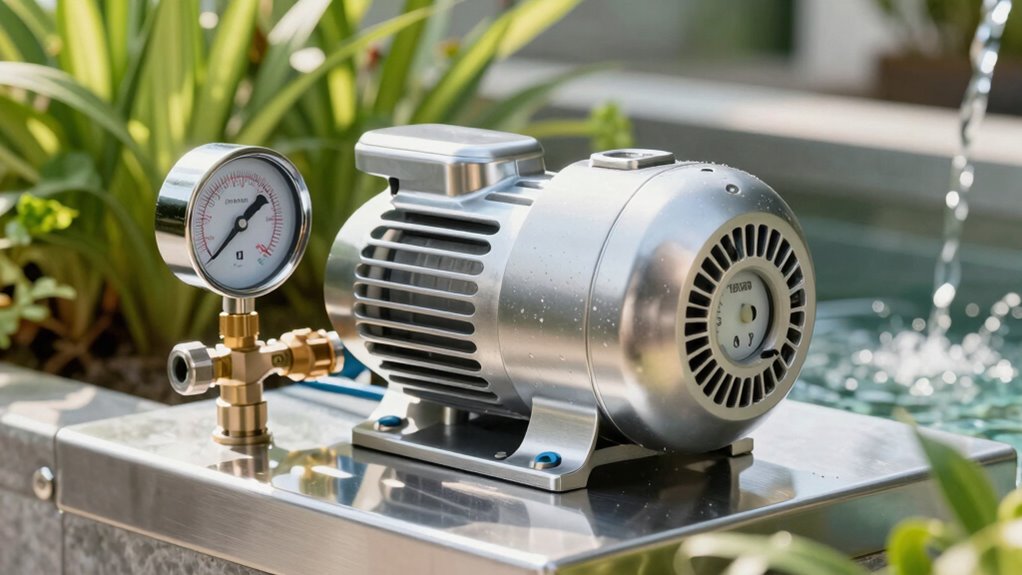
One common mistake that leads to underpowered pumps is selecting a model based solely on the pump’s flow rate without considering head height or system resistance. This oversight often results in a pump that struggles to circulate water properly, causing inconsistent flow and increased pump noise. To avoid this, pay attention to installation tips that minimize resistance, such as smooth piping and proper fittings. An underpowered pump may seem quieter initially, but it will struggle under load, leading to noise and wear over time. Remember, choosing a pump isn’t just about high flow rates; you need a model that can handle your water feature’s head height and resistance. Proper sizing ensures efficient operation, quiet performance, and longevity. Additionally, understanding system resistance helps ensure you select a pump capable of overcoming the total head height in your setup. Considering pump performance curves can further assist in selecting the right pump for your specific needs.
Comparing Pump Types and Features for Your Water Feature
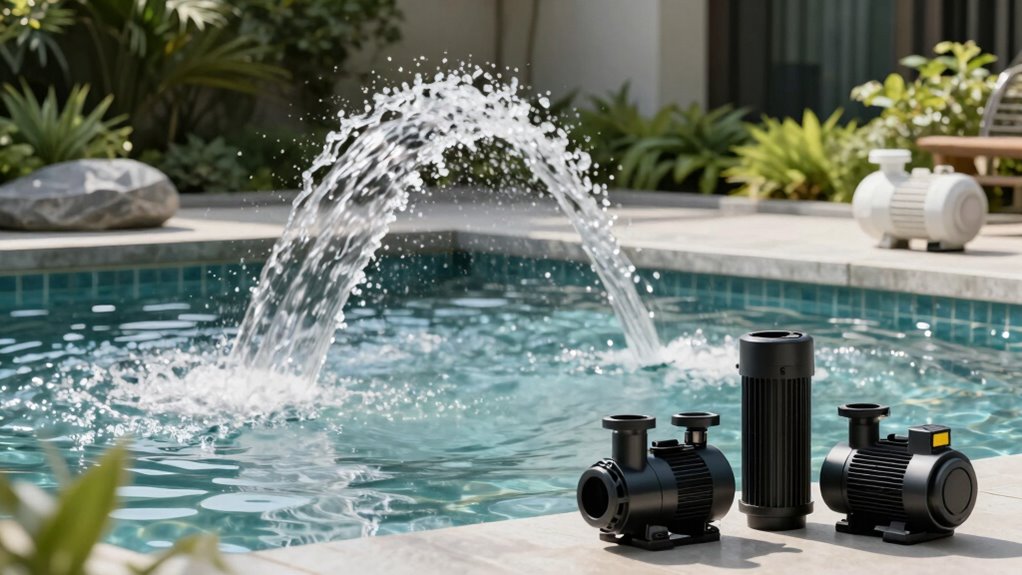
When choosing a pump, you’ll want to compare their flow capabilities to make certain your water feature runs smoothly. Energy efficiency features can also make a big difference in long-term costs and performance. Understanding these factors helps you select the right pump for your needs.
Pump Flow Capabilities
Understanding the flow capabilities of different pumps is essential for choosing the right one for your water feature. The right flow rate guarantees your feature looks stunning and functions smoothly without excessive noise or wear. Consider these key points:
- A pump with too high a flow can cause noise and splash out, disrupting tranquility.
- An undersized pump may struggle, leading to frustration and potential damage, reducing pump longevity.
- Matching your pump’s flow to your water feature’s size produces a calming, steady cascade and prolongs its lifespan.
Energy Efficiency Features
Choosing an energy-efficient pump can considerably reduce your water feature’s operating costs and environmental impact. Look for pumps with solar power options, which harness sunlight to run your feature sustainably and cut electricity bills. Smart controls are another valuable feature—they automatically adjust pump operation based on factors like water flow, time of day, or weather conditions, optimizing energy use. Some pumps come with variable speed settings, allowing you to fine-tune flow rates for efficiency without sacrificing performance. By selecting a pump with these energy-saving features, you guarantee your water feature remains vibrant and functional while minimizing energy consumption and costs. Investing in the right pump with solar power and smart controls makes your water feature more eco-friendly and easier to operate efficiently.
Tips to Save Money by Picking the Right Pump
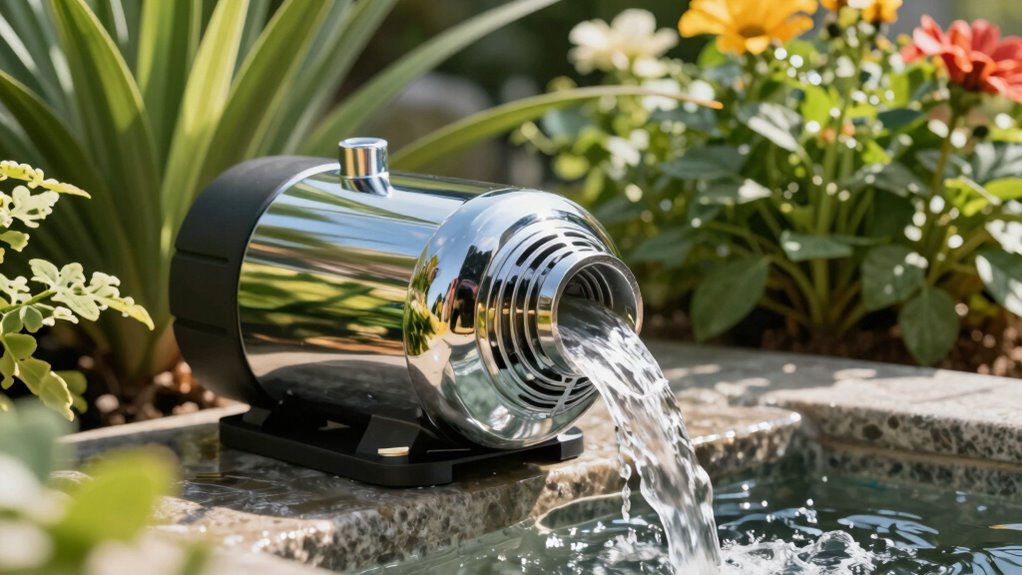
Selecting the right pump size is essential for saving money on your water feature. An improperly sized pump can lead to excessive pump noise, higher energy bills, and frequent replacements. Here are three tips to help you choose wisely:
- Avoid overestimating your needs—a too-powerful pump wastes energy and creates unnecessary noise.
- Follow installation tips to ensure your pump runs smoothly, reducing wear and tear that can lead to costly repairs.
- Match your pump’s flow rate to your fountain or pond size to prevent underperformance and save on electricity costs.
Choosing the correct pump size not only minimizes noise and maintenance but also keeps your budget intact. Invest a little time now to ensure your water feature runs efficiently and quietly for years to come.
How to Maintain and Adjust Your Pump for Best Performance
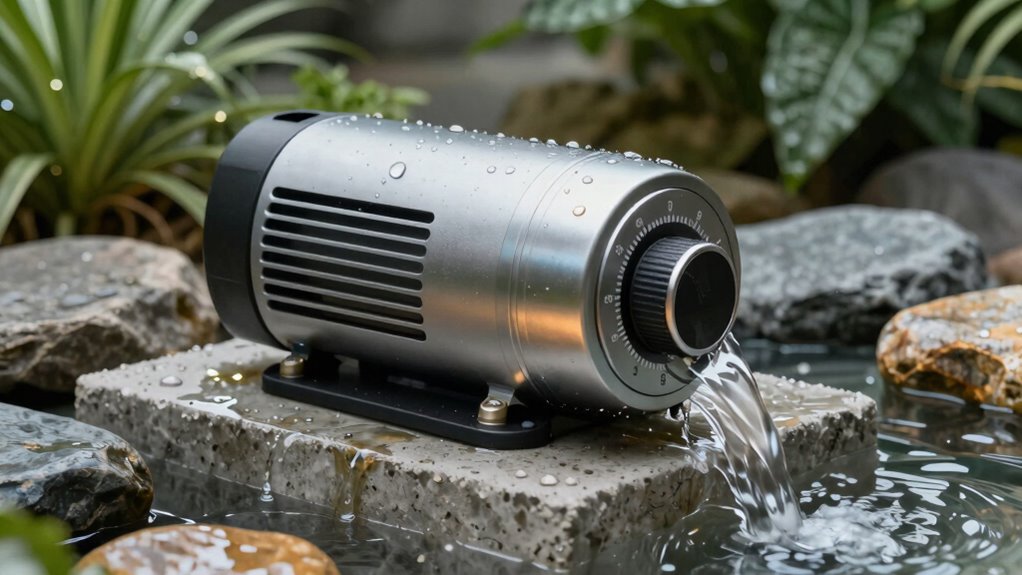
Regular maintenance and adjustments are key to keeping your water pump running at its best. Conduct routine pump maintenance by inspecting for debris, leaks, or worn parts, ensuring smooth operation. Adjusting flow is essential for ideal performance; if your water feature looks weak or uneven, tweak the pump’s settings or fittings to increase or reduce flow as needed. Clean or replace filters regularly to prevent clogs, which can hinder pump efficiency. Keep an eye on pressure gauges and listen for unusual noises—these signals may indicate the need for adjustments or maintenance. Properly calibrated flow not only enhances appearance but also extends your pump’s lifespan. By staying proactive with maintenance and fine-tuning your pump, you’ll enjoy a vibrant, healthy water feature all season long.
Frequently Asked Questions
How Often Should I Replace My Water Feature Pump?
You should replace your water feature pump roughly every 3 to 5 years, depending on your maintenance schedule and usage. Regularly clean and inspect the pump to extend its lifespan, but don’t wait too long—worn-out pumps can cause damage or reduce water flow. By staying on top of maintenance, you guarantee peak performance and get the most out of your investment, preventing unexpected breakdowns.
Can I Upgrade My Pump Without Replacing the Entire Water Feature?
Yes, you can do a pump upgrade without replacing your entire water feature. Many times, a component replacement with a more powerful pump can improve performance. First, identify the right pump that matches your water feature’s specifications. Then, carefully remove the old pump and install the upgrade, ensuring all connections are secure. This approach saves money and time while giving your water feature the boost it needs.
What Are Signs My Pump Is Too Weak for My Water Feature?
If your pump is too weak, you’ll notice increased pump noise and poor water clarity, indicating it struggles to circulate water effectively. You might see uneven water flow or dry spots in your feature. These signs mean your pump isn’t providing enough power, and upgrading to a more robust pump will improve both noise levels and water quality. Don’t ignore these signs; they signal it’s time for an upgrade.
How Do Seasonal Changes Affect Pump Performance?
Seasonal fluctuations and temperature impacts can substantially affect your pump’s performance. As temperatures drop, water viscosity increases, making your pump work harder and potentially slowing flow. In warmer months, higher temperatures can cause evaporation, reducing water levels and strain on the pump. You should regularly monitor your water feature during seasonal changes, adjusting flow rates or pump size if you notice decreased performance or increased strain, ensuring your pump remains effective year-round.
Are Energy-Efficient Pumps Suitable for Large Water Features?
Think of your large water feature as a grand symphony; it needs the right instruments to sound perfect. Energy-efficient pumps can be appropriate if they have enough pump capacity to handle the size and flow demands. Modern energy-efficient models often deliver powerful performance without excessive energy use. Just make certain you choose a pump rated for your water feature’s capacity, so it runs smoothly and saves you money in the long run.
Conclusion
Choosing the right pump size is vital—you don’t want to drown your water feature in excess power or struggle with weak flow. Did you know that selecting a pump that’s just 10% too small can reduce water circulation by up to 30%? By understanding flow rates, head height, and proper maintenance, you’ll guarantee your water feature runs smoothly and efficiently. Invest wisely now, and enjoy a vibrant, thriving display for years to come.
Halloween Picks
halloween
As an affiliate, we earn on qualifying purchases.