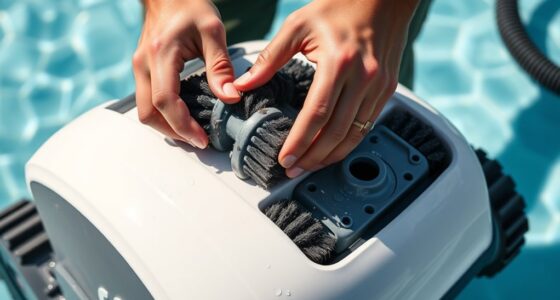
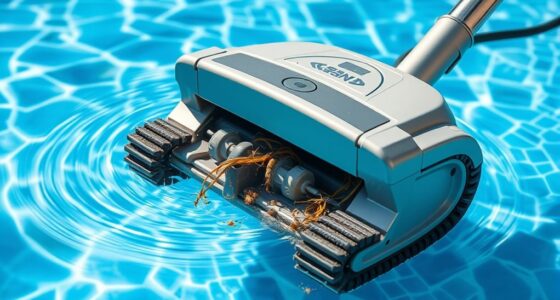
Salt cell scaling happens when minerals like calcium and magnesium build up on the cell’s metal plates, reducing its ability to produce chlorine. This usually occurs due to poor water chemistry, high mineral levels, or lack of maintenance. To stop it, keep your water balanced, regularly clean the cell, and monitor salt levels. If you continue, you’ll discover simple ways to prevent and address scaling before it worsens your system’s performance.
Key Takeaways
- Scaling occurs due to mineral deposits like calcium and magnesium building up on the salt cell plates from imbalanced water chemistry.
- Poor water balance, especially high calcium and pH levels, accelerates mineral buildup and crust formation on the cell.
- Regular cleaning with vinegar or specialized scale removers dissolves mineral deposits and prevents scaling.
- Maintaining proper water chemistry—balanced pH, alkalinity, and salt levels—helps prevent mineral precipitation.
- Monitoring system performance and addressing early signs of scale extend the salt cell’s lifespan and efficiency.
What Causes Salt Cell Scaling and Why Is It a Problem?
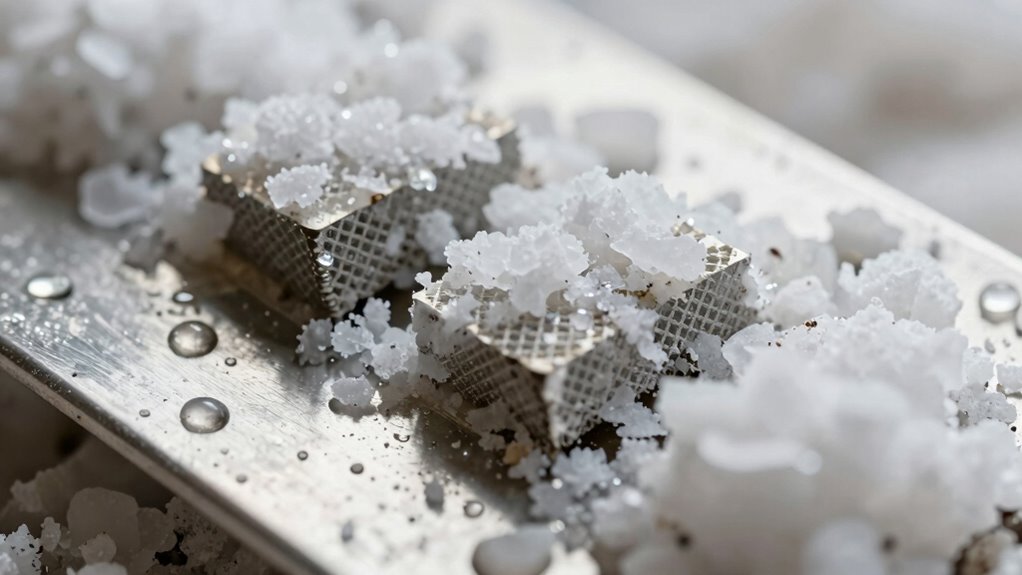
Salt cell scaling occurs when mineral deposits, mainly calcium and magnesium, build up on the cell’s metal plates. Poor pool chemistry often leads to imbalanced pH or high calcium levels, encouraging salt deposits to form. These mineral buildup blocks the flow of electrical current necessary for the salt chlorine generator to produce sanitizer efficiently. As salt deposits accumulate, the cell’s ability to operate properly diminishes, causing reduced chlorine production and increased wear on the system. Over time, scaling can cause the cell to overheat or fail altogether. Maintaining proper pool chemistry, including balanced pH and alkalinity, helps prevent salt deposits. Regular cleaning and monitoring of water parameters are essential to avoid salt cell scaling and keep your pool system functioning smoothly. Additionally, understanding the role of contrast ratio in maintaining clear and vibrant pool water visuals can help optimize your pool’s appearance and overall system efficiency. Implementing preventive maintenance strategies, such as using a salt cell cleaner, can further reduce the risk of scaling and extend the lifespan of your equipment.
How Can You Recognize the Signs of Salt Cell Scaling Early?

You can spot early signs of salt cell scaling by looking for visible salt deposits on the cell. If your chlorine levels drop despite adding salt, it’s a warning sign. Poor chlorine output combined with increased salt consumption also indicates scaling may be developing. Additionally, proper maintenance techniques can help prevent or minimize scaling issues. Regularly inspecting the salt cell and cleaning it as recommended can further reduce the risk of scaling and ensure optimal operation. Incorporating corrosion resistance into your pool components can also help mitigate scaling problems and extend the lifespan of your equipment. Utilizing high-quality materials in your pool equipment can enhance durability and resistance to such issues, making maintenance easier and more effective.
Visual Salt Deposits
Recognizing early signs of salt cell scaling is crucial for maintaining ideal system performance. One of the clearest indicators is the appearance of visual salt deposits on or around the cell. These deposits often look like crusty, white, or cloudy mineral buildup that forms on the plates or grid. You might also notice a cloudy film or a rough texture when inspecting the cell closely. These deposits are a direct sign of mineral buildup caused by excess salt or calcium precipitating out of the water. If left unchecked, this buildup can hinder proper salt ionization and reduce chlorination efficiency. Regular inspection for visible deposits helps catch scaling early, allowing you to address the problem before it impacts your pool’s water quality and system longevity. Monitoring water chemistry balance regularly can help prevent the formation of these deposits altogether. Additionally, understanding salt cell operation and how it interacts with water chemistry can aid in implementing preventative measures and prolonging the lifespan of your equipment. Proper system maintenance also plays a key role in minimizing mineral buildup and ensuring optimal performance. Being aware of mineral precipitation can assist in adjusting your water chemistry to avoid conditions conducive to scaling. A thorough understanding of water flow dynamics can further help in preventing areas of stagnation where mineral deposits are more likely to develop.
Increased Salt Consumption
An increase in salt consumption is often an early warning sign that your salt cell may be scaling. If you notice you’re adding more salt to your pool or your salt meter shows higher readings, it could indicate scaling issues. This rise in salt intake suggests your cell is working harder to maintain proper chlorine levels, often due to mineral buildup. Pay attention to your hydration habits too, as dehydration can exacerbate scaling. Here’s a quick guide:
| Sign | Cause | Action |
|---|---|---|
| Higher salt readings | Salt cell scaling | Test and clean your cell |
| More frequent salt additions | Salt loss or mineral buildup | Check water chemistry |
| Increased salt consumption | Inefficient cell operation | Maintain proper maintenance |
| Changes in pool chemistry | Mineral deposits | Adjust chemical levels |
Staying alert helps you catch scaling early and keep your pool running smoothly.
Poor Chlorine Output
Have you noticed your pool’s chlorine levels dropping despite adding the usual amount of sanitizer? This could signal poor chlorine output, often caused by salt cell scaling. When mineral buildup accumulates on the cell plates, it hampers the cell’s ability to produce chlorine efficiently. Early signs include inconsistent chlorination, cloudy water, or a noticeable decline in sanitizer effectiveness. You might also see your salt cell display error codes or reduced flow rates. Keep an eye out for:
- Decreased chlorine levels despite regular dosing
- Cloudy or murky water
- Salt cell warning lights or error messages
- Reduced water circulation or flow issues
- Understanding the salt cell design can help you identify potential causes of scaling and flow problems, ensuring better maintenance practices. Regular cleaning and preventative maintenance are essential to avoid mineral buildup that impairs performance. Recognizing these signs early helps prevent severe mineral buildup and prolongs your salt cell’s lifespan. flow rate and cell design are key factors in troubleshooting flow issues and maintaining optimal operation.
How Salt Cell Scaling Reduces Your Pool’s Chlorine Production
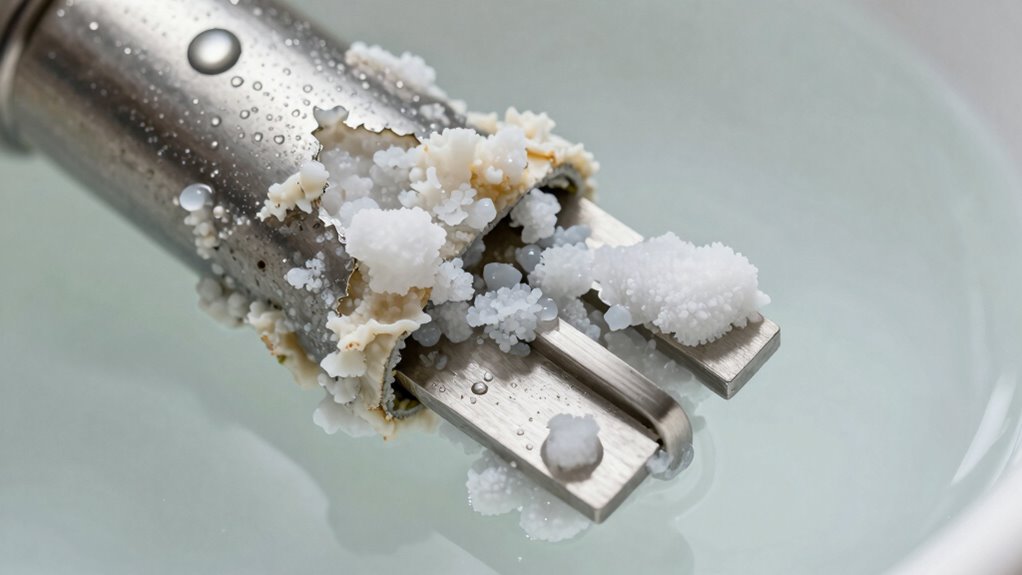
Salt cell scaling can greatly lower your pool’s chlorine output, making it harder to keep your water sanitized. As scaling builds up, your sanitizer production drops, increasing the risk of algae and bacteria growth. Understanding this connection helps you act before scaling impacts your pool’s health. Regular maintenance and choosing the right equipment are essential for optimal pool heating solutions, and ensuring your system operates efficiently. Additionally, monitoring cell voltage and current can help detect early signs of scaling before it severely affects performance. Implementing smart monitoring systems can provide real-time data, allowing for proactive maintenance and prevention of scaling issues.
Reduced Chlorine Output
Ever wonder why your pool isn’t staying as clean as it used to? Reduced chlorine output is often the culprit, caused by salt cell scaling. When scale builds up, it hinders salt cell performance, making it harder to produce enough chlorine. This means your pool isn’t sanitized effectively, risking algae and bacteria growth. Proper salt cell maintenance is essential to keep chlorine efficiency high and prevent scaling from forming. Scaling acts like a barrier, blocking the cell’s ability to generate chlorine. Using high-quality, weather-resistant home security cameras can help monitor pool equipment and alert you to potential issues early. Regularly checking water chemistry and preventive maintenance practices can also help reduce the likelihood of scaling. Additionally, understanding the science of scaling can help you implement more targeted solutions. For example, understanding the role of nanotechnology in cleaning solutions can offer innovative ways to mitigate buildup at the microscopic level. You might notice: – Longer chlorination cycles needed – Chlorine levels dropping unexpectedly – Increased use of chemical supplements – More frequent salt cell cleaning required. Implementing proper water chemistry adjustments and scale inhibitors can significantly help prevent scale formation. Addressing salt cell scaling promptly helps maintain ideal chlorine output and keeps your pool safe and sparkling.
Impact on Pool Sanitization
How does salt cell scaling directly impact your pool’s ability to stay sanitized? When scaling occurs, it creates a barrier on the cell’s surface, reducing its efficiency in producing chlorine. This decreased chlorine output means your pool isn’t properly sanitized, risking algae growth and bacteria buildup. Salt cell scaling also hampers water filtration by blocking the flow of water through the cell, impairing overall water quality. To combat this, corrosion prevention measures are essential to protect the salt cell from further damage. Regular maintenance, such as cleaning and monitoring salt levels, helps guarantee ideal chlorine production. Keeping your salt cell free of scale supports consistent sanitization, maintains water clarity, and prolongs the lifespan of your equipment.
How Water Chemistry Affects Salt Cell Scaling and Prevention

Water chemistry plays a crucial role in salt cell scaling, as the mineral content directly influences how and when scale forms. Maintaining proper water balance ensures minerals stay in check, preventing excess buildup on your salt cell. When mineral content is too high, scale is more likely to develop, reducing efficiency and lifespan. To prevent this, monitor your water’s pH, alkalinity, and calcium levels regularly. Proper water balance minimizes the risk of mineral deposits. Keep these key points in mind:
- Regularly test mineral content and adjust with conditioners or treatments
- Maintain balanced pH and alkalinity levels
- Avoid over-chlorination, which can alter water chemistry
- Use water softeners if mineral levels are consistently high
Easy Tips to Prevent Salt Cell Scaling in Your Pool
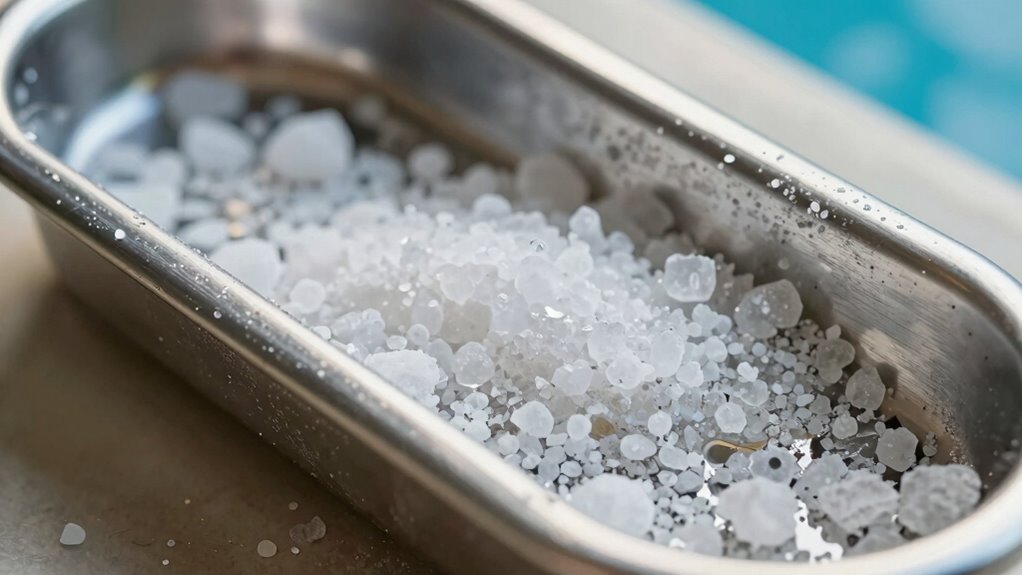
Maintaining proper water chemistry is the first step toward preventing salt cell scaling. Regularly test and adjust your pool’s pH, alkalinity, and calcium hardness to keep the pool chemical balance in the ideal range. Proper balancing minimizes the risk of scale buildup on your salt cell. Additionally, monitor your salt levels closely; too high salt concentrations can lead to scaling issues. Ensuring ideal water chemistry enhances salt system efficiency, helping your system operate smoothly and reducing mineral deposits. Run your pool pump and salt cell regularly to promote even circulation and prevent stagnation. Using a scale inhibitor or sequestering agent can also help keep minerals dissolved and prevent deposits. Consistent maintenance and attention to water chemistry are key to avoiding salt cell scaling.
How to Clean and Maintain Your Salt Cell Effectively

Regular cleaning is essential to keep your salt cell operating efficiently and prevent buildup that can diminish its effectiveness. Proper maintenance starts with checking your pool water balance, ensuring pH and alkalinity are within ideal ranges. When it’s time for salt cell cleaning, disconnect the cell and soak it in a vinegar solution to dissolve mineral deposits. Rinse thoroughly before reinstalling. Consistent maintenance helps avoid scaling and prolongs your salt cell’s lifespan.
Regular salt cell cleaning prevents buildup and extends lifespan by maintaining proper water balance and mineral deposit removal.
You can also:
- Regularly monitor chlorine and salt levels
- Use a soft brush to gently scrub the cell plates
- Avoid harsh chemicals that may damage the cell
- Schedule periodic inspections to catch issues early
Keeping these steps in mind will help you maintain a healthy, balanced pool while preventing salt cell scaling.
When Should You Replace Your Salt Cell? Signs and Tips
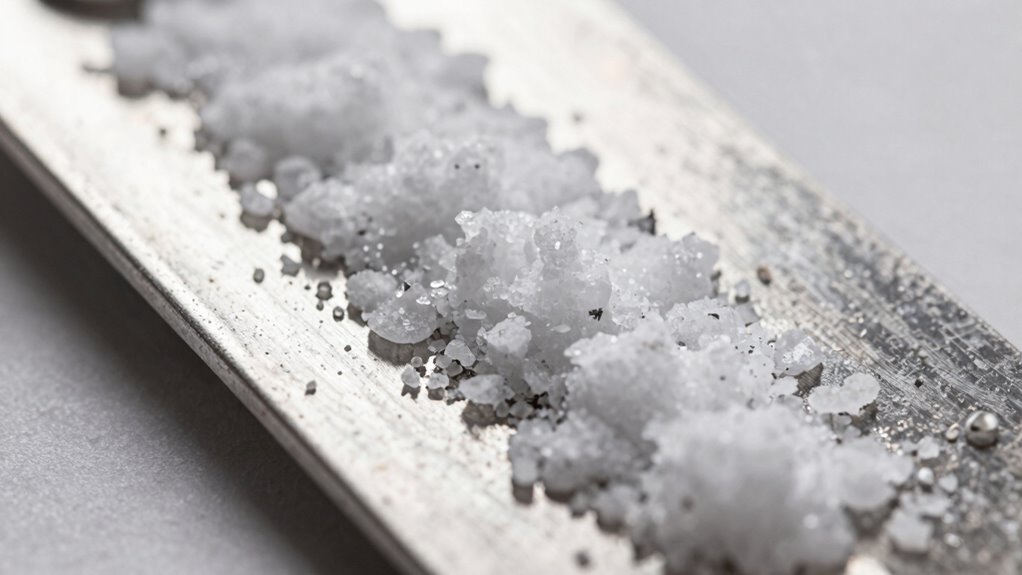
Even with proper cleaning and maintenance, there comes a time when your salt cell may no longer function effectively. The salt cell lifespan varies, but typically, you should consider replacement when you notice certain indicators. Reduced chlorine production is a clear sign that your salt cell isn’t working as it should. If your salt levels are fine but the system isn’t generating enough sanitizer, it’s time to evaluate the cell’s condition. Additionally, frequent error codes or a noticeable decline in water quality can signal the need for a new salt cell. Keep an eye on these replacement indicators to avoid system failure and guarantee your pool remains clean and safe. Replacing your salt cell promptly will help maintain ideal performance and extend your system’s overall lifespan.
Best Practices for Long-Term Salt System Performance
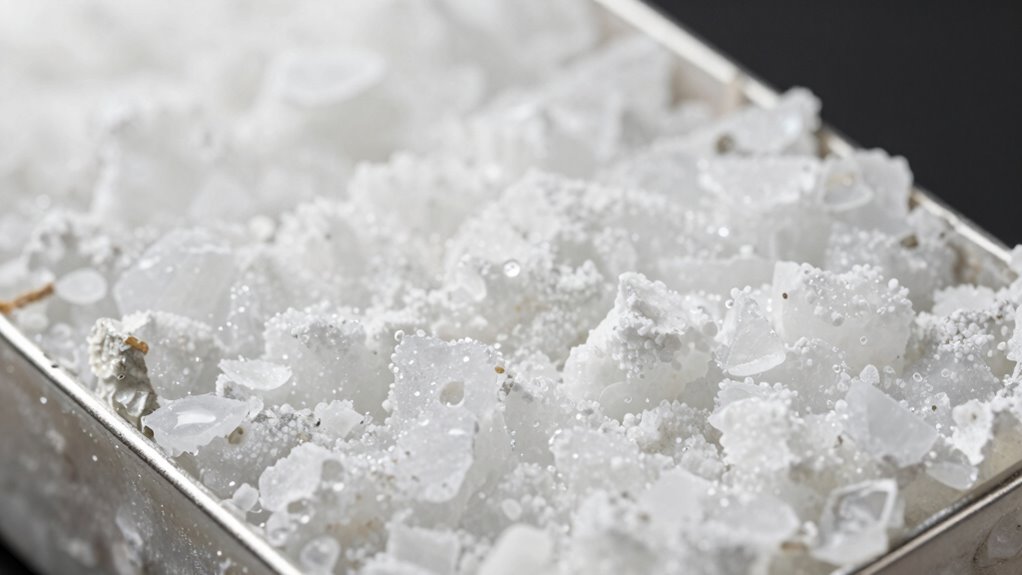
To guarantee your salt system performs effectively over the long term, adopting consistent maintenance practices is essential. Regularly test your water’s water hardness and pH balance to prevent scaling and ensure ideal operation. Keep your salt levels within recommended ranges to avoid stress on the cell. Maintain proper water circulation to prevent buildup and uneven scaling. Additionally, perform routine cleaning of the salt cell to remove mineral deposits before they become problematic.
Consistent maintenance, including water testing and salt cell cleaning, ensures your salt system operates efficiently long-term.
- Monitor water hardness and adjust your water source if needed
- Keep pH balanced between 7.2 and 7.6 for ideal salt cell function
- Clean the salt cell at least once a season
- Regularly test and top off salt levels to avoid low-salt conditions
Common Mistakes That Speed Up Salt Cell Scaling: And How to Avoid Them
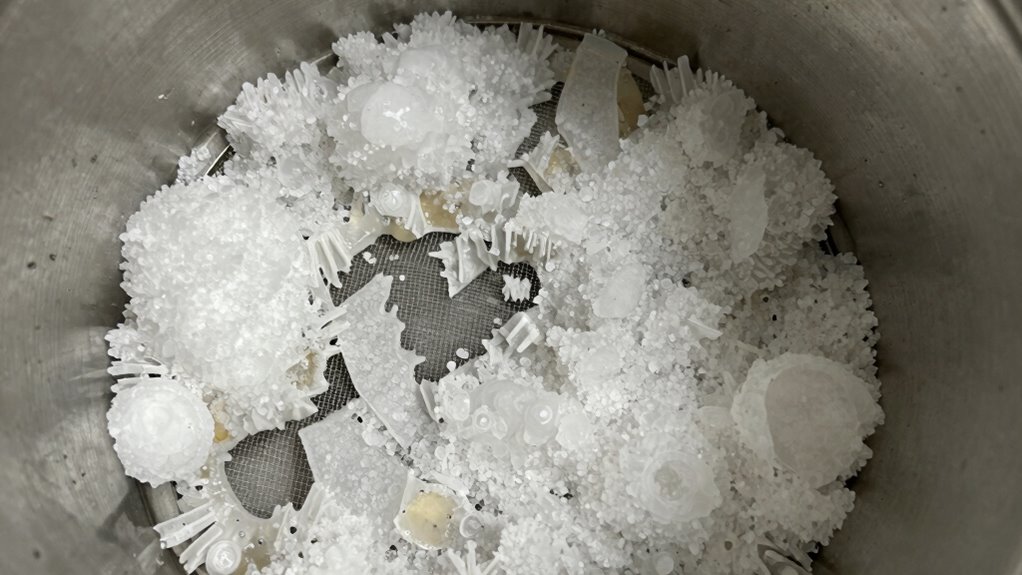
Ignoring common mistakes that accelerate salt cell scaling can lead to costly damage and reduced efficiency. One major mistake is neglecting water hardness; high calcium buildup from hard water promotes scaling inside the cell. If you don’t regularly test and adjust your pool’s water hardness, calcium deposits will accumulate faster. Using untreated or poorly balanced water increases the risk of calcium buildup, which can clog your salt cell and impair its performance. Another mistake is overusing salt or adding it improperly, which can create imbalanced mineral levels and hasten scaling. To avoid these issues, maintain proper water chemistry, regularly check calcium levels, and use water softeners if necessary. Proper maintenance prevents excessive calcium buildup and keeps your salt cell running smoothly longer.
Frequently Asked Questions
Can Salt Cell Scaling Damage My Pool Equipment?
Yes, salt cell scaling can damage your pool equipment if ignored. When salt cell maintenance is neglected, mineral buildup from imbalanced pool water chemistry can corrode or clog the cell and other components. Regularly checking and adjusting your pool water chemistry helps prevent scaling, ensuring your salt cell functions efficiently. Proper maintenance extends the lifespan of your equipment and keeps your pool clean and safe for swimming.
Does Water Temperature Influence Salt Cell Scaling?
You might notice mineral buildup more often when water temperature rises, and it’s no coincidence. Higher water temperatures accelerate chemical reactions, making salt cell scaling more likely. When the water gets warmer, minerals like calcium can settle and create that crusty buildup. To prevent this, keep your water temperature in check and regularly clean your salt cell. Cooler water helps slow down mineral buildup, keeping your system running smoothly.
Are There Chemical Treatments to Prevent Scaling?
Yes, you can use chemical inhibitors designed to prevent salt cell scaling. These treatments work by disrupting the mineral buildup that causes scaling, making maintenance easier. Additionally, maintaining proper water balancing is essential, as it helps prevent conditions that promote scale formation. Regularly applying chemical inhibitors and monitoring your water chemistry will keep your salt cell cleaner and functioning efficiently, reducing the need for costly repairs or replacements.
How Often Should I Check My Salt Cell for Scaling?
You should check your salt cell for scaling at least once a month as part of your regular maintenance routine. Regular inspections help you catch buildup early, preventing more serious issues. During these checks, look for visible mineral deposits or reduced flow. If you notice scaling, clean the cell promptly. Staying consistent with your inspection routines guarantees your salt cell operates efficiently and extends its lifespan.
Can Replacing My Salt Cell Eliminate Scaling Issues?
Replacing your salt cell can eliminate scaling issues temporarily, but it won’t resolve the root cause. To prevent future scaling, you need proper salt cell maintenance and balanced pool water chemistry. Regularly check and clean the cell, and ensure your water’s pH, alkalinity, and calcium levels stay within recommended ranges. This way, you protect your new cell and keep your pool running smoothly without recurring scale buildup.
Conclusion
If you notice the early signs of salt cell scaling, don’t ignore them. Addressing issues early can save you time, money, and frustration down the line. But what if scaling worsens, or your salt system starts to falter unexpectedly? Stay vigilant, follow the right maintenance tips, and keep a close eye on your water chemistry. The key to a trouble-free pool might just depend on how well you catch and prevent that next scaling surprise.