
Saltwater chlorinators make pool maintenance easier by automatically generating consistent chlorine levels, reducing the need for manual chemical adjustments. They help keep your water balanced, clear, and comfortable with less effort on your part. While they may require a higher upfront investment and proper equipment care to prevent corrosion, they simplify routine upkeep. To discover which option suits your needs best and how to keep your pool in top shape, keep exploring the details.
Key Takeaways
- Saltwater systems provide consistent chlorine levels, reducing the need for frequent chemical adjustments and testing.
- They are generally easier to maintain with less manual handling of chemicals compared to traditional chlorination.
- Proper maintenance of saltwater systems prevents corrosion and prolongs equipment lifespan, simplifying ongoing upkeep.
- Traditional chlorine systems require regular chemical addition and testing, increasing maintenance effort.
- Overall, saltwater chlorinators offer more stable water chemistry and easier maintenance, but may have higher initial costs.
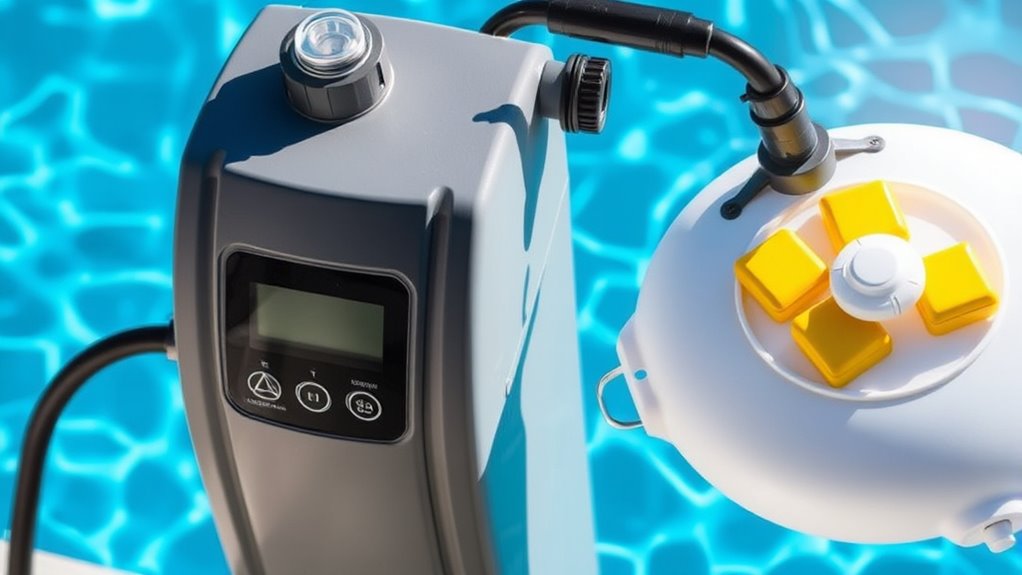
When choosing a method to keep your pool clean, you might wonder whether saltwater chlorinators or traditional chlorine systems are better. Both options have their pros and cons, but understanding how they impact pool chemical balance and equipment durability can help you make an informed decision. Saltwater systems generate chlorine through electrolysis, which means you add salt to your pool, and the system produces chlorine automatically. This process tends to create a more stable pool chemical balance because the chlorine levels are maintained consistently, reducing the risk of sudden fluctuations that can cause algae growth or cloudy water. On the other hand, traditional chlorine systems require you to manually add chlorine or use tablets, which can lead to more variable chemical levels if you’re not diligent with testing and adjustments.
Saltwater systems offer more stable chlorine levels, simplifying pool maintenance and reducing chemical fluctuations.
In terms of pool chemical balance, saltwater chlorinators often offer a more consistent experience. Since the system produces chlorine steadily, you’re less likely to experience sudden drops or spikes in chlorine levels, making it easier to keep your water balanced and safe. This stability helps prevent issues like pH imbalance and algae blooms, saving you time and effort in pool maintenance. Conversely, with traditional chlorine, maintaining perfect chemical balance requires regular testing and manual adjustments. If not managed carefully, it can lead to issues such as skin irritation, cloudy water, or scale buildup. Additionally, proper system maintenance is essential to ensure both types of systems function optimally and to prolong their lifespan.
When it comes to equipment durability, saltwater chlorinators tend to be more delicate than traditional chlorine feeders. The electrolysis process can produce byproducts that may corrode certain pool components, especially if the salt levels are too high or if you don’t keep the system properly maintained. Additionally, the salt itself can accelerate wear on equipment like heaters, pumps, and filters if they’re not specifically designed for saltwater use. This means you might face higher replacement costs down the line if your equipment isn’t compatible or if you neglect routine maintenance.
Traditional chlorine systems usually involve simpler equipment that’s less prone to corrosion, making them more durable in the long run. However, they can also require more frequent handling of chemicals, which comes with its own safety concerns and maintenance routines. Ultimately, if you prefer a set-it-and-forget-it approach with fewer chemical adjustments, saltwater chlorinators are appealing, but you should be prepared for potential equipment upkeep. If durability and straightforward maintenance are your top priorities, traditional chlorine might be the better choice.
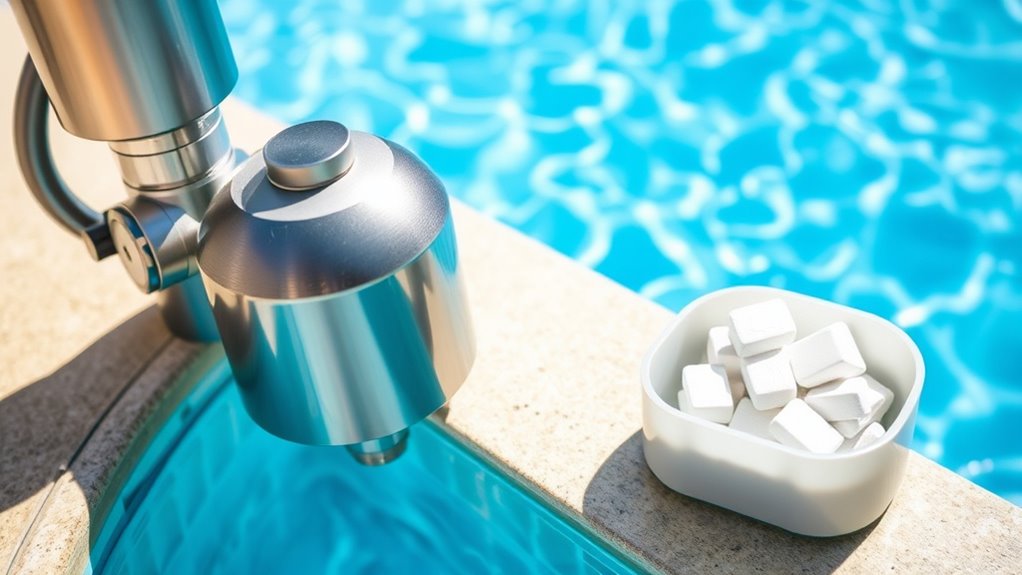
saltwater pool chlorinator
As an affiliate, we earn on qualifying purchases.
As an affiliate, we earn on qualifying purchases.
Frequently Asked Questions
Which System Is More Cost-Effective Long-Term?
When considering long-term cost-effectiveness, you should look at the cost comparison and maintenance costs of each system. Saltwater chlorinators often have higher upfront costs but lower ongoing maintenance expenses, saving you money over time. Traditional chlorine systems typically have lower initial costs but may incur higher maintenance and chemical costs. Overall, your choice depends on balancing initial investment against ongoing expenses, with saltwater systems usually being more economical long-term.
How Do Saltwater Systems Affect Pool Equipment Lifespan?
You might think saltwater systems are gentle, but they actually extend your pool equipment’s lifespan by drastically reducing corrosion risks and mineral buildup. Unlike traditional chlorine, saltwater’s softer, more balanced environment minimizes wear and tear on filters, pumps, and heaters. This means fewer repairs and replacements over time, saving you money and hassle. So, saltwater systems don’t just make your pool easier to maintain—they protect your equipment for years to come.
Are Saltwater Chlorinators Safe for Children and Pets?
You might wonder if saltwater chlorinators are safe for children and pets. Generally, they’re considered safe because they produce less harsh chemicals, reducing chemical exposure risks. However, you should still monitor pool safety carefully, avoid direct contact with the saltwater, and teach kids not to swallow pool water. Proper maintenance guarantees balanced chemical levels, making your pool safer for everyone while minimizing potential health concerns.
Can Existing Pools Be Converted to Saltwater Systems Easily?
Converting your existing pool to a saltwater system is generally straightforward if you consider system compatibility. You’ll need to check if your pool’s current equipment, like the pump and filter, can work with a saltwater chlorinator. Most pools can be converted with some adjustments, such as installing a salt chlorination cell. Consulting a professional guarantees a smooth pool conversion, making maintenance easier and providing cleaner, safer water for you and your family.
What Are the Environmental Impacts of Each Chlorination Method?
You should consider the environmental impacts of each chlorination method. Saltwater systems typically have a smaller environmental footprint because they produce fewer chemical runoff and reduce the need for harsh chemicals. Traditional chlorine, however, can lead to chemical runoff that harms aquatic life and pollutes water sources. By choosing a saltwater system, you lessen environmental harm and promote eco-friendly pool maintenance.
automatic pool chlorine generator
As an affiliate, we earn on qualifying purchases.
As an affiliate, we earn on qualifying purchases.
Conclusion
So, whether you choose saltwater chlorinators or traditional chlorine, remember that easier maintenance might just mean more time spent relaxing. Ironically, the device promising simplicity could require just as much attention, if not more. In the end, no system is completely hands-off, and your pool’s health depends on your care—no matter what kind of sanitizer you opt for. After all, the real secret is staying vigilant, not just picking the “easier” option.
pool chemical testing kit
As an affiliate, we earn on qualifying purchases.
As an affiliate, we earn on qualifying purchases.
pool salt system parts
As an affiliate, we earn on qualifying purchases.
As an affiliate, we earn on qualifying purchases.