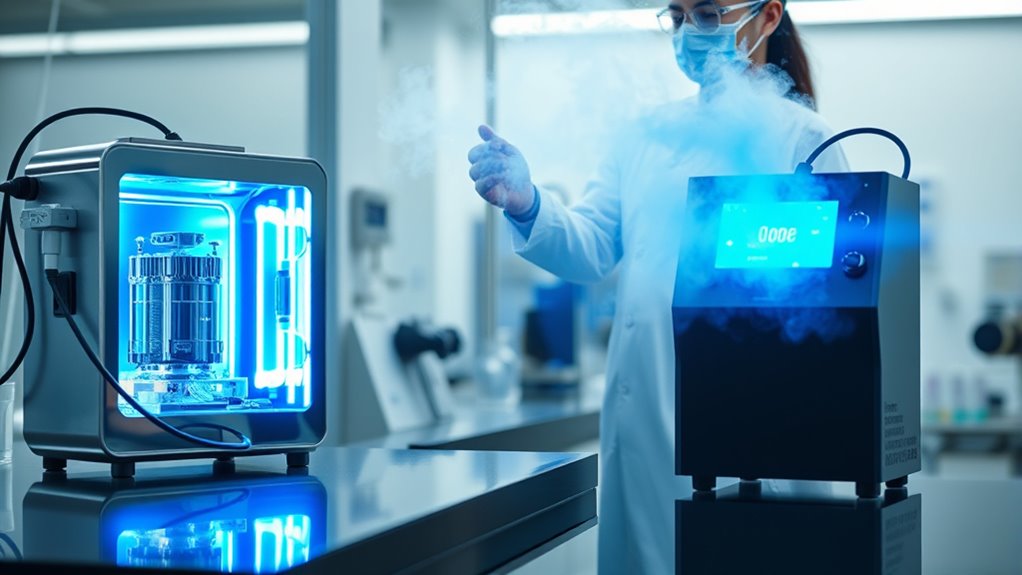

UV and ozone sanitization both disinfect effectively but in different ways. UV light damages microbes’ DNA, making it great for quick surface cleaning but limited by shadows and line-of-sight. Ozone penetrates cracks and hidden areas, breaking down microorganisms and odors through oxidation, suitable for larger spaces and air treatment. Both require safety precautions, as UV can harm skin and eyes, and ozone can irritate your lungs. Want to see how these differences impact your cleaning? Keep exploring.
Key Takeaways
- UV light damages microbial DNA/RNA for surface sterilization but has limited penetration and shadowing issues.
- Ozone oxidizes cell structures, effectively disinfecting cracks, crevices, and larger or shadowed spaces.
- UV is generally safer for humans when used properly; ozone can cause respiratory irritation and requires unoccupied spaces.
- UV provides quick surface disinfection, while ozone offers deeper penetration, deodorizing, and VOC removal in complex environments.
- Cost, safety precautions, and application environment influence the choice between UV and ozone sanitization methods.
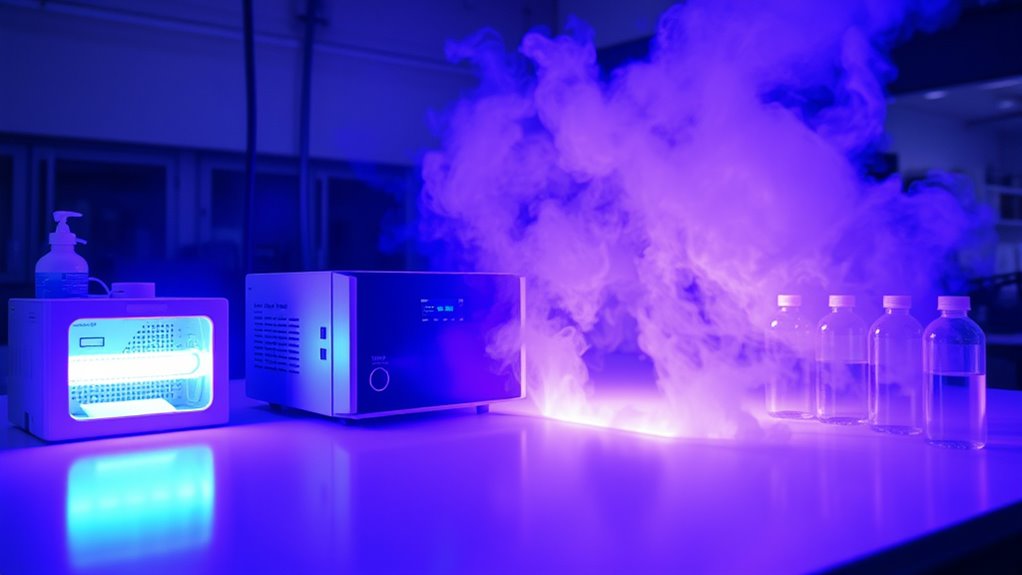
When it comes to sanitizing your environment, UV and ozone technologies are two popular options, each with its own advantages and limitations. Understanding how they compare in terms of effectiveness and safety is vital to choosing the right method for your needs. The effectiveness comparison between UV and ozone sanitization depends largely on what you’re targeting. UV light works by damaging the DNA or RNA of microorganisms, preventing them from reproducing and effectively neutralizing bacteria, viruses, and fungi on surfaces and in the air. Its ability to disinfect depends on the exposure time, intensity of the UV light, and the distance from the source. UV sterilization is quick and effective for surface disinfection, especially in well-illuminated areas where direct line-of-sight exposure is possible. However, UV light has limitations when it comes to penetrating surfaces or shadows, meaning some microorganisms may survive if they’re hidden or shielded from the light. Additionally, the cost-efficiency of UV devices can influence their practicality for different environments.
Ozone, on the other hand, acts as a powerful oxidizing agent. When released into an environment, ozone molecules react with the cell walls of microbes, breaking down their structure and rendering them inactive. Ozone’s effectiveness is notable in airborne and larger space disinfection, especially because it can reach into cracks, crevices, and shadowed areas where UV might fall short. It’s particularly useful in deodorizing spaces and eliminating volatile organic compounds (VOCs) along with microbes. But ozone’s effectiveness comparison also involves safety considerations. While ozone can disinfect effectively, high concentrations pose health risks, such as respiratory irritation or exacerbation of asthma symptoms. That’s why ozone treatments typically require unoccupied spaces and thorough ventilation afterward. UV light, in contrast, is generally safer for humans when used properly, especially in enclosed devices or with protective measures, but direct exposure can cause skin burns and eye injuries. Proper safety precautions are essential regardless of the technology you choose.
Frequently Asked Questions
Are UV and Ozone Sanitizers Safe for Human Exposure?
You should avoid direct exposure to UV and ozone sanitizers, as they pose health risks like skin burns, eye damage, and respiratory issues. Always follow safety precautions, such as wearing protective gear and ensuring the area is clear during use. If you’re exposed accidentally, seek fresh air and medical attention if symptoms worsen. Staying cautious helps protect your health while effectively sanitizing your environment.
How Long Does Each Sanitization Process Typically Take?
Imagine waiting forever for a sanitizer to do its magic—well, with UV sanitizers, you’re looking at about 10 minutes for effective coverage, thanks to quick timing efficiency. Ozone sanitization, however, might stretch to 30 minutes or more, as it takes longer to penetrate and disinfect thoroughly. So, if you’re in a rush, UV wins on process duration, but ozone offers a more thorough clean at the cost of extra time.
Can UV and Ozone Eliminate All Types of Bacteria and Viruses?
Yes, UV and ozone sanitization can eliminate many bacteria and viruses, but their effectiveness depends on bacteria resilience and virus types. UV light is excellent against surface bacteria and some viruses, but tougher bacteria with higher resilience may survive. Ozone penetrates surfaces better and can neutralize more resilient bacteria and viruses, including certain virus types. However, neither method guarantees 100% elimination, so combining methods or additional sanitation might be necessary for thorough results.
What Are the Maintenance Requirements for UV and Ozone Systems?
Did you know that regular maintenance can extend UV and ozone system durability by up to 30%? You should perform routine inspections, clean the UV bulbs or ozone generators monthly, and replace parts as recommended by manufacturers. Keep a detailed maintenance routine to prevent malfunctions, ensuring consistent performance. Proper upkeep minimizes downtime, prolongs system life, and guarantees effective sanitization, saving you money and hassle in the long run.
Are There Environmental Impacts Associated With Ozone Sanitization?
You should know that ozone sanitization does have environmental impacts, mainly due to ecological concerns. Ozone can contribute to air pollution if not properly managed, harming ecosystems and human health. While effective at disinfecting, releasing excess ozone into the environment can damage the ozone layer and contribute to smog formation. Consequently, it’s vital to use ozone systems responsibly, ensuring proper containment and venting to minimize their ecological footprint.
Conclusion
In the battle of UV versus ozone, you now see their unique strengths. UV acts swiftly, like a modern sword slicing through germs, perfect for quick sanitization. Ozone, on the other hand, works like a wise alchemist, transforming the environment over time. Depending on your needs, you might choose one or combine both. Remember, choosing the right method is like selecting the best knight for your castle—each has its own armor and purpose.