If you’re weighing an inground versus above-ground pool, you’ll find inground models cost more upfront due to excavation and custom work, but add long-term value and durability. Above-ground pools are more budget-friendly and faster to install, often within a weekend, but may need replacing sooner. Installation complexity and maintenance differ too—inground pools need permits and winterization, while above-ground pools are easier to set up and store. Continue exploring to uncover more details on costs and setup.
Key Takeaways
- Inground pools require a higher initial investment due to excavation, permits, and custom construction costs.
- Above-ground pools are more affordable upfront, with simpler installation that can often be DIY or completed in a weekend.
- Inground pools involve complex installation processes including excavation, foundation work, and landscaping, while above-ground pools need minimal setup.
- Long-term durability favors inground pools, which last longer and add property value, whereas above-ground pools may need earlier replacement.
- Seasonal maintenance differs: inground pools need winterization and robust filtration, while above-ground pools are easier to drain and store seasonally.

When deciding between an inground and an above-ground pool, understanding their differences can help you make the right choice for your backyard and lifestyle. Cost and installation are two major factors to contemplate, but it’s equally important to think about ongoing expenses like pool maintenance and seasonal considerations. Inground pools typically come with a higher upfront cost, partly due to excavation, permits, and custom construction. You might spend several thousand dollars more initially, but they tend to add more value to your property and last longer. Above-ground pools, on the other hand, are more budget-friendly and easier to install. You can often set one up in a weekend, which makes them appealing if you’re looking for a quick, less expensive option.
Choosing between inground and above-ground pools depends on budget, installation time, and long-term maintenance needs.
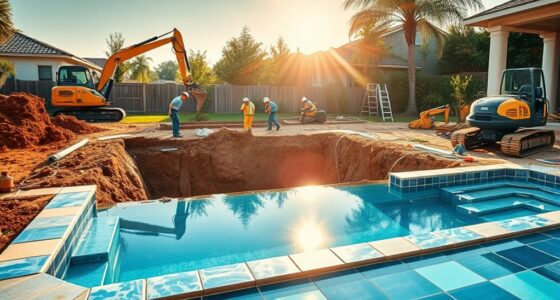
The installation process for inground pools is more complex, involving excavation, foundation work, and possibly extensive landscaping. This means you’ll need to plan for additional costs like permits and professional labor, which can quickly increase the total price. Above-ground pools require minimal construction—mostly just assembling the panels and filling with water. Because of this, the installation cost is notably lower, and you might even do it yourself if you’re handy. However, keep in mind that with inground pools, you’re investing in a more permanent feature. They usually require more planning around seasonal considerations, such as winterizing procedures in colder climates to prevent damage from freezing temperatures. Proper pool maintenance schedule also needs to be established, especially since inground pools often have larger water volumes, meaning more chemicals and filtration maintenance.
In addition, the durability of inground pools generally exceeds that of above-ground pools, which can be more vulnerable to weather-related damage over time. Seasonal considerations play a big role in your ongoing costs and efforts. An inground pool may require winterization in colder regions, which involves draining, cleaning, and covering the pool to prevent damage from freezing temperatures. Above-ground pools are generally easier to drain and store during winter, but they can be more susceptible to wind damage or weather-related wear and tear if left exposed. This makes seasonal maintenance a critical aspect to factor in when choosing between the two options. With inground pools, you often need to invest in a more robust filtration and cleaning system to keep the water clear and safe during the swimming season, which adds to ongoing expenses. Above-ground pools can be easier to maintain seasonally but may require replacement sooner if exposed to harsh weather.
Ultimately, your decision hinges on how much you’re willing to invest upfront versus ongoing maintenance and seasonal care. Inground pools tend to be more durable and more integrated into your landscape, but they demand a bigger initial commitment. Above-ground pools offer affordability and flexibility, with less seasonal hassle, but might not last as long. Weigh these factors carefully, considering your budget, lifestyle, and the time you’re willing to dedicate to pool upkeep year-round.
Frequently Asked Questions
Which Pool Type Has Lower Maintenance Costs Long-Term?
You’ll find that above-ground pools generally have lower long-term maintenance costs. They require less chemicals management because their smaller size makes balancing water chemistry easier. Plus, cover maintenance is simpler since you can easily remove or replace covers to keep debris out, reducing cleaning needs. In contrast, inground pools often need more frequent chemical adjustments and cover upkeep, leading to higher ongoing expenses.
How Does Climate Influence Pool Choice?
When it comes to climate considerations, your choice of pool can make or break your summer fun. If you live in a hot, sunny area, an inground pool offers seasonal usage and durability against the elements. In colder climates, above-ground pools are easier to winterize and maintain. Think of it as matching your pool to your climate, so you enjoy swimming year-round without the weather throwing a wrench in your plans.
Can Either Pool Type Be Easily Expanded Later?
You can usually do a pool expansion with both types, but each has its challenges. Above-ground pools often face size limitations, making expansion tricky or impossible without replacing the entire structure. Inground pools are easier to expand or modify, as they’re built into the ground, allowing for adjustments in size or added features later. Keep in mind, expansion costs and complexities vary, so plan ahead based on your future needs.
What Safety Features Are Recommended for Each Pool Type?
You probably realize that safety features are essential for peace of mind. For both pool types, you should install pool lighting to improve visibility at night and fencing that meets local requirements to prevent accidents. Inground pools often require self-closing gates, while above-ground pools benefit from removable fences. Prioritizing these safety features guarantees you enjoy your pool responsibly, no matter the type you choose.
Are There Zoning Laws Affecting Pool Installation?
You should check local zoning restrictions and permitting requirements before installing a pool. Zoning laws may limit pool size, placement, or require setbacks from property lines. Permitting requirements guarantee your pool meets safety and building codes. Contact your city or county office to get specific regulations. Failing to follow these rules could lead to fines or needing to remove your pool later. Always verify with local authorities before starting installation.
Conclusion
Whether you choose an inground or above-ground pool, consider your budget, space, and long-term plans. Weigh the costs against the installation process, maintenance, and durability. Think about the aesthetics, the flexibility, and the future value of your property. Decide what fits your lifestyle, your needs, and your dreams. Ultimately, make a choice that brings you joy, enhances your home, and creates memories. Because your perfect pool should be about fun, relaxation, and the moments that matter most.