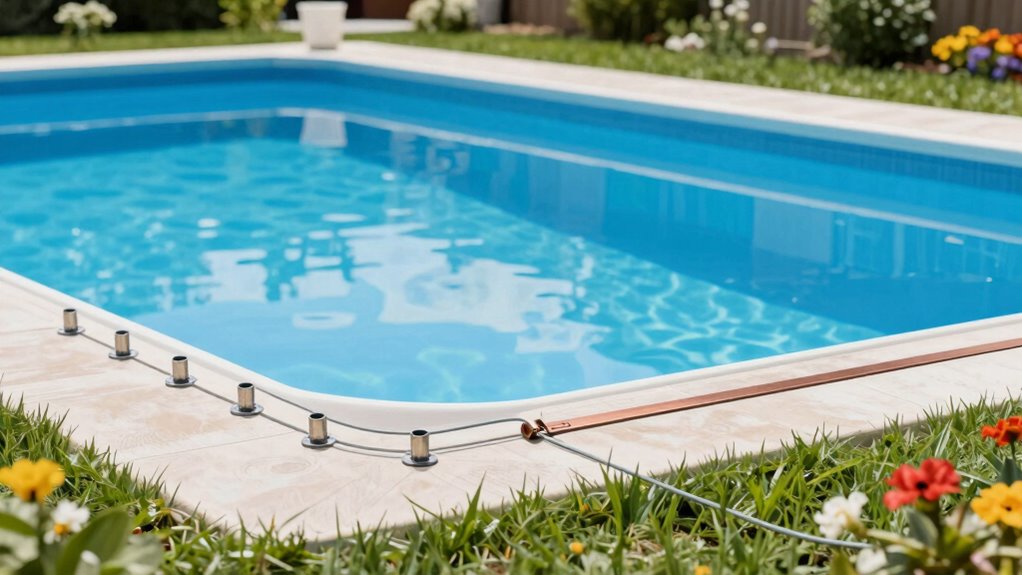

Bonding and grounding for pools are unseen safety systems that protect you from electrical shocks by creating a continuous electrical connection among metal parts and directing stray currents safely into the earth. Proper installation prevents dangerous voltage differences and reduces shock risks. Regular checks ensure these systems are up to code and functioning well. If you want to keep swimmers safe and avoid hazards, understanding how to maintain this essential safety network is key.

Get pool and patio gear delivered free — and shop member deals
- Fast, free delivery on millions of items
- Access to Prime Big Deal Days deals on October 6–7
- Prime Video, Amazon Music and more included
Key Takeaways
- Bonding creates a continuous electrical connection among all metal pool components to prevent dangerous voltage differences.
- Grounding safely directs stray electrical currents into the earth, reducing shock risks around the pool.
- Proper installation and regular inspection of bonding and grounding systems are essential for safety and code compliance.
- Signs like corrosion, frayed wiring, or circuit breaker trips indicate potential issues with the pool’s electrical safety system.
- Professional assessment and maintenance ensure the invisible safety system remains effective and compliant with standards.
As an affiliate, we earn on qualifying purchases.
What Are Pool Bonding and Grounding, and Why Do They Matter?
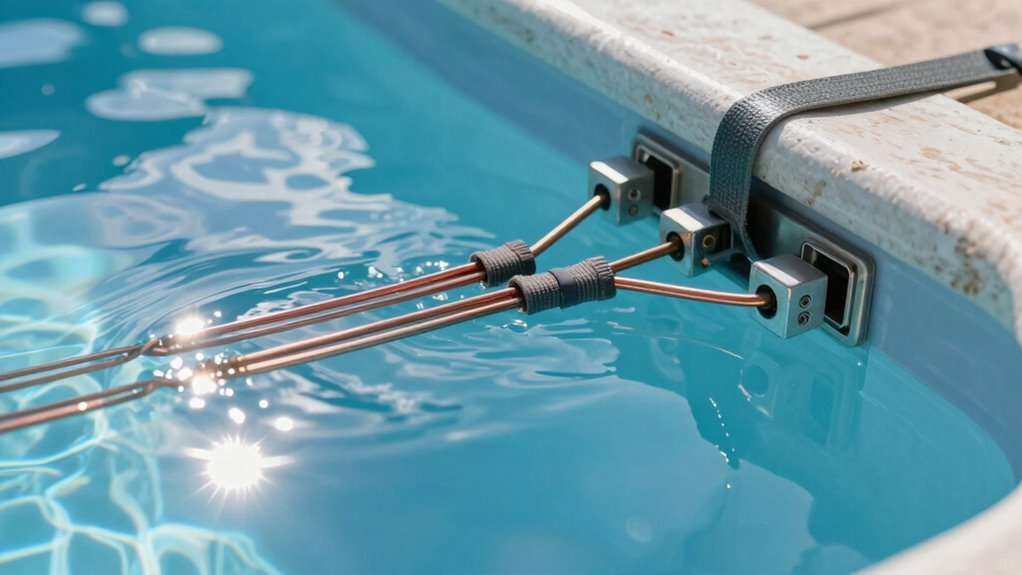
Pool bonding and grounding are essential safety measures that help protect you from electric shocks. To understand their importance, it’s helpful to know some chemistry fundamentals: bonding creates a continuous electrical connection between all metal parts in and around your pool, preventing dangerous voltage differences. Grounding directs any stray electrical current safely into the earth, reducing shock risk. These processes work together to enhance electrical safety by ensuring that if a fault occurs, the electricity has a low-resistance path to escape, preventing harm. Proper installation of grounding systems is critical for effective safety. Without proper bonding and grounding, metal components could become energized, increasing the chance of electric shock. Additionally, understanding electrical safety principles helps you maintain a safe swimming environment, giving you peace of mind while enjoying your pool.
Why Proper Bonding and Grounding Are Critical for Pool Safety
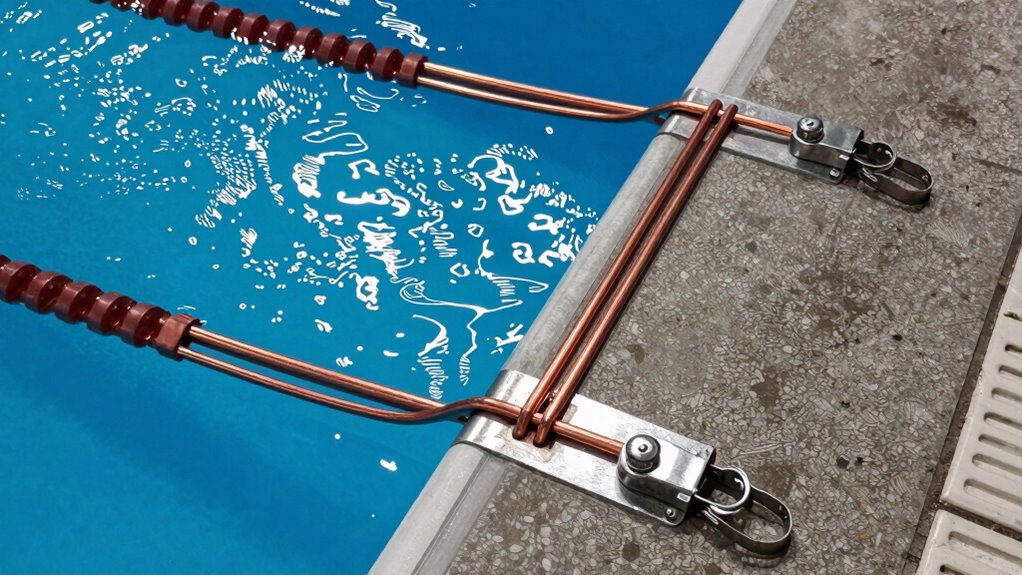
Because electrical faults can pose serious risks, proper bonding and grounding are essential for your safety in and around the pool area. They prevent electric shocks by providing a safe path for stray currents. When your pool cover or water chemistry are not properly managed, the risk of electrical faults increases, making effective bonding and grounding even more critical. Imagine a scenario where a faulty light fixture or a water imbalance causes stray currents; without proper grounding, you could be exposed to dangerous shocks. Proper bonding ensures all metal parts, including ladders and pumps, are connected, reducing shock hazards. Additionally, understanding the navigation and mapping of your electrical system can help identify potential fault points before they become hazards. Regular inspections and compliance with electrical codes are vital for maintaining a safe pool environment. Implementing ground-fault protection devices adds an extra layer of safety by quickly shutting off power in case of a fault. This safety system keeps the pool environment safe, giving you peace of mind while enjoying your swim. Properly testing electrical systems regularly further ensures ongoing safety and compliance.
Signs Your Pool’s Bonding and Grounding Might Be Unsafe
If you notice any irregularities or issues with your pool’s electrical components, it could be a sign that your bonding and grounding systems are unsafe. For example, inconsistent water temperature can indicate electrical problems, especially if certain areas feel warmer or cooler unexpectedly. Additionally, if pool chemicals aren’t balanced properly, corrosion or damage to grounding wires might occur, compromising safety. Discolored or frayed wiring, frequent tripping of circuit breakers, or electric shocks when touching pool equipment are clear warning signs. These issues suggest your bonding and grounding might be compromised, increasing the risk of electric shock or other hazards. Regularly inspecting your system and addressing any anomalies promptly helps guarantee your pool remains a safe environment. Proper electrical safety is essential to prevent these hazards and ensure your pool’s safety. Being aware of grounding and bonding systems and their proper maintenance can significantly reduce potential risks, especially considering the diverse crochet styles for locs that can be incorporated into poolside accessories or décor.
How to Check if Your Pool’s Bonding and Grounding Meet Code
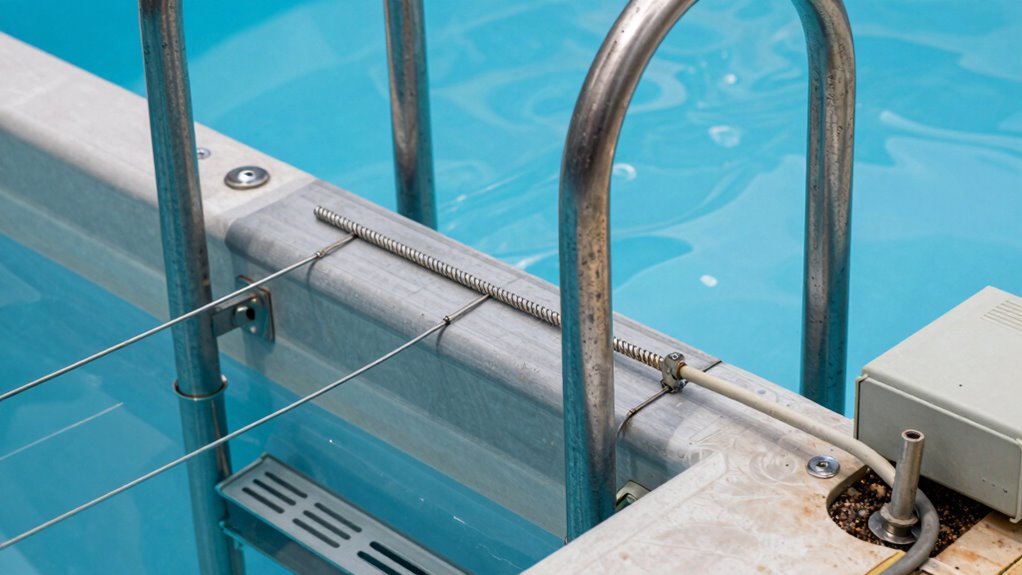
To make certain your pool’s bonding and grounding meet code, start with a visual inspection of all connections and conduct a compliance check. Look for loose or corroded fittings, and verify that grounding wires are properly connected and intact. Following these steps helps you confirm your pool’s safety and adherence to regulations.
Visual Inspection Tips
Performing a visual inspection is a straightforward way to verify that your pool’s bonding and grounding systems meet safety standards. Start by examining the pool lighting, ensuring it’s properly sealed and grounded to prevent electrical hazards. Check the bonding wire connections around the pool, verifying they are secure, corrosion-free, and continuous. Look at the water chemistry; if it’s unbalanced, it can cause corrosion on metal parts, impacting grounding integrity. Also, inspect accessible bonding jumpers for signs of wear or damage. Remember, a thorough visual check helps identify potential issues before they become serious. Keep an eye out for loose or damaged wiring, corrosion around metal components, and any signs of water intrusion near electrical connections. Proper maintenance ensures your safety system remains effective. Additionally, reviewing Vetted – Witbeck Vacuums recommendations can help ensure your cleaning equipment does not interfere with your pool’s electrical safety measures.
Compliance Verification Steps
Wondering how to guarantee your pool’s bonding and grounding systems comply with safety codes? First, check for proper connections using a multimeter to ensure continuity and low resistance. Confirm that all metal parts, including rebar and fittings, are bonded correctly. Regularly inspect the grounding system during seasonal maintenance to catch any corrosion or loose connections. Remember, pool chemical safety is vital, so keep chemicals stored properly to prevent damage to electrical components. Verify that GFCIs are functioning properly by testing them periodically. If you notice any issues, consult a licensed electrician to correct them. These steps guarantee your pool’s electrical safety meets code, reducing risks and providing peace of mind during every swim season.
How to Bond and Ground Your Pool Safely: Step-by-Step

Bonding and grounding your pool is essential for safety, and doing it correctly can prevent electrical hazards. During pool installation, ensure all electrical wiring is properly connected to a dedicated grounding system. Here’s how to do it safely:
- Identify all metal components, including the pool shell and metal fittings.
- Connect these components with a continuous bonding conductor, ensuring no breaks.
- Attach the grounding wire from your electrical system to the pool’s bonding grid, making sure it’s secure and corrosion-resistant.
- Use proper sizing and load‑planning tools to confirm your system can handle the electrical demands safely. Properly implemented, the bonding system creates a low-resistance path for stray currents, minimizing shock risks.
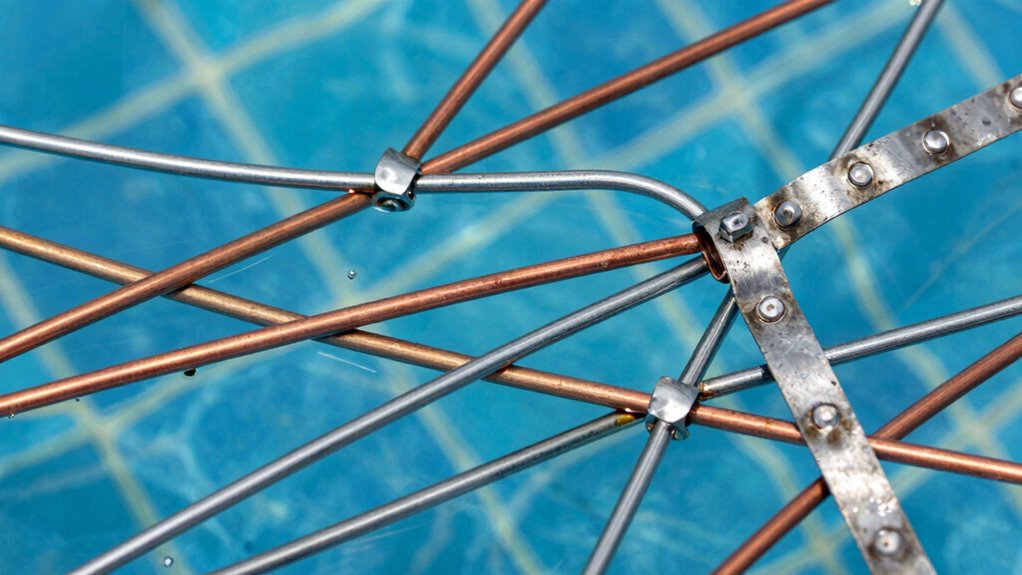
Visualize the process: a network of wires uniting the pool’s metal parts, creating a protective mesh. This system directs stray currents safely into the ground, reducing shock risks. Proper bonding and grounding are crucial for a safe, enjoyable swimming experience.
Troubleshooting Common Bonding and Grounding Problems
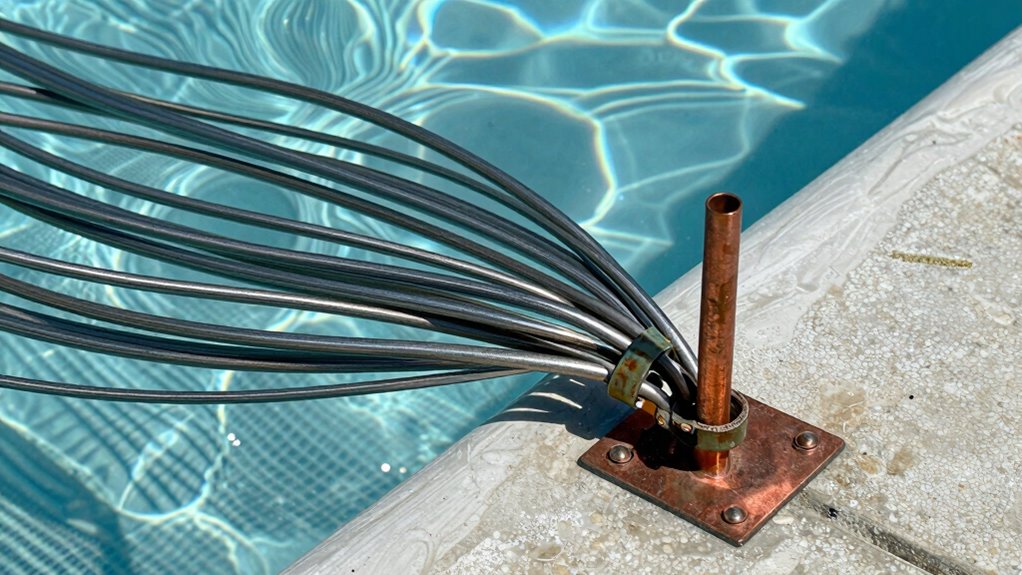
When troubleshooting bonding and grounding issues, start by inspecting for grounding loops that can cause electrical interference. Next, check all bonding connections to confirm they’re secure and free of corrosion. Recognizing and fixing corrosion problems early helps maintain a safe, effective electrical system around your pool. Additionally, verifying that all components are properly grounded ensures optimal safety and system performance.
Identifying Grounding Loops
Grounding loops can cause serious safety issues and interfere with the proper functioning of your pool’s electrical system. To identify a ground loop, look for signs of electrical interference, such as buzzing sounds or erratic equipment behavior. A common cause is multiple grounding paths creating a continuous loop. These loops can introduce voltage differences that compromise safety and cause shock hazards. To spot them, check for:
- Excessive grounding wires running parallel without proper separation
- Unnecessary or redundant grounding connections
- Unbalanced or loose connections that may cause current to cycle
Proper grounding practices are essential to prevent the formation of such loops and ensure electrical safety.
Checking Bonding Connections
To effectively troubleshoot common bonding and grounding issues, start by inspecting all bonding connections around your pool area. Check that the bonding wire is securely attached to all metal components, including the ladder, handrails, and pool shell. Look for any loose or corroded connections that could compromise the system. While doing this, consider the pool’s color; a faded or discolored appearance might indicate corrosion, which can affect bonding integrity. Also, observe the water temperature; if it’s unusually high or fluctuating, it could signal underlying electrical issues. Ensuring consistent, tight bonding connections helps prevent electrical shock hazards. Remember, proper bonding maintains a continuous conductive path, so any compromised connection needs to be repaired or replaced immediately for safety. Additionally, verifying the vetted security zone info can help ensure your safety measures meet current standards and best practices. Regular inspection of these components and understanding electrical safety principles are key to maintaining a safe swimming environment. Incorporating grounding system checks into routine maintenance can further enhance overall electrical safety in your pool area. Performing periodic testing of the bonding and grounding system can catch potential problems before they become hazards. Proper documentation of these inspections can assist in future troubleshooting and compliance with safety regulations.
Recognizing Corrosion Issues
How can you tell if corrosion is affecting your pool’s bonding system? Look for signs like discolored or flaky metal surfaces, which indicate rust or deterioration. You might also notice increased resistance or loose connections during inspections. Corrosion prevention is key to maintaining a safe bonding system, so regular equipment maintenance is essential. Keep an eye out for:
- Greenish or whitish deposits on metal parts
- Frayed or damaged bonding wires
- Corroded or pitted metal components
These issues can compromise your pool’s electrical safety. Addressing corrosion early helps prevent costly repairs and ensures your bonding system functions properly. Regular inspections and maintenance help you spot problems before they escalate, keeping your pool safe and compliant with electrical codes. Understanding corrosion indicators is vital for effective troubleshooting. Additionally, understanding the causes of corrosion can help you implement better preventative measures, supported by research on corrosion prevention methods. Preventative measures such as proper metal selection and protective coatings can significantly reduce corrosion risks.
What to Do If Your Pool’s Bonding or Grounding Isn’t Up to Standard
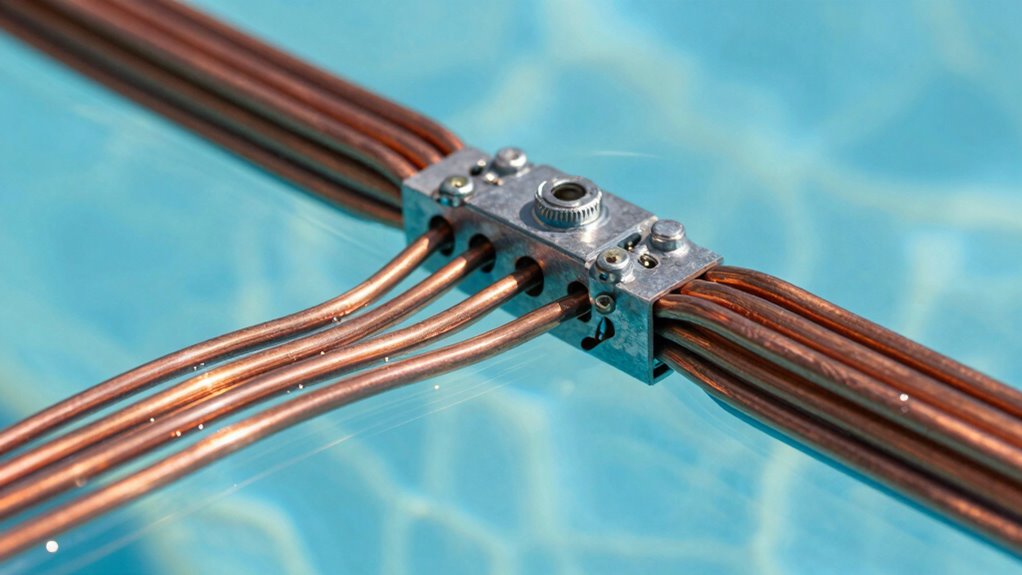
If you discover that your pool’s bonding or grounding isn’t up to standard, it’s essential to address the issue promptly to guarantee safety. Start by consulting a licensed electrician or pool professional to inspect your system thoroughly. They can check the bonding grid, grounding connections, and compatibility with your pool heater, ensuring everything meets electrical codes. Poor water chemistry can also impact grounding effectiveness, so test and balance your water regularly. Avoid DIY fixes that may overlook hidden issues; professional assessment is critical. If problems are found, they’ll recommend repairs or upgrades to bring your system up to code, reducing the risk of electrical shock or equipment damage. Proper electrical system testing is vital to identify potential hazards early. Taking swift action ensures your pool remains safe and compliant for everyone enjoying it.
Frequently Asked Questions
How Often Should Pool Bonding and Grounding Systems Be Inspected?
You should inspect your pool’s bonding and grounding systems at least once a year as part of regular pool maintenance. Regular inspections ensure safety protocols are maintained and any corrosion or damage is caught early. If you notice any issues like loose connections or corrosion, address them immediately. Consistent inspections help prevent electrical hazards, keeping your pool safe for everyone and maintaining compliance with safety standards.
Can DIY Bonding and Grounding Repairs Compromise Safety?
DIY bonding and grounding repairs can definitely compromise safety if you’re not careful. Risks include improper connections and material incompatibility, which can lead to electrical faults or shock hazards. Always make sure you use compatible materials and follow local electrical codes. If you’re unsure, it’s best to consult a professional. Rushing or DIY shortcuts could jeopardize your safety and the safety of others around your pool.
Are There Specific Materials Recommended for Pool Grounding?
Yes, there are specific materials recommended for pool grounding. You should use grounding materials like copper or stainless steel, which provide reliable conductivity. Bonding conductors, typically copper wire, connect metal parts to guarantee safety. Always choose materials that meet local electrical codes and standards to prevent corrosion or failure. Proper installation of these grounding materials and bonding conductors is essential for effective safety and compliance.
How Do Weather Conditions Affect Bonding and Grounding Effectiveness?
Weather conditions can impact your pool’s bonding and grounding effectiveness, especially during storms. Lightning safety becomes a concern, so make certain your grounding system provides a direct path to prevent damage or injury. Additionally, rain and humidity can accelerate corrosion, so regularly check and maintain connections to prevent deterioration. Proper bonding and grounding help protect you, your family, and your pool equipment from weather-related hazards.
What Professional Certifications Ensure a Qualified Pool Grounding Installer?
You should look for a pool grounding installer with certifications aligned with industry standards like NEC (National Electrical Code) and OSHA. These certification standards confirm the installer has proper training and meets safety requirements. Installer qualifications include ongoing education and proven experience in grounding and bonding systems. Choosing a certified professional guarantees your pool’s safety, compliance, and reliable grounding, giving you peace of mind during installation and use.
Conclusion
Think of your pool’s bonding and grounding as the invisible shield protecting you from electrical danger. When these systems are properly maintained, they act like a sturdy safety net beneath the surface, catching hazards before they can cause harm. Regular checks and expert help ensure your pool remains a safe oasis. Don’t let unseen issues turn your paradise into a peril—stay vigilant and keep that safety net strong.
Fall Picks
fall essentials
As an affiliate, we earn on qualifying purchases.