Conducting site surveys and soil tests is essential because they reveal ground conditions, soil stability, and potential contamination risks that can affect your project’s safety and longevity. Proper testing helps you plan foundation designs, avoid costly repairs, and guarantee environmental safety. Knowing what lies beneath your site helps prevent delays from utility strikes and structural failures. Keeping these factors in mind makes certain your project proceeds smoothly and securely—continue exploring to learn how geotech plays a crucial role in this process.
Key Takeaways
- Geotechnical surveys identify soil conditions and prevent foundation issues, ensuring long-term stability.
- Soil testing detects contamination risks early, safeguarding environmental health and avoiding costly remediation.
- Site surveys reveal underground utilities and obstructions, reducing construction delays and safety hazards.
- Advanced testing techniques provide detailed soil insights, leading to better foundation design and project planning.
- Proper geotechnical evaluation minimizes future repairs, enhances safety, and supports regulatory compliance.
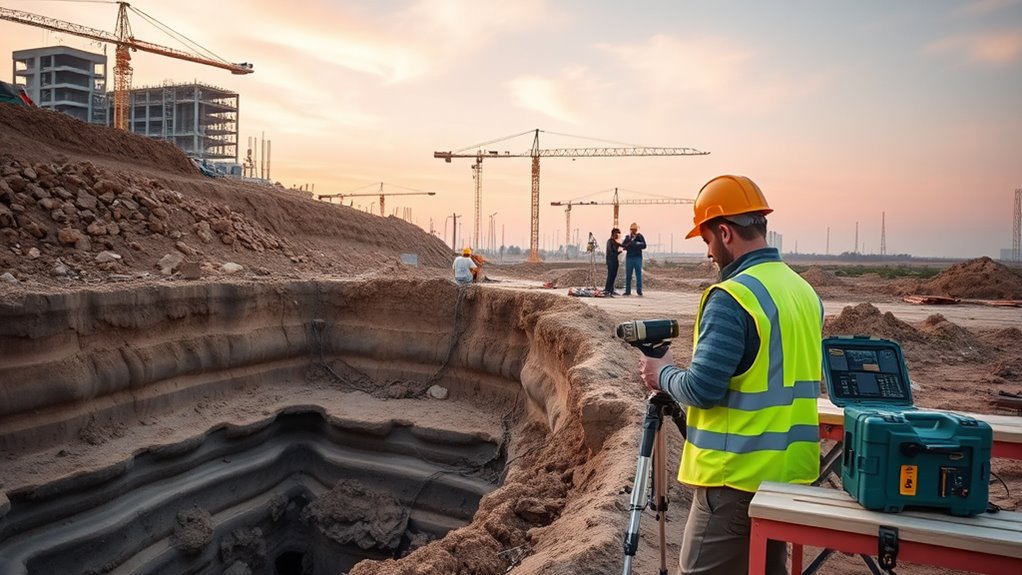
Before beginning any construction project, conducting site surveys and soil tests is essential to guarantee a solid foundation. You need to understand the ground you’re building on to ensure the stability and safety of the structure. One of the primary reasons for this is foundation stability. If the soil beneath your project isn’t properly evaluated, you risk encountering issues like uneven settling or even structural failure down the line. Soil tests reveal how the soil behaves under load, whether it’s cohesive or granular, and how well it can support the weight of your building. When you invest in thorough testing upfront, you’re better positioned to design foundations that match the specific conditions of your site, reducing the likelihood of costly repairs or modifications later.
Thorough site surveys and soil tests ensure foundation stability and prevent costly future repairs.
Soil contamination is another critical factor often overlooked during initial planning. If the soil has been contaminated by chemicals, waste, or other pollutants, it can compromise both the environment and the integrity of your construction. Contaminated soil may require remediation before construction can proceed safely, which can considerably delay your project and increase costs. Identifying contamination early allows you to develop appropriate mitigation strategies, such as soil removal, stabilization, or the use of specialized foundation techniques. Ignoring these issues could lead to long-term health hazards, environmental violations, or damage to the structure itself.
Site surveys and soil tests also help you understand other crucial factors like drainage patterns, groundwater levels, and the presence of underground utilities or obstructions. Knowing these details enables you to plan effectively, minimizing surprises during construction. For example, high groundwater levels can impact foundation design, requiring waterproofing or sump pumps to prevent future flooding or moisture issues. Discovering underground utilities early prevents accidental strikes, which can cause delays and safety hazards. Each piece of information gathered through geotechnical investigations makes your planning more accurate, ensuring your project proceeds smoothly and on schedule.
In addition, utilizing advanced soil testing techniques can provide deeper insights into soil composition and stability, further informing your construction strategies. In essence, investing in detailed site surveys and soil testing isn’t just about compliance; it’s about protecting your investment. When you understand the soil conditions, including potential contamination and stability concerns, you can make informed decisions that safeguard your project’s success. It’s a proactive approach that saves you from unforeseen problems, costly corrections, and safety risks. Remember, the ground beneath your feet is the foundation of everything you’re building—know it thoroughly, and you’ll set yourself up for a solid, durable, and safe structure.

MySoil Soil Test Kit, Unlock Your Lawn & Garden Potential, Complete & Accurate Nutrient and pH Analysis with Recommendations Tailored to Your Soil and Plant Needs
- Professional Soil Testing Kit: Accurately analyze nutrients and pH
- Fast Results: Receive analysis in 6-8 days
- Comprehensive Nutrient Analysis: Measures 13 plant-available nutrients
As an affiliate, we earn on qualifying purchases.
As an affiliate, we earn on qualifying purchases.
Frequently Asked Questions
How Long Does a Typical Site Survey Take?
A typical site survey takes about one to two weeks, depending on the project’s complexity. You should factor in the survey timeline into your project planning to guarantee timely progress. During this period, geotechnical experts assess soil conditions, site accessibility, and other factors that influence construction. By understanding how long the survey will take, you can better coordinate with contractors and avoid delays later on.
Are Soil Tests Required for All Construction Projects?
Think of soil tests as a doctor’s check-up for your building’s foundation. Not all construction projects require soil tests, but most do, especially when soil composition varies. Testing methods like boreholes or sampling reveal critical info about stability and drainage. Without these tests, you risk building on unstable ground, much like ignoring symptoms that signal an underlying health issue—potentially costly and dangerous down the line.
What Safety Precautions Are Involved During Soil Testing?
During soil testing, you should wear appropriate safety gear like gloves, goggles, and masks to protect against soil contamination and testing equipment hazards. Keep the testing area well-ventilated and ensure all equipment is handled carefully to prevent accidents. Follow safety protocols strictly, especially when dealing with potentially contaminated soil, and dispose of samples properly to minimize environmental risks. Always stay alert and cautious to guarantee a safe testing process.
How Much Does a Geotechnical Investigation Usually Cost?
Think of a geotechnical investigation as laying the foundation for a sturdy building. The cost usually ranges from $1,000 to $10,000, depending on factors like site size, complexity, and testing procedures. Cost considerations include the scope of tests needed and depth of sampling. You should get detailed quotes from geotechnical firms to understand what’s included, ensuring you’re investing wisely in safe, reliable construction.
Can Soil Tests Predict Future Land Stability Issues?
Soil tests can’t predict future land stability issues with certainty, but they provide valuable insights into soil composition and groundwater levels. By analyzing these factors, you can identify potential risks like settlement or erosion. Regular testing and monitoring help you stay ahead of problems, making informed decisions for construction or land use. While not foolproof, soil tests are essential tools for evaluating current conditions and preventing future instability.
Conclusion
Don’t underestimate the power of thorough site surveys and soil tests—they’re the backbone of any successful construction project. Skipping these steps is like building on quicksand, risking catastrophic failure. When you prioritize geotech investigations, you’re fundamentally giving your project a sturdy foundation that can withstand even the fiercest challenges. Trust me, neglecting this vital step could turn your dream build into a nightmare faster than you can say “foundation failure.” Make geotech your top priority for lasting success.