To optimize your equipment pad layout, place it close to utilities for easy connections, but away from living or working areas to reduce noise. Confirm there’s enough space for future upgrades, ventilation, and safe servicing access from walkways or driveways. Use sound barriers if needed to manage noise and position the pad for safe operation and maintenance. For a complete guide on creating an efficient layout, keep exploring the key factors that matter most.
Key Takeaways
- Select a location close to utilities, away from noise-sensitive areas, for easy access and minimal disturbance.
- Ensure the pad is large enough to accommodate current and future equipment with proper clearance for ventilation.
- Position the pad to reduce noise transmission, using barriers or enclosures if necessary, to comply with local noise regulations.
- Place the pad where technicians can access it easily from walkways or driveways, avoiding tight or obstructed spots.
- Design the layout to optimize operational safety, maintenance convenience, and compliance with safety standards.
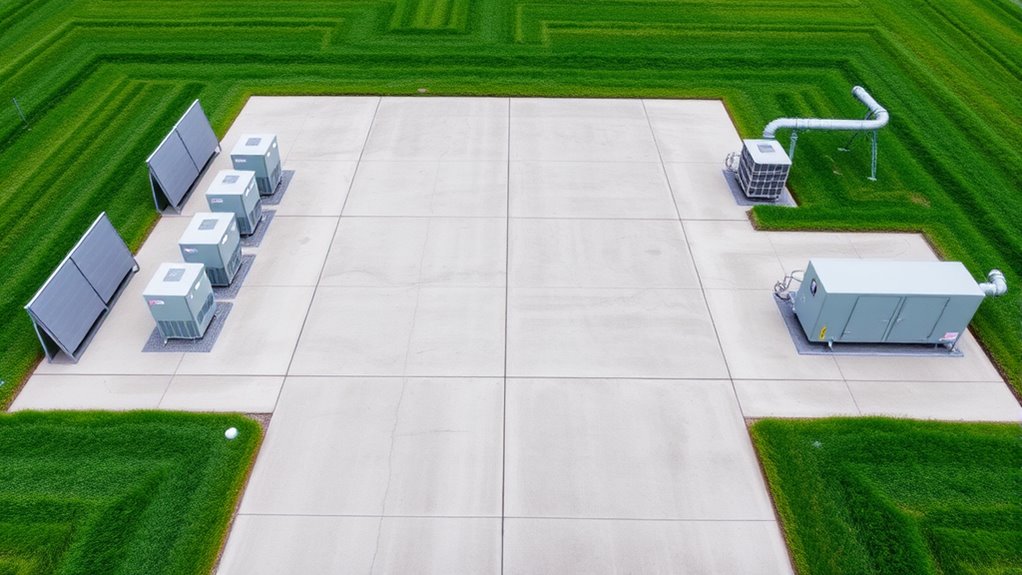
Are you planning to install new equipment and wondering how to maximize your space? The key starts with careful planning of your equipment pad layout. Choosing the right equipment pad location isn’t just about fitting everything in; it’s about guaranteeing safety, accessibility, and efficiency. When selecting the spot for your equipment pad, consider proximity to existing utilities, ease of access for maintenance, and noise concerns. An ideal location keeps noise away from living or working areas, while still being reachable for service. Remember, the equipment installation safety depends heavily on where you place the pad—an improperly located pad can cause operational issues or hazards down the line.
Once you’ve pinpointed the best position, think about the size and shape of the equipment pad. It needs enough space to accommodate current equipment and potential future upgrades. Also, guarantee there’s enough room around the equipment for technicians to work comfortably without risking damage or safety hazards. Proper spacing isn’t just about convenience; it’s essential for ventilation and heat dissipation, which can extend the lifespan of your equipment. Overcrowding the pad can lead to overheating or difficulty in servicing the equipment, so plan for adequate clearance on all sides.
Ensure sufficient space around equipment for maintenance, ventilation, and future upgrades to promote safety and longevity.
Noise management is another essential aspect of equipment pad layout. If your equipment generates significant noise, position the pad away from sensitive areas such as bedrooms, offices, or public spaces. This reduces noise disturbance and complies with local noise ordinances. Installing sound barriers or enclosures around the equipment can further minimize noise transmission, making your environment more comfortable for everyone nearby. Additionally, understanding and incorporating proper maintenance practices ensures long-term performance and safety of the equipment.
Service access is often overlooked but is fundamental to long-term maintenance and safety. Your equipment pad should be positioned for easy access from walkways or driveways, allowing technicians to perform inspections, repairs, or replacements without hassle. Avoid placing equipment behind structures or in tight corners where access becomes difficult. Clear pathways not only facilitate routine maintenance but also improve your overall safety by reducing the risk of accidents during service.
Ultimately, your equipment pad layout impacts operational efficiency, safety, and comfort. Careful planning guarantees that your equipment operates smoothly, maintenance is straightforward, and safety standards are met. Think about the equipment pad location in relation to noise, accessibility, and future needs. Prioritizing these factors helps you create a space that’s functional, safe, and compliant with all relevant guidelines. With thoughtful design, you’ll set yourself up for trouble-free operation and peace of mind, knowing your equipment is well-placed for both current use and future growth.
Frequently Asked Questions
How Do Weather Conditions Affect Equipment Pad Placement?
Weather conditions greatly impact your equipment pad placement. You should prioritize weather resilience by choosing a location that minimizes exposure to extreme elements like rain, snow, or wind. Incorporate effective drainage solutions to prevent water accumulation, which can damage your equipment. Proper placement ensures your equipment stays dry and functional, reduces maintenance needs, and extends its lifespan, even during adverse weather.
What Are the Best Materials for Durable Pad Surfaces?
Imagine you’re crafting a spaceship landing pad—durability matters. For your pad surface materials, concrete is the top choice due to its strength and weather resistance. Consider asphalt for cost-effectiveness but note it wears faster. Pavers add aesthetic appeal but require regular maintenance. Focus on durability considerations like load-bearing capacity and resistance to weathering. Picking the right materials guarantees your equipment stays protected and functional for years to come.
How to Ensure Safety Around Equipment Pads?
To guarantee safety around equipment pads, you should implement security precautions like installing safety barriers to prevent accidental contact or unauthorized access. Clearly mark the area with warning signs and restrict access to trained personnel only. Regularly inspect the barriers and signage to maintain their effectiveness. Keeping the space organized and free of debris also minimizes hazards, creating a safer environment for everyone working near or around the equipment pad.
What Are the Cost Implications of Different Layout Options?
Different layout options can substantially impact costs, especially when considering landscaping considerations and aesthetic integration. You might spend more on customized designs or relocating equipment to improve noise control and service access, but these costs can be offset by reduced maintenance and enhanced visual appeal. Balancing practicality with aesthetic goals ensures you choose a layout that minimizes expenses while maintaining safety, accessibility, and harmony with your property’s landscape.
How Can Future Expansion Be Accommodated in the Layout?
You can accommodate future expansion by planning for extra space around the equipment pad now, guaranteeing utility connections are easily extendable. Incorporate flexible layouts that allow for additional units without major disruptions. Consider the environmental impact by minimizing noise and runoff, which helps prevent future issues. This proactive approach ensures ease of access for service, reduces costs later, and supports seamless growth as your needs evolve.
Conclusion
Designing your equipment pad is like orchestrating a symphony—you need space to breathe, silence to listen, and easy access to keep the rhythm flowing smoothly. When you balance noise, space, and service routes, you create a foundation that hums with efficiency and harmony. Think of it as planting seeds for a thriving garden; with careful planning, your setup will flourish quietly and effortlessly, standing strong against the winds of daily challenges.